Artwork
Triumphal Doorway
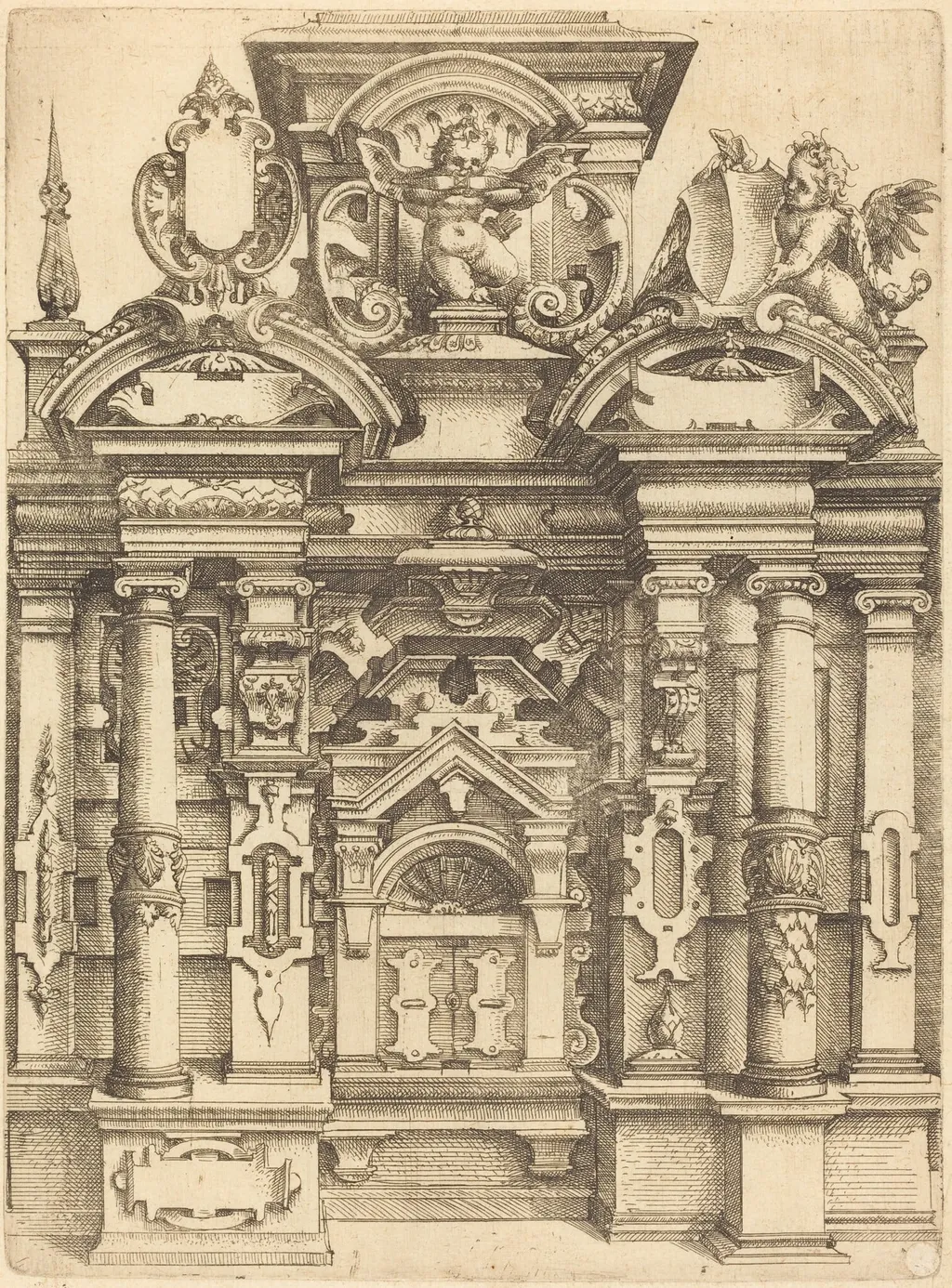
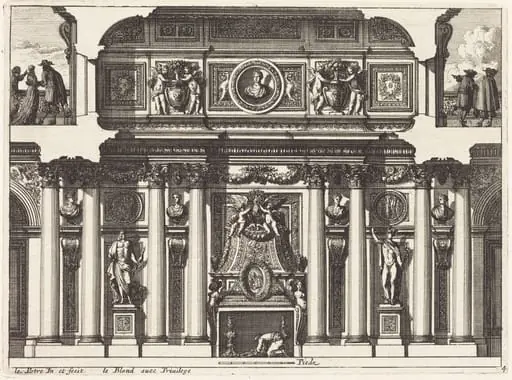
Triumphal Doorway is an ink print by the Renaissance artist Wendel Dietterlin. It dates from 1574 and is held in the collection of the National Gallery of Art.
About this work
Overview
The work was created using the etching technique, which involved incising a design into a metal plate with acid, allowing for multiple impressions.
Triumphal Doorway is an etching produced by Wendel Dietterlin in 1574 on laid paper. It presents a fantastical architectural composition rendered in fine, precise lines. The work was created using the etching technique, which involved incising a design into a metal plate with acid, allowing for multiple impressions. This method enabled the dissemination of complex architectural visions beyond hand-drawn originals, reflecting a growing interest in reproducible imagery during the late Renaissance.
Subject & Meaning
The image depicts an imaginary ceremonial gateway, layered with columns, arches, and ornamental carvings that suggest a fusion of classical and inventive forms. At its summit, a heraldic shield is flanked by two hybrid figures—one resembling a lion, the other a winged human-bird hybrid. These elements evoke ideals of power, divine protection, and civic grandeur, aligning with the symbolic language of Renaissance architecture and the aspirations of noble patrons.
Technique & Style
Dietterlin employed etching to achieve intricate detail and uniform line quality across multiple prints. The design is rendered with sharp, controlled strokes that mimic technical drafting, giving the composition a schematic clarity. Unlike freehand drawings, the etched lines retain consistency, allowing each impression to mirror the original with precision. This approach reflects a shift toward systematic representation in architectural illustration, prioritizing reproducibility over unique expression.
History & Provenance
Created in 1574, the print was part of Dietterlin’s broader effort to compile and distribute architectural models for craftsmen and patrons. It likely circulated among builders and designers in German-speaking regions, serving as a reference for decorative schemes. While no early ownership records are widely documented, its survival in institutional collections suggests it was valued for its pedagogical function rather than as a standalone artwork.
Context
In the late 16th century, architectural treatises and printed plates became essential tools for disseminating design ideas across Europe. Dietterlin’s work emerged amid a surge in interest in classical forms and Mannerist ornamentation. His etchings responded to a demand for accessible, detailed models that could guide artisans unfamiliar with theoretical texts, bridging the gap between scholarly architecture and practical construction.
Legacy
Triumphal Doorway contributed to the standardization of architectural imagery in print, influencing later manuals and pattern books. Its emphasis on layered ornamentation and symbolic figuration resonated in Baroque and early modern decorative arts. Though not widely known today, the print remains a significant example of how print technology transformed the transmission of design knowledge, laying groundwork for modern architectural documentation.
Artist & collection


 Plan et elevation des plus beaux confessionnaux de Paris, tres fidelemant mesure
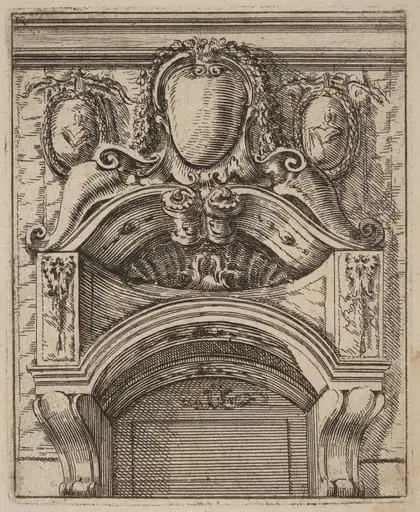 Architectural Motif with Three Shields, Two with Figures
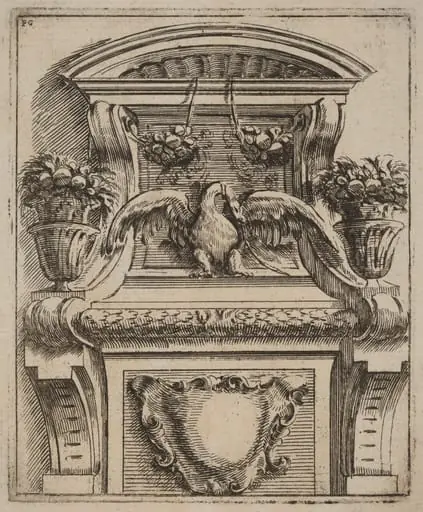 Architectural Motif with a Bird
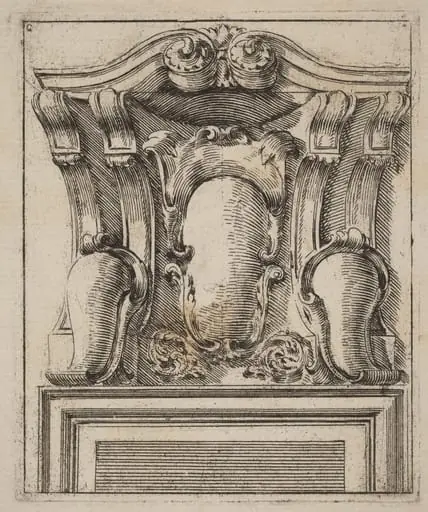 Architectural Motif with Three Shields
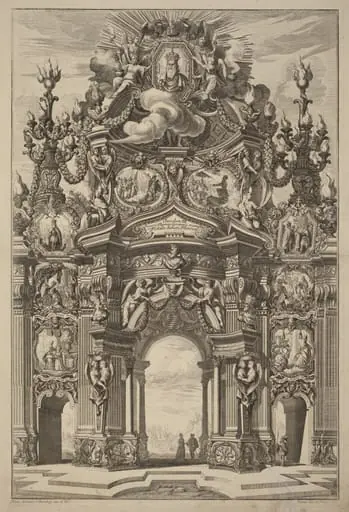 Triumphal Arch for Henry II
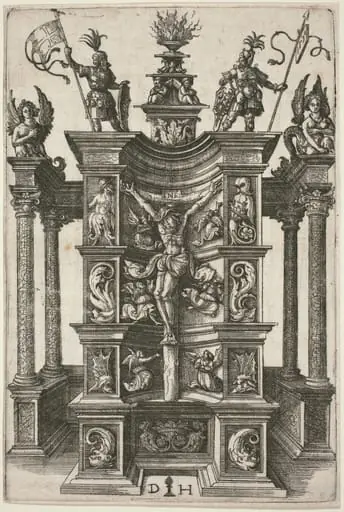 The Crucified Christ in a Decorated Niche
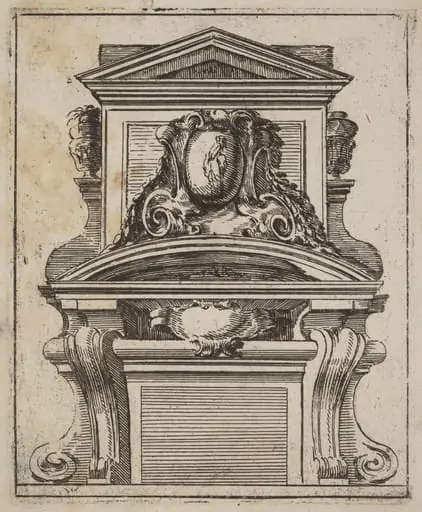 Architectural Motif with a Figure
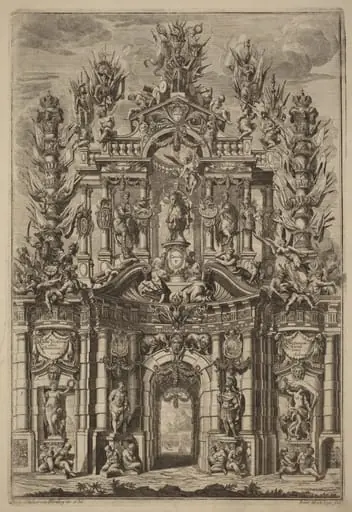 Triumphal Arch for Charles V
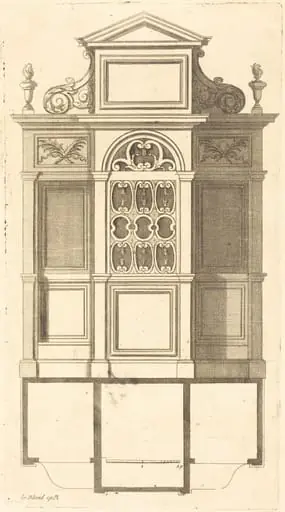 Plan et elevation des plus beaux confessionnaux de Paris, tres fidelemant mesure
 Fireplaces and Other Interior Decorations