Artwork
Emperor Yao Visiting Yu Chonghua
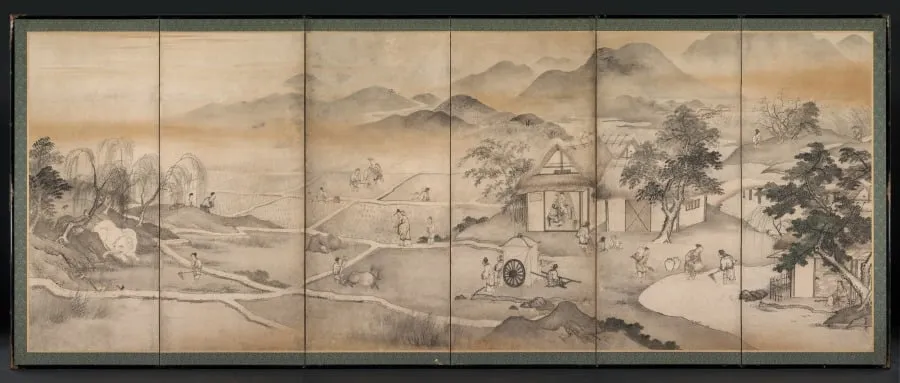
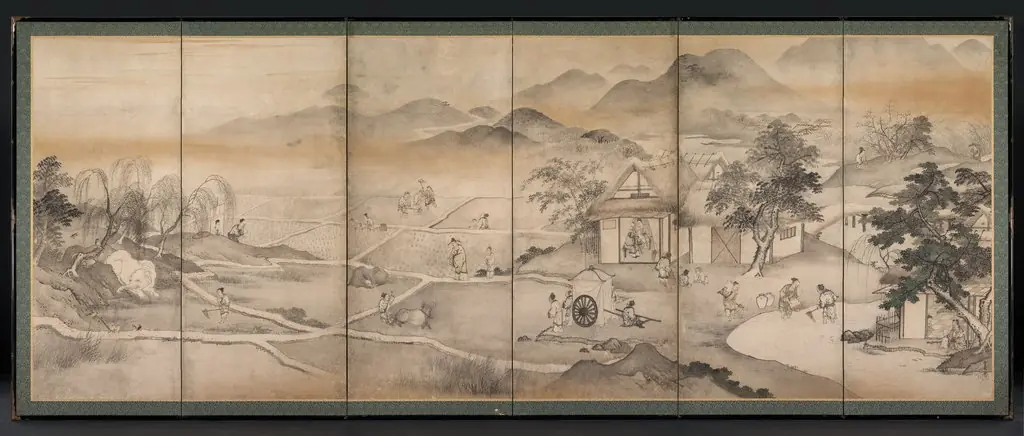
Emperor Yao Visiting Yu Chonghua is an unspecified painting by the Baroque artist Kusumi Morikage. It dates from 1604 and is held in the collection of the Cleveland Museum of Art.
About this work
The story comes from ancient China, but the artist painted it in Japan during the Edo period.
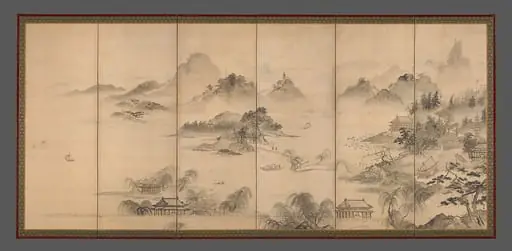
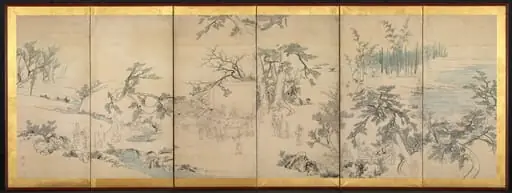
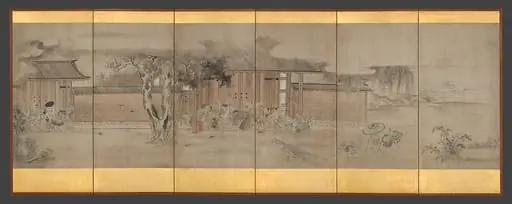
You see a folding screen with two men in flowing robes walking through misty hills. One is an emperor; the other, his future successor.
The story comes from ancient China, but the artist painted it in Japan during the Edo period. Look at the soft, wavy lines of the trees and rocks—nothing stiff or formal. That playful touch was Morikage’s signature, even when he painted serious subjects.
To see more of this style, look up *japan, edo period (1615–1868)*.
Overview
This folding screen, painted by Edo‑period artist Kusumi Morikage, depicts a scene from an ancient Chinese legend in which Emperor Yao selects his heir, Yu Chonghua, who later becomes Emperor Shun. The work forms one half of a paired set and presents the two figures traversing mist‑filled hills in flowing robes.
Subject & Meaning
The narrative illustrates the moment of succession, emphasizing Chonghua’s reputed virtue. According to the legend, his moral excellence was such that, in spring, mountain elephants would descend to assist him in plowing fields with their tusks, symbolising harmony between ruler and nature.
Technique & Style
Morikage, a leading disciple of Kano Tan’yō, employs soft, undulating lines for trees and rocks, avoiding the rigid formalism typical of court paintings. The leftmost panel features gray and white elephants rendered with a playful touch, reflecting the artist’s personal sensibility even within a conservative subject.
History & Provenance
Created in the Edo era (1615–1868), the screen reflects the Japanese fascination with Chinese historical themes. Morikage, trained under the shogun’s official painter, was among the four top students of Kano Tan’yō, and his work was likely commissioned for a private collection that valued both scholarly content and refined brushwork.
Context
The piece belongs to a broader tradition of Japanese screen painting that adapted foreign narratives for domestic audiences. By integrating Chinese legend with the Kano school’s aesthetic, Morikage bridges cultural exchange and the Edo period’s interest in moral exemplars drawn from antiquity.
Artist & collection