Artwork
Opwekking van de jongeling te Naïn
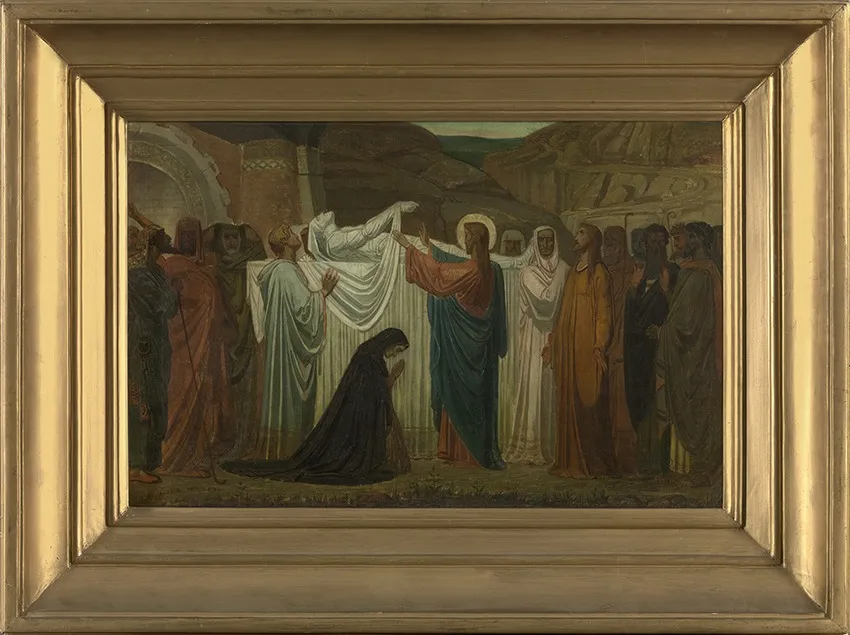
Opwekking van de jongeling te Naïn is an oil painting by the French Romanticist artist Léonce Legendre. It dates from 1831 and is held in the collection of the Groeningemuseum.
About this work
Overview
The scene unfolds in a classical architectural setting, rendered with careful attention to spatial depth and emotional gravity.
Painted in 1831 by Léonce Legendre, this oil-on-canvas work illustrates a biblical episode from the Gospel of Luke. The scene unfolds in a classical architectural setting, rendered with careful attention to spatial depth and emotional gravity. The painting resides in the Groeningemuseum, where it remains one of the few documented religious works by the artist, reflecting his engagement with sacred narratives during the early 19th century.
Subject & Meaning
The painting captures the moment Jesus restores a young man to life in the town of Nain. Two figures lift the deceased youth from his bier, while a woman in mourning kneels nearby—likely the mother, as described in the biblical account. The composition emphasizes divine intervention through gesture and gaze, with Christ standing as the calm center of action, contrasting with the grief and awe of the surrounding figures.
Technique & Style
Legendre employs chiaroscuro to heighten the drama of the resurrection scene, directing light toward the central group and deepening shadows around the edges. Robes are rendered with soft folds and muted tones, grounding the figures in a tangible space. The architectural backdrop, with its stone arches and columns, suggests a Hellenistic setting, reinforcing the historical context of the narrative without overt ornamentation.
History & Provenance
The painting entered the collection of the Groeningemuseum in the 19th century, likely through acquisition or donation. Little is documented about its early ownership, but its preservation in a public institution suggests recognition of its devotional and artistic merit during Legendre’s lifetime. It remains one of the few surviving religious works by the artist, whose output was primarily secular.
Context
Created during a period of renewed interest in biblical themes among European artists, the painting reflects the influence of academic traditions and Romantic sensibilities. While not part of a major religious movement, it aligns with contemporaneous efforts to depict sacred stories with psychological realism and emotional weight, responding to both theological and aesthetic currents of the time.
Legacy
Though Léonce Legendre is not widely known today, this work stands as a testament to his ability to convey spiritual narrative through controlled composition and lighting. It contributes to the broader 19th-century corpus of religious painting in Belgium, offering insight into how smaller regional artists engaged with canonical subjects outside the dominant Parisian or Flemish traditions.
Artist & collection

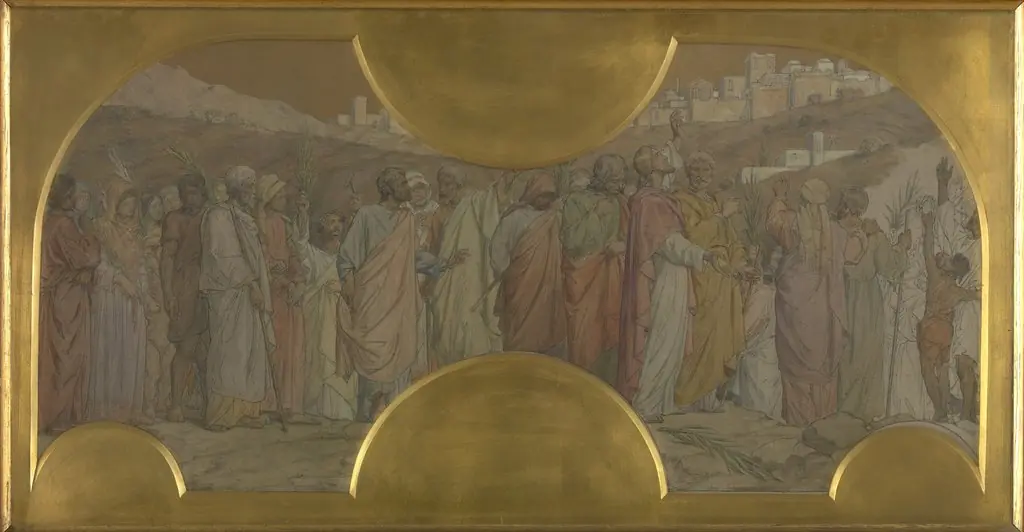 Jesus Going to Jerusalem to Accomplish his Mission
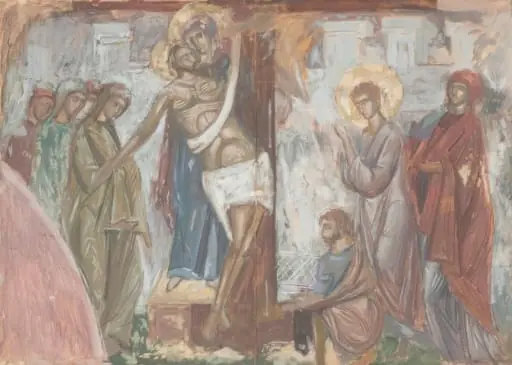 Unfixation
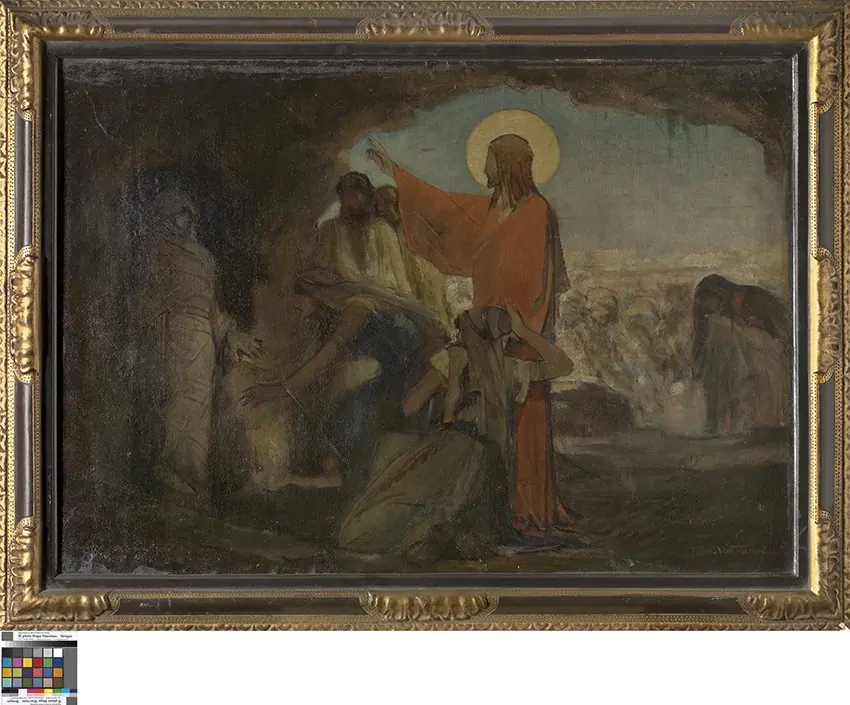 Opwekking van Lazarus
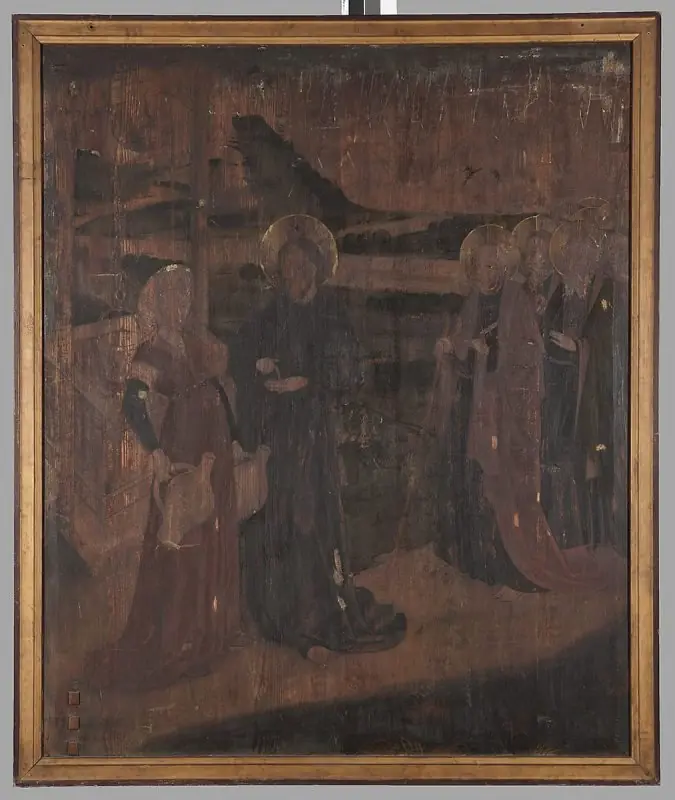 Legnica polyptych - right wing external - upper panel - obverse: St Barbara, St Catherine, St Dorothy; reverse: Christ and the Samaritan
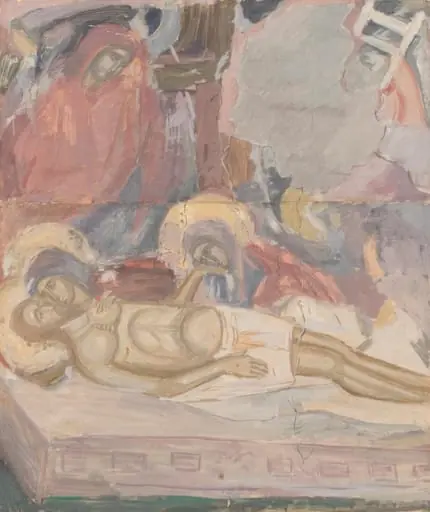 Interment
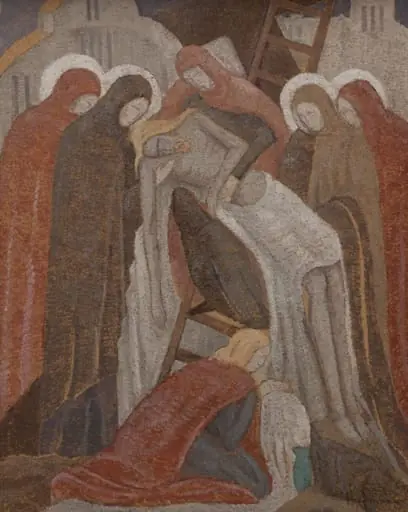 Coborârea de pe cruce
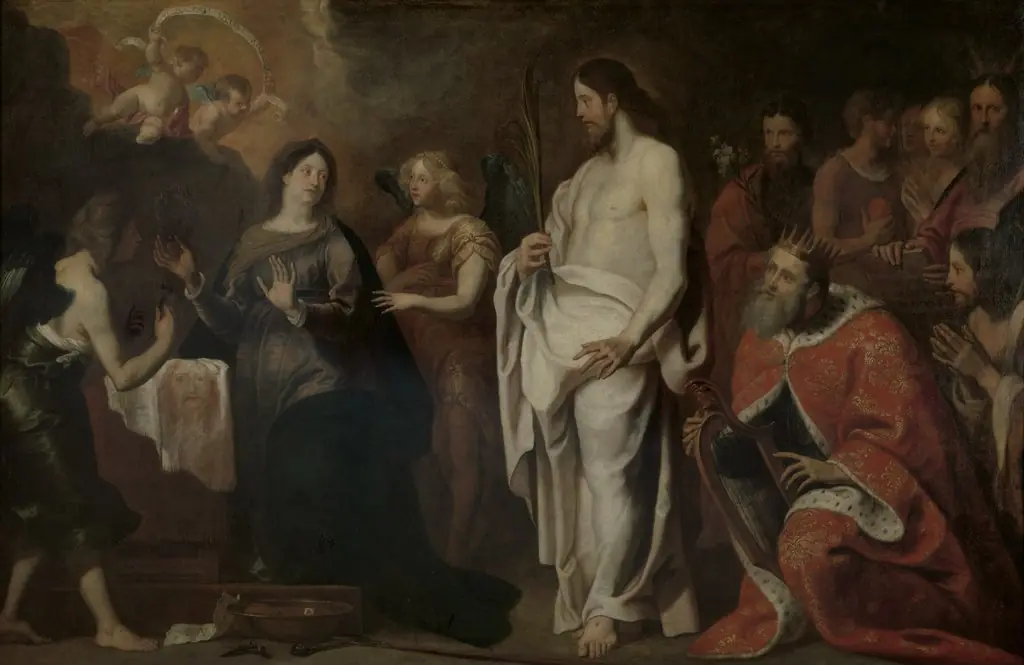 Christ Returning from Purgatory
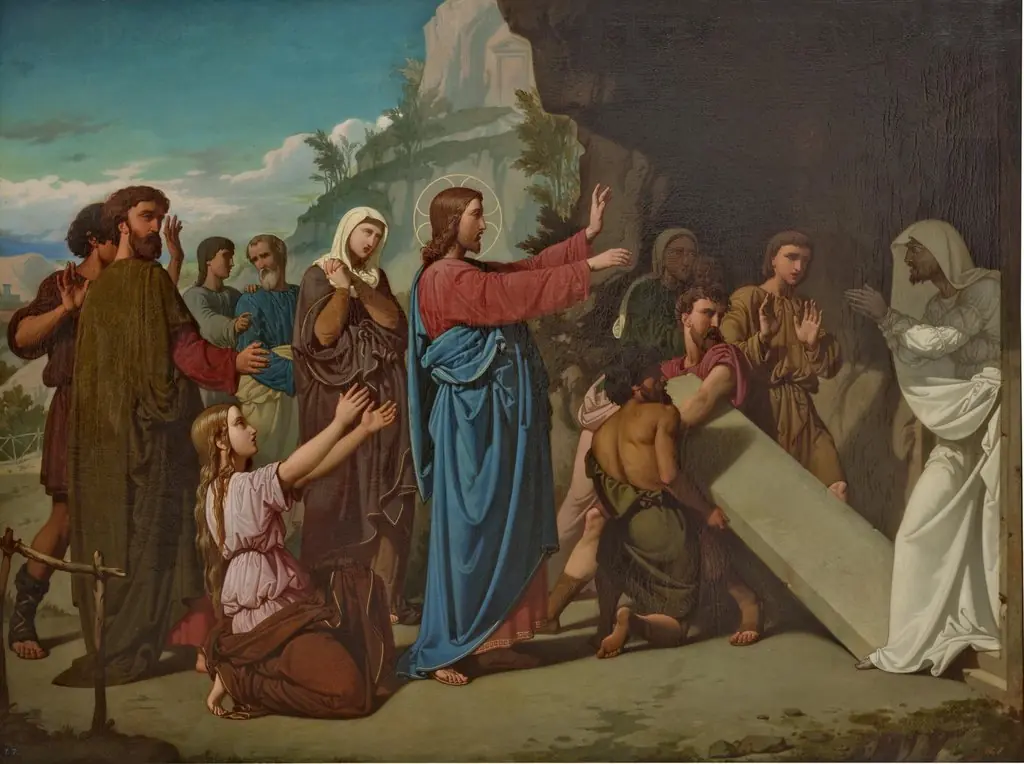 La resurrección de Lázaro
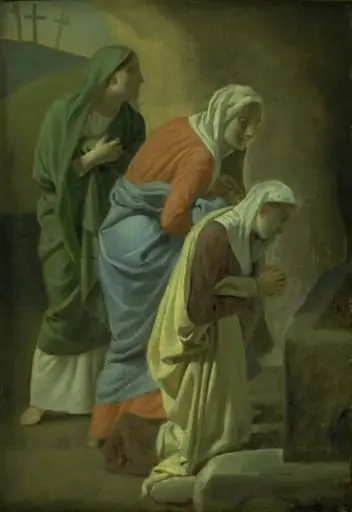 The Three Maries at the Tomb of Christ. Study
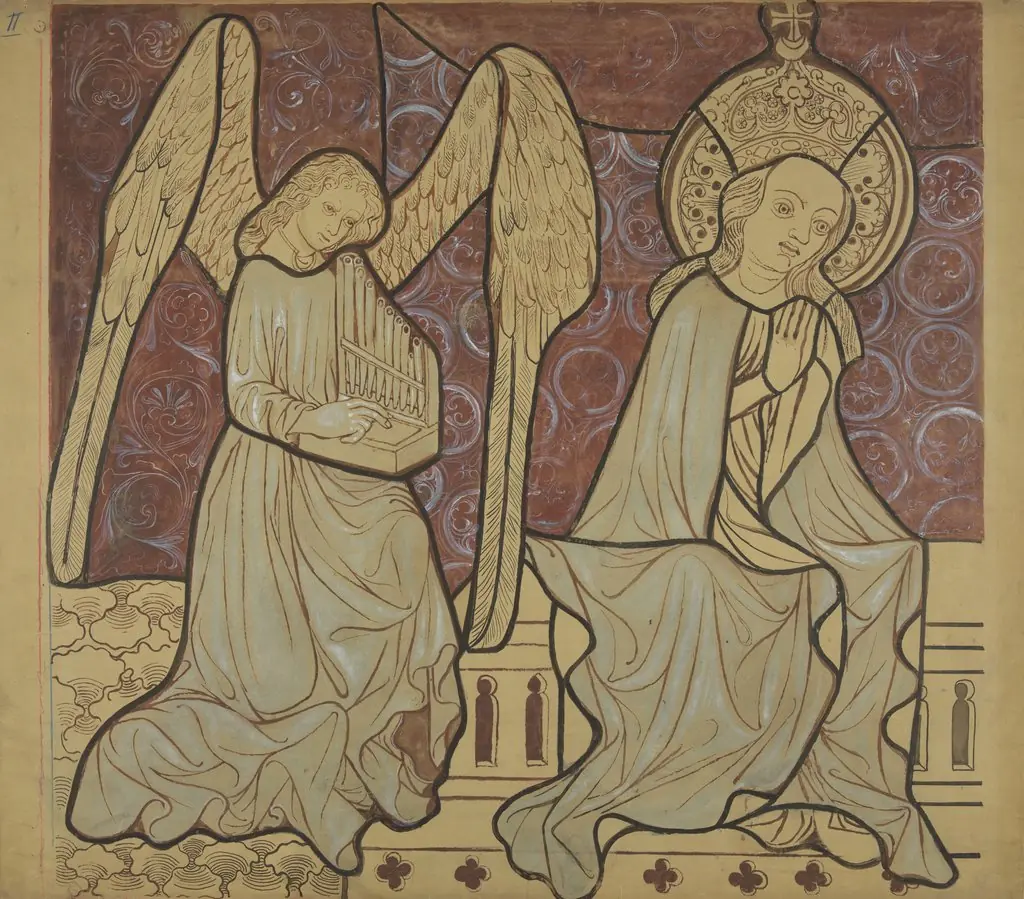 Enthroned Mary with an angel from the scene "Coronation of the Blessed Virgin Mary" (left part). Artistic reconstruction of a stained-glass panel from the Dominican church in Kraków
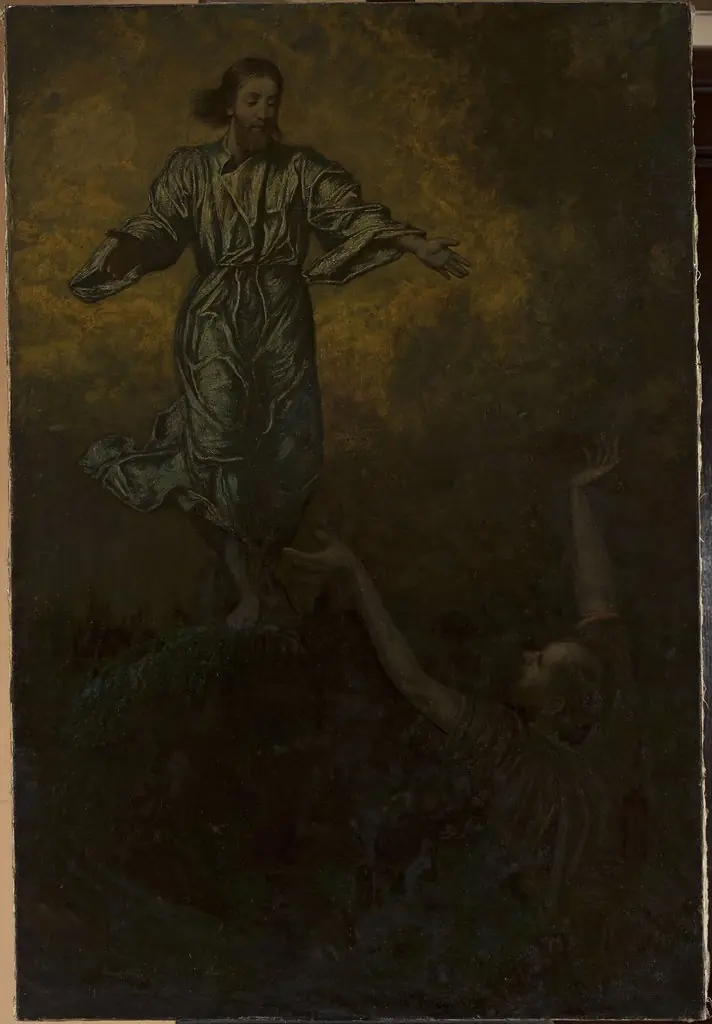 Christ and Saint Peter
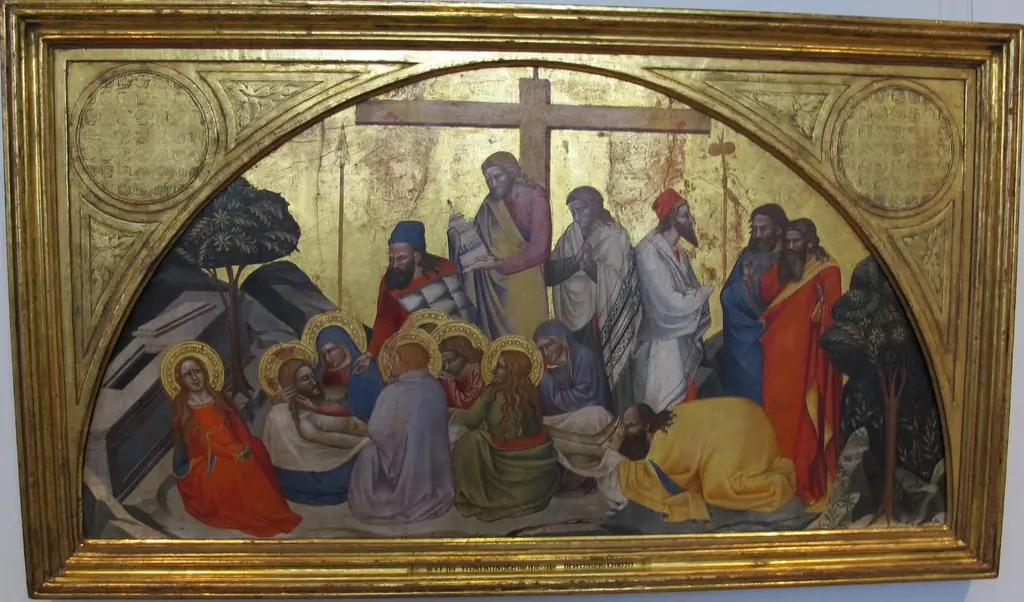 Lamentation