Artwork
Legnica polyptych - right wing external - upper panel - obverse: St Barbara, St Catherine, St Dorothy; reverse: Christ and the Samaritan
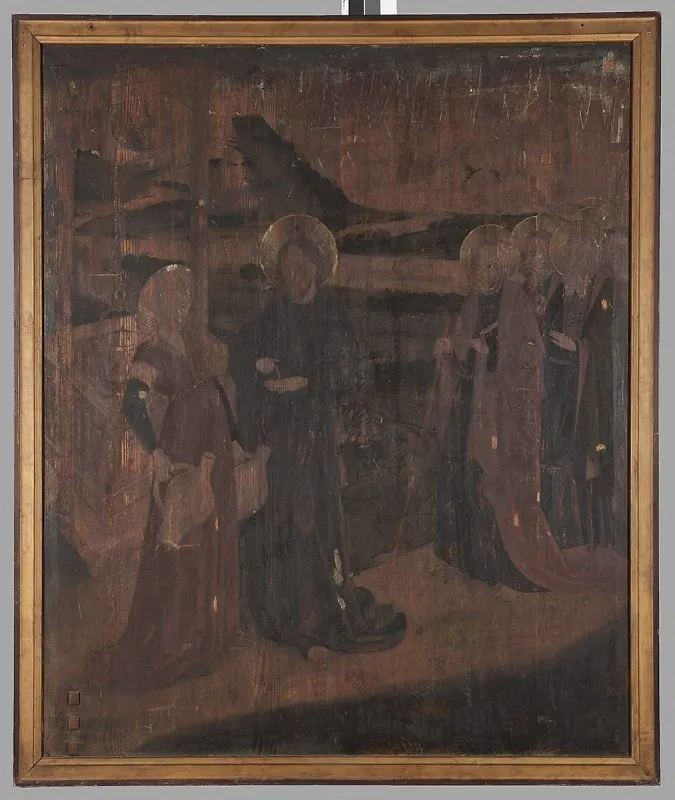
Legnica polyptych - right wing external - upper panel - obverse: St Barbara, St Catherine, St Dorothy; reverse: Christ and the Samaritan is a tempera painting by the Northern Renaissance artist Mikołaj Obilman. It dates from 1466 and is held in the collection of the National Museum in Warsaw.
About this work
Overview
The right wing of the Legnica polyptych, painted by Mikołaj Obilman in 1466, is a tempera work now conserved in the National Museum in Warsaw. The external upper panel presents a dual composition: on its front three female saints are shown, while the reverse side depicts the biblical encounter between Christ and the Samaritan woman.
Subject & Meaning
The obverse features Saint Barbara, Saint Catherine, and Saint Dorothy, each identified by their traditional attributes—Barbara with a tower, Catherine with a wheel, Dorothy with a basket of fruit—signifying virtues of faith, wisdom, and charity. The reverse illustrates the New Testament scene in which Christ engages the Samaritan woman at the well, emphasizing themes of redemption and spiritual nourishment.
Technique & Style
The figures are rendered in subdued earth tones, with halos rendered in a faint gold leaf that catches limited light.
Executed in egg tempera, the painting displays the medium's characteristic matte surface and fine linear detail. The figures are rendered in subdued earth tones, with halos rendered in a faint gold leaf that catches limited light. The overall composition is restrained, the facial expressions solemn, and the background rendered in shadowy interior space, typical of mid‑15th‑century Central European devotional art.
History & Provenance
Created in 1466 for the high altar of the Legnica collegiate church, the panel remained in the region until the 20th century, when it entered the collection of the National Museum in Warsaw. Its transfer to the museum reflects post‑war efforts to preserve Polish medieval art and to make it accessible for scholarly study.
Context
Obilman's work belongs to the late Gothic tradition flourishing in Silesia, where polyptychs served both liturgical and didactic functions. The inclusion of three virgin martyrs alongside a New Testament episode reflects a common medieval practice of juxtaposing saintly exemplars with Christ's teachings to guide the faithful.
Artist & collection
Artist
This late-medieval painter created the Legnica polyptych, a five-panel altarpiece from 1466.

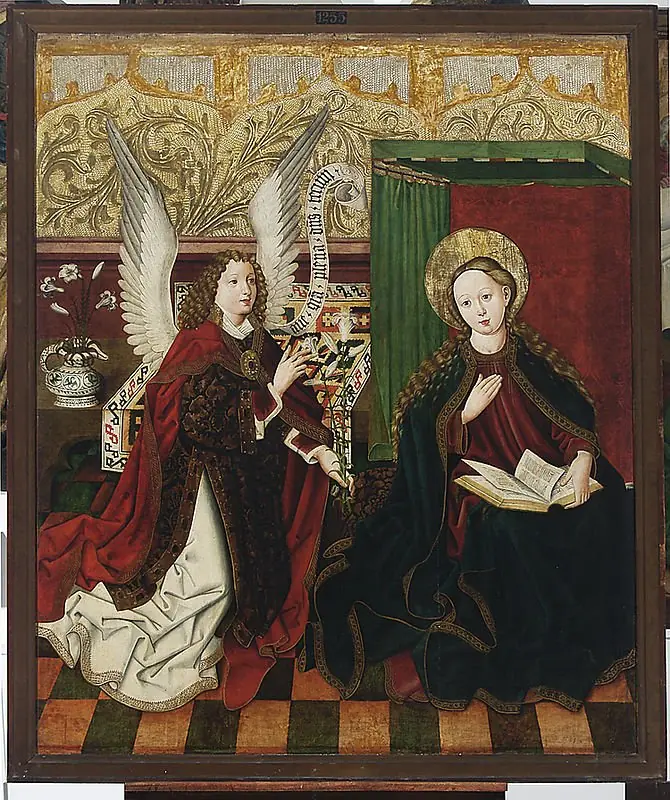 Legnica polyptych - left wing internal - upper panel - obverse: Annunciation; reverse: St Lawrence, St Vincent the Levite. St John the Baptist
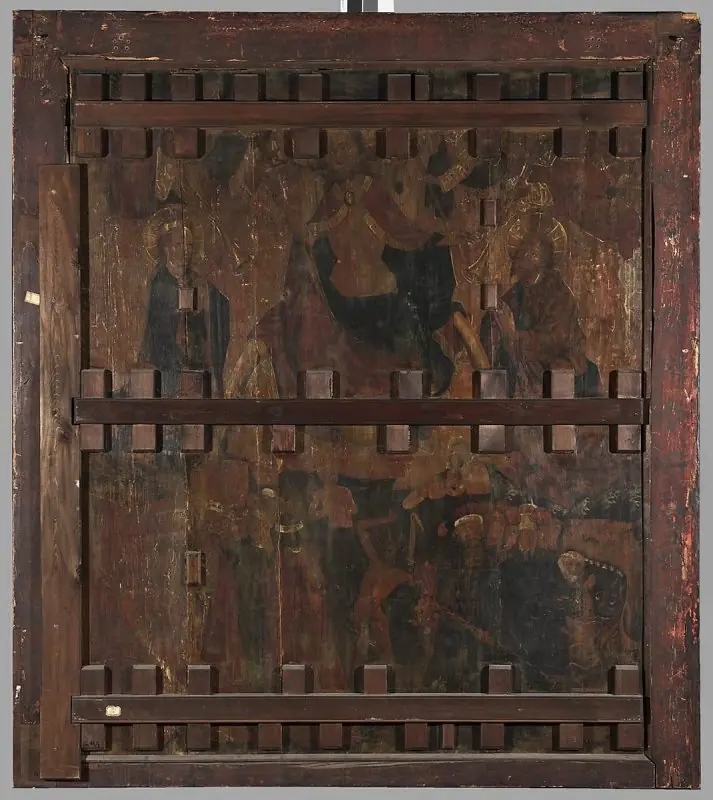 Legnica polyptych - right wing external - lower panel - obverse: Resurrection of Christ; reverse: Last judgement
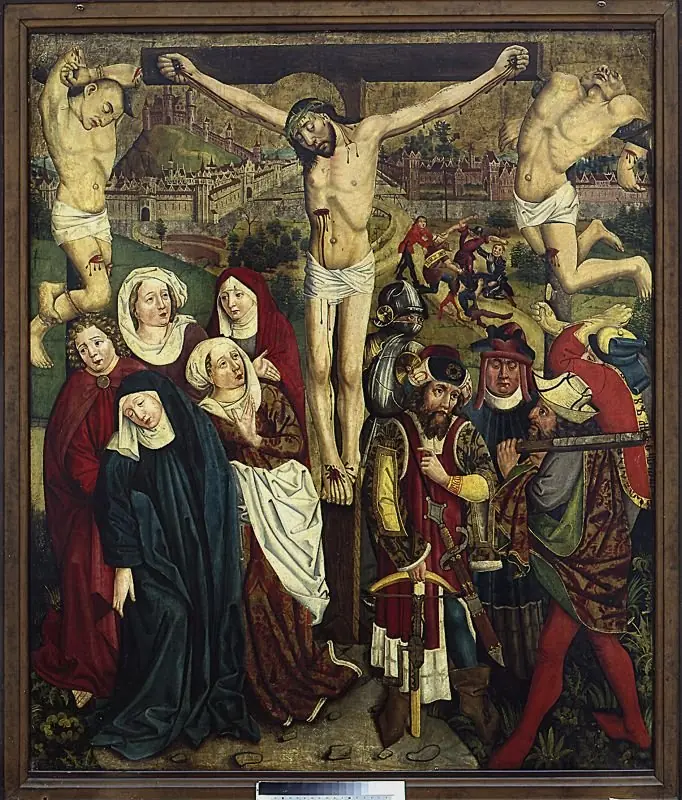 Legnica polyptych
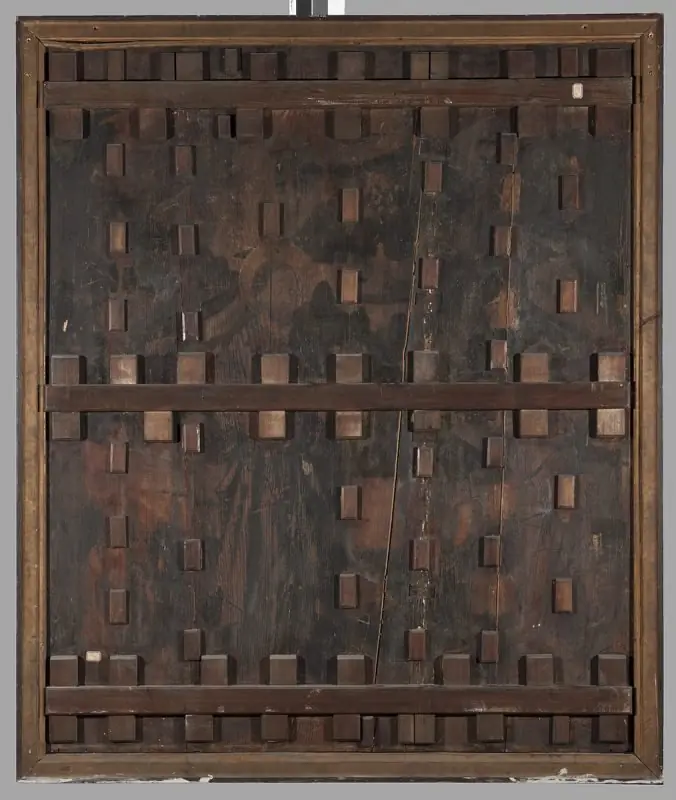 Legnica polyptych - left wing external - upper panel - obverse: St Henry, St Nicholas, St Stephen; reverse: temptation of Christ
 Our Lady of Sorrows
 Virgin and Child Adored by Saints Mary Magdalene and Nicolas of Bari; Christ Crucified with the Virgin and Saint John the Evangelist
 The Marriage of the Virgin
 Nașterea lui Isus
 St John the Evangelist
 Die Vermählung der hl. Katharina
 Madonna del Sacco
 Family of Mary
 Triptych with the Adoration of the Magi
 Untitled