Artwork
Saint Luke
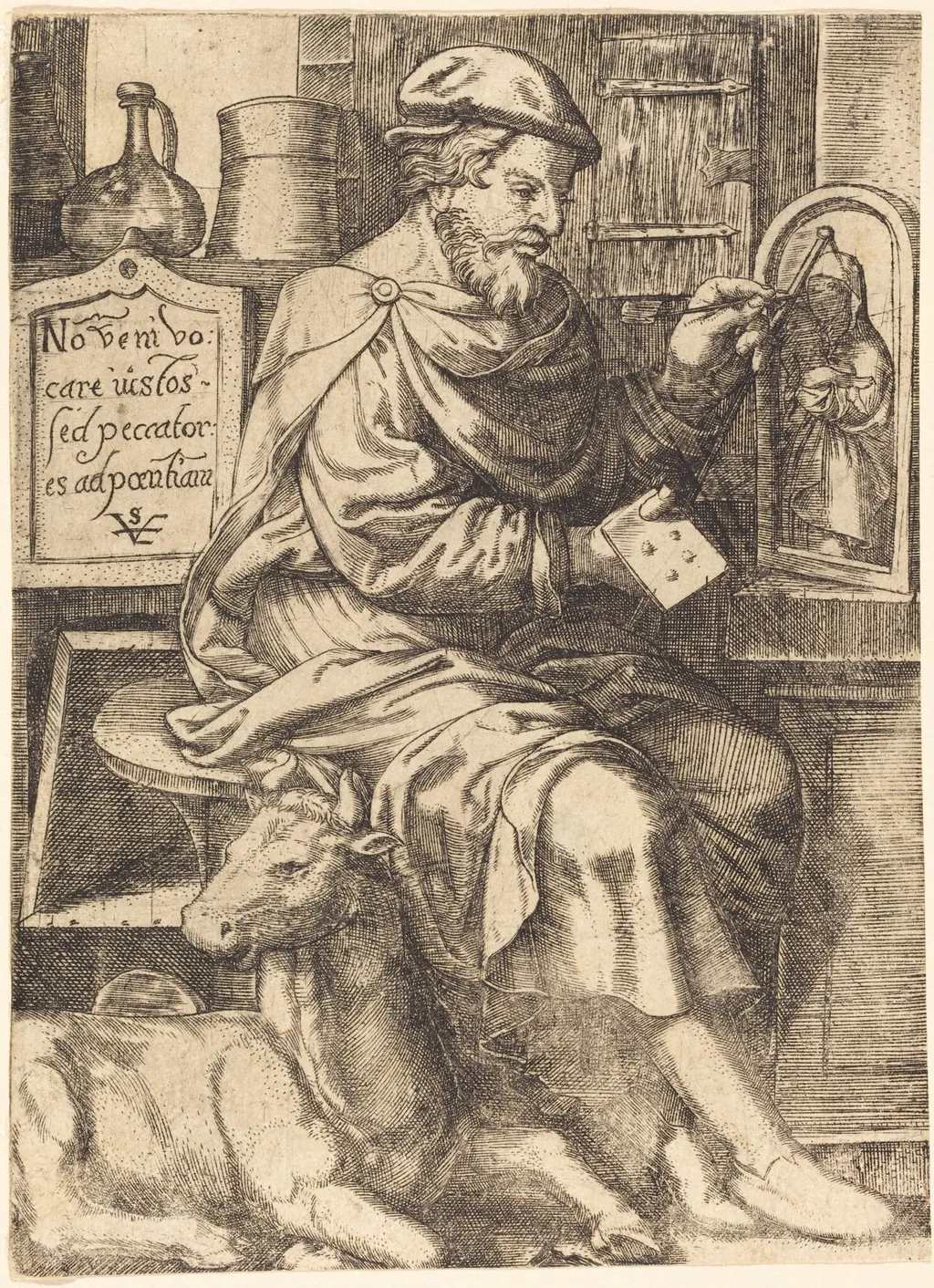
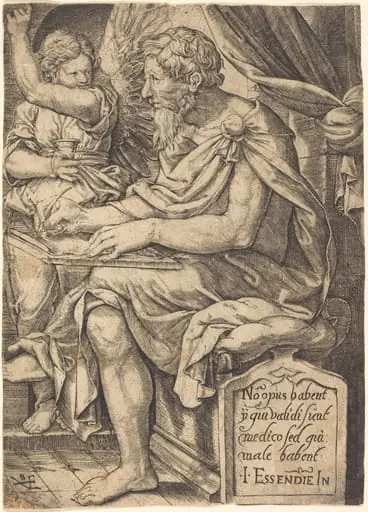
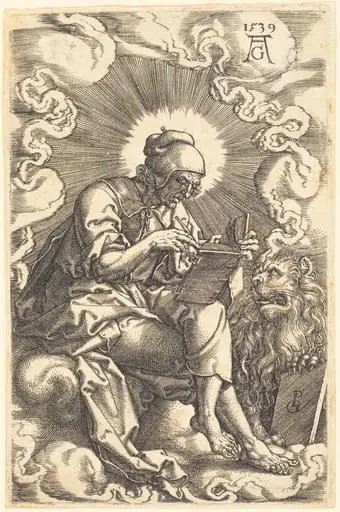
Saint Luke is an ink print by the Renaissance artist Johann Ladenspelder. It dates from 1536 and is held in the collection of the National Gallery of Art.
About this work
Overview
Created in 1536 by Johann Ladenspelder, this engraving depicts Saint Luke, traditionally regarded as the first Christian painter. Executed in fine linear detail, the work belongs to the tradition of Northern Renaissance printmaking. It captures the saint in a moment of quiet concentration, engaged in the act of painting, reflecting the period’s reverence for artistic labor as a divine calling.
Subject & Meaning
The cow at his feet alludes to his traditional association as the patron saint of artists, linked to the ox from the vision of Ezekiel.
The figure of Saint Luke, identified by his attributes, is shown composing a portrait of the Virgin Mary. The cow at his feet alludes to his traditional association as the patron saint of artists, linked to the ox from the vision of Ezekiel. The inscription on the wall likely references his role as evangelist and painter, reinforcing the spiritual significance of his craft within Christian iconography.
Technique & Style
Ladenspelder employed precise engraving techniques to render textures—fabric folds, wood grain, and fur—with meticulous line work. The composition is tightly framed, directing focus to the saint’s hands and the painting he creates. The contrast between light and shadow, achieved through controlled hatching, enhances the three-dimensionality of the figures and objects, characteristic of skilled Northern printmakers of the era.
History & Provenance
The engraving was produced during a period when religious imagery remained central to print culture, even as Reformation ideas spread. Though few records of its early ownership exist, similar works by Ladenspelder circulated among devout collectors and clergy in the Rhineland. Its survival suggests it was valued for its devotional function as much as its technical mastery.
Context
In early 16th-century Germany, artists increasingly portrayed sacred figures engaged in creative acts, aligning human craftsmanship with divine inspiration. Ladenspelder’s image reflects this trend, emerging alongside the rise of print as a medium for both religious instruction and artistic expression. The depiction of Luke as a painter resonated with contemporary guilds that saw their trade as spiritually elevated.
Legacy
Though Ladenspelder is less known than contemporaries like Dürer, this engraving exemplifies the quiet dignity accorded to artisanal labor in Renaissance religious art. It contributed to the enduring visual trope of Saint Luke at his easel, influencing later depictions in painting and print. The work remains a testament to the integration of faith, craft, and literacy in early modern European culture.
Artist & collection