Artwork
Saint Mark
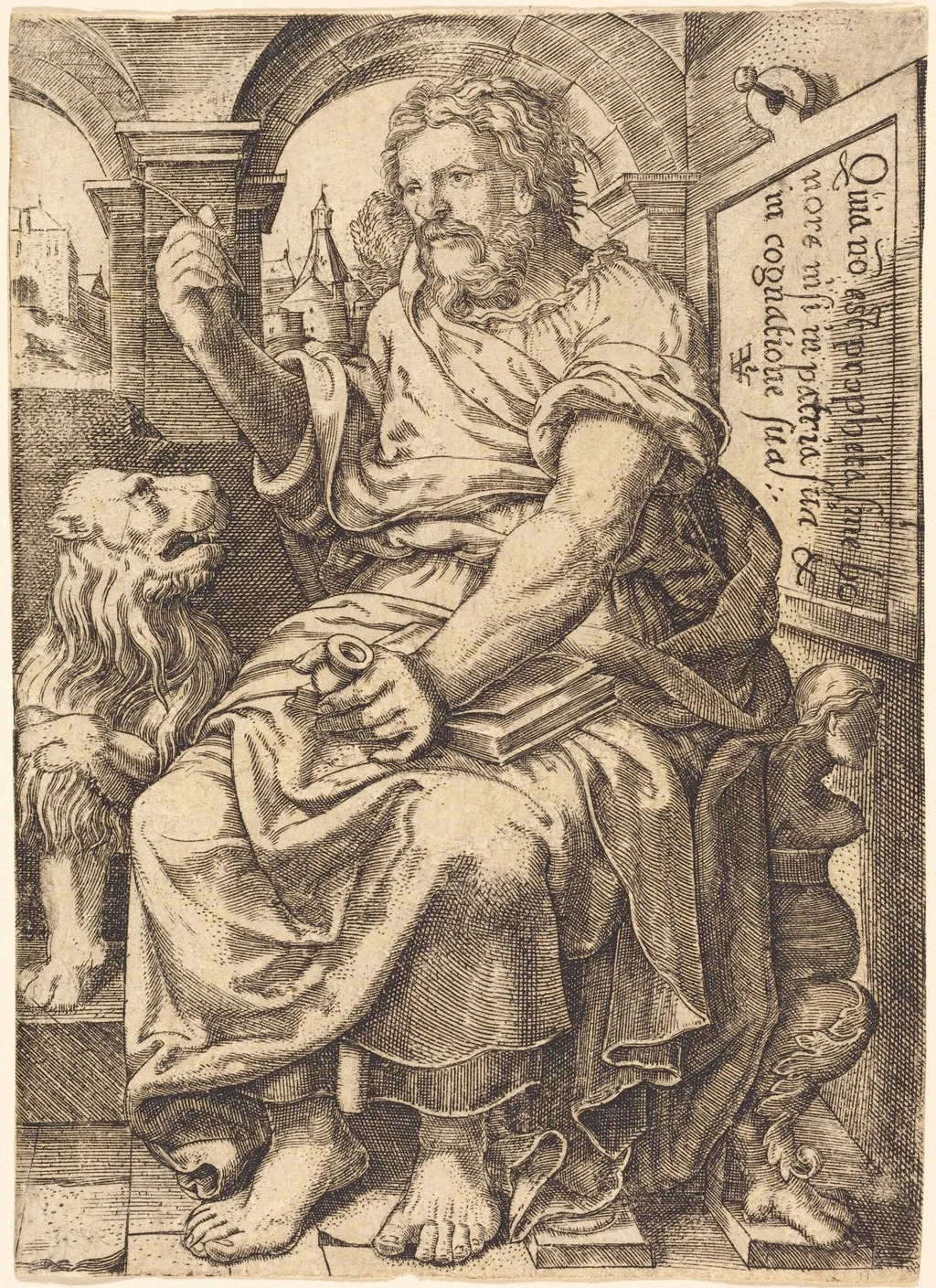
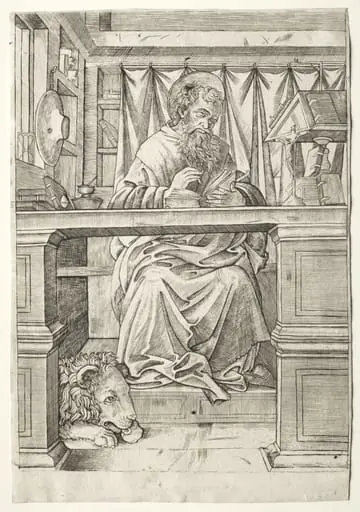
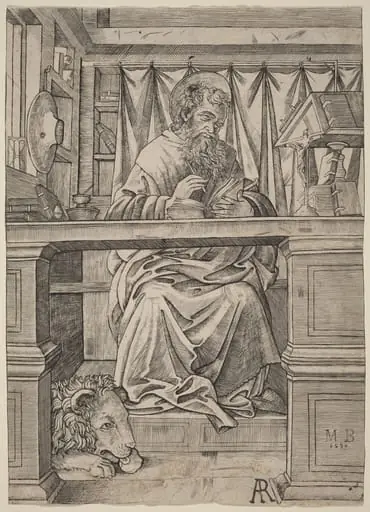
Saint Mark is an ink print by the Renaissance artist Johann Ladenspelder. It dates from 1536 and is held in the collection of the National Gallery of Art.
About this work
Overview
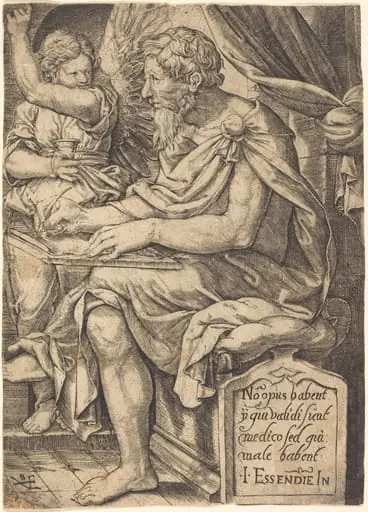
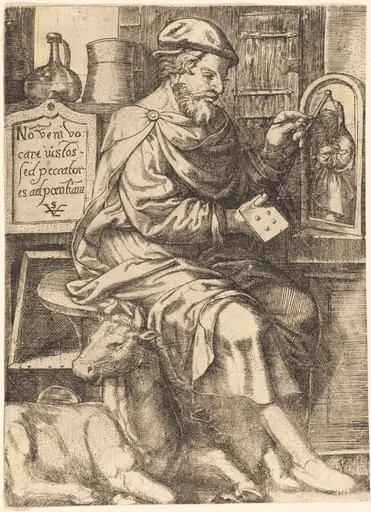
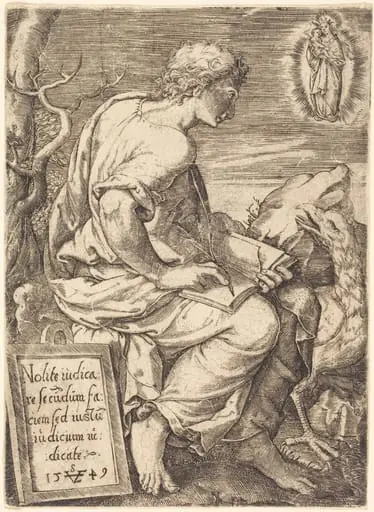
Johann Ladenspelder’s 1536 engraving presents the evangelist Saint Mark seated in a chair, his right hand raised as if addressing the viewer. He wears a long robe, holds a small object, and rests a book on his lap, while a lion stands at his left. An arched opening behind him frames a distant cityscape, adding depth to the composition.
Subject & Meaning
The figure represents Saint Mark, traditionally associated with a lion, a symbol of his gospel’s opening. The book underscores his role as author of the Gospel, and the raised hand suggests teaching or proclamation. The surrounding architecture and city view may allude to his missionary journeys and the spread of Christian doctrine.
Technique & Style
Executed as a copper engraving, the work displays the fine line work and meticulous detail characteristic of Northern Renaissance printmaking. Ladenspelder’s handling of hatching creates subtle tonal variations, rendering the textures of fabric, fur, and stone with a realistic sensibility.
History & Provenance
Created in 1536, the print was produced during Ladenspelder’s active period in Augsburg, where he worked as a goldsmith and engraver. Surviving copies are held in several European collections, reflecting the work’s circulation among collectors of religious prints in the sixteenth century.
Context
The engraving aligns with the broader Renaissance interest in humanist scholarship and the visual representation of saints. Its detailed realism and incorporation of architectural perspective echo contemporary developments in painting and print, while the inclusion of symbolic attributes follows established iconographic conventions.
Artist & collection