Artwork
Saint Matthew
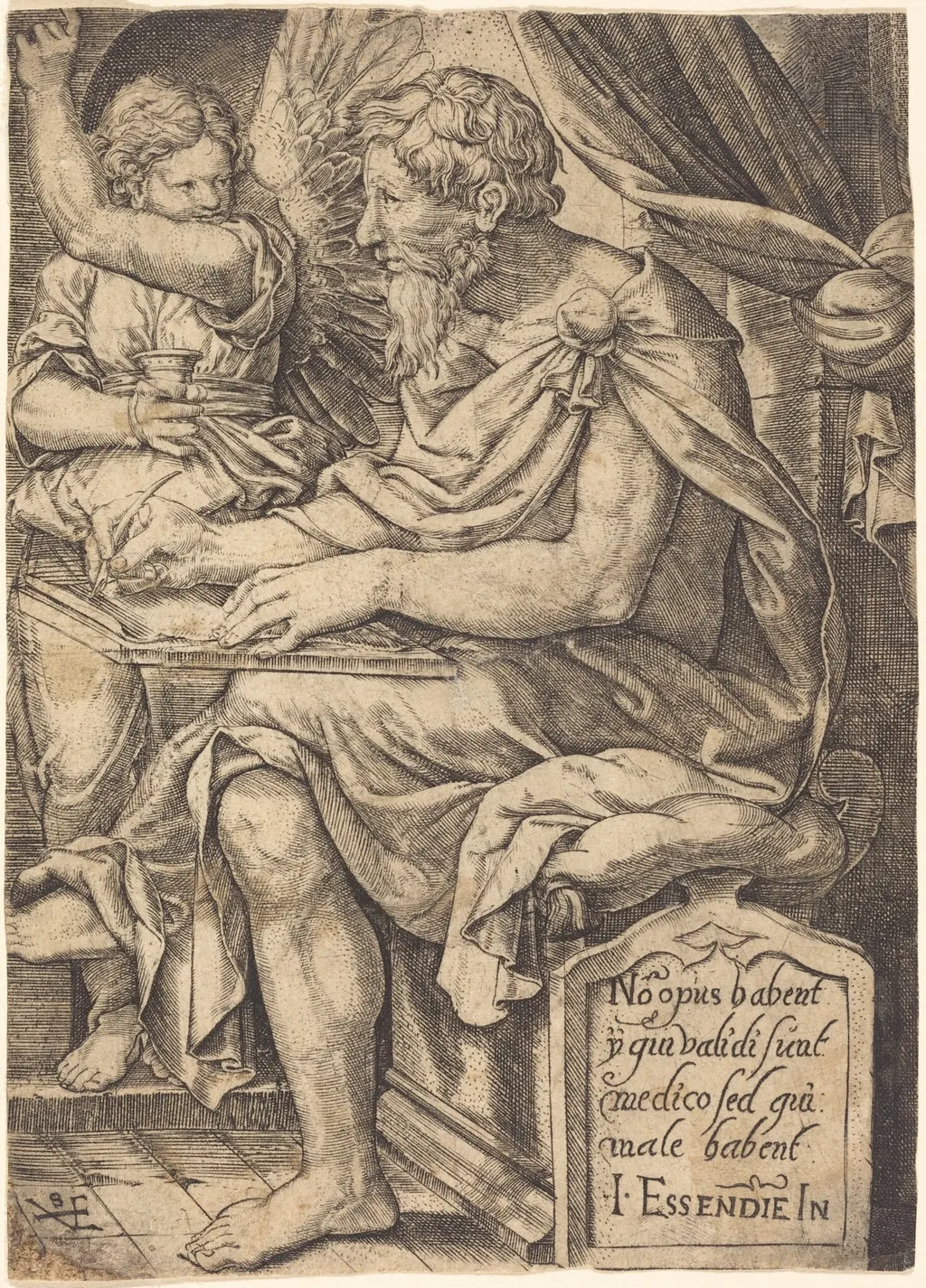
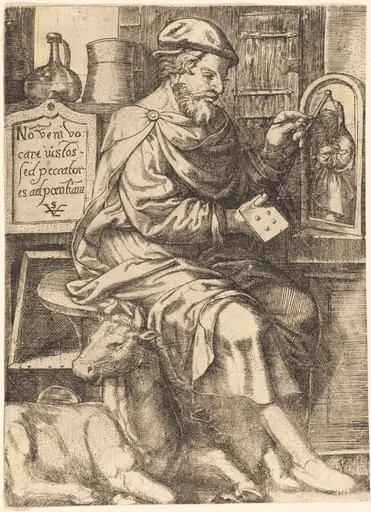
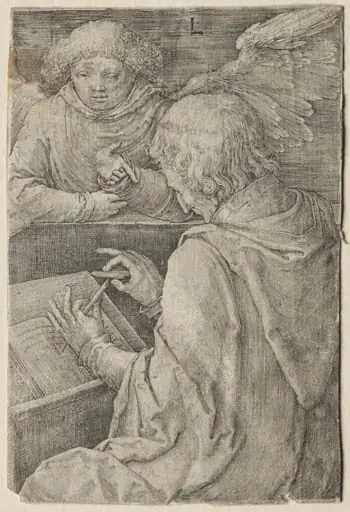
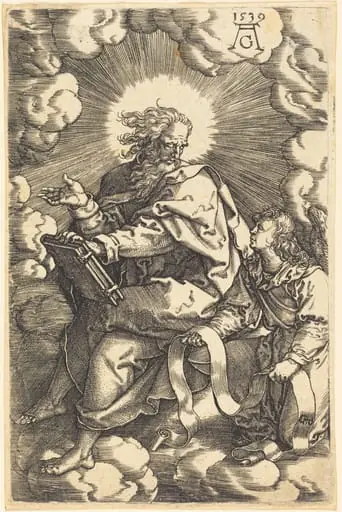
Saint Matthew is an ink print by the Renaissance artist Johann Ladenspelder. It dates from 1536 and is held in the collection of the National Gallery of Art.
About this work
Overview
The composition centers on the saint’s quiet intensity, framed by subtle environmental details that ground the figure in a tangible space.
Created in 1536, this engraving by Johann Ladenspelder depicts Saint Matthew as a contemplative elder. Rendered in fine ink lines on paper, the work belongs to the tradition of Northern Renaissance printmaking. The artist employed meticulous cross-hatching to model form and depth, transforming a metal plate into a detailed visual narrative. The composition centers on the saint’s quiet intensity, framed by subtle environmental details that ground the figure in a tangible space.
Subject & Meaning
The figure of Saint Matthew, traditionally regarded as the evangelist and author of the first Gospel, is shown in a moment of scholarly reflection. Beside him, a young child leans toward the open book, suggesting the transmission of sacred knowledge across generations. The presence of the child may allude to divine wisdom revealed through humility or the innocence of faith. The Latin inscription in the corner likely identifies the subject or cites a scriptural passage, reinforcing the devotional purpose of the image.
Technique & Style
Ladenspelder used fine, controlled engraving lines to build volume and texture, particularly in the heavy folds of the saint’s robe and the dense strands of his beard. The contrast between smooth skin and intricate fabric is achieved through varying line density and direction. Shadows are not applied as tones but constructed from intersecting strokes, giving the scene a sculptural quality. The technique reflects the precision expected in religious prints of the period, where clarity and legibility were paramount.
History & Provenance
The engraving was produced in the mid-1530s, during a time when printed religious imagery was widely circulated among educated laypeople in Northern Europe. While specific early ownership records are scarce, similar works by Ladenspelder were distributed through regional print markets, often used for private devotion or teaching. The survival of this impression suggests it was carefully preserved, likely within a devotional or scholarly context.
Context
This print emerged during the Protestant Reformation, when visual representations of saints were contested yet still produced, especially in regions with lingering Catholic traditions. Engravings like this served both devotional and didactic roles, offering accessible images of biblical figures to those who could not read Latin. Ladenspelder’s work aligns with a broader trend of integrating humanist detail into religious subjects, blending spiritual gravity with naturalistic observation.
Legacy
Though not widely known today, Ladenspelder’s engravings contributed to the visual vocabulary of religious printmaking in 16th-century Germany. His attention to texture and psychological presence influenced later artists working in the medium. This piece remains a quiet example of how printmakers translated sacred narratives into intimate, tactile forms, bridging the gap between liturgical tradition and individual contemplation.
Artist & collection