Artwork
Bas-relief depicting a Gorgon Head in terra cotta
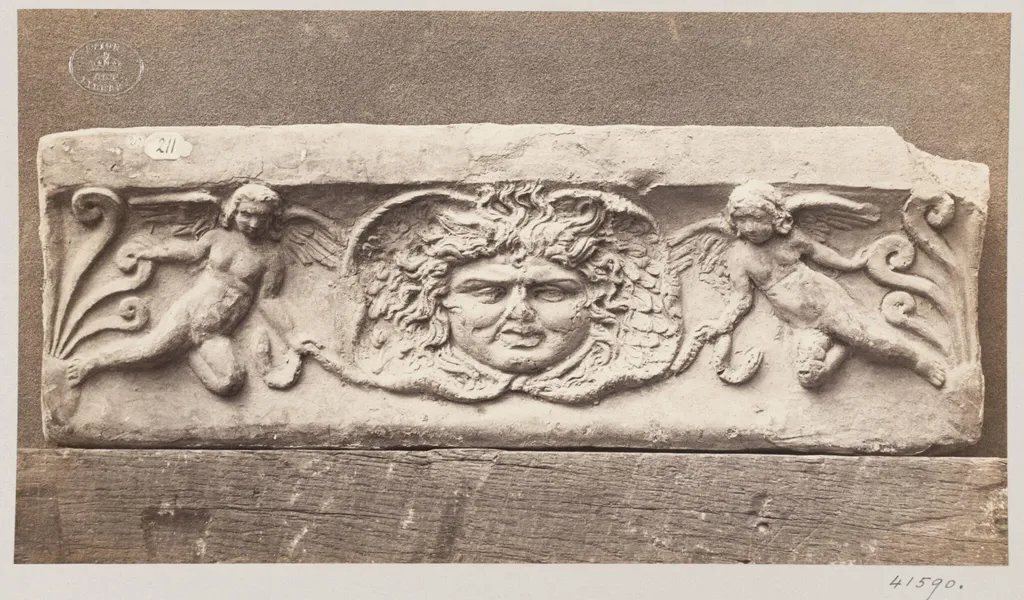
Bas-relief depicting a Gorgon Head in terra cotta is a photographic photography by the Impressionist artist Louise Laffon. It dates from 1864 and is held in the collection of the Victoria and Albert Museum. This photograph is part of the Victoria and Albert Museum’s early institutional effort to use photography as an educational tool.
About this work
Overview
This photograph is part of the Victoria and Albert Museum’s early institutional effort to use photography as an educational tool.
This photograph is part of the Victoria and Albert Museum’s early institutional effort to use photography as an educational tool. Acquired in 1864, it documents a terra cotta bas-relief of a Gorgon head, originally from the Campana Collection in Paris. The image was produced by Louise Laffon, one of the first professional female photographers in France, and purchased through an agent to expand the museum’s visual reference materials for artists and students.
Subject & Meaning
The subject is a classical Gorgon head, likely Medusa, rendered in low relief with stylized features typical of ancient Greek and Roman decorative art. Such imagery served as apotropaic symbolism in antiquity, meant to ward off harm. The photograph preserves the relief’s form and texture, not as an artistic interpretation, but as a documentary record for study, emphasizing its role in academic training rather than aesthetic display.
Technique & Style
Laffon’s photograph employs the albumen print process, common in mid-19th-century photographic documentation. The image captures fine surface details of the terra cotta relief with clarity, using controlled lighting to highlight sculptural depth. The composition is frontal and neutral, avoiding dramatic angles or embellishment, reflecting the photograph’s function as an archival and instructional resource rather than an expressive work.
History & Provenance
The photograph originated in a series documenting objects from the Campana Collection at the Musée Napoléon III in Paris. Louise Laffon, a member of Le Société Française de la Photographie, produced the series between 1860 and 1864. In 1864, the South Kensington Museum (later the V&A) acquired 500 images from this set through the Parisian agent E. Cappe, integrating them into its growing photographic archive for educational use.
Context
During the 1850s and 1860s, the V&A actively built a photographic collection to support design education, supplementing casts and drawings. Female photographers like Laffon and Isabel Agnes Cowper were instrumental in this effort, though their contributions were often unacknowledged. Laffon’s work exemplifies how international networks of photographers supplied the museum with high-quality documentation of continental antiquities, expanding its pedagogical reach.
Legacy
The photograph remains part of the V&A’s historical archive, representing one of the earliest institutional uses of photography for art historical study. Laffon’s role as a female professional in a male-dominated field underscores the quiet but significant contributions of women to museum practices. Her work helped establish photography as a standard tool for documentation, influencing how museums preserve and disseminate knowledge of material culture.
Artist & collection
Artist
Louise Laffon (1828–1885), was a French photographer and painter. She was one of the first female professional photographers in France. She had a studio in Paris between 1859 and 1876.

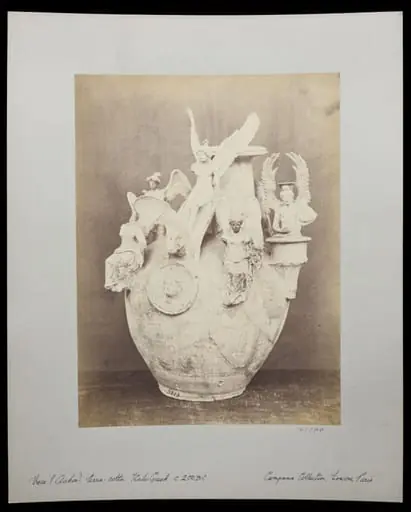 Perfume Burner in terra cotta
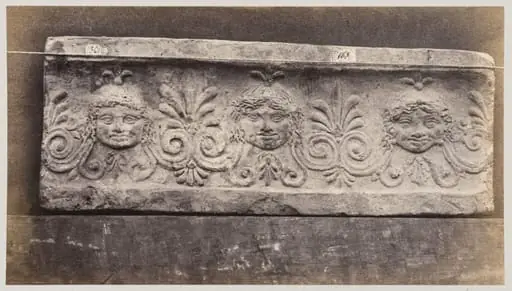 Three masques of gorgons in terra cotta
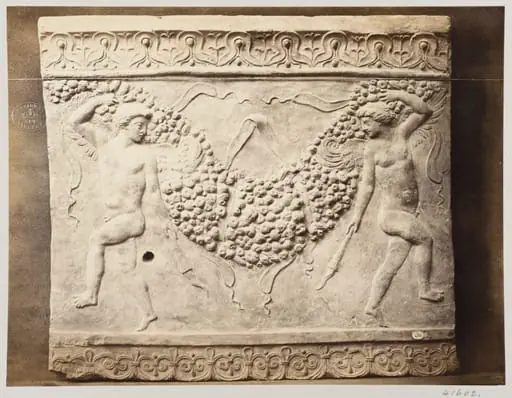 Bas-relief of portion of frieze of dancing figures with torches bearing festoon of fruit in terra cotta
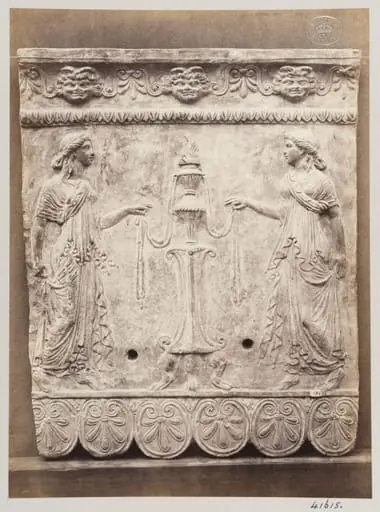 Bas-relief portion of a frieze of two draped females and an altar in terra cotta
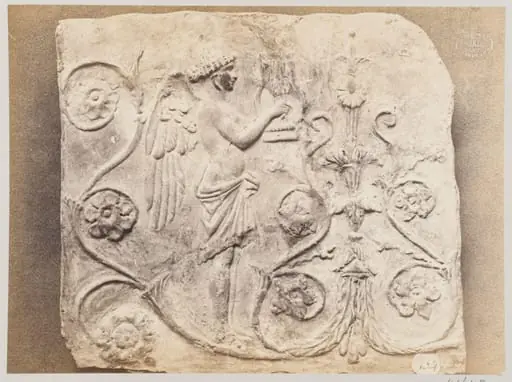 Bas-relief of a geni and a lyre in terra cotta
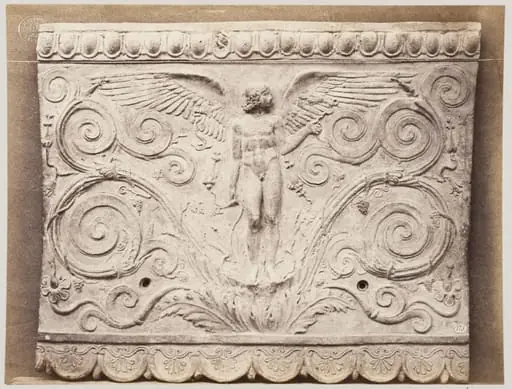 Bas-relief of a portion of frieze of Eros with scrollwork in terra cotta
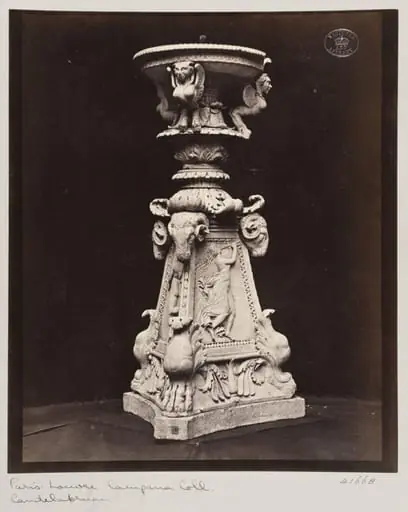 Marble sculptured fountain
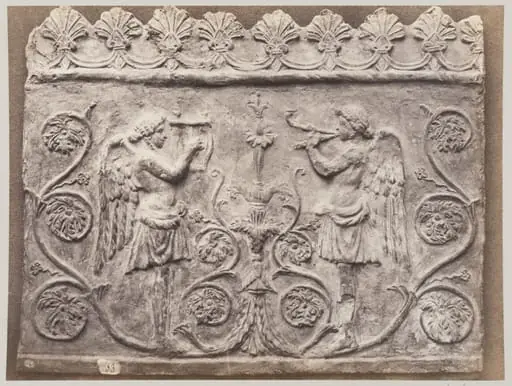 Bas-relief portion of frieze of Genii with double flutes and lyre
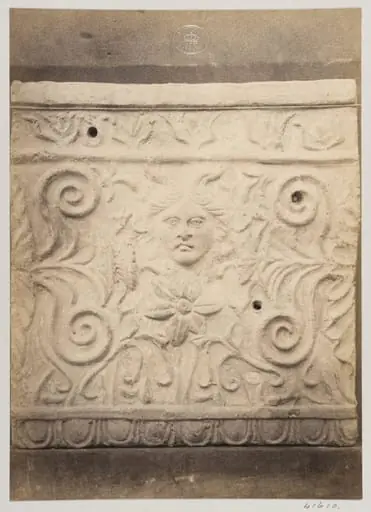 Bas-relief portion of a frieze with a mask in terra cotta
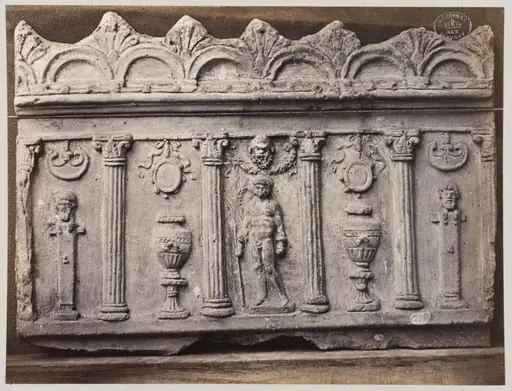 Bas-relief of a figure with bust, vessels and columns in terra cotta
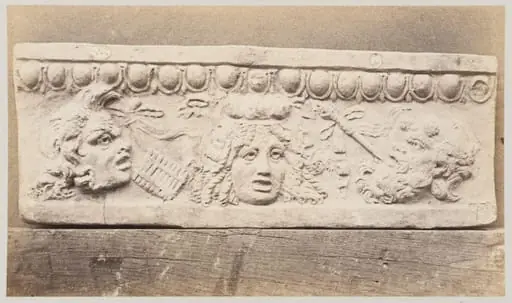 Bas-relief portion of frieze with theatrical masks in terra cotta
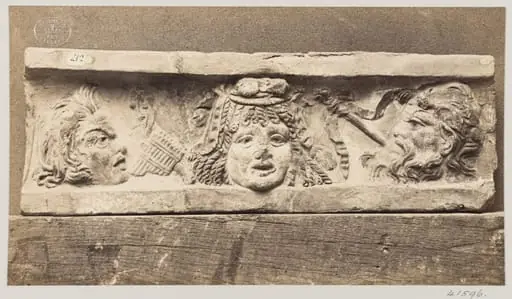 Bas-relief of three masques in terra cotta
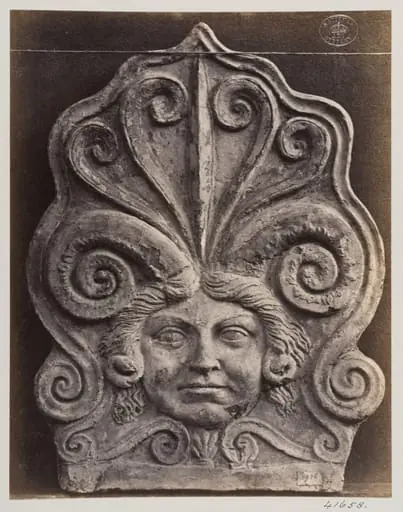 Bas-relief antifixa of a gorgon in terra cotta
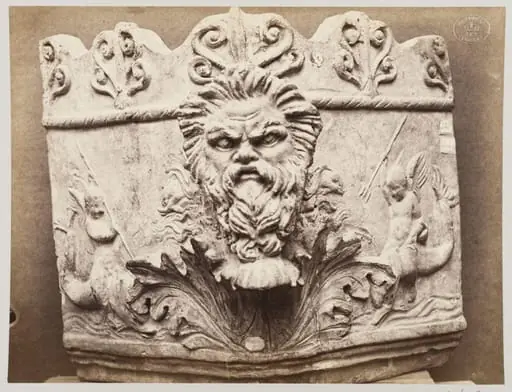 Bas-relief portion of frieze with mask of Satyr in terra cotta
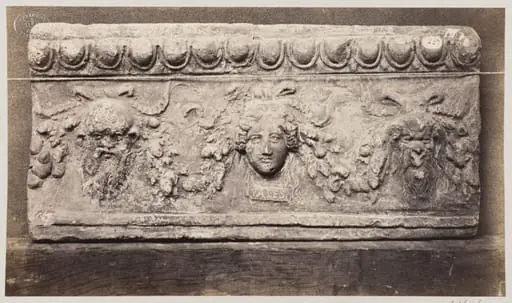 Bas-relief of three baccanalian masques in terra cotta
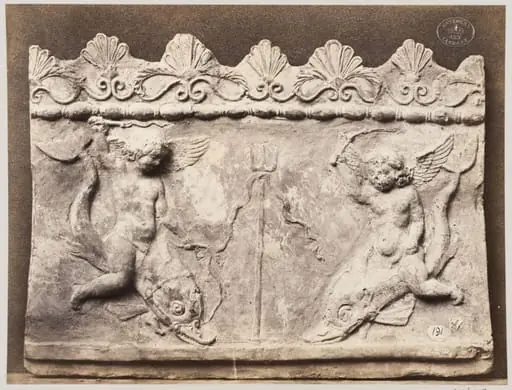 Bas-relief of two figures of Neptune in terra cotta
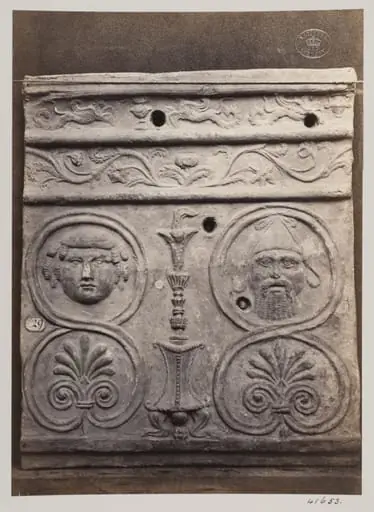 Bas-relief of a portion of a frieze of a thymiaterion and bacanallian masks in terra cotta