Artwork
Bas-relief portion of a frieze of a flying genie in terra cotta
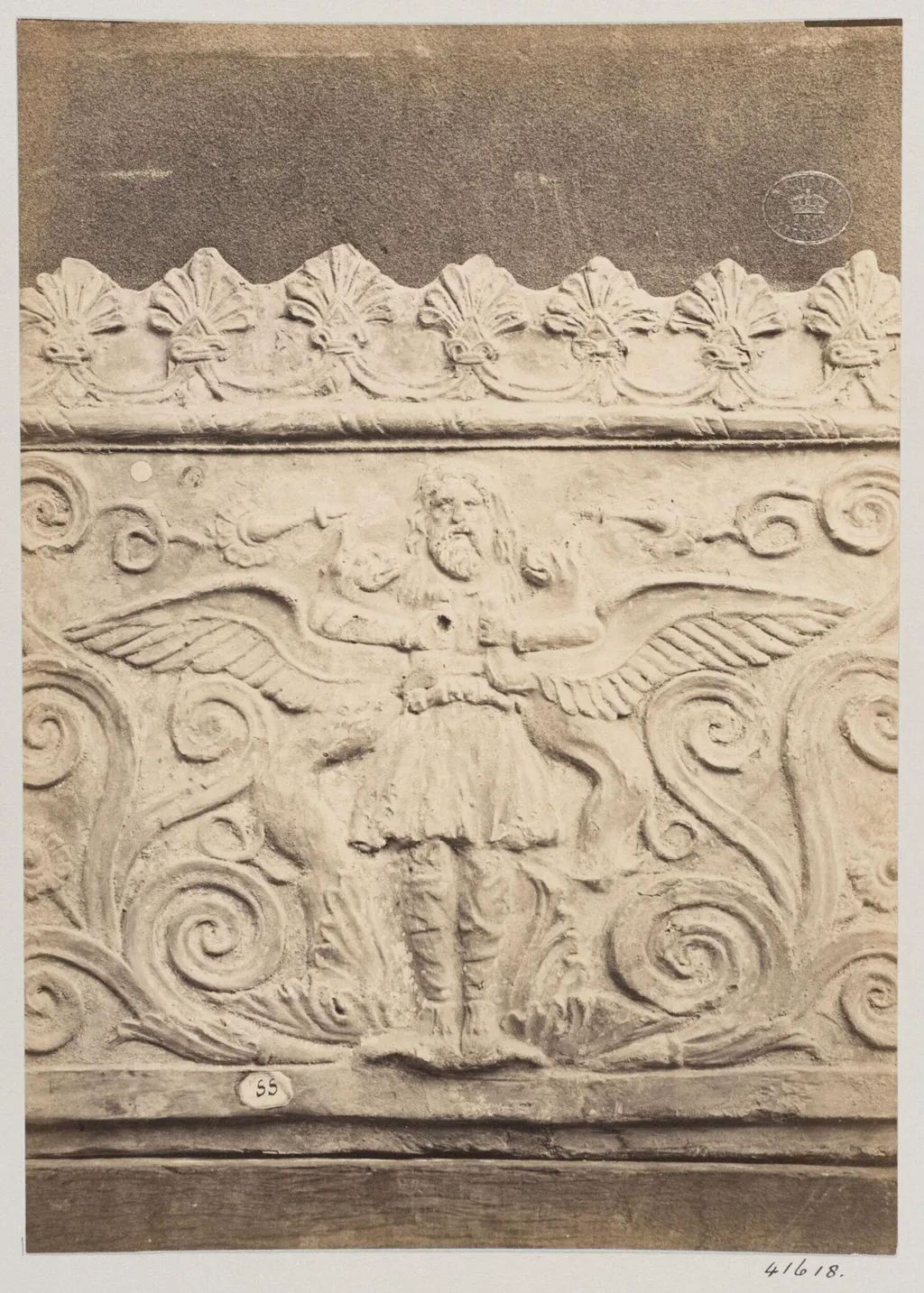
Bas-relief portion of a frieze of a flying genie in terra cotta is a photographic photography by the Impressionist artist Louise Laffon. It dates from 1864 and is held in the collection of the Victoria and Albert Museum. This photograph captures a terra cotta bas-relief depicting a flying genie, originally part of a larger architectural frieze.
About this work
The museum began collecting photos in 1852 and soon used them to help artists and students.
This terra cotta bas-relief frieze shows a flying genie, carved in delicate detail. The work comes from 1863–1864, made by Louise Laffon, a French photographer and artist. A small putto figure appears in the scene, adding a playful touch.
Laffon’s piece sits in the Victoria and Albert Museum’s early photography collection. The museum began collecting photos in 1852 and soon used them to help artists and students. This genie relief shows how photography and sculpture overlapped in that era.
Check out more works by Louise Laffon next.
Overview
This photograph captures a terra cotta bas-relief depicting a flying genie, originally part of a larger architectural frieze. Created in 1863–1864 by French photographer Louise Laffon, the image was acquired by the Victoria and Albert Museum in 1864 as part of a batch of 500 photographs sourced from her series documenting the Campana Collection in Paris. The work reflects the museum’s early commitment to using photography as an educational tool for artists and designers.
Subject & Meaning
The relief portrays a winged, human-like figure, likely drawn from Assyrian or Near Eastern iconography, hovering above a small putto. The juxtaposition of the divine or supernatural being with the playful child suggests a narrative of protection or whimsical guardianship. Laffon’s photograph preserves the intricate carving details, emphasizing the symbolic richness of ancient decorative arts as interpreted through 19th-century European collecting practices.
Technique & Style
Laffon employed the albumen print process, common in mid-19th-century photography, to render fine surface textures with clarity. Her composition isolates the relief against a neutral background, prioritizing documentary precision over artistic embellishment. The lighting is even and controlled, allowing the carved contours and weathering of the terra cotta to be clearly visible, aligning with the museum’s goal of accurate visual documentation for study.
History & Provenance
The photograph was purchased by the V&A in 1864 through Parisian agent E. Cappe, as part of a larger acquisition from Laffon’s series of the Campana Collection. Laffon, one of the earliest documented female members of Le Société Française de la Photographie, contributed to institutional efforts to build visual archives. The image entered the museum’s National Art Library collection, where it served scholars and designers alongside other photographic reproductions.
Context
In the 1860s, museums increasingly turned to photography to expand access to artworks beyond physical visitation. The V&A, among the first to collect photographs, used them to support design education and cross-cultural study. Laffon’s work exemplifies how European institutions relied on international photographers to document antiquities, bridging archaeological discovery and artistic training through reproducible imagery.
Legacy
Laffon’s photograph remains a key example of early institutional photography’s role in art education. It illustrates how women photographers, often overlooked, contributed significantly to museum archives. The image endures not as art in itself, but as a functional record that facilitated the transmission of historical design motifs to 19th-century designers, shaping the study of ornament and form.
Artist & collection
Artist
Louise Laffon (1828–1885), was a French photographer and painter. She was one of the first female professional photographers in France. She had a studio in Paris between 1859 and 1876.

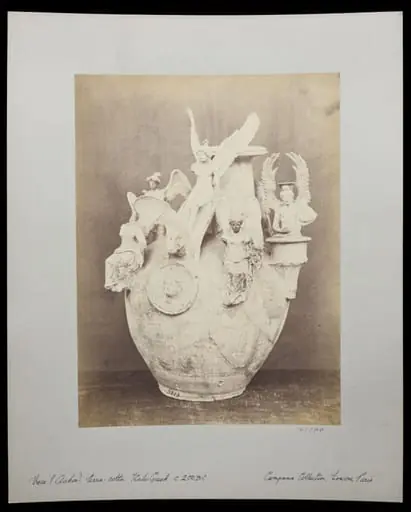 Perfume Burner in terra cotta
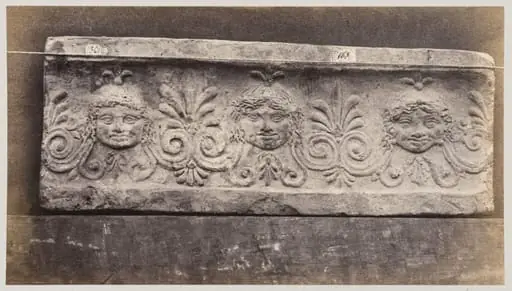 Three masques of gorgons in terra cotta
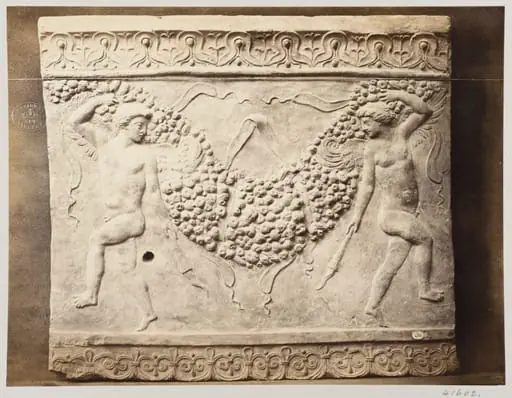 Bas-relief of portion of frieze of dancing figures with torches bearing festoon of fruit in terra cotta
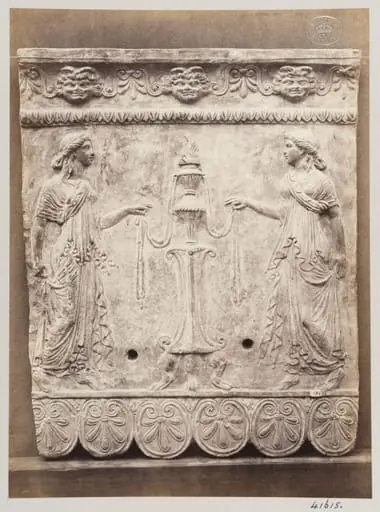 Bas-relief portion of a frieze of two draped females and an altar in terra cotta
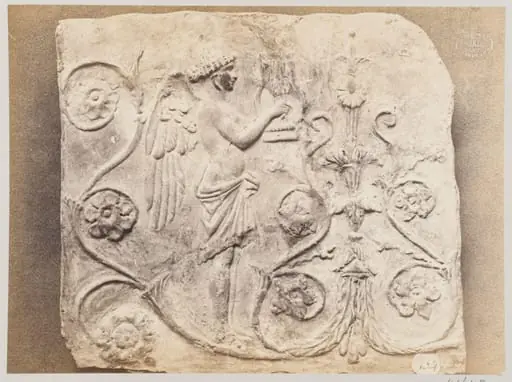 Bas-relief of a geni and a lyre in terra cotta
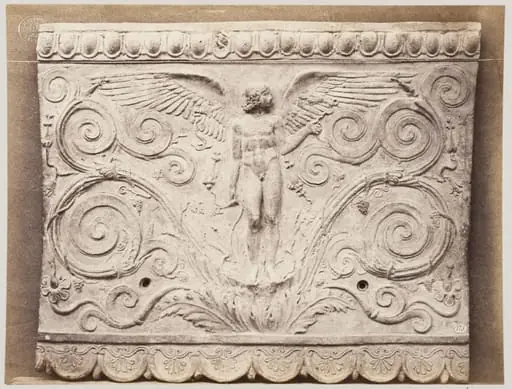 Bas-relief of a portion of frieze of Eros with scrollwork in terra cotta
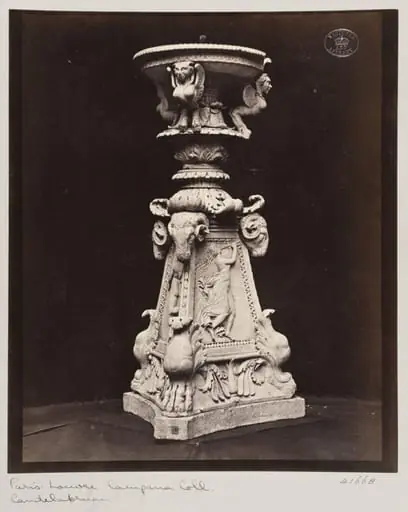 Marble sculptured fountain
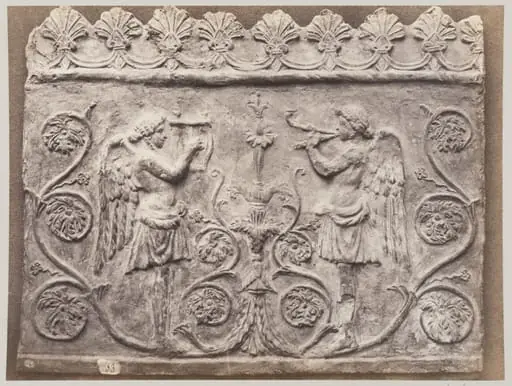 Bas-relief portion of frieze of Genii with double flutes and lyre
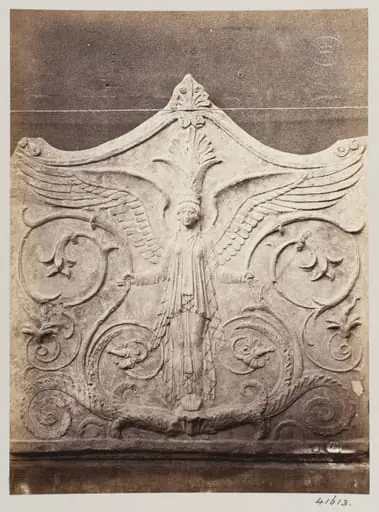 Bas-relief portion of a frieze of a winged figure with foliage in terra cotta
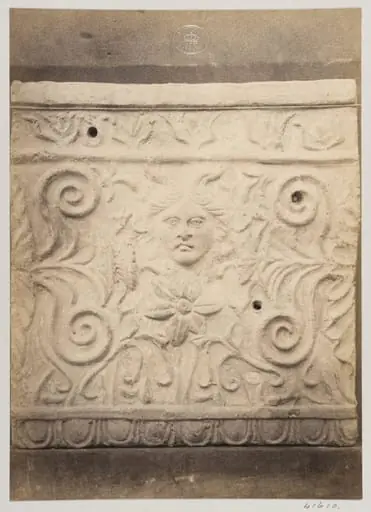 Bas-relief portion of a frieze with a mask in terra cotta
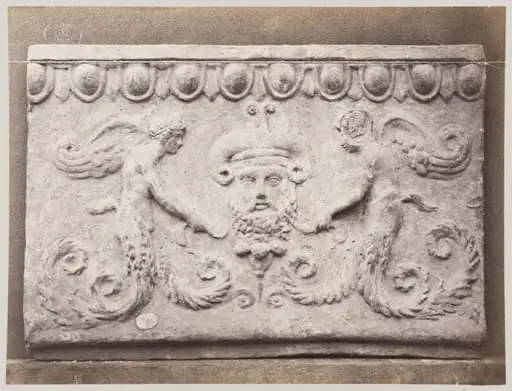 Bas-relief portion of frieze of masque of Ammon and genii in terra cotta
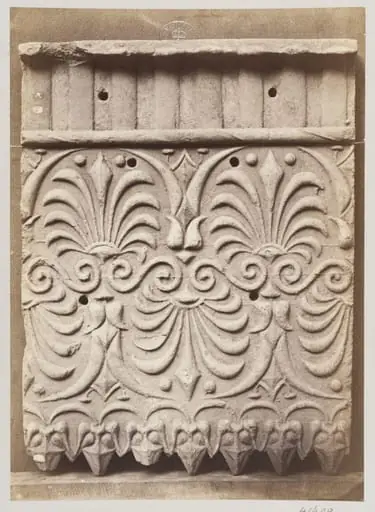 Bas-relief portion of a frieze of honeysuckle in terra cotta
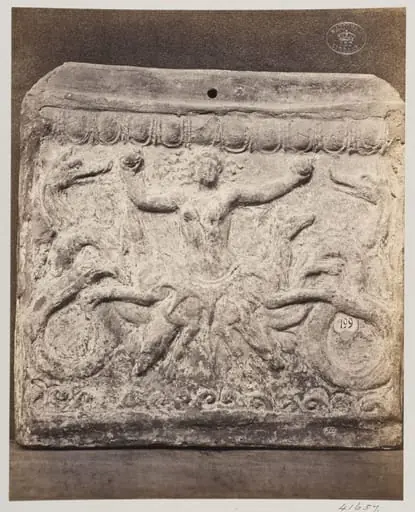 Bas-relief portion of a frieze of Scylla in terra cotta
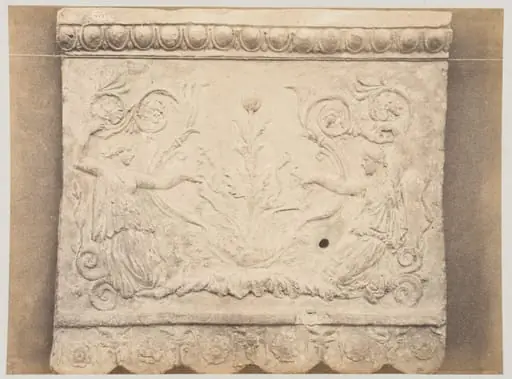 Bas-relief portion of frieze of nymphs with scrollwork in terra cotta
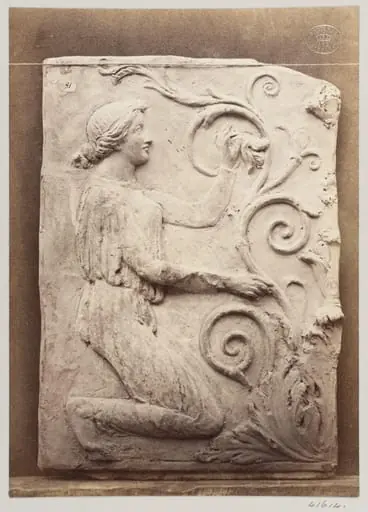 Bas-relief portion of a frieze of a female figure and foliage in terra cotta
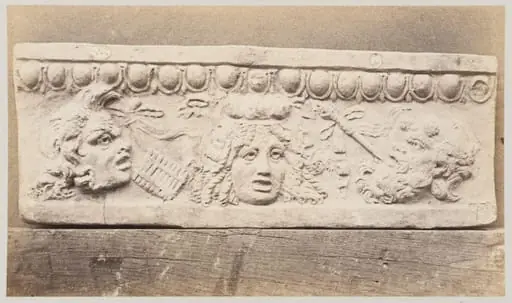 Bas-relief portion of frieze with theatrical masks in terra cotta
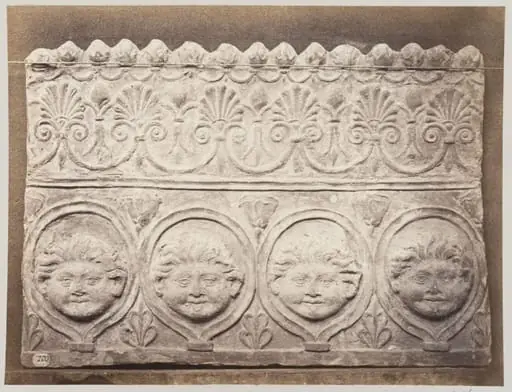 Bas-relief portion of a frieze of four masked young satyrs in terra cotta