Artwork
Bas-relief portion of a frieze of four masked young satyrs in terra cotta
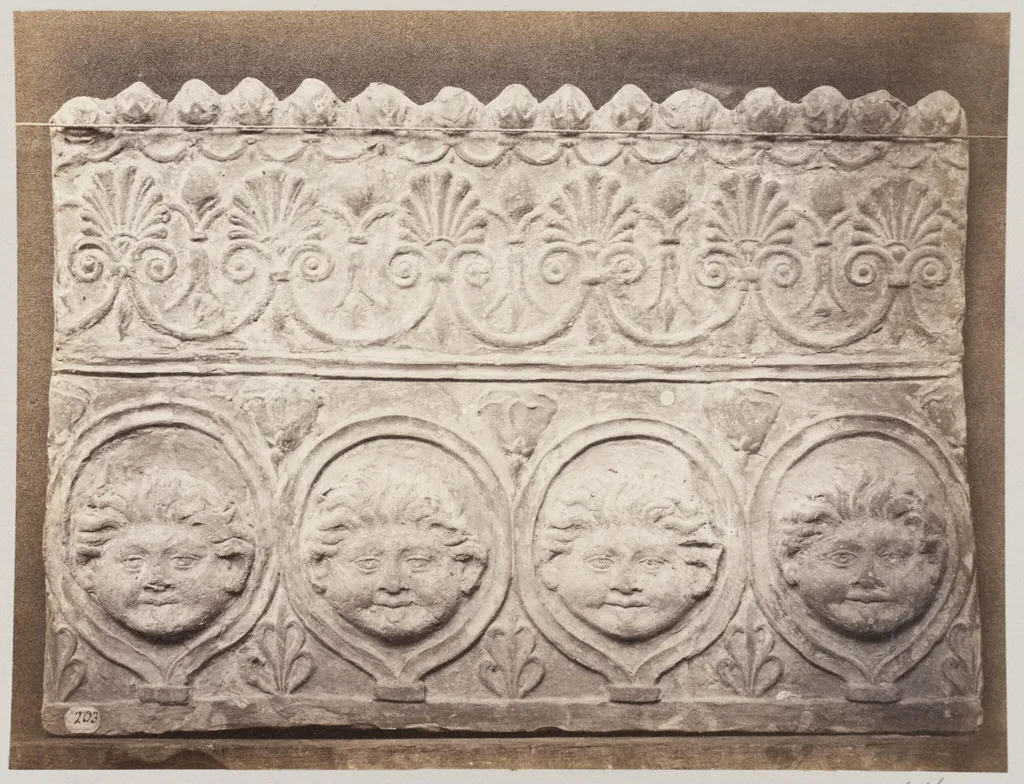
Bas-relief portion of a frieze of four masked young satyrs in terra cotta is a photographic photography by the Impressionist artist Louise Laffon. It dates from 1864 and is held in the collection of the Victoria and Albert Museum.
About this work
This is a terra cotta bas-relief photograph from 1863-64 by Louise Laffon. It shows four masked young satyrs in a frieze. The work blends Impressionism and Realism.
Back in 1852, the Victoria and Albert Museum became the first to collect and later exhibit photographs. That’s why this piece ended up in their collection.
Check out the Victoria and Albert Museum next.
Overview
This photograph, taken between 1863 and 1864 by Louise Laffon, captures a terra cotta bas-relief depicting four masked satyrs from a classical frieze.
This photograph, taken between 1863 and 1864 by Louise Laffon, captures a terra cotta bas-relief depicting four masked satyrs from a classical frieze. Acquired by the Victoria and Albert Museum in 1864, it was part of a larger set of 500 images purchased from Laffon’s documentation of the Campana Collection in Paris. The image served an educational function, supporting the museum’s early commitment to using photography as a tool for study and artistic reference.
Subject & Meaning
The relief portrays four youthful satyrs, mythological forest spirits, each wearing distinctive masks and arranged in a rhythmic procession. Their masked expressions and dynamic postures suggest theatrical performance or ritual, common themes in ancient Greco-Roman decorative arts. The composition emphasizes movement and anonymity, aligning with classical ideals of mythic representation rather than individual identity.
Technique & Style
Laffon’s photographic approach combines careful lighting with precise focus to render the texture of the terra cotta and the subtle contours of the relief. The tonal range captures the depth of carving without romanticizing the surface, reflecting a documentary intent. While sometimes described as blending Impressionism and Realism, the image’s clarity and neutrality are more aligned with early photographic documentation practices than stylistic experimentation.
History & Provenance
The photograph originated in a series documenting objects from the Campana Collection, housed in the Musée Napoléon III. Louise Laffon, one of the earliest professional female photographers in France, was commissioned to produce these images. In 1864, the V&A acquired 500 of them through Parisian agent E. Cappe, integrating them into its growing photographic archive, which was then managed by the National Art Library.
Context
The Victoria and Albert Museum, then known as the South Kensington Museum, began collecting photographs in 1852, becoming the first institution to do so. Under Henry Cole’s leadership, photography was embraced not as art but as a practical resource for designers, artisans, and students. Laffon’s work was part of a broader international effort to build a visual reference library, with images sourced from Europe’s major collections to support artistic education.
Legacy
Laffon’s contribution helped establish photography as a legitimate medium for museum documentation, particularly through the work of women who were often overlooked in institutional histories. Her images from the Campana Collection remain part of the V&A’s archive, illustrating early efforts to systematize visual knowledge. The photograph endures as evidence of how photography shaped the museum’s pedagogical mission in the 19th century.
Artist & collection
Artist
Louise Laffon (1828–1885), was a French photographer and painter. She was one of the first female professional photographers in France. She had a studio in Paris between 1859 and 1876.

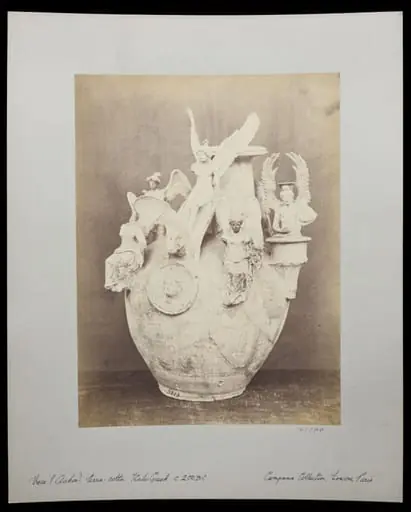 Perfume Burner in terra cotta
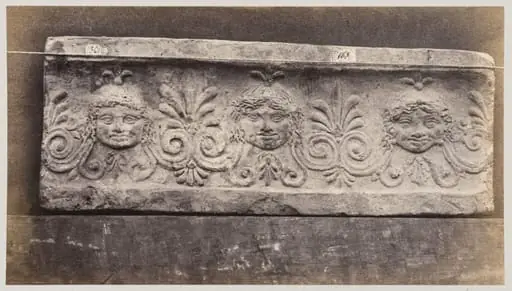 Three masques of gorgons in terra cotta
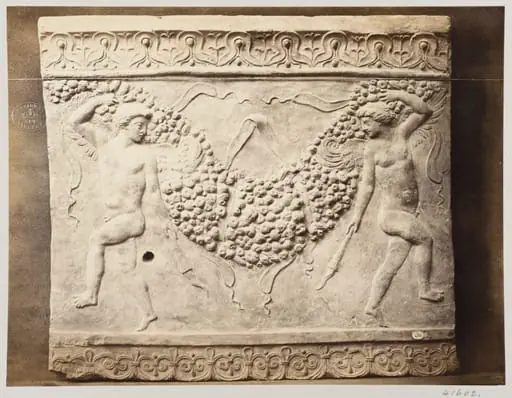 Bas-relief of portion of frieze of dancing figures with torches bearing festoon of fruit in terra cotta
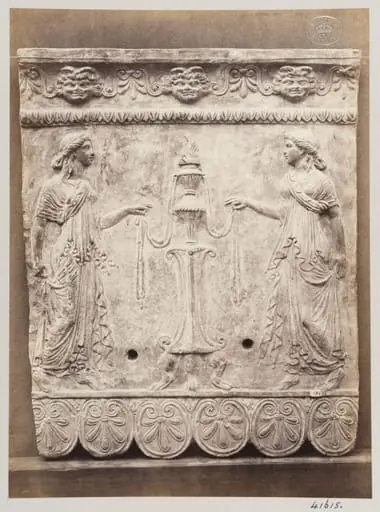 Bas-relief portion of a frieze of two draped females and an altar in terra cotta
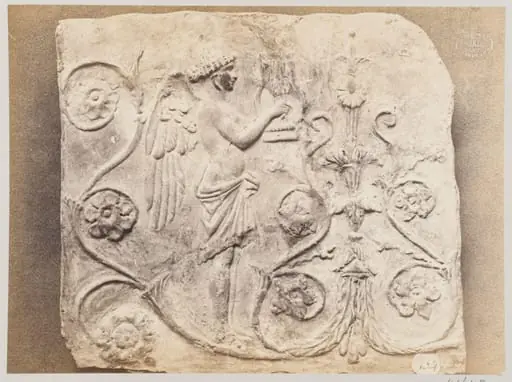 Bas-relief of a geni and a lyre in terra cotta
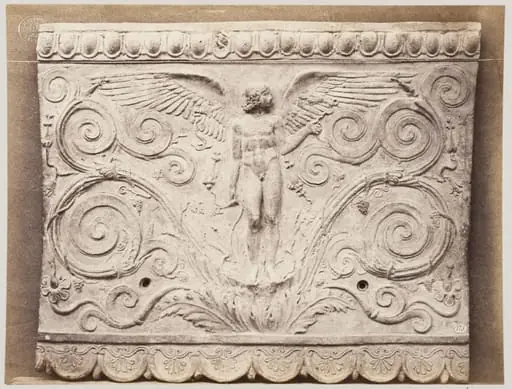 Bas-relief of a portion of frieze of Eros with scrollwork in terra cotta
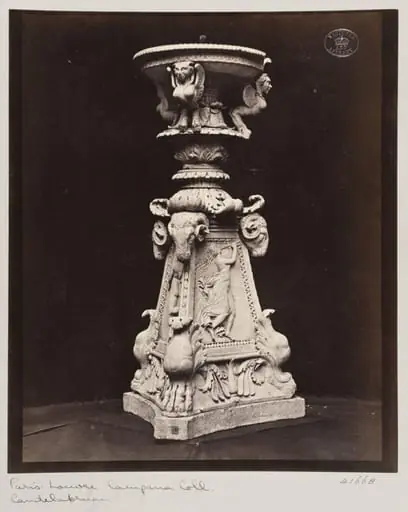 Marble sculptured fountain
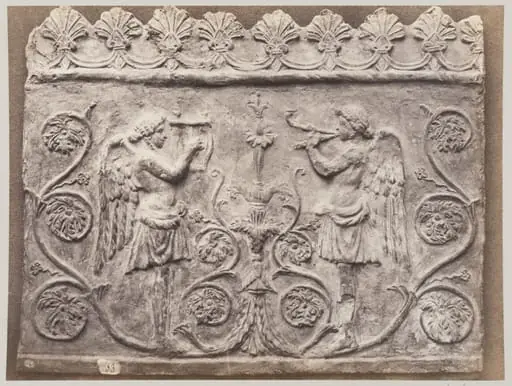 Bas-relief portion of frieze of Genii with double flutes and lyre
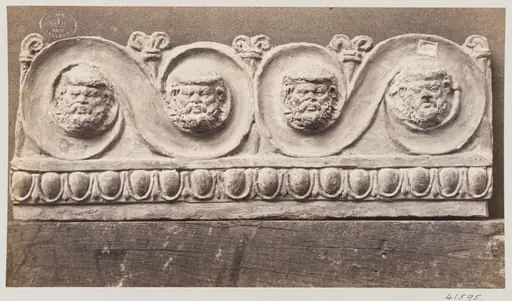 Bas-relief scroll with four masques in terra cotta
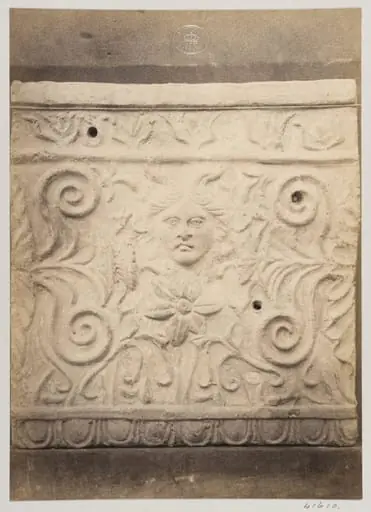 Bas-relief portion of a frieze with a mask in terra cotta
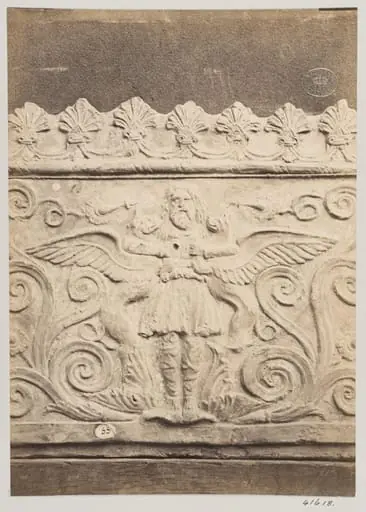 Bas-relief portion of a frieze of a flying genie in terra cotta
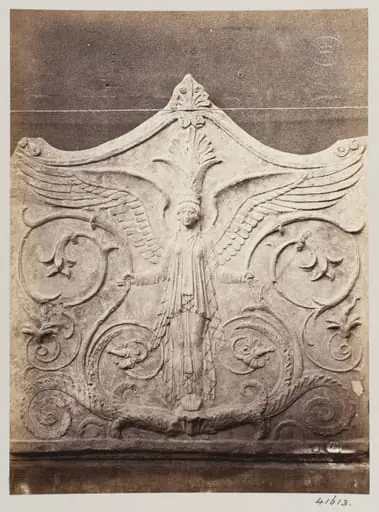 Bas-relief portion of a frieze of a winged figure with foliage in terra cotta
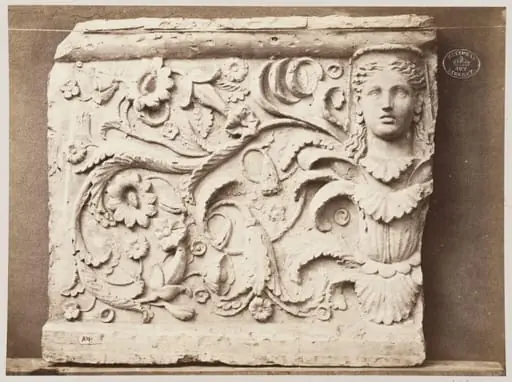 Bas-relief portion of frieze of female head and foliage ornament in terra cotta
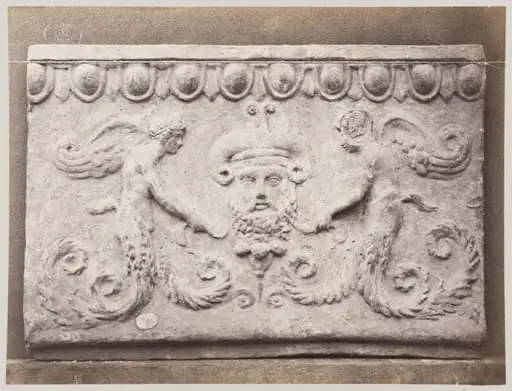 Bas-relief portion of frieze of masque of Ammon and genii in terra cotta
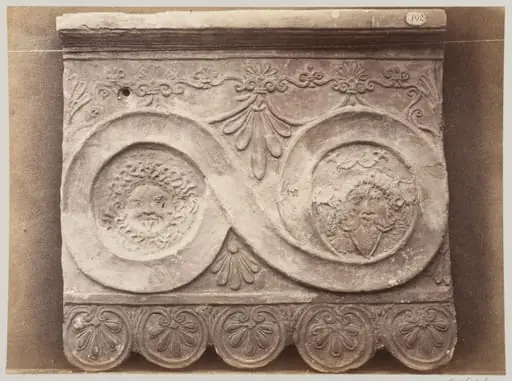 Bas-relief portion of a frieze of scrollwork with masks in terra cotta
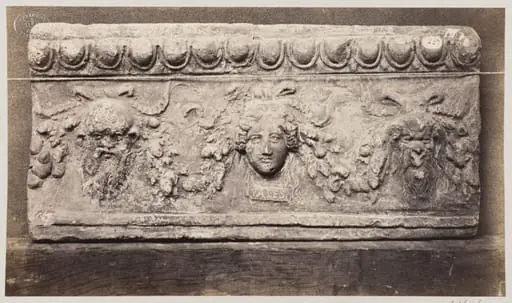 Bas-relief of three baccanalian masques in terra cotta
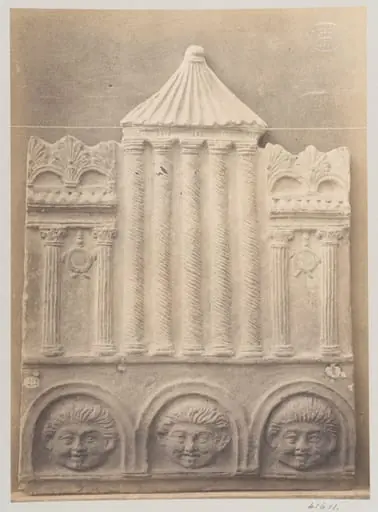 Bas-relief of temple in terra cotta
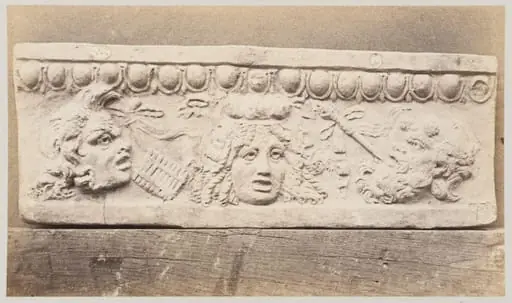 Bas-relief portion of frieze with theatrical masks in terra cotta
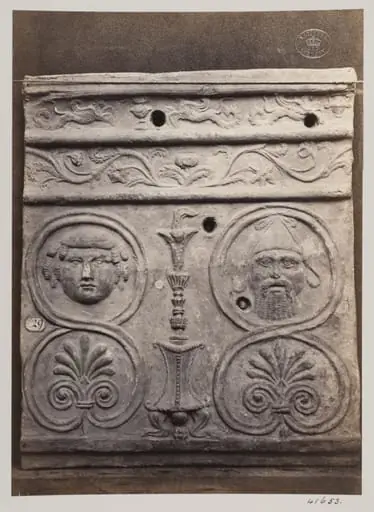 Bas-relief of a portion of a frieze of a thymiaterion and bacanallian masks in terra cotta
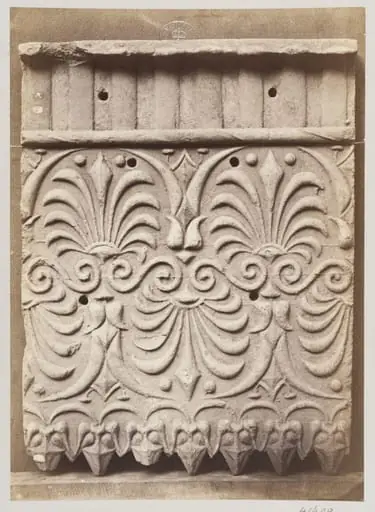 Bas-relief portion of a frieze of honeysuckle in terra cotta