Artwork
Bas-relief portion of frieze, Bust of Ceres and ears of corn, terra cotta
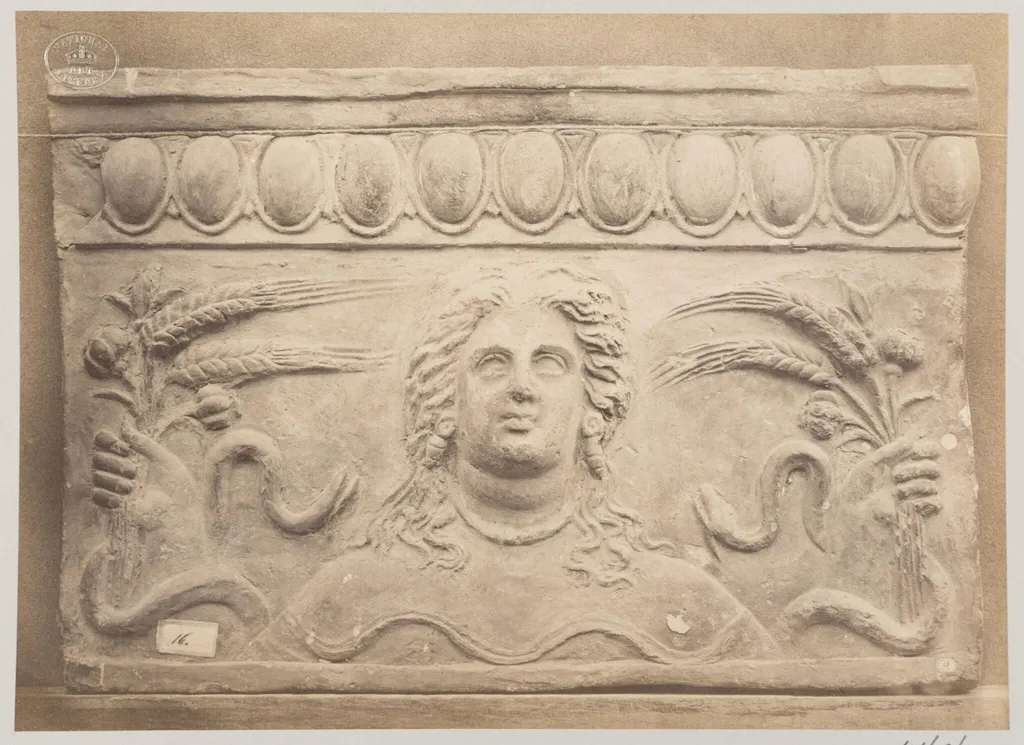
Bas-relief portion of frieze, Bust of Ceres and ears of corn, terra cotta is a photographic photography by the Impressionist artist Louise Laffon. It dates from 1864 and is held in the collection of the Victoria and Albert Museum.
About this work
This is a photo of a terra cotta bas-relief. It shows a bust of Ceres and ears of corn. Louise Laffon made it between 1863 and 1864.
Photography was new and rare in museums back then. The Victoria and Albert Museum started collecting photos in 1852. They used images like this to teach artists and students.
Check out Laffon, Louise.
Overview
The image is a photographic reproduction of a small terra‑cotta bas‑relief depicting the Roman goddess Ceres, presented as a bust surrounded by stylised ears of corn. The photograph was taken by French photographer Louise Laffon between 1863 and 1864 and now forms part of the Victoria and Albert Museum’s early photographic holdings.
Subject & Meaning
Ceres, the deity of agriculture and fertility, is shown in profile with the emblematic grain sheaves, a conventional iconography that underscores her role as protector of crops. The composition emphasizes the link between the human figure and the bounty of the earth, a theme frequently employed in neoclassical decorative arts.
Technique & Style
The original relief is executed in low relief on terra‑cotta, a material favored for its pliability and warm tone. Laffon’s photograph captures the shallow modeling and the subtle play of light across the surface, employing the wet‑plate collodion process that was standard in the early 1860s, allowing fine detail and tonal range.
History & Provenance
Louise Laffon, one of the first women admitted to the French Photographic Society, produced a series of images of objects from the Campana collection in Paris. In 1864 the V&A acquired five hundred of these photographs through the dealer E. Cappe, integrating them into the museum’s National Art Library for instructional use.
Context
The Victoria and Albert Museum began collecting photographs in 1852, becoming the first British institution to do so, and displayed them publicly from 1858. Photographs like Laffon’s were intended to supplement traditional reproductions, providing artists and students with accurate visual references to historic artefacts.
Legacy
Laffon’s work exemplifies the early contribution of women photographers to museum documentation. The image remains a reference point for scholars studying 19th‑century photographic practices and the dissemination of classical motifs within decorative arts collections.
Artist & collection
Artist
Louise Laffon (1828–1885), was a French photographer and painter. She was one of the first female professional photographers in France. She had a studio in Paris between 1859 and 1876.

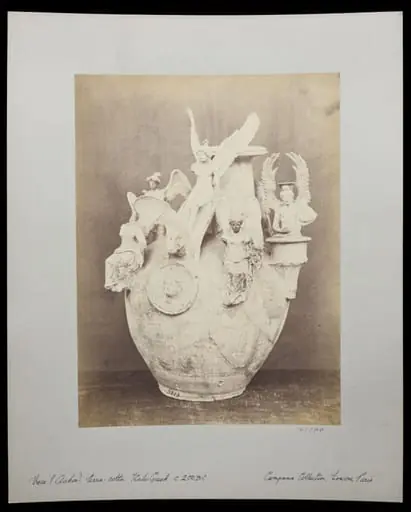 Perfume Burner in terra cotta
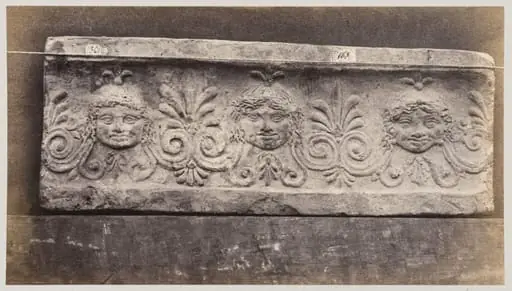 Three masques of gorgons in terra cotta
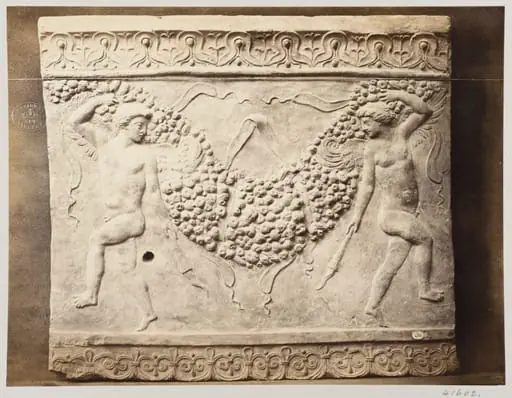 Bas-relief of portion of frieze of dancing figures with torches bearing festoon of fruit in terra cotta
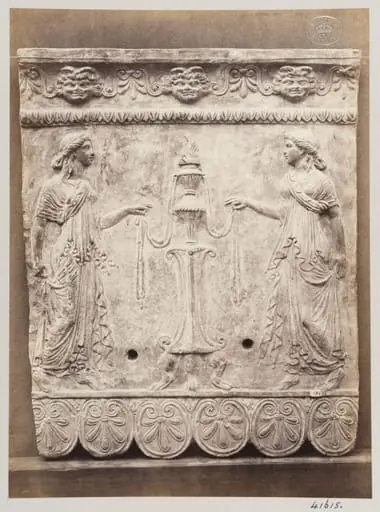 Bas-relief portion of a frieze of two draped females and an altar in terra cotta
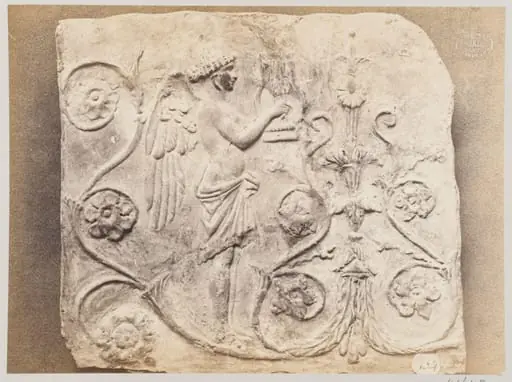 Bas-relief of a geni and a lyre in terra cotta
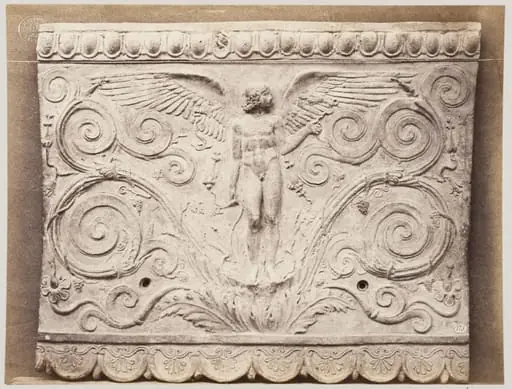 Bas-relief of a portion of frieze of Eros with scrollwork in terra cotta
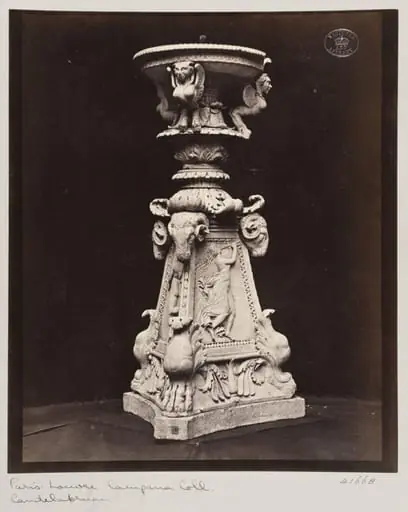 Marble sculptured fountain
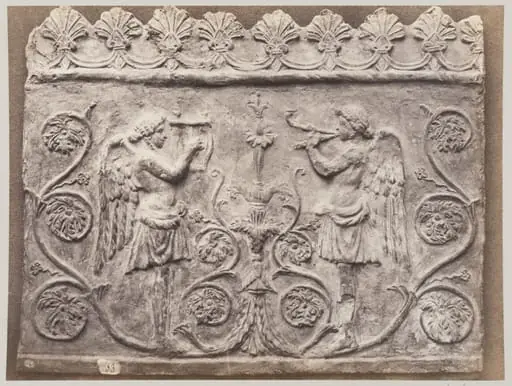 Bas-relief portion of frieze of Genii with double flutes and lyre
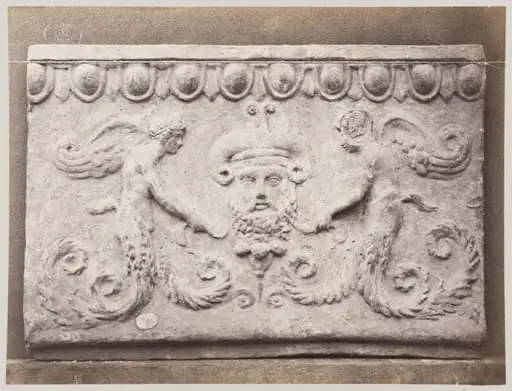 Bas-relief portion of frieze of masque of Ammon and genii in terra cotta
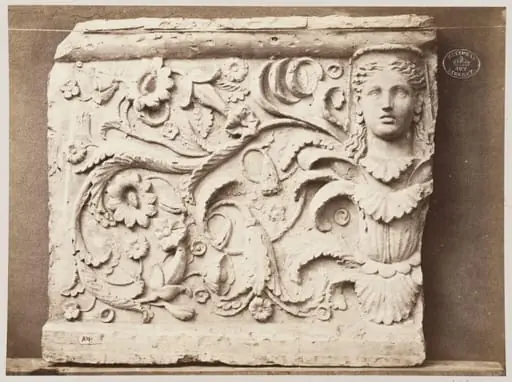 Bas-relief portion of frieze of female head and foliage ornament in terra cotta
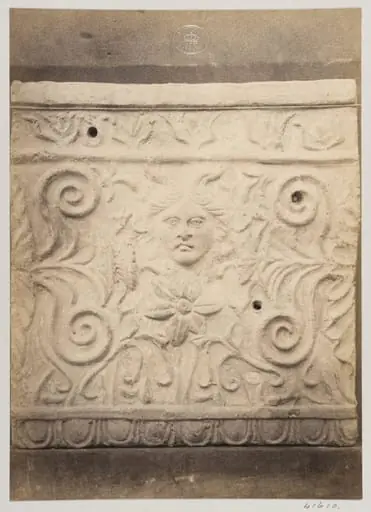 Bas-relief portion of a frieze with a mask in terra cotta
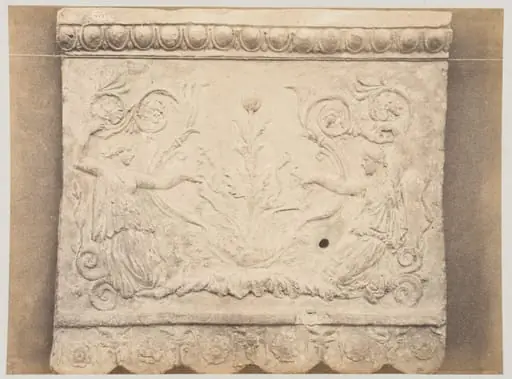 Bas-relief portion of frieze of nymphs with scrollwork in terra cotta
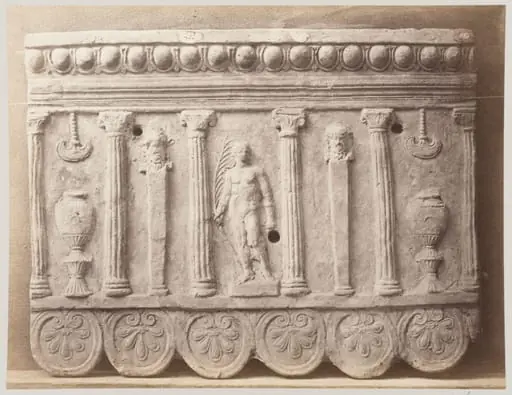 Bas-relief portion of a frieze of Cestiphore conqueror in terra cotta
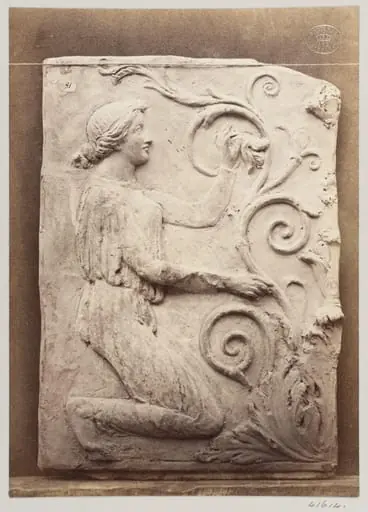 Bas-relief portion of a frieze of a female figure and foliage in terra cotta
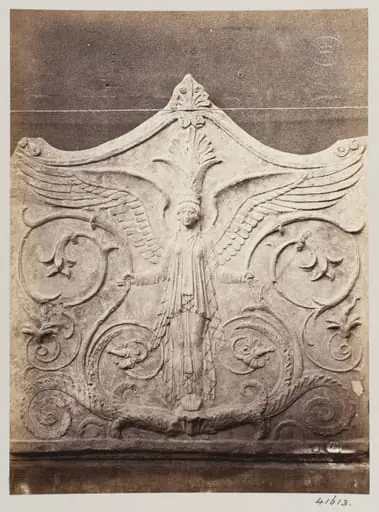 Bas-relief portion of a frieze of a winged figure with foliage in terra cotta
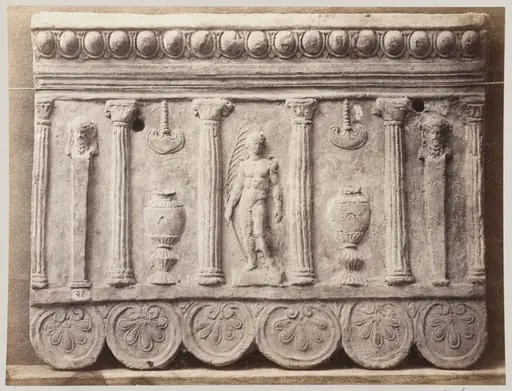 Bas-relief portion of a frieze of Hercules the conqueror in terra cotta
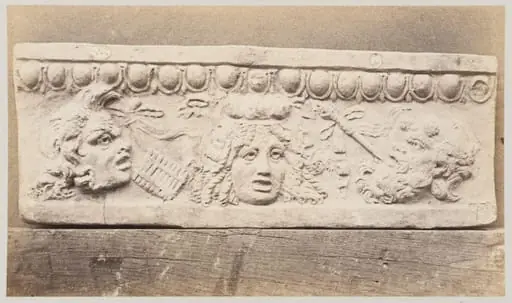 Bas-relief portion of frieze with theatrical masks in terra cotta
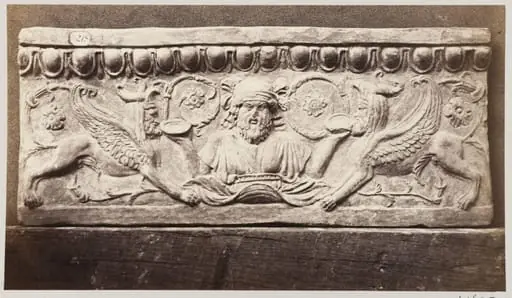 Bas-relief portion of frieze with the 'Libation of Asiatic Sphinx' in terra cotta