Artwork
Bas-relief portion of frieze with palmettes and columns in terra cotta
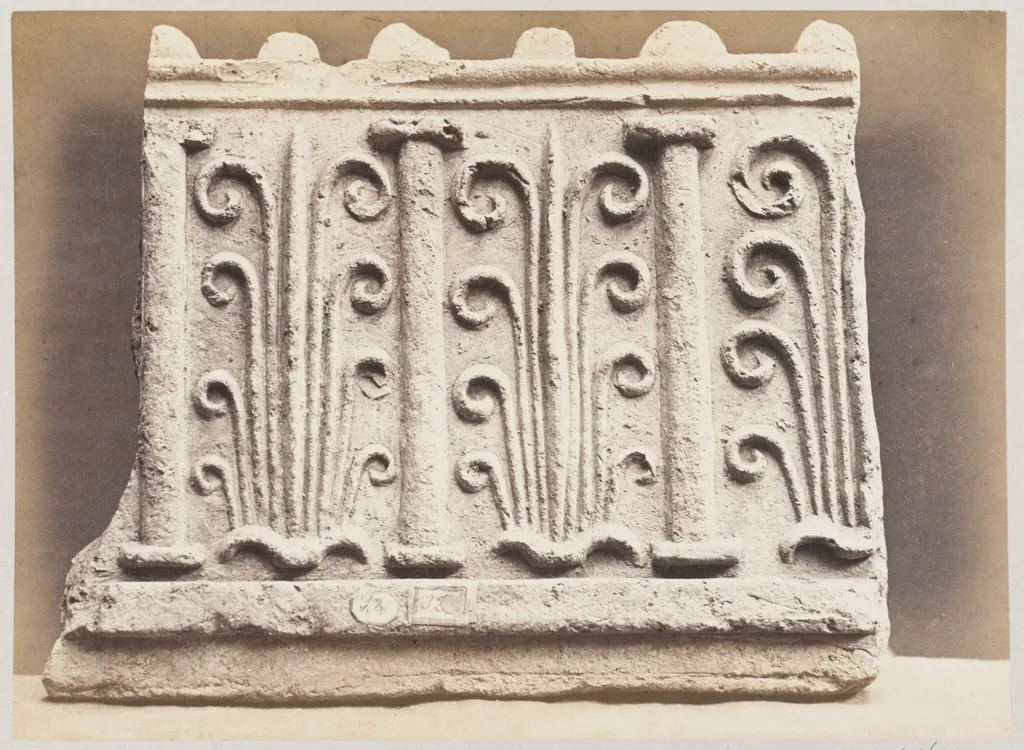
Bas-relief portion of frieze with palmettes and columns in terra cotta is a photographic photography by the Impressionist artist Louise Laffon. It dates from 1864 and is held in the collection of the Victoria and Albert Museum. This photograph captures a terra cotta bas-relief fragment from a classical frieze, featuring palmette motifs and architectural columns.
About this work
Overview
This photograph captures a terra cotta bas-relief fragment from a classical frieze, featuring palmette motifs and architectural columns.
This photograph captures a terra cotta bas-relief fragment from a classical frieze, featuring palmette motifs and architectural columns. Acquired by the Victoria and Albert Museum in 1864, it is one of five hundred images purchased from French photographer Louise Laffon. The image served an educational function, documenting sculptural details for study by artists and students, reflecting the museum’s early commitment to using photography as a tool for visual scholarship.
Subject & Meaning
The relief depicts ornamental elements common in ancient Greco-Roman architecture—palmettes and columns—used to decorate public and sacred buildings. These motifs symbolized growth, continuity, and classical order. The photograph does not interpret the imagery but preserves its formal qualities for academic analysis, aligning with the museum’s goal of providing accurate visual references to support design education and historical study.
Technique & Style
Laffon’s photograph was produced using the albumen print process, common in mid-19th-century photographic practice. The image exhibits sharp tonal contrast and fine detail, essential for recording intricate sculptural textures. Composition is formal and centered, prioritizing clarity over aesthetic flourish, consistent with the museum’s utilitarian approach to photographic documentation.
History & Provenance
The photograph originated from Laffon’s series documenting the Campana Collection at the Musée Napoléon III in Paris. In 1864, the V&A acquired 500 images from this set through Parisian agent E. Cappe. Laffon, among the earliest professional female photographers in France, was selected for her technical precision. The image entered the museum’s collection as part of its broader effort to build a visual archive for teaching and conservation.
Context
During the 1850s and 1860s, the V&A actively collected photographs to supplement its physical holdings, recognizing their value in making art accessible beyond physical display. Female photographers like Laffon and Isabel Agnes Cowper were integral to this initiative, often overlooked in historical accounts. The museum’s strategy mirrored broader European efforts to systematize visual knowledge through mechanical reproduction.
Legacy
Laffon’s photographs remain part of the V&A’s historical archive, illustrating the museum’s pioneering role in institutional photography. Her work exemplifies how early female professionals contributed to scholarly infrastructure in a male-dominated field. These images continue to support research into classical ornamentation and the history of photographic documentation in art institutions.
Artist & collection
Artist
Louise Laffon (1828–1885), was a French photographer and painter. She was one of the first female professional photographers in France. She had a studio in Paris between 1859 and 1876.

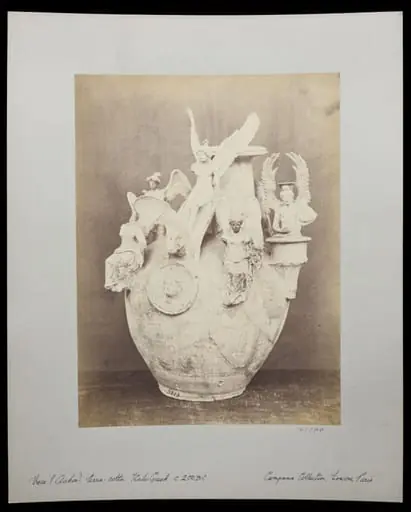 Perfume Burner in terra cotta
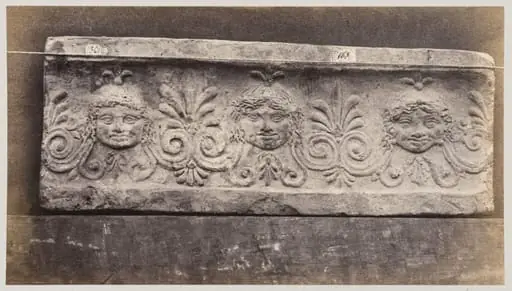 Three masques of gorgons in terra cotta
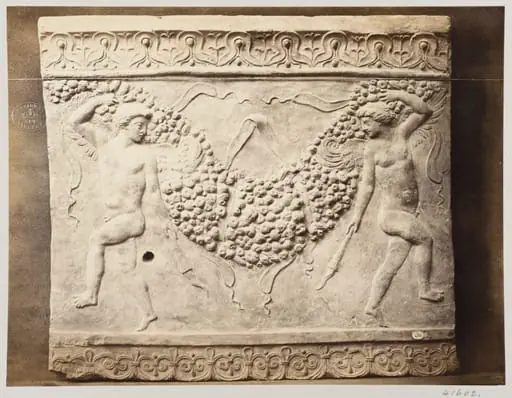 Bas-relief of portion of frieze of dancing figures with torches bearing festoon of fruit in terra cotta
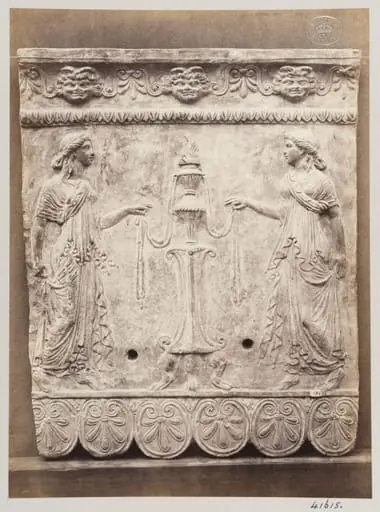 Bas-relief portion of a frieze of two draped females and an altar in terra cotta
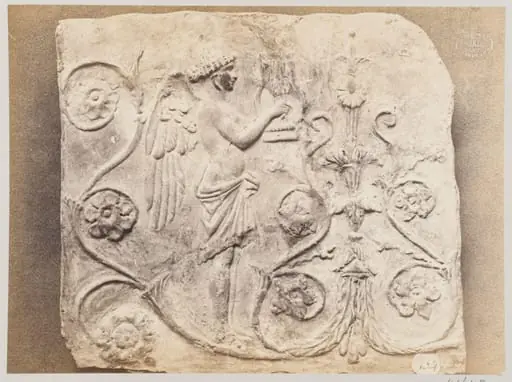 Bas-relief of a geni and a lyre in terra cotta
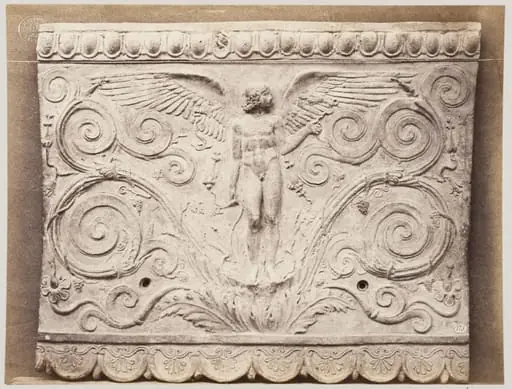 Bas-relief of a portion of frieze of Eros with scrollwork in terra cotta
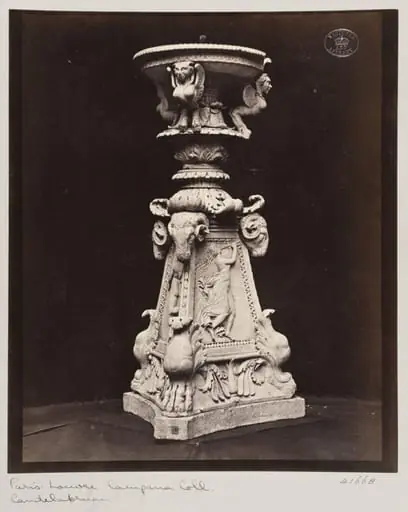 Marble sculptured fountain
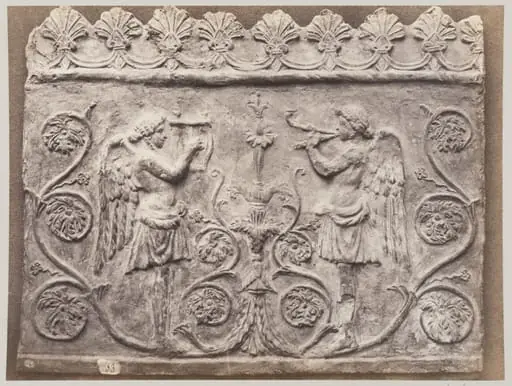 Bas-relief portion of frieze of Genii with double flutes and lyre
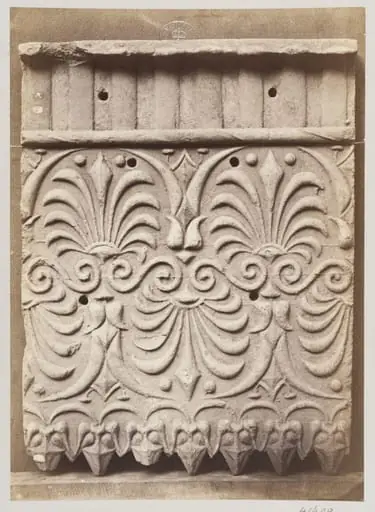 Bas-relief portion of a frieze of honeysuckle in terra cotta
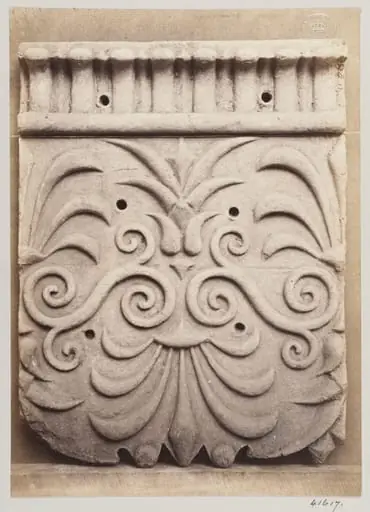 Bas-relief portion of a frieze in terra cotta
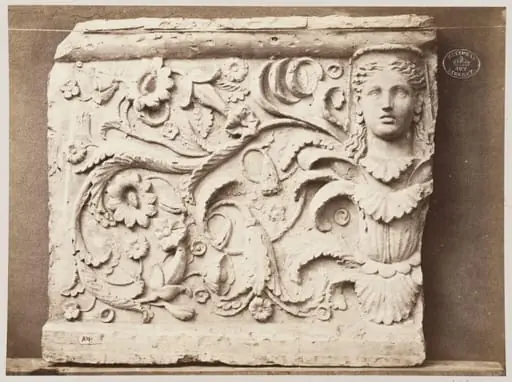 Bas-relief portion of frieze of female head and foliage ornament in terra cotta
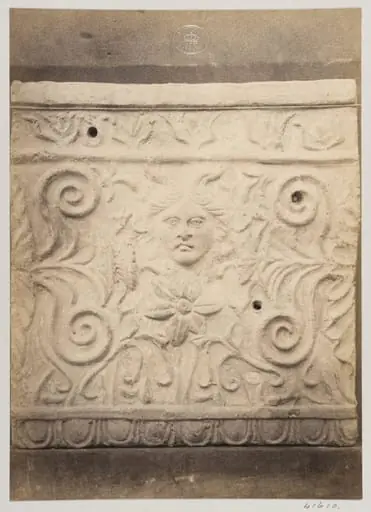 Bas-relief portion of a frieze with a mask in terra cotta
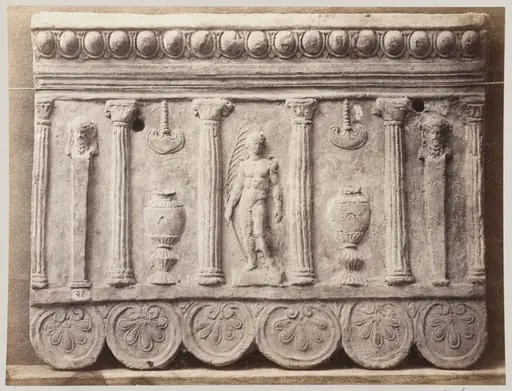 Bas-relief portion of a frieze of Hercules the conqueror in terra cotta
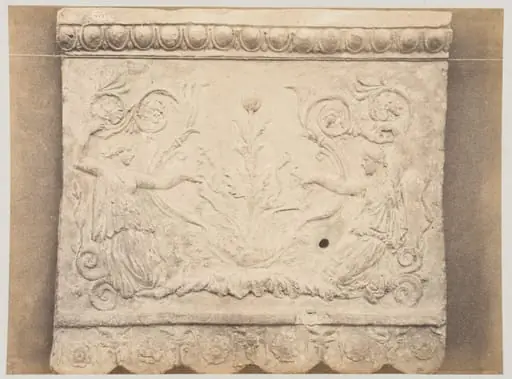 Bas-relief portion of frieze of nymphs with scrollwork in terra cotta
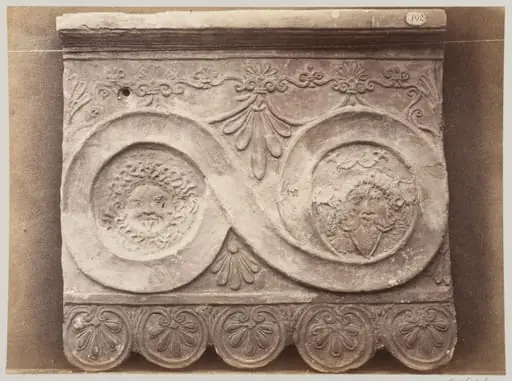 Bas-relief portion of a frieze of scrollwork with masks in terra cotta
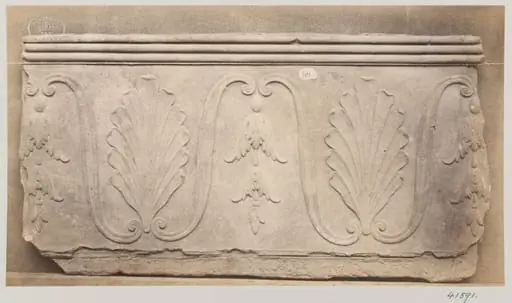 Bas-relief of a portion of a frieze depicting a palmetto and foliage in terra cotta
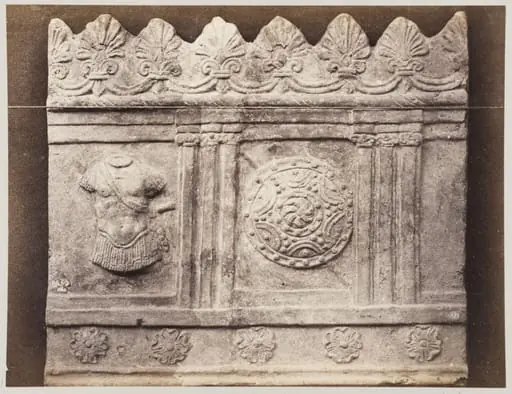 Bas-relief portion of a frieze of with trophies in terra cotta
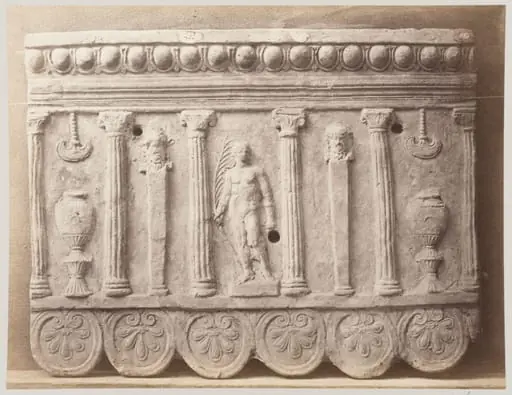 Bas-relief portion of a frieze of Cestiphore conqueror in terra cotta
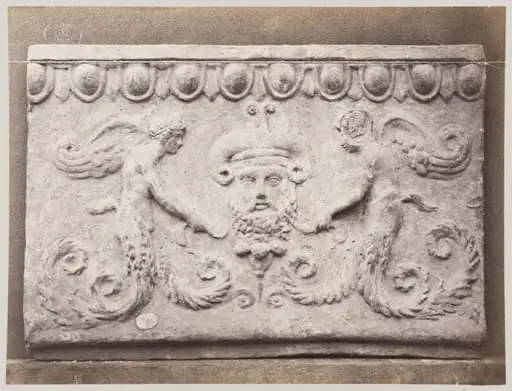 Bas-relief portion of frieze of masque of Ammon and genii in terra cotta