Artwork
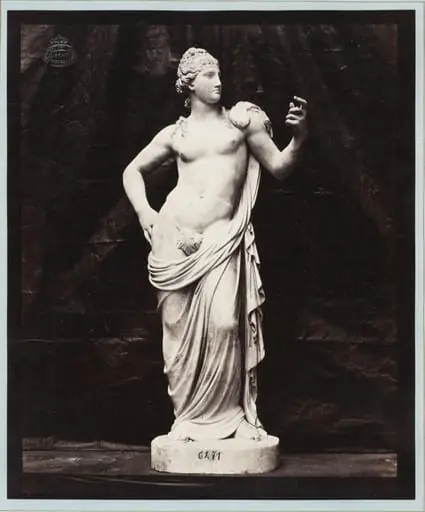
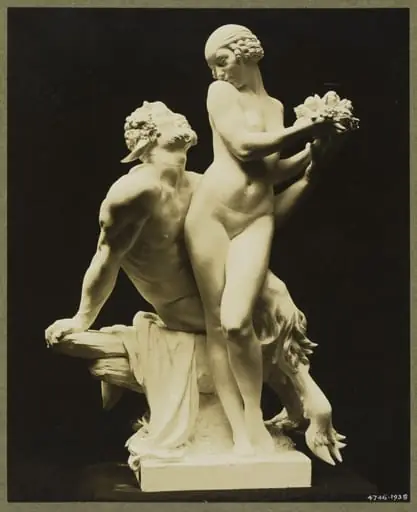
Hercules and Dejanira statuette group in marble
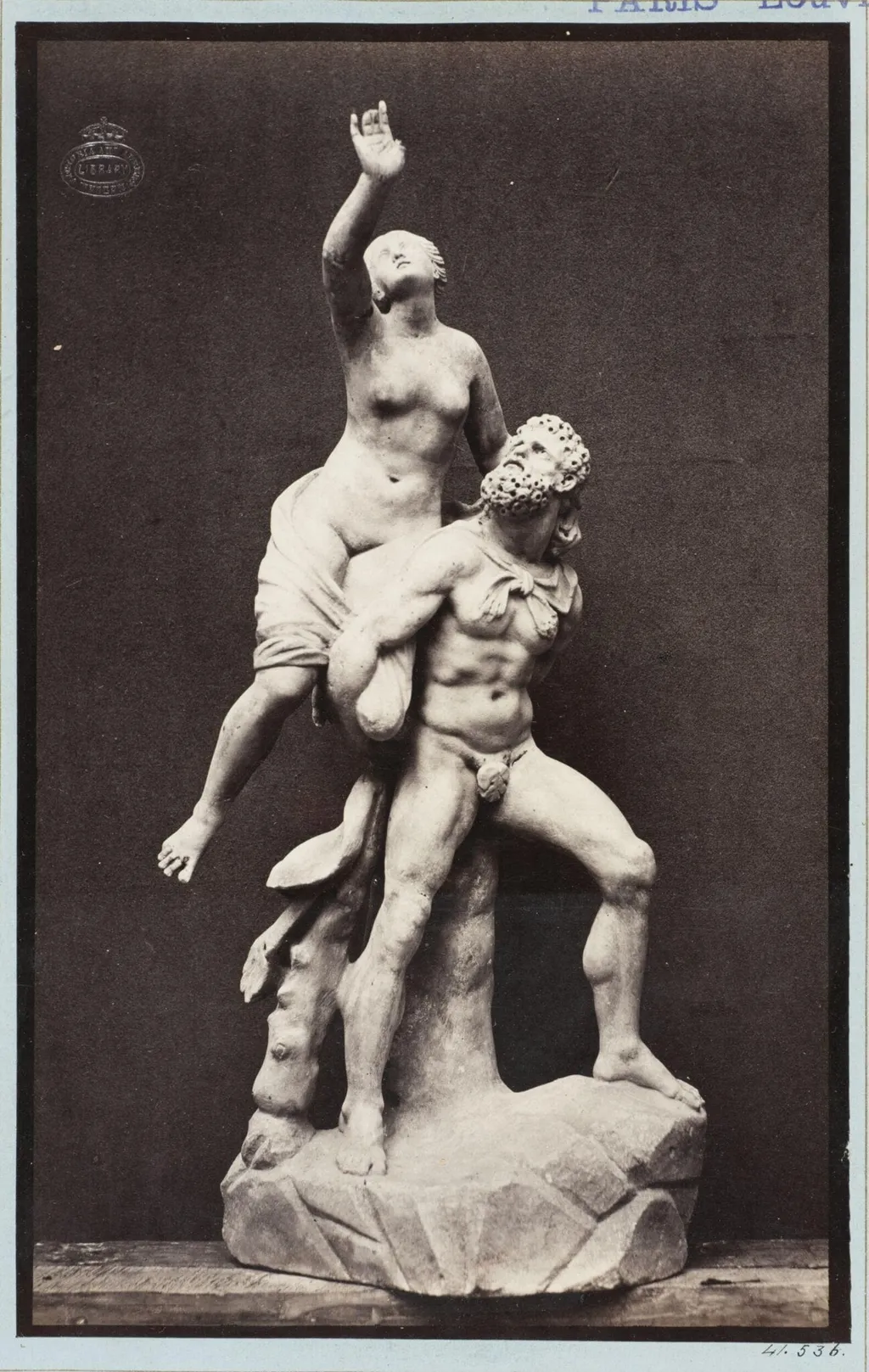
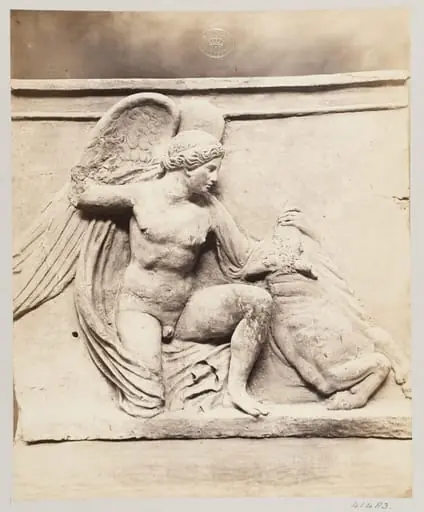
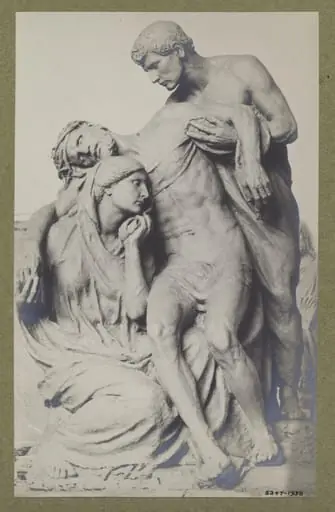
Hercules and Dejanira statuette group in marble is a photographic photography by the Impressionist artist Louise Laffon. It dates from 1864 and is held in the collection of the Victoria and Albert Museum. This photograph captures a marble statuette group depicting Hercules and Dejanira, acquired by the Victoria and Albert Museum in 1864.
About this work
Overview
It was part of a larger set of 500 images purchased from French photographer Louise Laffon, who documented antiquities from the Campana Collection in Paris.
This photograph captures a marble statuette group depicting Hercules and Dejanira, acquired by the Victoria and Albert Museum in 1864. It was part of a larger set of 500 images purchased from French photographer Louise Laffon, who documented antiquities from the Campana Collection in Paris. The image served an educational function, aiding museum staff and students in the study of classical sculpture through reproducible visual records.
Subject & Meaning
The statuette portrays the mythological moment when Dejanira, unknowingly offering Hercules a poisoned robe, triggers his tragic demise. The compact marble composition emphasizes emotional tension and physical strain, typical of Hellenistic interpretations of the scene. As a reproductive photograph, the image preserves the sculptural narrative for study, detached from its original ritual or decorative context.
Technique & Style
Laffon’s photograph employs the albumen print process, common in mid-19th-century photographic documentation. The composition is carefully framed to highlight the sculptural form’s contours and surface texture, with even lighting minimizing shadows. The image’s clarity and detail reflect the technical precision required for scholarly use, prioritizing accuracy over artistic interpretation.
History & Provenance
The statuette originated in the Campana Collection, assembled by Italian nobleman Giampietro Campana and later acquired by Napoleon III’s museum. In 1864, the V&A purchased 500 photographs of these objects through Parisian agent E. Cappe. Louise Laffon, one of the earliest professional female photographers in France, produced the series under commission, making her work a rare documented contribution to institutional photographic archives.
Context
The V&A’s early adoption of photography aligned with its mission to support design education. By 1858, it was the first museum to exhibit photographs, and by the 1860s, it systematically collected images to supplement its teaching collection. Laffon’s photographs filled gaps in access to continental antiquities, enabling British students to study works otherwise inaccessible due to geography or political barriers.
Legacy
Laffon’s contribution remains a significant but historically underrecognized part of the V&A’s photographic archive. Her work exemplifies how women operated in professional photographic roles during a period when their contributions were often uncredited. The 1864 acquisition marked a deliberate institutional strategy to use photography as a tool for global art education, shaping how museums would later approach visual documentation.
Artist & collection
Artist
Louise Laffon (1828–1885), was a French photographer and painter. She was one of the first female professional photographers in France. She had a studio in Paris between 1859 and 1876.

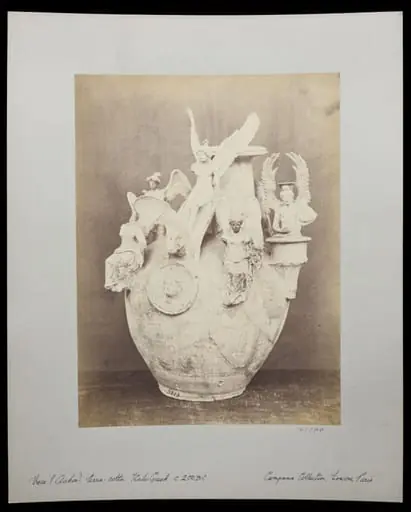 Perfume Burner in terra cotta
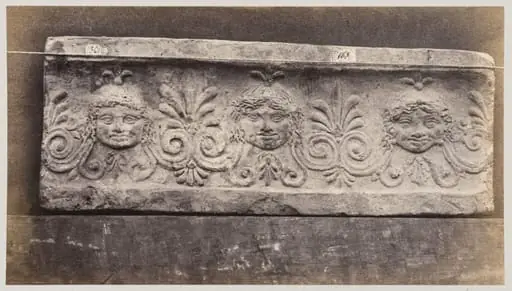 Three masques of gorgons in terra cotta
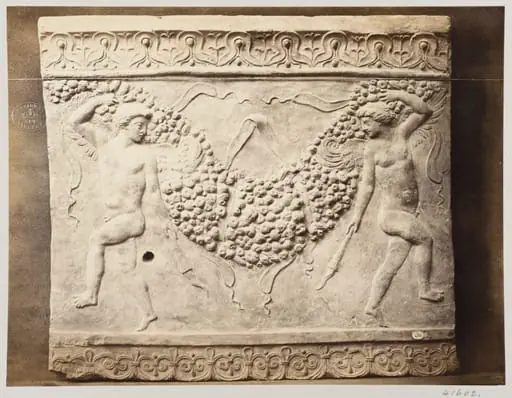 Bas-relief of portion of frieze of dancing figures with torches bearing festoon of fruit in terra cotta
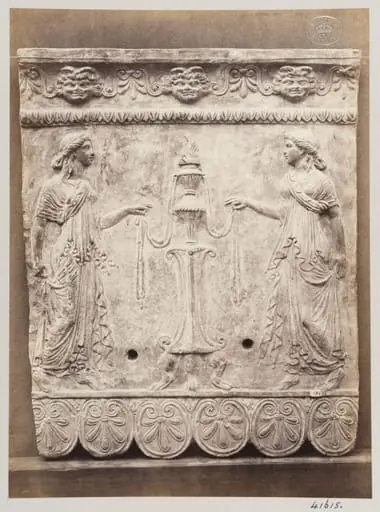 Bas-relief portion of a frieze of two draped females and an altar in terra cotta
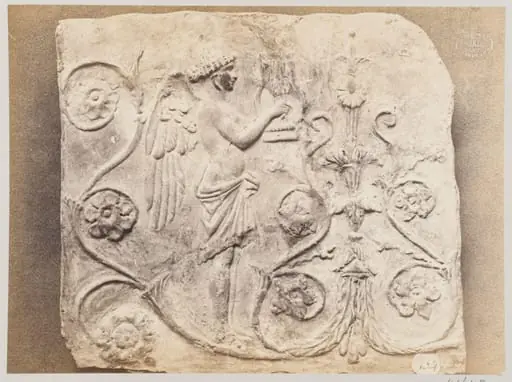 Bas-relief of a geni and a lyre in terra cotta
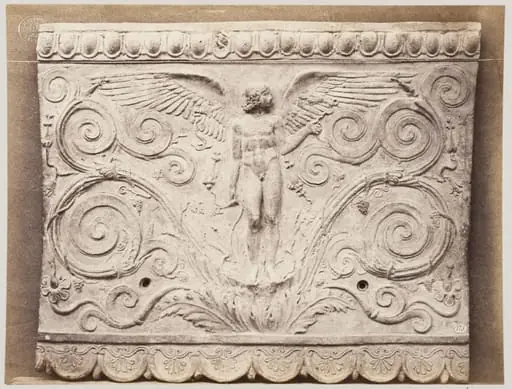 Bas-relief of a portion of frieze of Eros with scrollwork in terra cotta
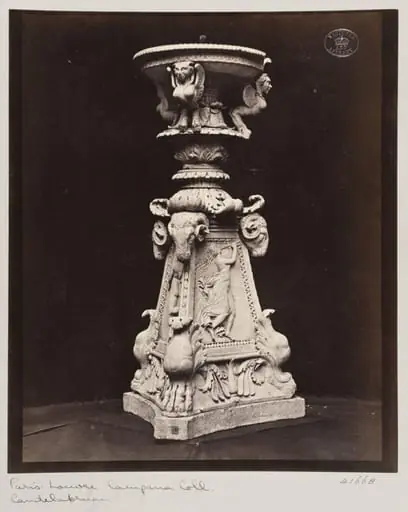 Marble sculptured fountain
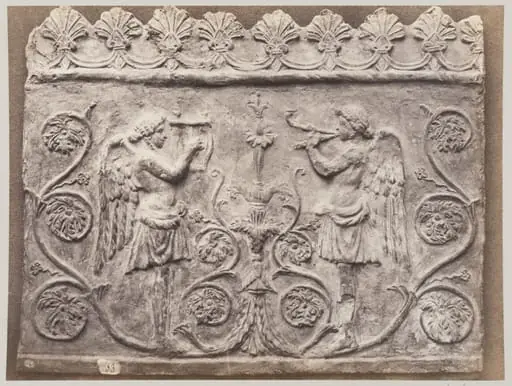 Bas-relief portion of frieze of Genii with double flutes and lyre