Artwork
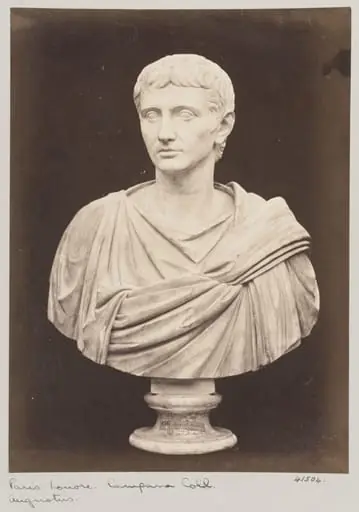
Marble Statue of Emperor Claudius
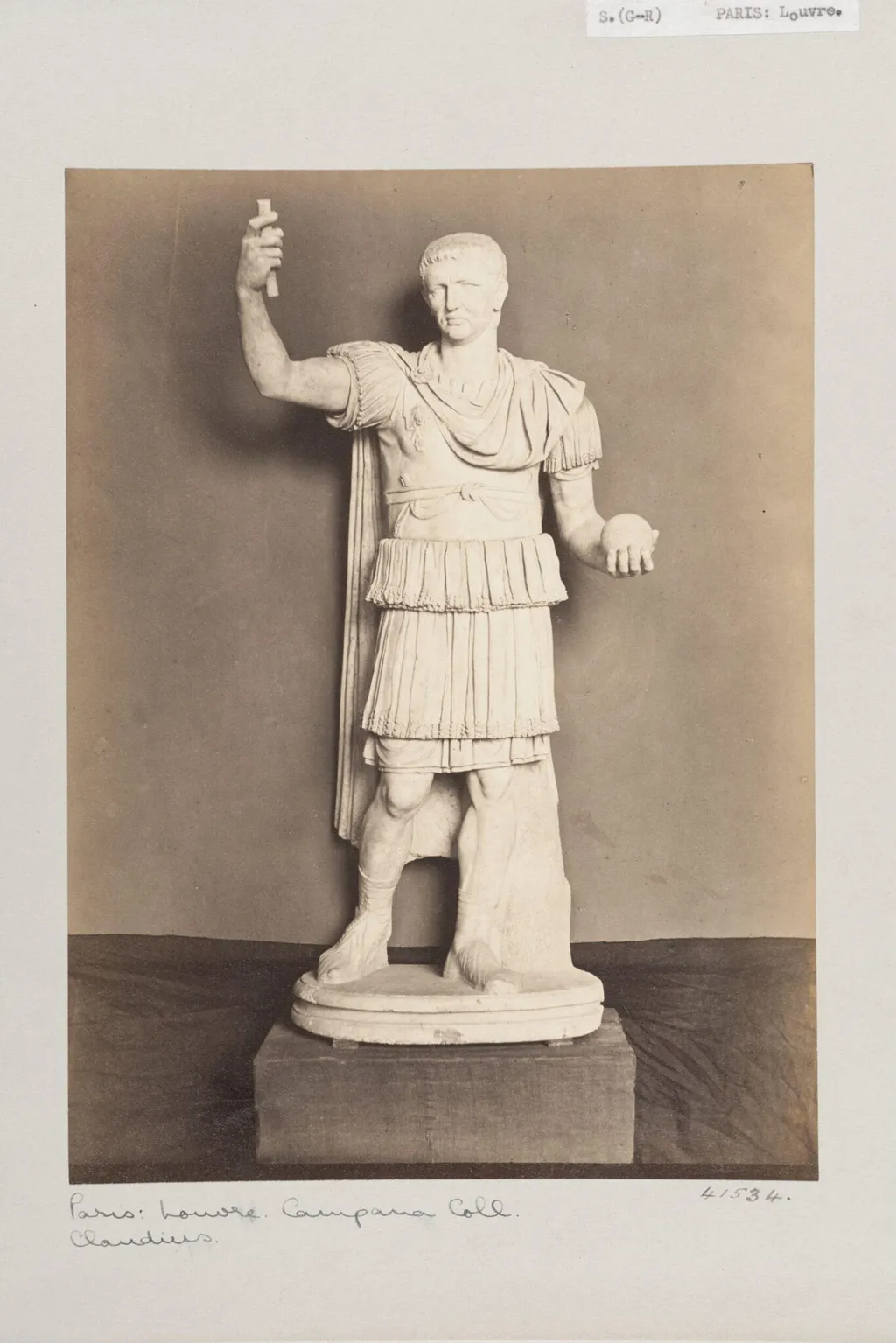
Marble Statue of Emperor Claudius is a photographic photography by the Impressionist artist Louise Laffon. It dates from 1864 and is held in the collection of the Victoria and Albert Museum. The Victoria and Albert Museum began collecting photographs in 1852, making it the first museum to do so.
About this work
The photograph is titled Marble Statue of Emperor Claudius.
It was taken by Louise Laffon in 1863-1864.
The Victoria and Albert Museum holds this photograph, which is part of its collection that started in 1852, when the museum began collecting photographs to help artists and students, and this photograph is associated with the movement Realism.
You can learn more about this style by looking up Realism.
Overview
This initiative, led by director Henry Cole, aimed to support artistic education by expanding access to visual references.
The Victoria and Albert Museum began collecting photographs in 1852, making it the first museum to do so. This initiative, led by director Henry Cole, aimed to support artistic education by expanding access to visual references. Among the early acquisitions were photographic records of classical sculptures, including this 1863–64 image of Emperor Claudius’s marble statue, sourced from French photographer Louise Laffon as part of a larger series documenting the Campana Collection.
Subject & Meaning
The photograph captures a marble portrait of Emperor Claudius, a Roman ruler known for administrative reforms and imperial expansion. The image does not depict the statue in situ but isolates it as a study object, emphasizing form and detail. Its purpose was pedagogical: to provide artists and students with an accurate visual record of classical sculpture, supporting the study of anatomy, proportion, and historical representation within the Realist tradition.
Technique & Style
Louise Laffon employed the albumen print process, common in mid-19th-century photographic documentation. The image exhibits sharp detail and tonal clarity, typical of technical precision valued for scholarly use. Lighting is even and neutral, avoiding dramatic effect to prioritize factual representation. This aligns with Realist principles—recording objects as they are, without idealization, for educational rather than aesthetic ends.
History & Provenance
In 1864, the V&A acquired 500 photographs from Laffon’s series documenting the Campana Collection in Paris, purchased through agent E. Cappe. Laffon, one of the earliest female members of Le Société Française de la Photographie, was commissioned to record antiquities for institutional archives. This photograph entered the V&A’s collection as part of its broader effort to build a visual reference library, initially housed within the National Art Library before being integrated into the museum’s broader holdings.
Context
During the 1860s, European museums increasingly turned to photography to document and disseminate their collections. The V&A’s program was part of a wider movement to democratize access to art through mechanical reproduction. Laffon’s work, alongside other female photographers employed by institutions, contributed to a quiet but vital shift in museum practice—where documentation became as essential as display, and technical accuracy superseded artistic flair.
Legacy
This photograph exemplifies how early institutional photography shaped art education and archival practice. Laffon’s contributions, though long overlooked, helped establish photography as a legitimate tool for scholarly research. The V&A’s continued preservation of such images underscores their role in sustaining a visual record of cultural heritage, bridging 19th-century documentation methods with modern curatorial standards.
Artist & collection
Artist
Louise Laffon (1828–1885), was a French photographer and painter. She was one of the first female professional photographers in France. She had a studio in Paris between 1859 and 1876.

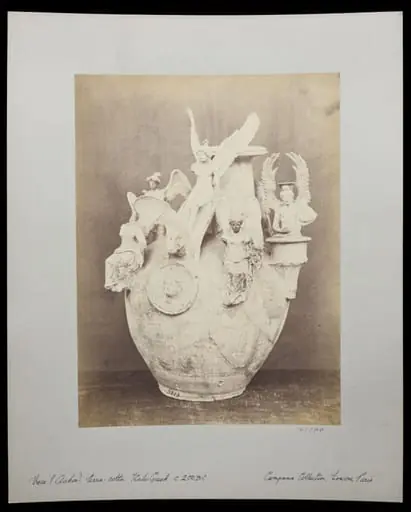 Perfume Burner in terra cotta
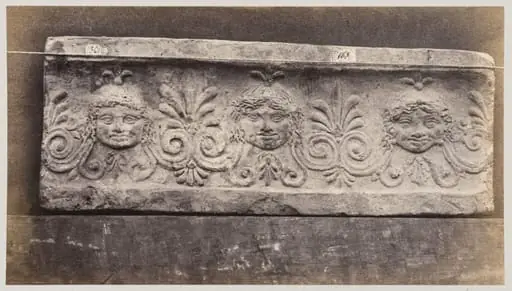 Three masques of gorgons in terra cotta
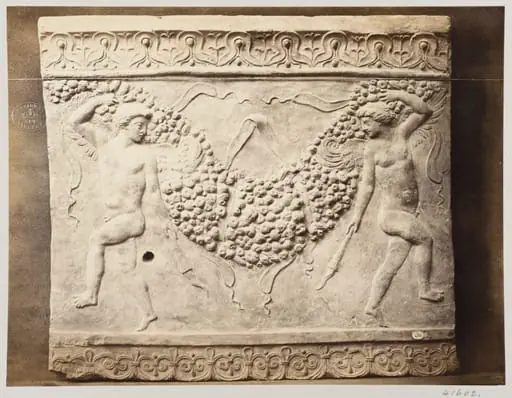 Bas-relief of portion of frieze of dancing figures with torches bearing festoon of fruit in terra cotta
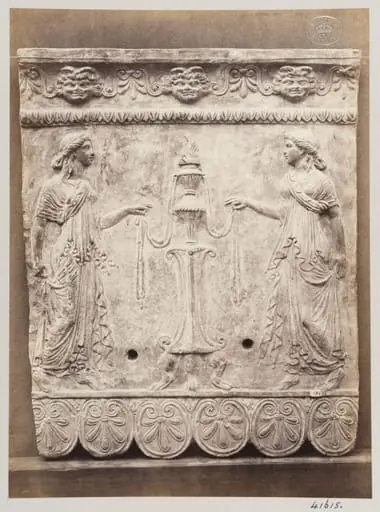 Bas-relief portion of a frieze of two draped females and an altar in terra cotta
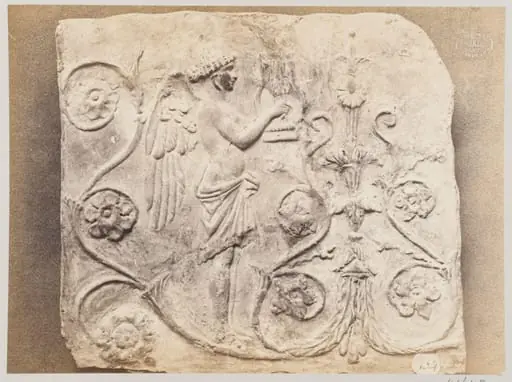 Bas-relief of a geni and a lyre in terra cotta
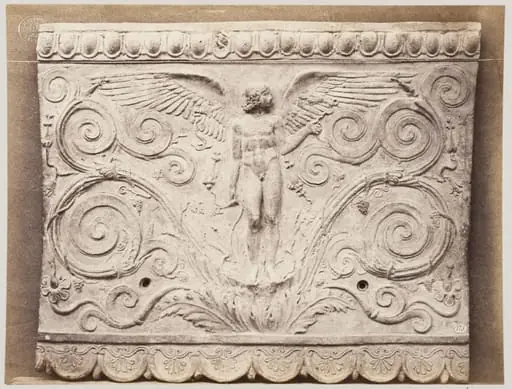 Bas-relief of a portion of frieze of Eros with scrollwork in terra cotta
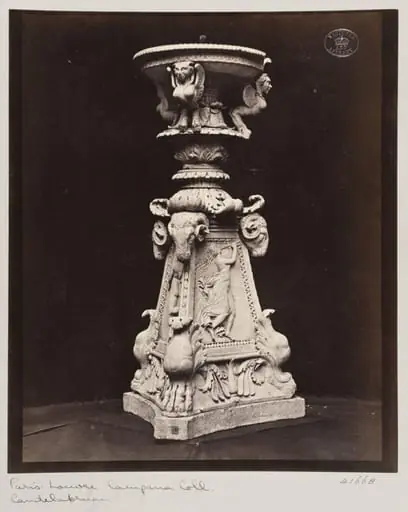 Marble sculptured fountain
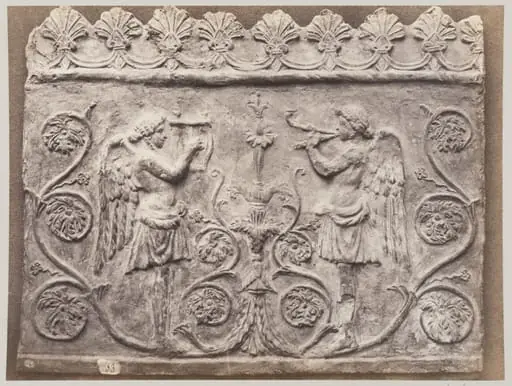 Bas-relief portion of frieze of Genii with double flutes and lyre
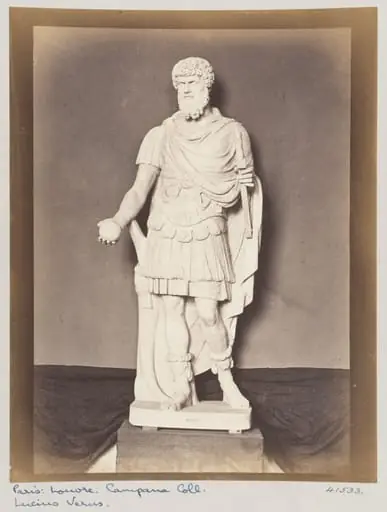 Marble Statue of Lucius Verus
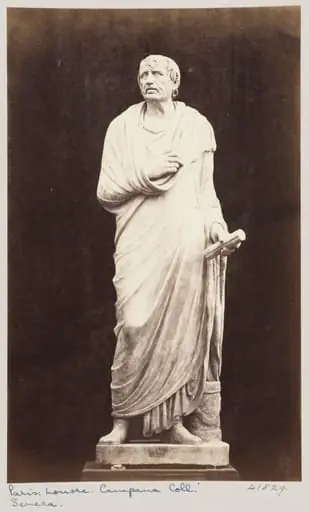 Marble Statue of Seneca
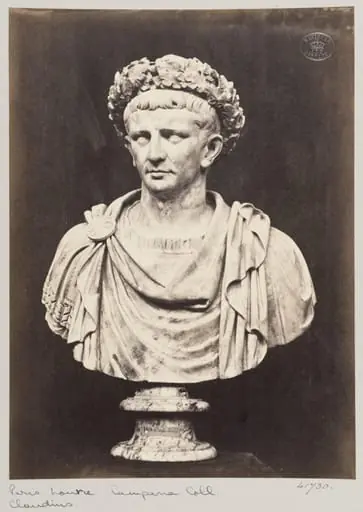 Marble bust of the Emperor Claudius
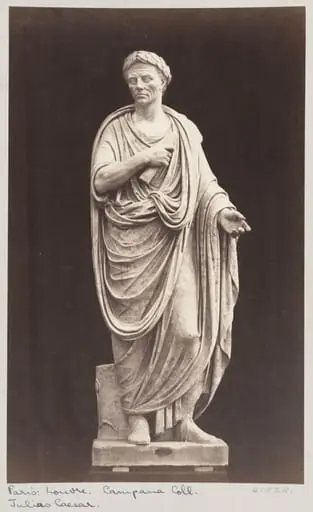 Marble Statue of Julius Caesar
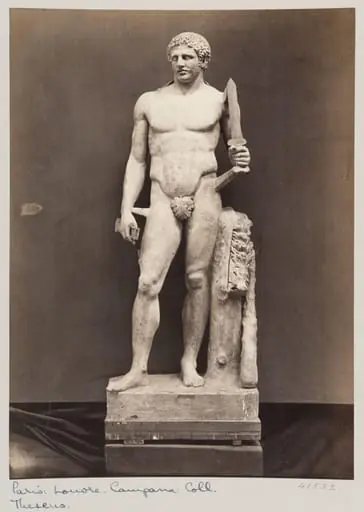 Marble Statue of Theseus
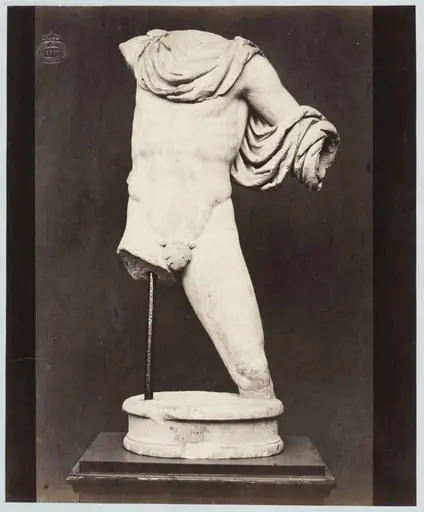 Fragment of a small marble statue
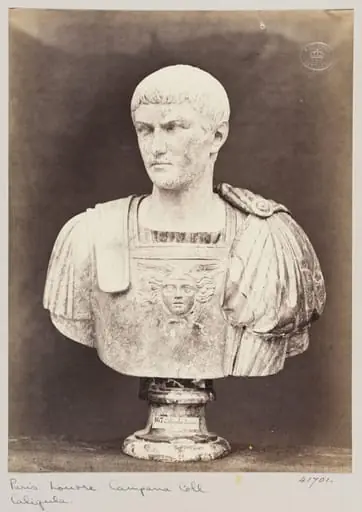 Marble bust of the Emperor of Caligula
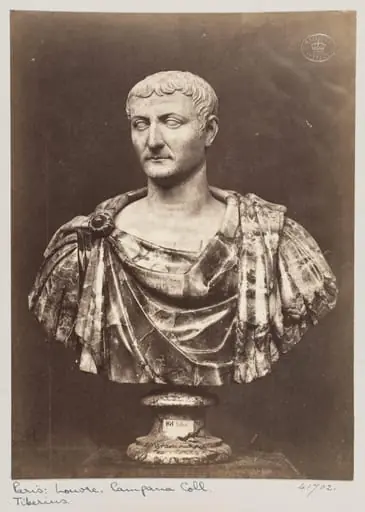 Marble bust of the Emperor Tiberius
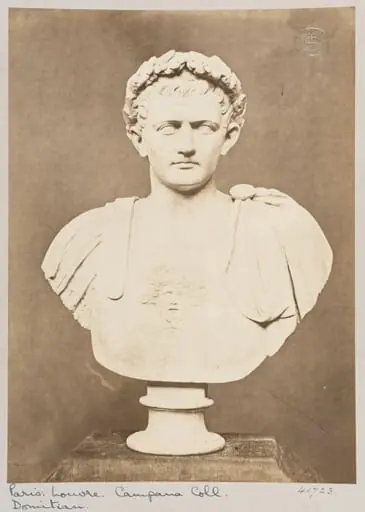 Marble bust of the Emperor Domitian
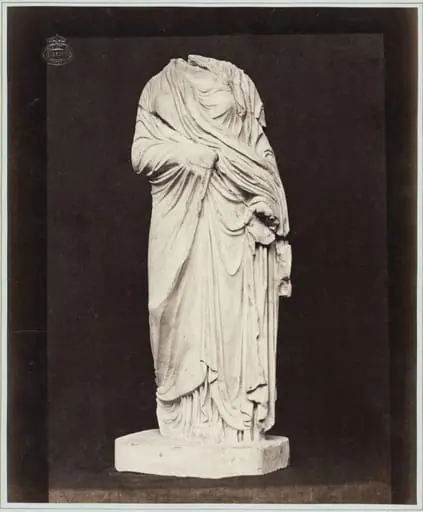 Marble statue of a headless draped figure
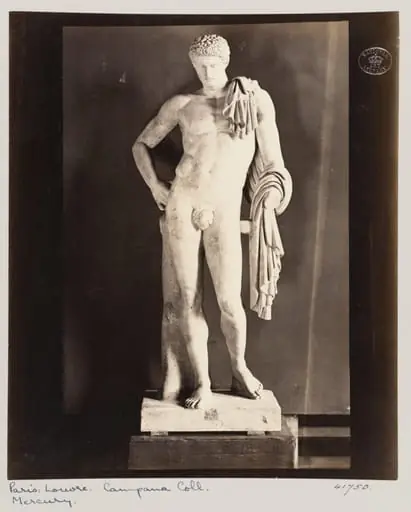 Marble statue of Theseus or Hercules
 Marble Bust of the Emperor Augustus