Artwork
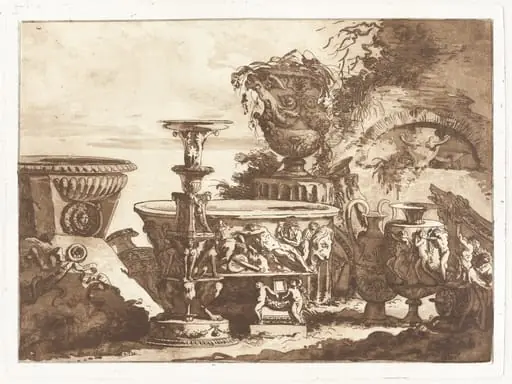
Ornamental Frieze
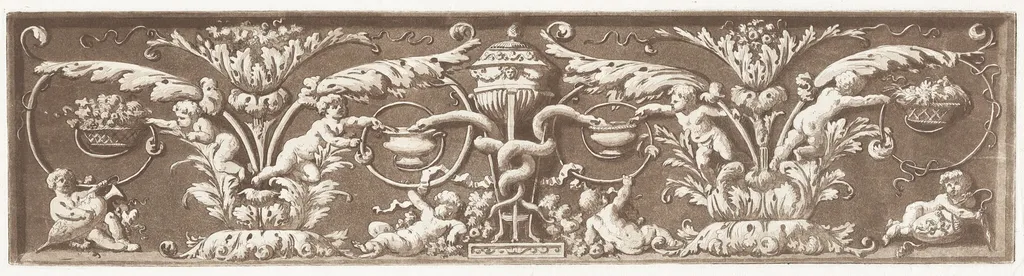
Ornamental Frieze is an ink print by the Romanticist artist Jean Jacques II Lagrenée. It is held in the collection of the National Gallery of Art.
About this work
Overview
Ornamental Frieze is a printed work from 1784 by Jean Jacques II Lagrenée, executed in etching, aquatint, and lift-ground aquatint on laid paper.
Ornamental Frieze is a printed work from 1784 by Jean Jacques II Lagrenée, executed in etching, aquatint, and lift-ground aquatint on laid paper. The image presents a decorative scene rendered in brown ink, mimicking the texture of carved stone. It was acquired by the National Gallery of Art in Washington, D.C., where it remains part of the print collection as an example of 18th-century decorative printmaking.
Subject & Meaning
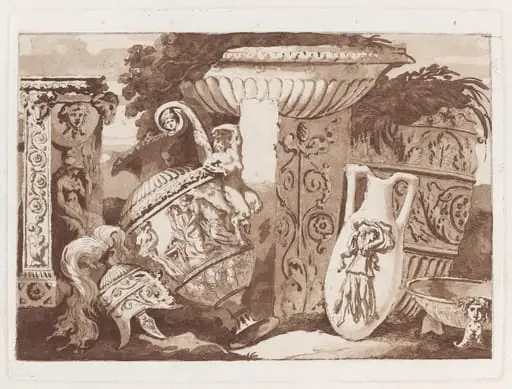
The composition depicts a lush, imaginary landscape populated by human figures and hybrid animal forms engaged in quiet, ritualistic acts. A woman pours water from a jug beside a tall vase, while trees and foliage frame the scene. The inclusion of mythical creatures and stylized natural elements suggests a symbolic or allegorical narrative, evoking classical antiquity rather than a literal setting.
Technique & Style
Lagrenée employed multiple intaglio techniques—etching for fine lines, aquatint for tonal gradations, and lift-ground aquatint to create areas of soft texture. The brown ink and layered printing simulate the appearance of weathered stone relief. The border is adorned with scrolling foliage, reinforcing the work’s function as a decorative panel, while the detailed figures are rendered with precision and a sense of quiet motion.
History & Provenance
Created in 1784, the print was likely produced as part of a series of ornamental designs for interior decoration. It entered the National Gallery of Art’s collection through established acquisition channels, though its early ownership history remains undocumented. Its survival in good condition reflects its status as a refined, non-commercial print intended for collectors rather than mass distribution.
Context
In late 18th-century France, decorative prints like this one responded to renewed interest in classical motifs and interior design. Artists often blended mythological and natural elements to create idealized spaces for aristocratic homes. Lagrenée’s work aligns with this trend, offering a refined alternative to architectural ornamentation through the accessible medium of print.
Legacy
Ornamental Frieze exemplifies the technical sophistication of French printmaking during the Enlightenment. While not widely reproduced or exhibited, it remains a key reference for understanding how artists translated sculptural aesthetics into print. Its preservation in a major institution ensures continued study of its role in the evolution of decorative arts.
Artist & collection


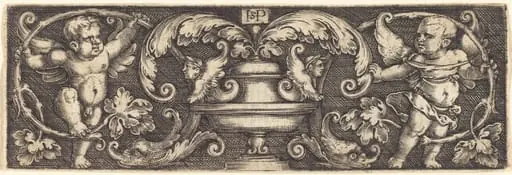 Ornament with a Vase Between Two Genii
 Ornament Panel: Triton Ridden by a Child
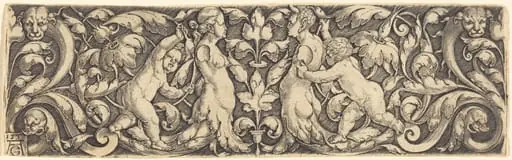 Cross Panel with Vine in Center and Tritons' Couple
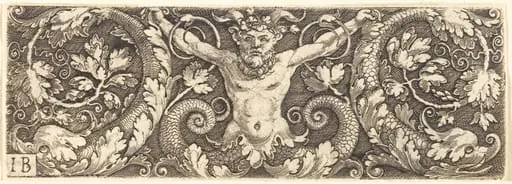 Ornament with Fantastic Satyr and Dolphins
 Panel of Ornament with Candelabra Supported by Two Blindfolded Women
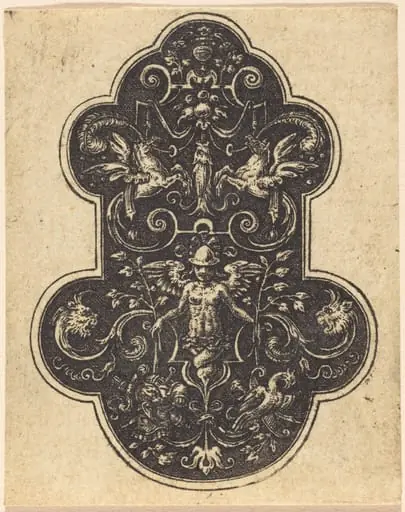 Female Figure
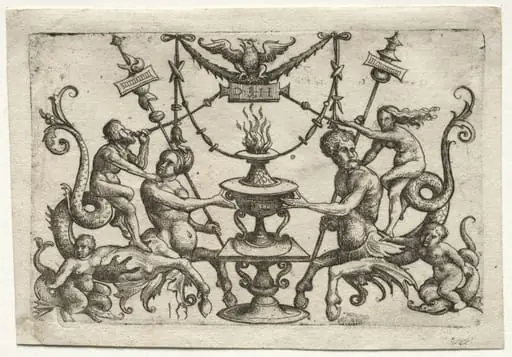 Ornament with Siren and Triton
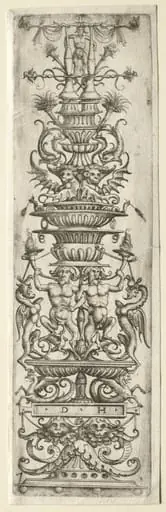 Ornament Fillet with Candelabre-Ornament
 Ornament Panel: Nereid and Two Children Playing Musical Instruments
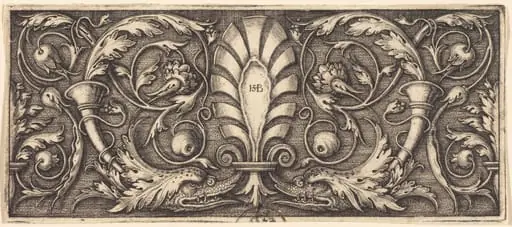 Ornament with Palmette and Two Dophin Heads
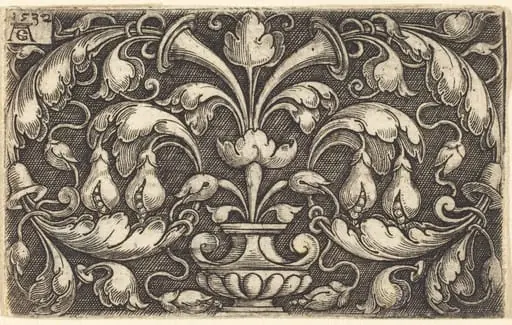 Ornament
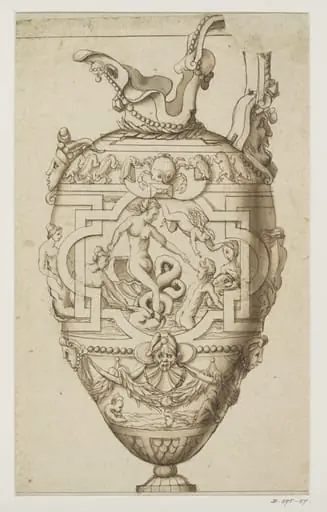 Copy of a design for a ewer