Artwork
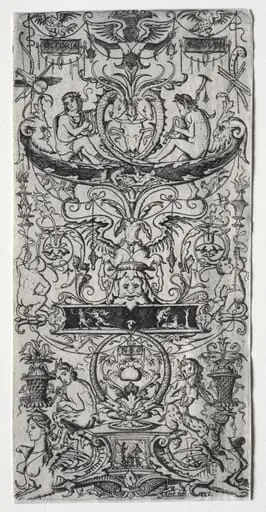
Ornament Fillet with Candelabre-Ornament
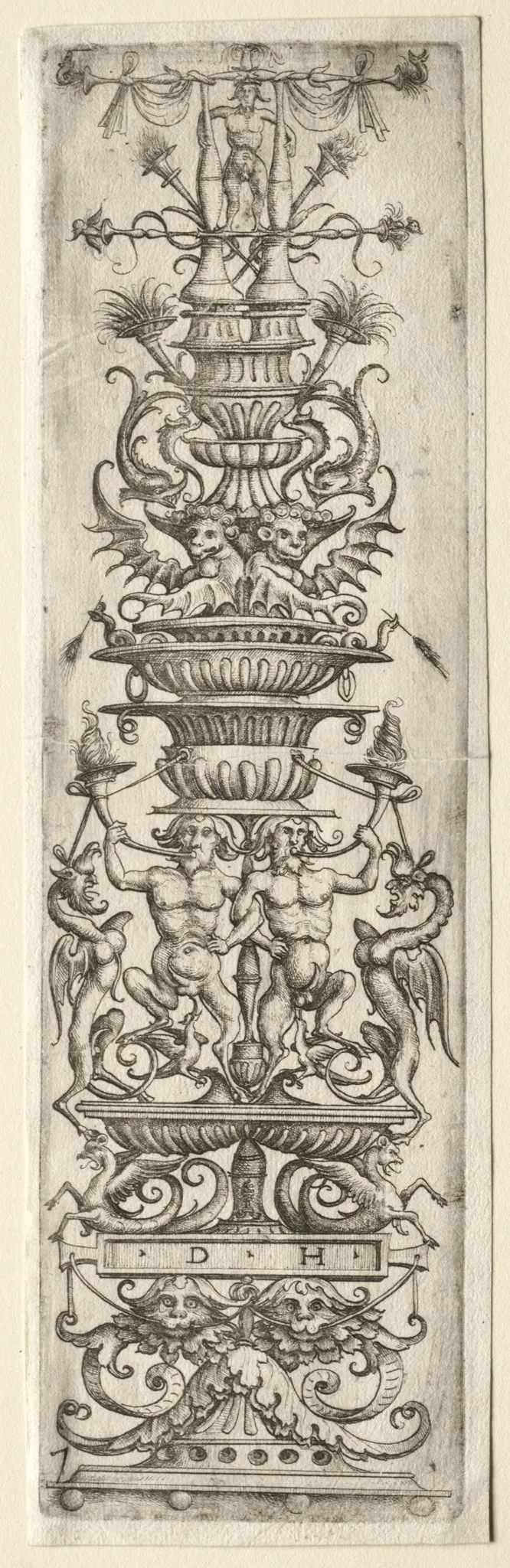
Ornament Fillet with Candelabre-Ornament is a print by Daniel Hopfer. It dates from 1513 and is held in the collection of the Cleveland Museum of Art.
About this work
Overview
This work, dated around 1513, exemplifies his shift toward decorative subjects, which helped expand the market for printed designs beyond narrative imagery.
Daniel Hopfer, a German artist active in the late 15th and early 16th centuries, is recognized as one of the first to adopt etching as a primary printmaking technique. His background in armor-making informed his use of iron plates, distinguishing his process from contemporaries who favored woodcut. This work, dated around 1513, exemplifies his shift toward decorative subjects, which helped expand the market for printed designs beyond narrative imagery.
Subject & Meaning
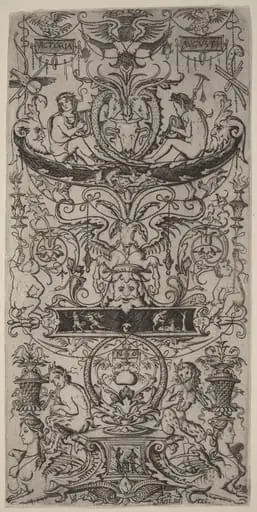
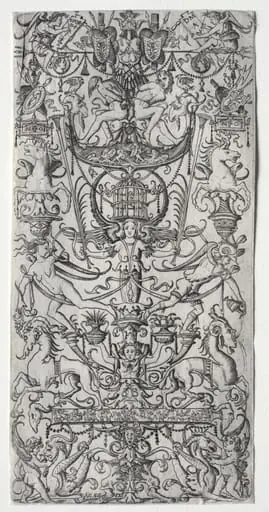
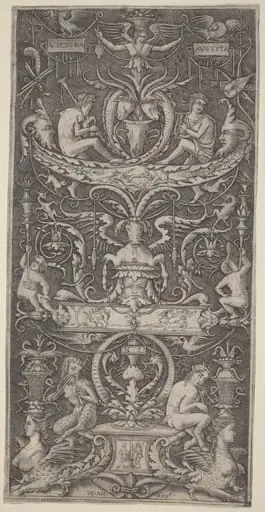
The print features a continuous band of candelabrum motifs, rendered in intricate linear patterns. These ornamental forms draw from classical and Renaissance decorative traditions, serving no narrative purpose but instead offering reusable visual elements. Such designs were likely intended for artisans and craftsmen seeking patterns for metalwork, textiles, or architectural embellishment, reflecting a practical function in the visual culture of the time.
Technique & Style
Hopfer employed etching on iron plates, using acid to bite lines into the metal surface—a method adapted from his armor-making experience. The lines are precise and dense, with a controlled rhythm that emphasizes repetition and symmetry. Unlike woodcut’s bold contrasts, this technique allowed finer detail and tonal variation, enabling the reproduction of delicate, repeatable ornamentation with greater consistency.
History & Provenance
Created during the early decades of etching’s emergence, this print likely circulated among workshops and designers rather than collectors. Its survival suggests it was valued as a working template. While no specific early ownership records are documented, its existence aligns with the rise of print publishers who distributed decorative designs across Europe, laying groundwork for the commercial print trade.
Context
In early 16th-century Germany, demand grew for standardized decorative motifs as artisanal production expanded. Hopfer’s ornamental prints responded to this need, offering reproducible patterns that could be adapted across media. His work coincided with broader shifts in visual culture, where printed images began to function as tools for design dissemination rather than solely as religious or narrative artifacts.
Legacy
Hopfer’s focus on ornamentation helped establish etching as a viable medium for non-narrative imagery, influencing later printmakers who specialized in decorative and architectural designs. His use of iron plates and commercial orientation contributed to the professionalization of print publishing. Though overshadowed by later artists, his role in expanding the scope of printmaking’s utility remains significant in the history of graphic arts.
Artist & collection

Artist
Daniel Hopfer (c. 1470 – 1536) was a German artist who is widely believed to have been the first to use etching in printmaking, at the end of the 15th century. He also worked in woodcut. Although his etchings were…

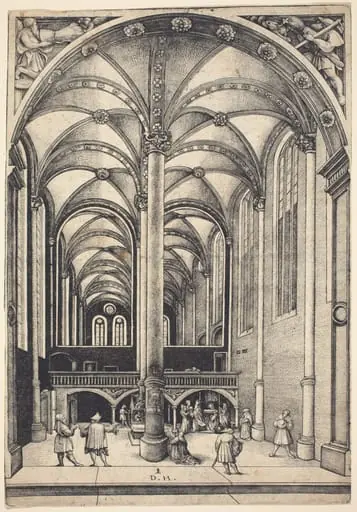 Interior of the Church of Saint Maria Magdalena with the Parable of the Offering of the Widow
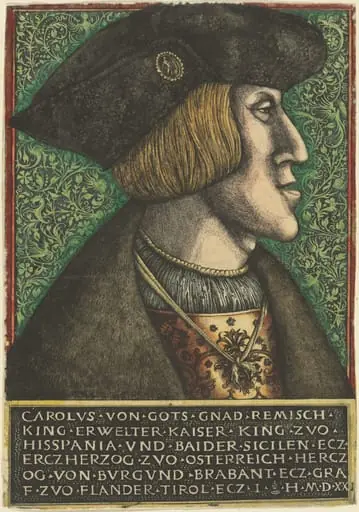 Emperor Charles V
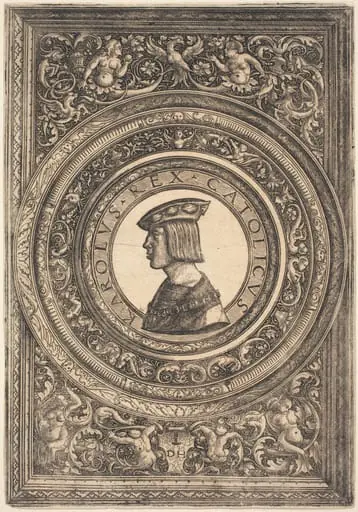 Emperor Charles V
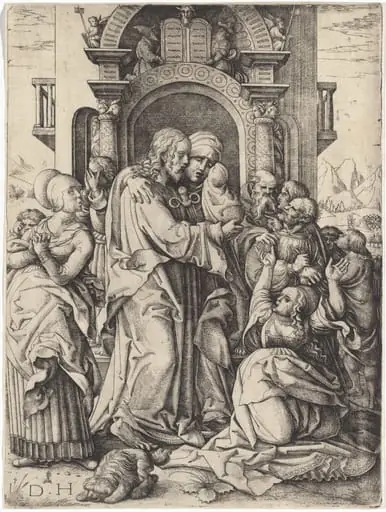 The Virgin Mary Taking Leave of Christ
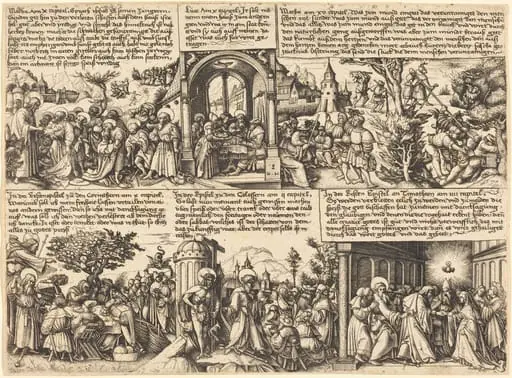 Jesus Christ Giving the Mission to the Apostles and Other New Testament Scenes
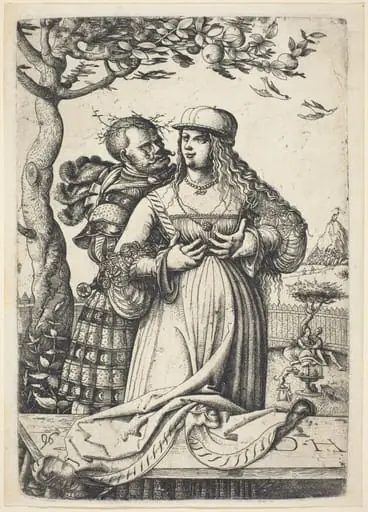 Soldier Embracing a Woman
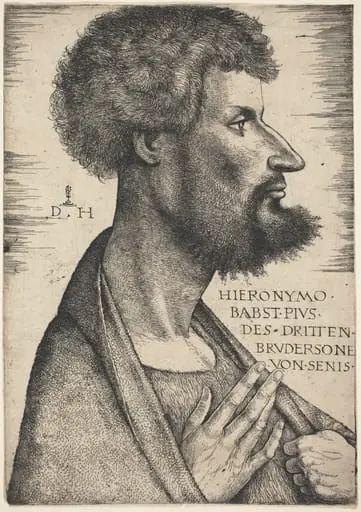 Girolamo da Siena
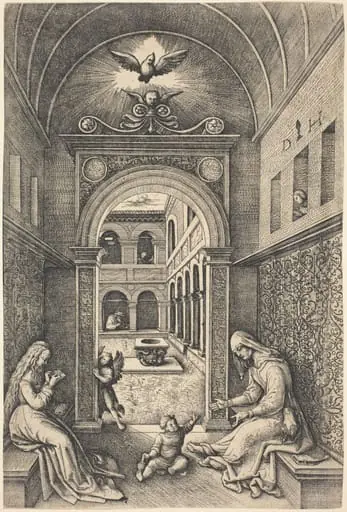 The Virgin and Child with Saint Anne by a Portal
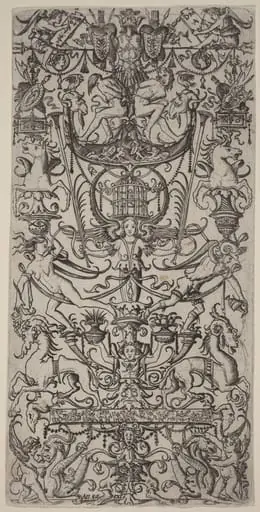 Ornament Panel with a Birdcage
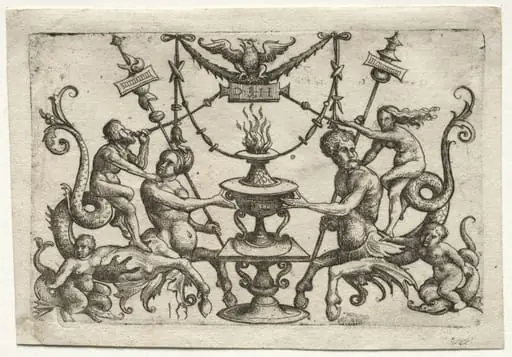 Ornament with Siren and Triton
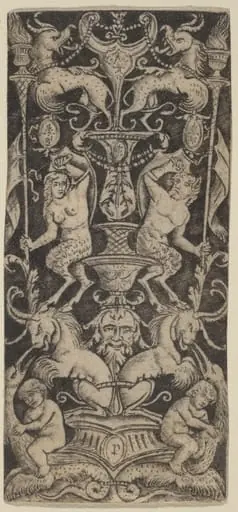 Panel of Ornament with Two Naked Children on Monstrous Beasts
 Ornament Panel: Victoria Augusta
 Ornament Panel with a Bird Cage
 Vase Orné d'Enfans
 Ornamental Panel Inscribed "Victoria Augusta"
 Ornament Panel Inscribed Victoria Augusta
 Head of Medusa