Artwork
Jeanne d'Albret, Queen of Navarre, Mother of Henry IV of France
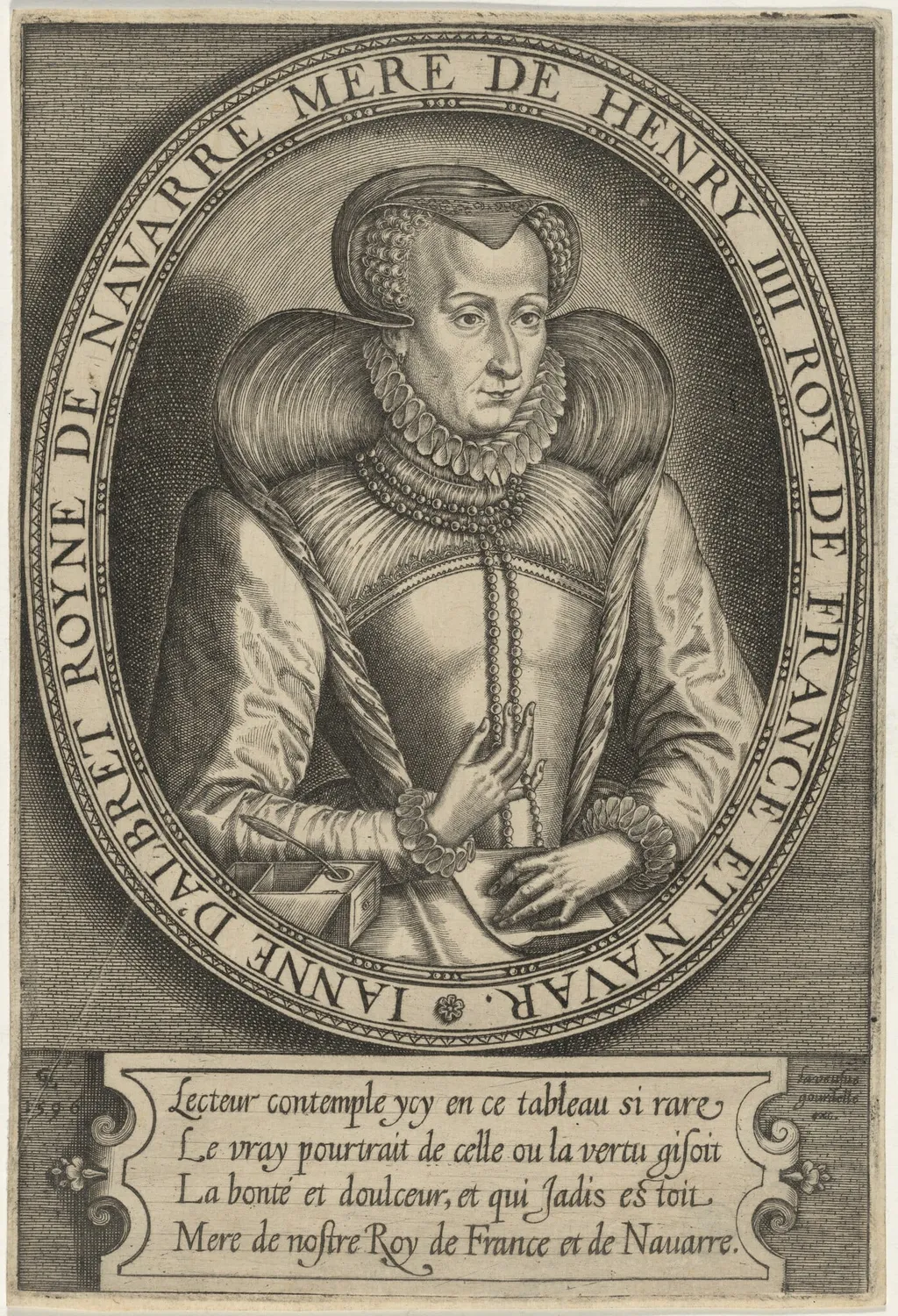
Jeanne d'Albret, Queen of Navarre, Mother of Henry IV of France is an ink print by the Baroque artist Gerard de Lairesse. It dates from 1676 and is held in the collection of the National Gallery of Art.
About this work
Overview
This 1676 engraving by Gerard de Lairesse portrays Jeanne d'Albret, Queen of Navarre and mother of Henry IV of France, within a classical framework. The composition features the queen in an oval frame, adorned with a hat, high-collared dress, and rosary, set against a dark background that accentuates her figure.
Subject & Meaning
Jeanne d'Albret is depicted in a formal, dignified manner, reflecting her royal status and the artistic conventions of the time. The rosary in her hands may symbolize her religious devotion, a significant aspect of her identity as a Huguenot leader.
Technique & Style
Executed in the Baroque style, the engraving showcases detailed realism and classical influences, characteristic of Lairesse's work. Although often associated with the Baroque, Lairesse's approach, as outlined in his later treatises, emphasizes geometric precision, blending Baroque detail with classical restraint.
History & Provenance
Created in 1676 by Gerard de Lairesse, a Dutch artist theorist influenced by Italian and French classicism (notably Cesare Ripa and Charles le Brun), this engraving postdates Rembrandt's era, positioning it within the later Dutch Golden Age.
Context
The engraving's classical and formal conventions align with the artistic preferences of the late 17th century, reflecting the enduring influence of French and Italian classicist traditions in Dutch art during this period.
Artist & collection
Artist
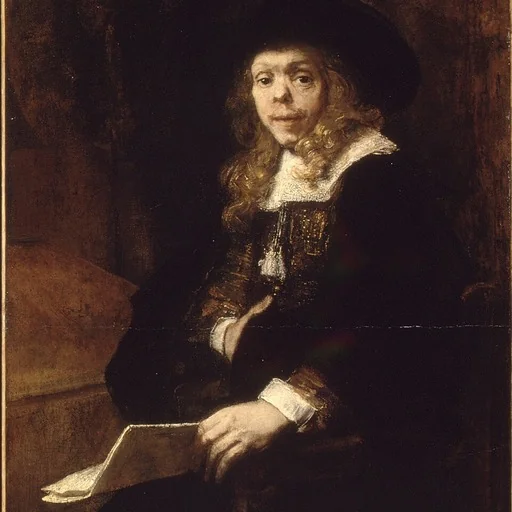
Gerard or Gérard (de) Lairesse (French pronunciation: ; 11 September 1641 – June 1711) was a Dutch Golden Age painter and art theorist.

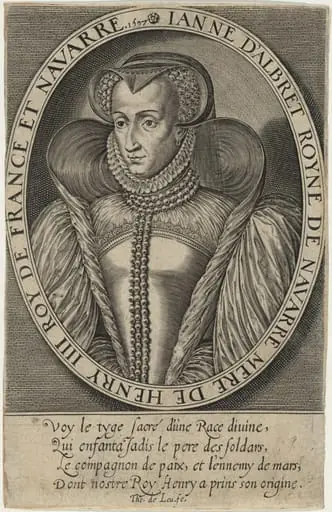 Jeanne D'Albret, Queen of Navarre, Mother of Henry IV of France
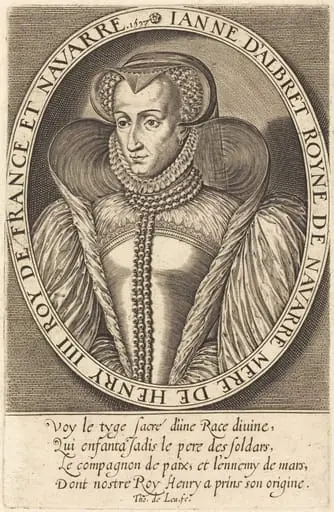 Jeanne d'Albret, Queen of Navarre
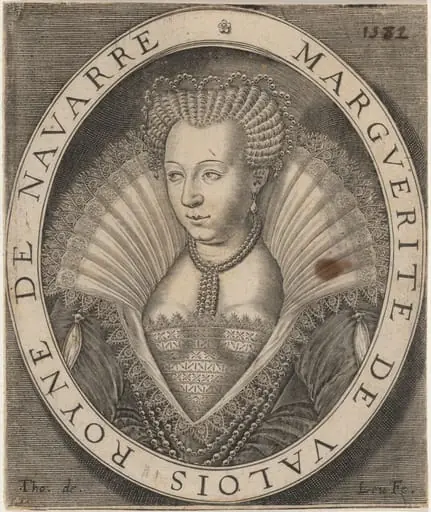 Marguerite de Valois, Wife of Henry of Navarre
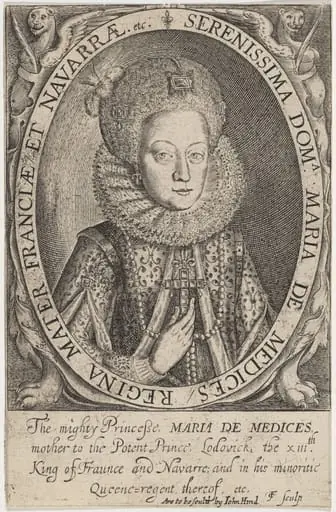 Marie de Medici, Wife of Henry IV of France
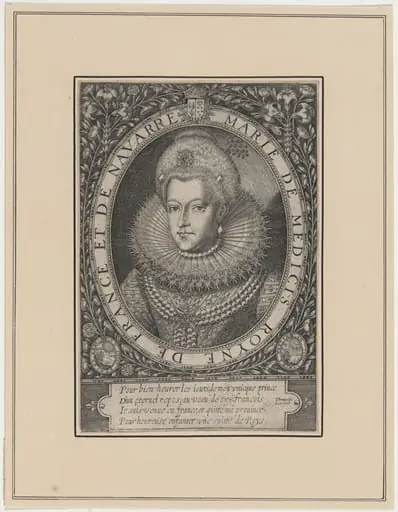 Marie de Medici, Wife of Henry IV of France
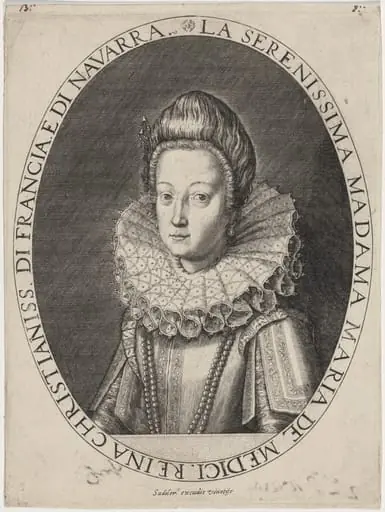 Marie de Medici, Wife of Henry IV of France
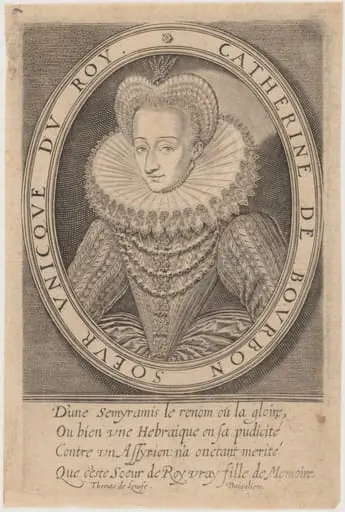 Catherine of Bourbon, Sister of Henry IV
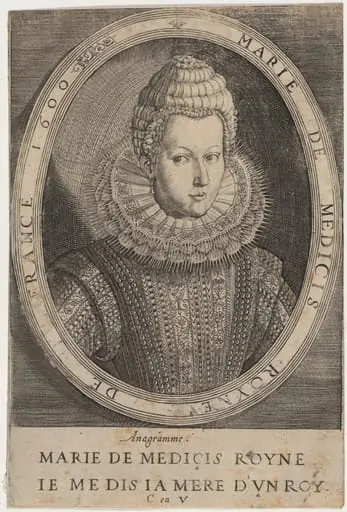 Marie de Medici, Wife of Henry IV of France
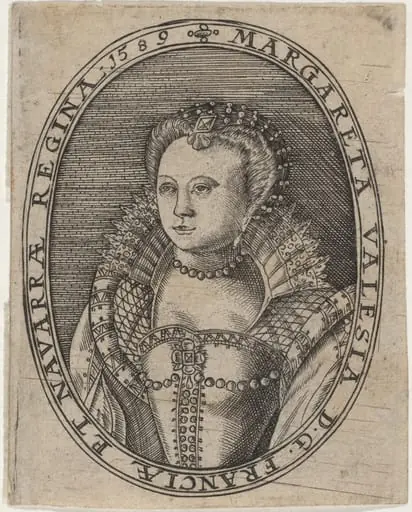 Marguerite de Valois, Wife of Henry of Navarre