Artwork
Marguerite de Valois, Wife of Henry of Navarre
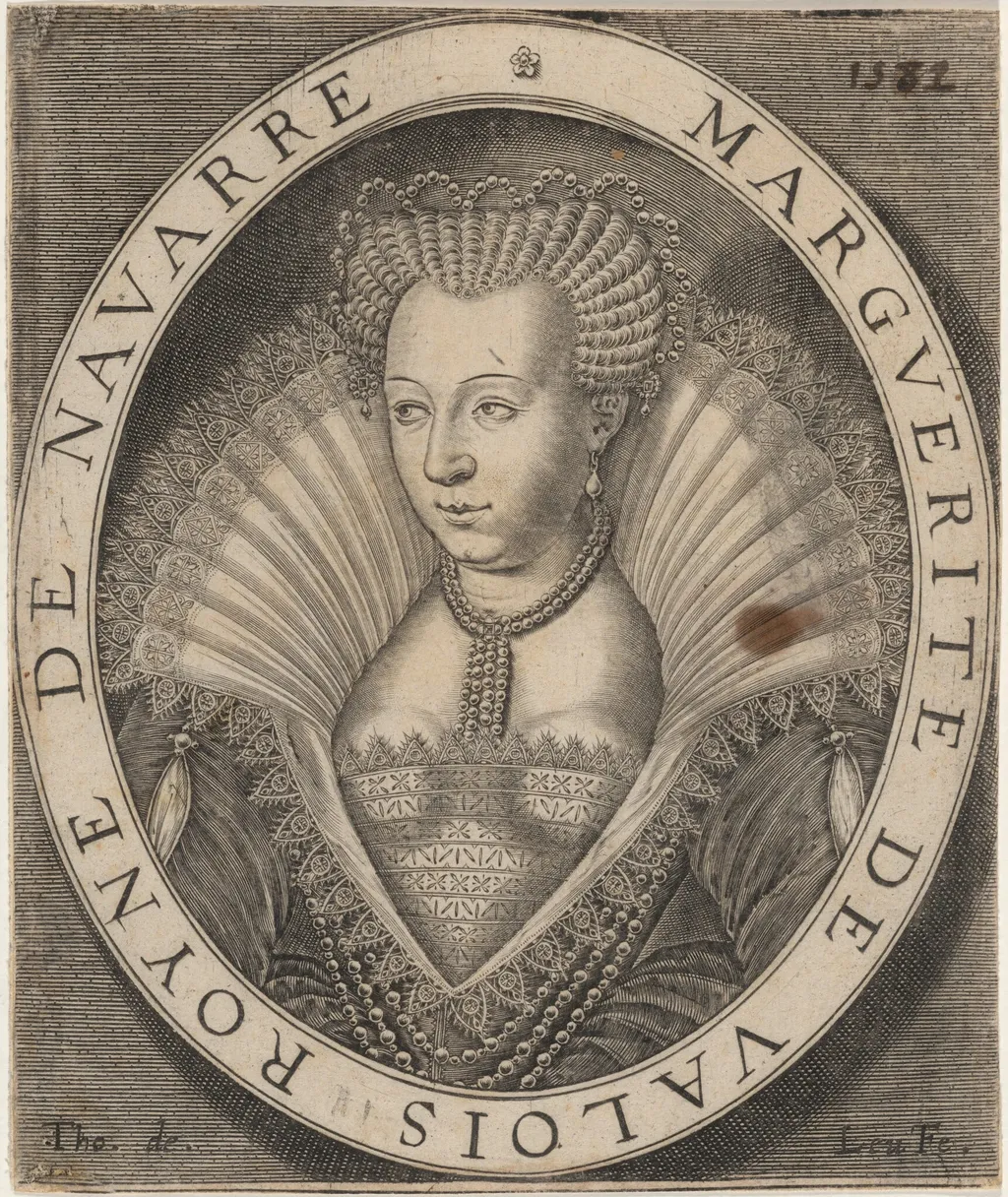
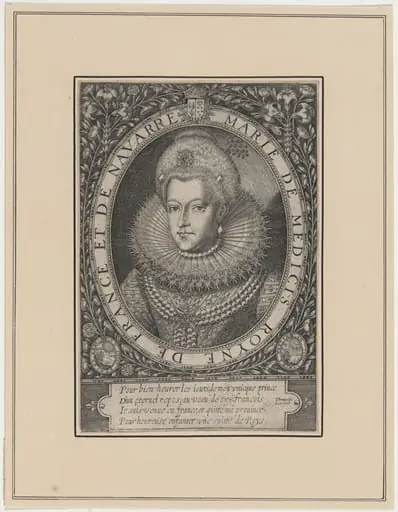
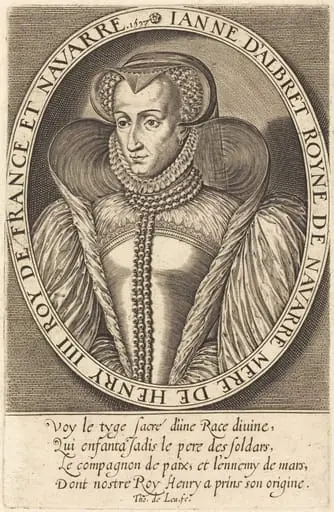
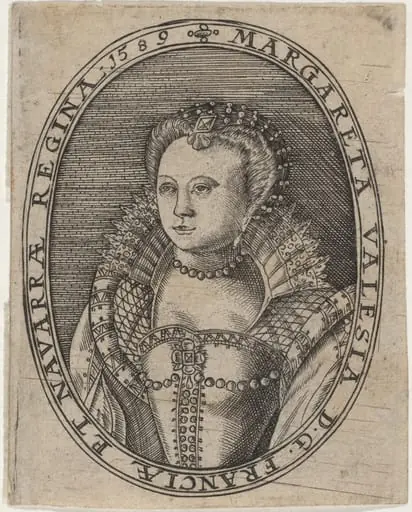
Marguerite de Valois, Wife of Henry of Navarre is an ink print by the Renaissance artist Thomas de Leu. It dates from 1590 and is held in the collection of the National Gallery of Art.
About this work
Overview
The work is a finely detailed portrait executed in black ink on paper, typical of late 16th-century printmaking practices in France.
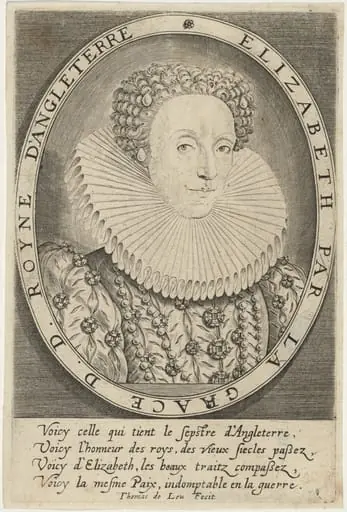
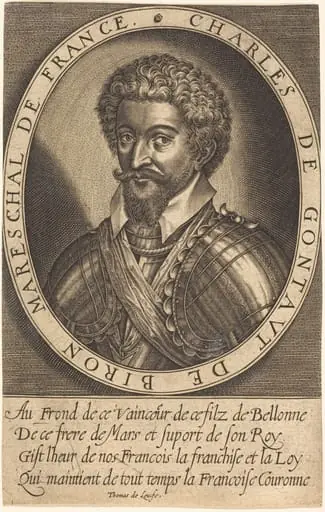
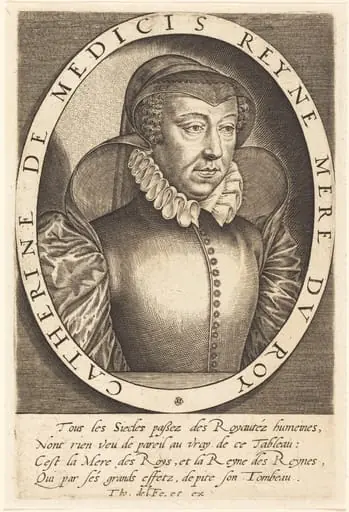
Created in 1590 by Thomas de Leu, this engraving portrays Marguerite de Valois, queen consort of Henry of Navarre. De Leu, a Flemish artist active in Paris, specialized in reproductive prints that circulated images of European nobility. The work is a finely detailed portrait executed in black ink on paper, typical of late 16th-century printmaking practices in France. Its purpose was likely to disseminate the likeness of a politically significant royal figure.
Subject & Meaning
Marguerite de Valois, daughter of King Henry II of France and queen to the future Henry IV, was a central figure in France’s religious conflicts. The portrait emphasizes her status through regal attire rather than narrative context. Her expression is composed, her gaze direct—conveying dignity rather than emotion. The image functions as a symbol of legitimacy and aristocratic presence during a turbulent period of French history.
Technique & Style
De Leu employed fine linear engraving to render textures of fabric, lace, and metalwork with precision. The headdress and necklace are rendered with intricate hatching and cross-hatching, highlighting the craftsmanship of courtly adornments. The plain background isolates the figure, focusing attention on facial features and costume. This approach reflects Renaissance ideals of clarity, proportion, and observed detail, typical of reproductive portraiture in print.
History & Provenance
The print was produced during a time of civil unrest in France, when Marguerite’s role as a mediator between Catholic and Huguenot factions was politically sensitive. De Leu, operating as both artist and publisher, likely issued multiple impressions for elite collectors and diplomatic circles. No definitive early ownership records survive, but similar engravings by de Leu appear in royal and aristocratic collections across Europe.
Context
In the late 1500s, engraved portraits served as tools of political visibility, especially for women whose influence was often indirect. Marguerite’s image, circulated widely, reinforced her public identity amid shifting alliances. De Leu’s work aligned with broader European trends in print culture, where portraiture became a medium for constructing and sustaining noble reputations beyond the court.
Legacy
This engraving remains one of the most recognizable visual records of Marguerite de Valois. While not original in composition—likely based on a lost painting—it contributed to the standardized iconography of French royalty in print. De Leu’s technique influenced later engravers, and the image continues to be referenced in historical studies of gender, power, and visual propaganda in early modern Europe.
Artist & collection
Artist
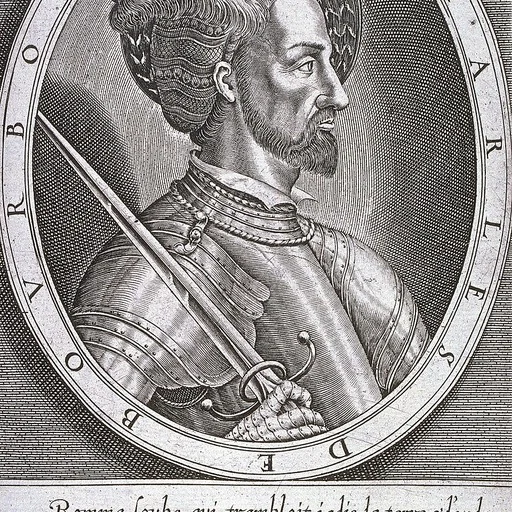
Thomas de Leu or Leeuw or Le Leup or Deleu (1560–1612) was a French engraver, publisher, and print dealer of Flemish origin.