Artwork
Marie de Medici, Wife of Henry IV of France
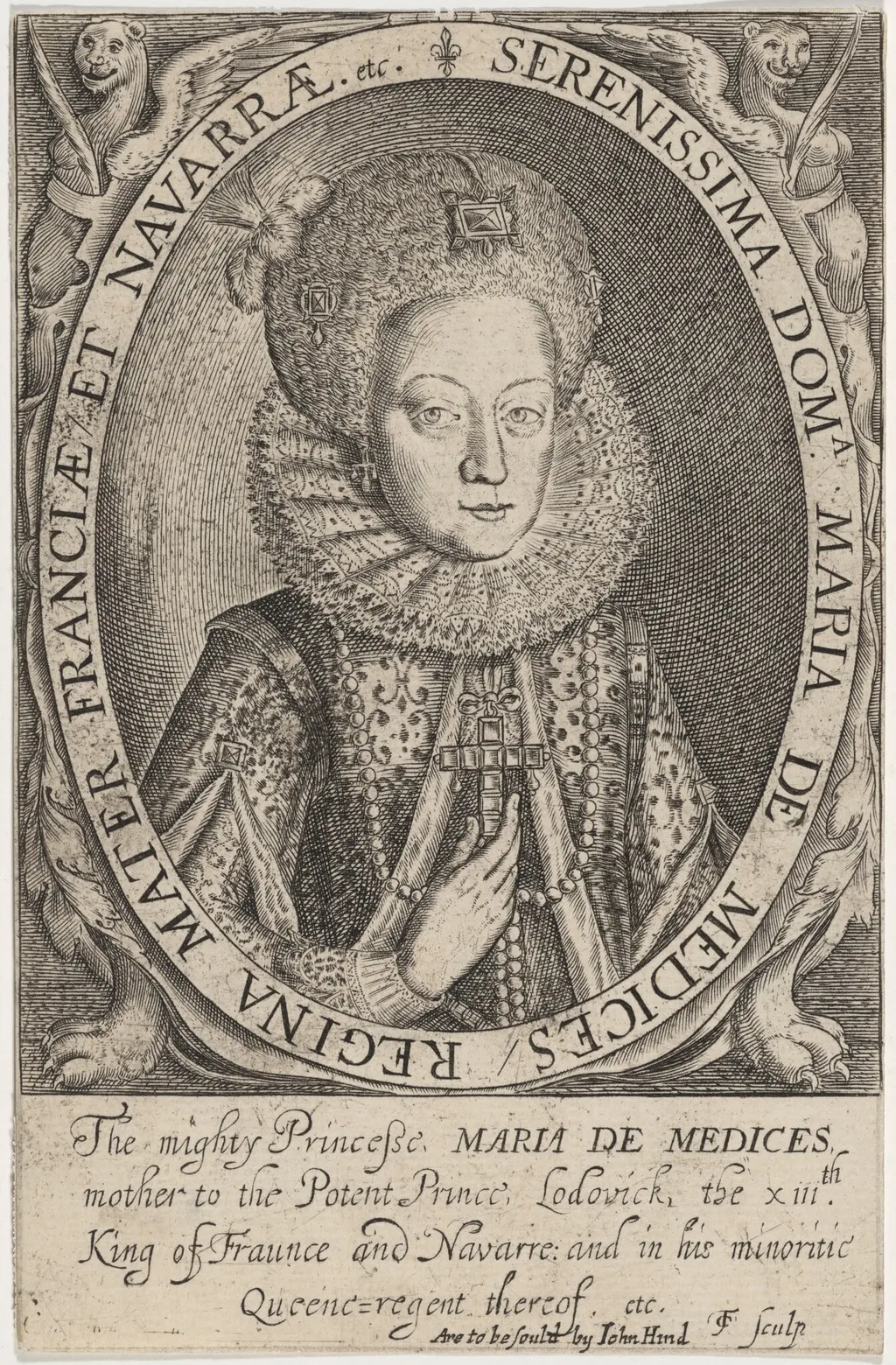
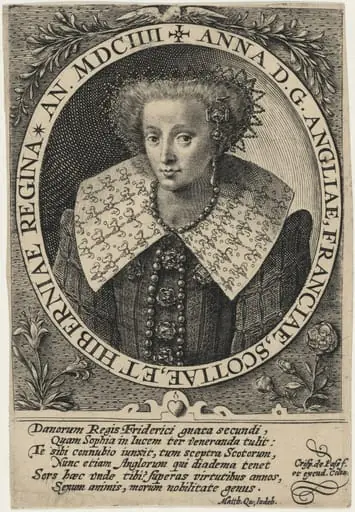
Marie de Medici, Wife of Henry IV of France is an ink print by the Renaissance artist Thomas Cockson. It dates from 1604 and is held in the collection of the National Gallery of Art.
About this work
Overview
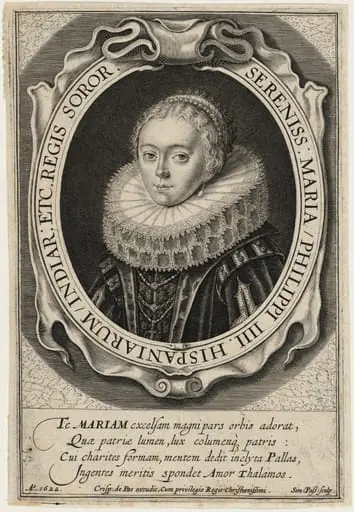
Thomas Cockson’s 1604 engraving presents Marie de Medici, the consort of Henry IV of France. Rendered in monochrome, the portrait shows the queen‑consort in a formal pose, gazing directly at the viewer with a composed expression.
Subject & Meaning
The figure is identified as Marie de Medici, highlighted by her regal attire—a high collar, ornate dress, and a modest crown—signifying her status within the French court. The presence of a cross at her throat underscores her Catholic affiliation, a key aspect of her public identity.
Technique & Style
Executed as a line engraving, the work relies on fine incised lines to model the intricate details of the collar, dress, and hair. The surrounding circular band contains an inscription rendered in a decorative script, typical of early‑17th‑century portrait prints.
History & Provenance
Created in 1604, the print emerges shortly after Marie de Medici’s marriage to Henry IV, reflecting contemporary interest in royal portraiture. The engraving is attributed to the English printmaker Thomas Cockson, known for his portrait prints of European nobility.
Context
The image belongs to the broader tradition of Renaissance portraiture that emphasized clarity of line and symbolic attributes to convey rank and piety. Such prints served both as commemorative objects and as means of disseminating the likeness of prominent figures across Europe.
Artist & collection