Artwork
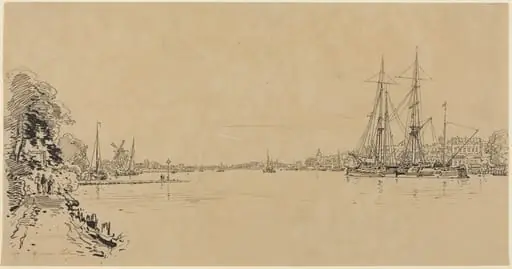
Banks of the Tamise
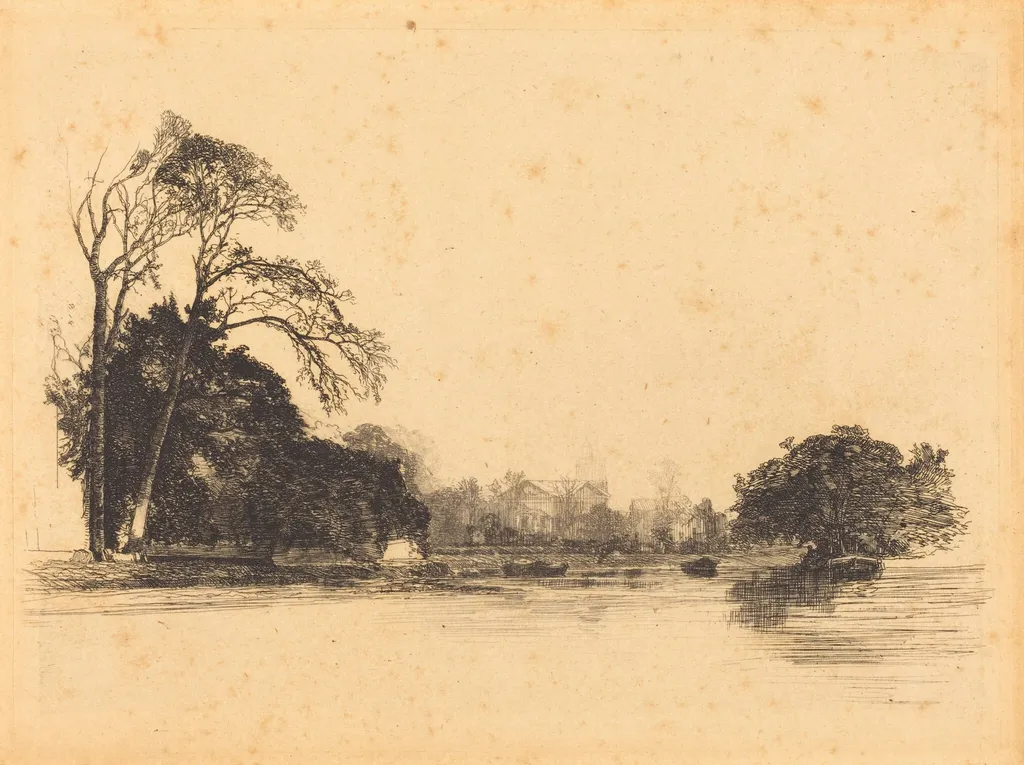
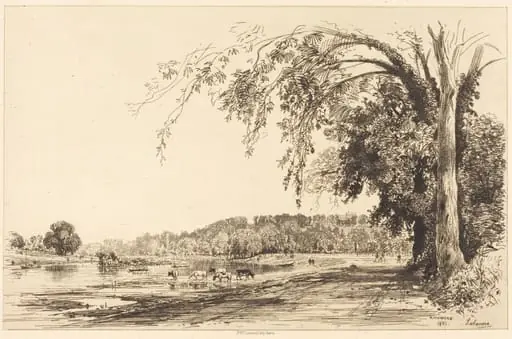
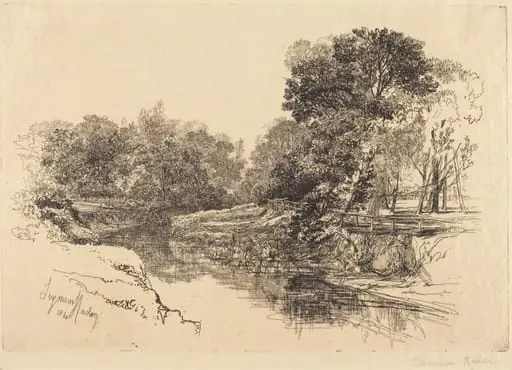
Banks of the Tamise is an ink print by the Impressionist artist Maxime Lalanne. It dates from 1869 and is held in the collection of the National Gallery of Art.
About this work
Overview
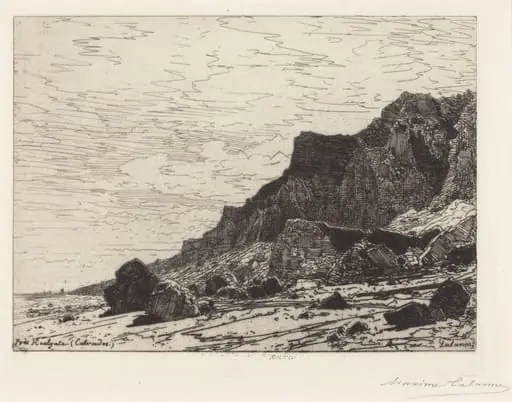
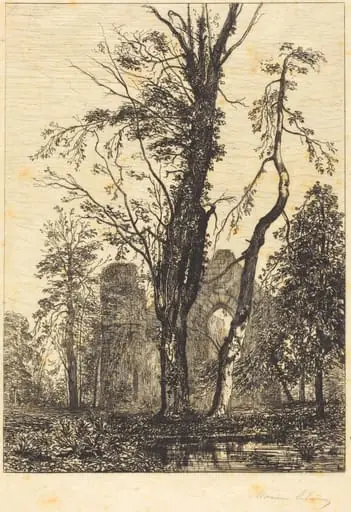
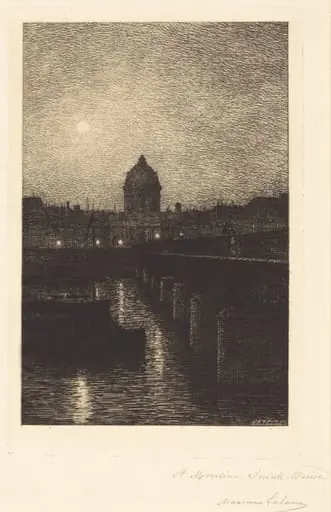
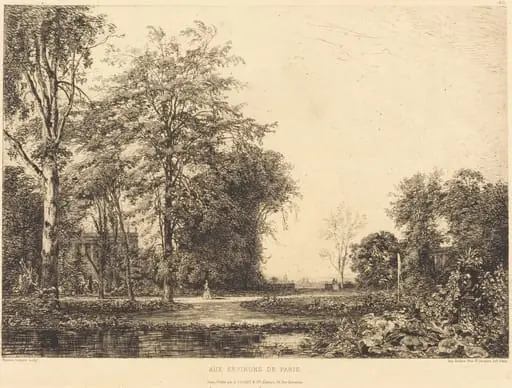
François Antoine Maxime Lalanne, a French printmaker active in the mid‑nineteenth century, produced the work titled *Banks of the Tamise* in 1869. Executed as an etching on laid paper, the piece belongs to his broader output of river and landscape subjects rendered in monochrome.
Subject & Meaning
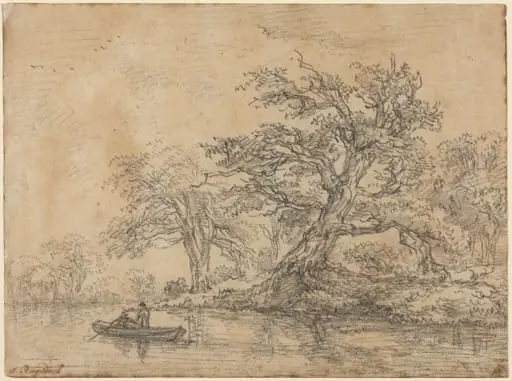
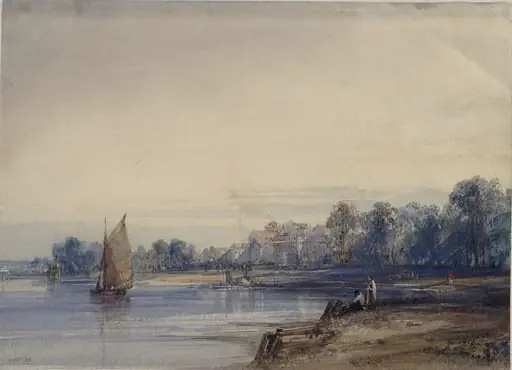
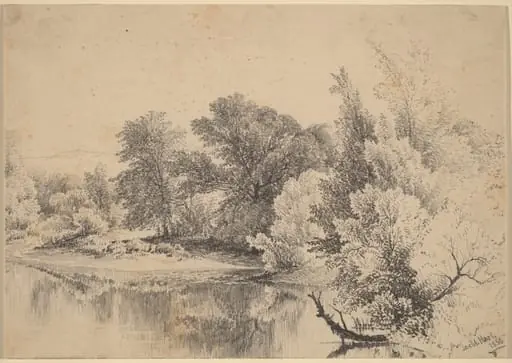
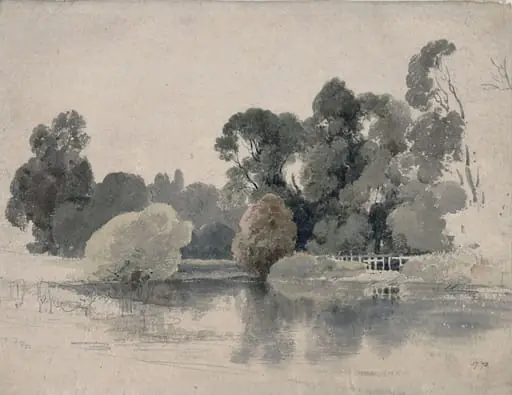
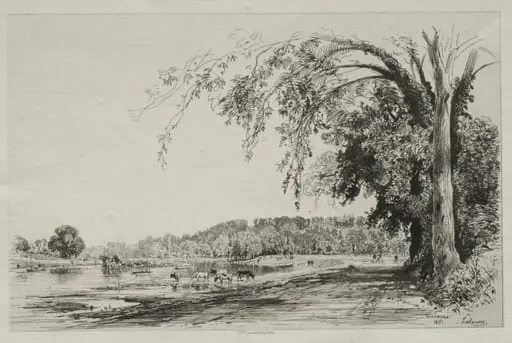
The image presents a tranquil stretch of the Thames, its banks lined with gnarled trees and punctuated by modest structures in the distance. Calm water bears faint ripples near the shore, suggesting a moment of quiet observation rather than narrative drama.
Technique & Style
Lalanne employed a loose, ink‑spreading approach characteristic of his etchings, allowing the lines to soften and the foliage and water to appear alive without precise definition. The use of laid paper contributes a subtle texture that enhances the atmospheric quality of the scene.
History & Provenance
Created during a period when French artists were revitalising the etching medium, *Banks of the Tamise* reflects Lalanne’s participation in that revival. The work has remained documented as part of his oeuvre, illustrating his contribution to nineteenth‑century printmaking.
Context
The print aligns with a broader nineteenth‑century interest in urban and riverine landscapes, particularly those of iconic cities such as London. By focusing on a familiar yet serene view of the Thames, Lalanne engages with contemporary tastes for picturesque depictions of modern life.
Own this work as a print
Artist & collection
Artist
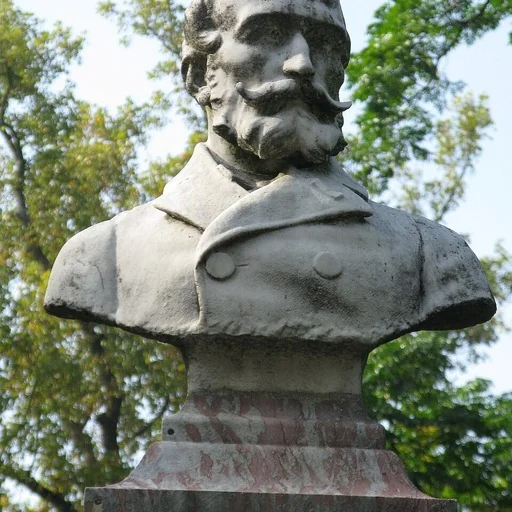
François Antoine Maxime Lalanne (November 27, 1827 – July 29, 1886) was a French artist known for his etchings and charcoal drawings (fusain).