Artwork
Secret derobé à un ami (Secret Stolen from a Friend)
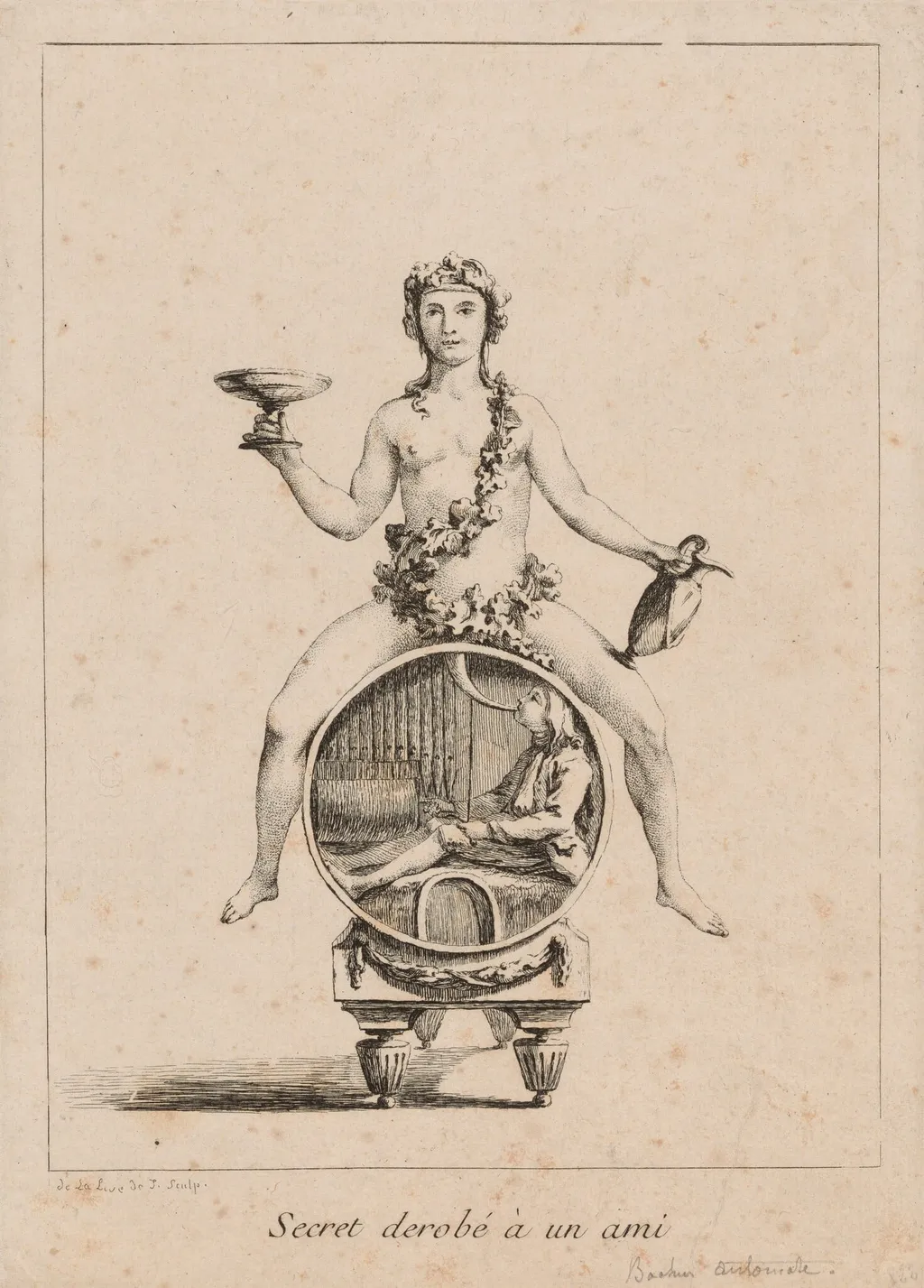
Secret derobé à un ami (Secret Stolen from a Friend) is an ink print by the Romanticist artist Ange-Laurent de Lalive de Jully. It dates from 1764 and is held in the collection of the National Gallery of Art.
About this work
Overview
Created around 1764, this etching on laid paper, later mounted in a nineteenth‑century paper frame, is attributed to the French printmaker Ange‑Laurent de Lalive de Jully. The work is part of the collection of the National Gallery of Art in Washington, D.C., and exemplifies the playful allegorical genre popular in mid‑eighteenth‑century France.
Subject & Meaning
The image depicts a female figure poised atop a massive globe, clutching a tray in one hand and a bird in the other, while a wreath crowns her head.
The image depicts a female figure poised atop a massive globe, clutching a tray in one hand and a bird in the other, while a wreath crowns her head. Within the globe a miniature scene shows a man seated beside a lake, reading a book. The title, *Secret derobé à un ami* (Secret Stolen from a Friend), suggests the composition functions as a visual allegory, perhaps warning of the divulgence of private knowledge or the spread of gossip.
Technique & Style
Executed by etching, the artist incised lines into a copper plate, producing delicate tonal variations and fine details that translate into the printed image. The use of laid paper provides a textured surface that enhances the contrast between the figure’s crisp outlines and the softer interior scene of the globe. The composition balances a theatrical pose with intricate narrative elements typical of Rococo printmaking.
History & Provenance
The print was produced in the mid‑1760s, a period when Lalive de Jully was active in Paris, publishing a range of satirical and allegorical prints. It entered the National Gallery of Art’s holdings through a 20th‑century acquisition, though earlier ownership records are limited. The mounting in a nineteenth‑century paper frame reflects later conservation practices.
Context
During the Enlightenment, prints often served as vehicles for social commentary, using mythological or allegorical figures to critique manners and private conduct. The globe motif alludes to the expanding geographic knowledge of the era, while the act of a woman balancing on it may symbolize the precariousness of reputation when secrets are disclosed.
Legacy
Although not widely reproduced, the work illustrates Lalive de Jully’s skill in merging narrative wit with technical finesse. It remains a valuable example of mid‑eighteenth‑century French print culture, offering insight into the visual strategies used to convey moral and social messages through allegory.
Artist & collection


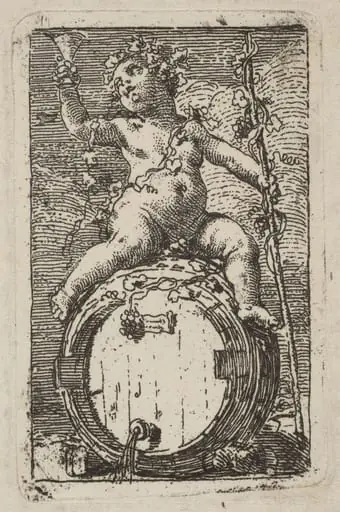 The Infant Bacchus Astride a Wine Barrel
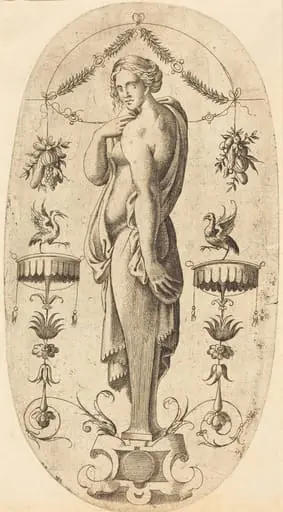 Woman with Left Profile
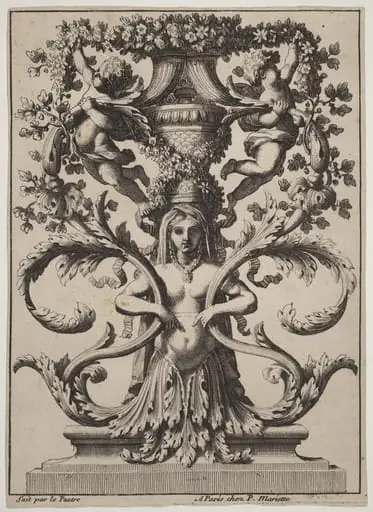 Ornament with a Woman Turning to Foliage
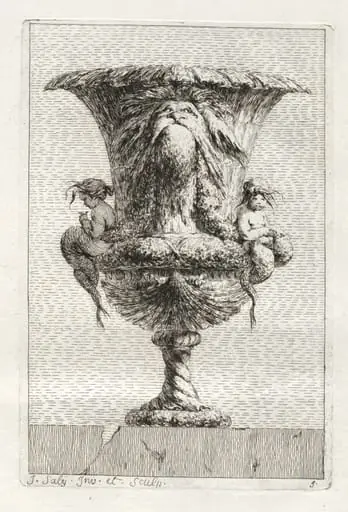 Suite of Vases: Plate 9
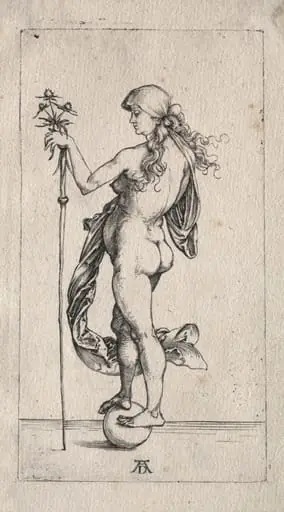 The Little Fortune
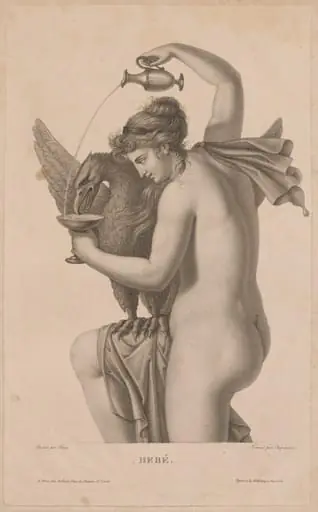 Hebé
Hebé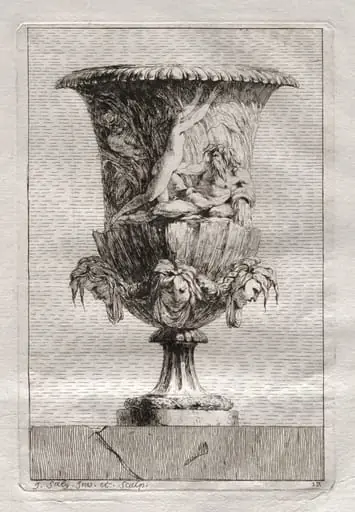 Suite of Vases: Plate 17
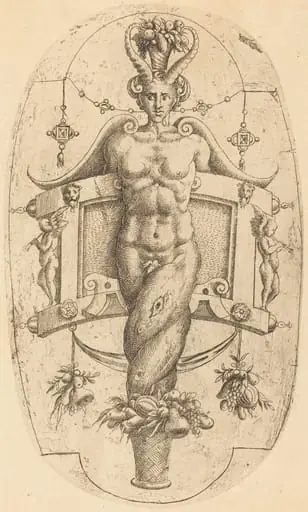 Horned Genius
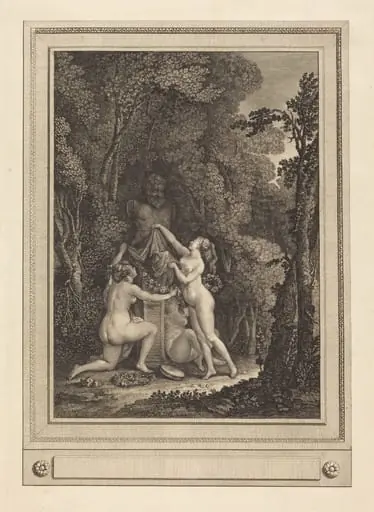 Les nymphes scrupuleuses
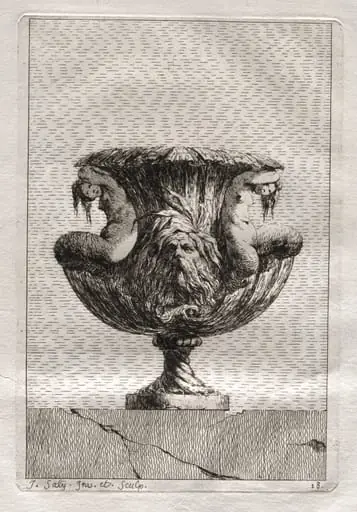 Suite of Vases: Plate 18
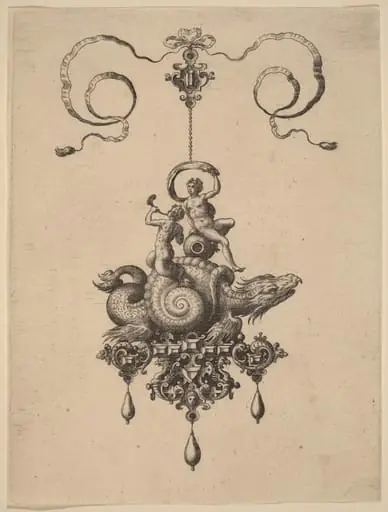 Design for a Pendant with a Sea-Monster in a Shell Carrying a Triton and a Woman with a Sail
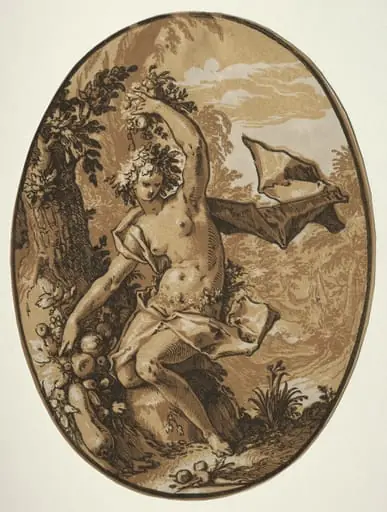 The Deities: Proserpine