Artwork
Le paysan
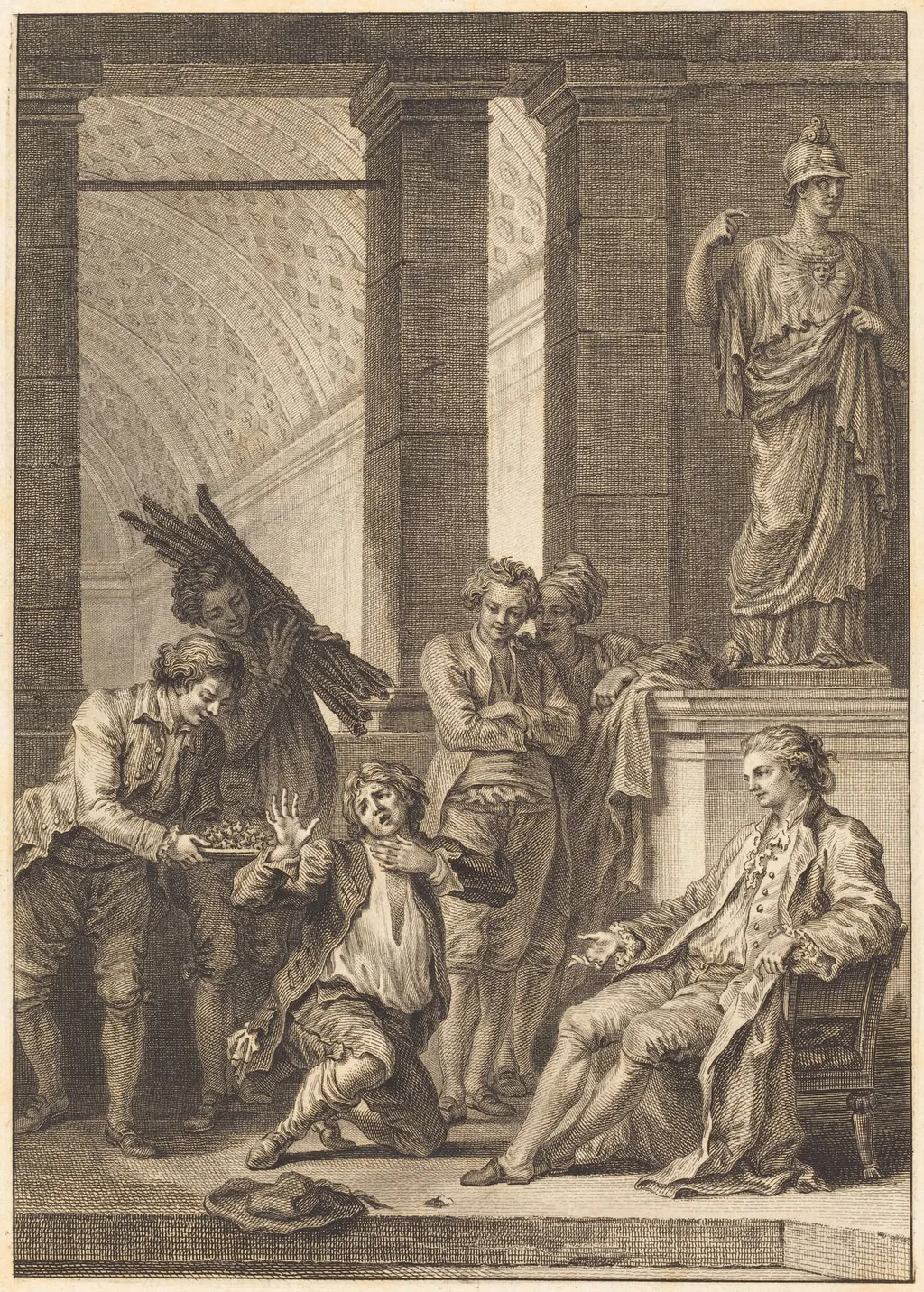
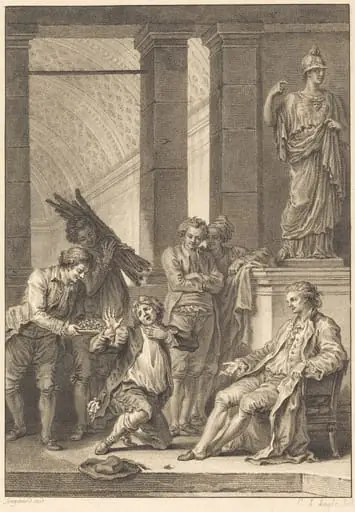
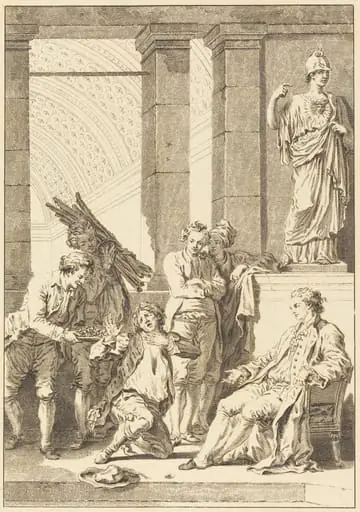
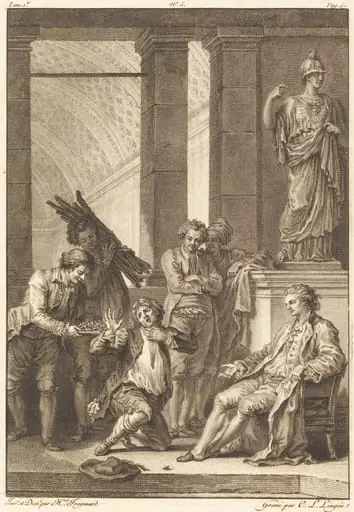
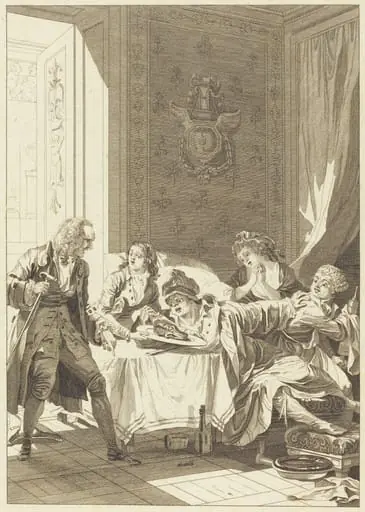
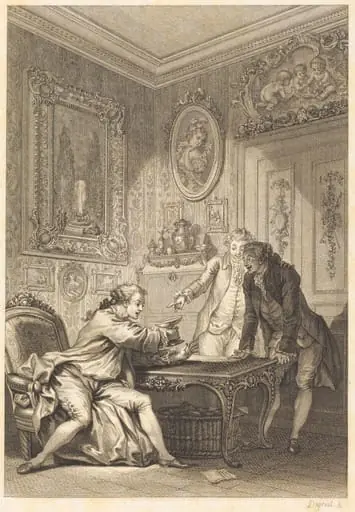
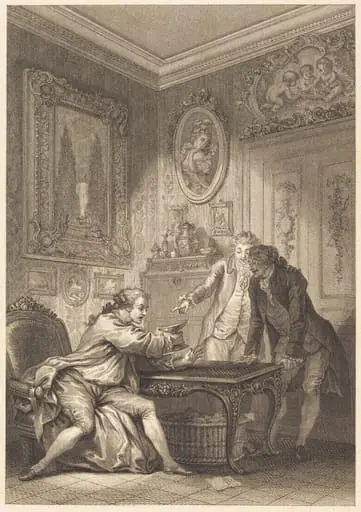
Le paysan is an ink print by the Baroque artist Charles Louis Lingée. It dates from 1784 and is held in the collection of the National Gallery of Art.
About this work
Overview
Le paysan is a print created by Charles Louis Lingée in 1784, utilizing etching and engraving techniques to depict a dramatic scene of everyday life.
Subject & Meaning
The print shows five individuals in a dimly lit room, surrounded by symbols of potential decline (a broken column and statue) and unexpected disruption (a man holding a tray of fruit, another leaning over him in surprise). The juxtaposition of these elements may allude to themes of upheaval or loss amidst daily activities.
Technique & Style
Lingée employed a combination of etching, drypoint, and aquatint to achieve detailed, high-contrast prints characterized by dramatic lighting and deep shadows, emphasizing the emotional tone of the scene.
History & Provenance
Created in 1784, specific details about the print's history and ownership prior to its current status are not provided in the available information.
Context
The old-fashioned clothing suggests the scene is set in a period prior to the late 18th century, potentially reflecting Lingée's interest in historical or literary themes, though the exact context or inspiration remains unspecified.
Legacy
The legacy and impact of 'Le paysan' on subsequent art or its reception over time are not detailed in the provided information, focusing instead on its technical and compositional aspects.
Artist & collection