Artwork
La Mère de famille (The Mother of the Family)
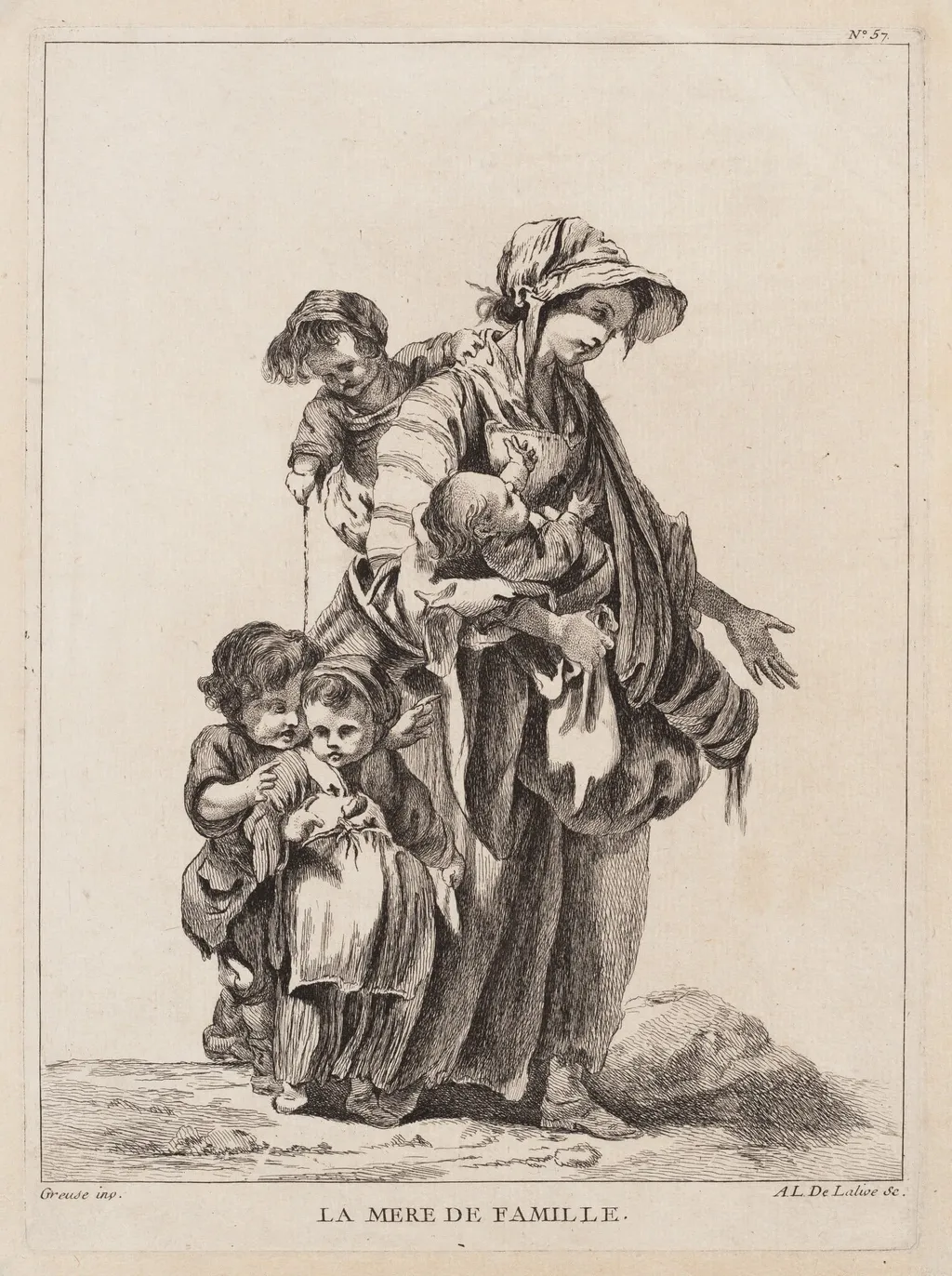
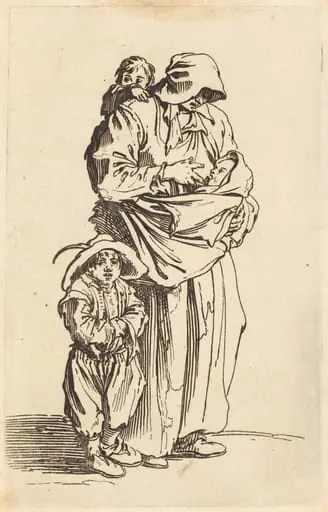
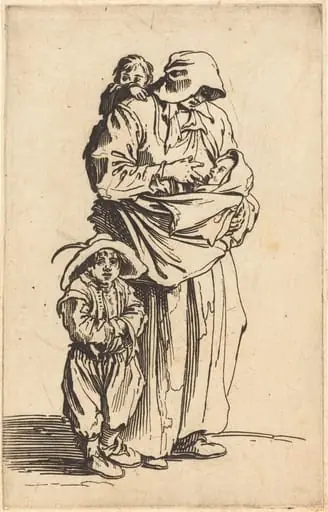
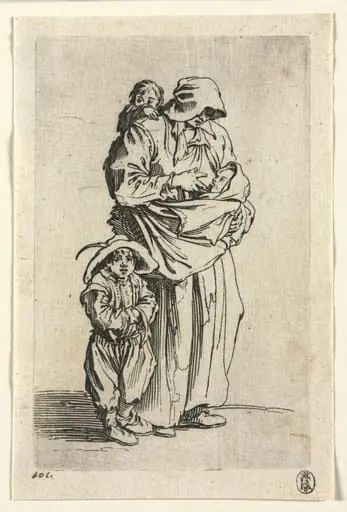
La Mère de famille (The Mother of the Family) is an ink print by the Romanticist artist Ange-Laurent de Lalive de Jully. It dates from 1763 and is held in the collection of the National Gallery of Art. An etching titled *La Mère de famille* was produced in 1763 by the Swiss artist Ange‑Laurent de Lalive de Jully.
About this work
Overview
An etching titled *La Mère de famille* was produced in 1763 by the Swiss artist Ange‑Laurent de Lalive de Jully. Executed on laid paper, the work measures a modest size typical of 18th‑century prints and is part of the collection of the National Gallery of Art in Washington, D.C.
Subject & Meaning
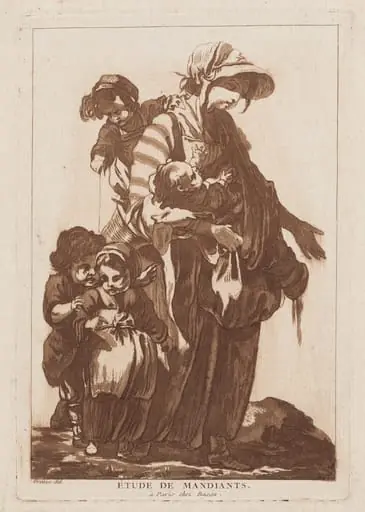
The image depicts a mother attending to four children on a modest street scene. She cradles an infant in one arm, steadies a toddler with the other, while two older children linger nearby, one clutching a birdcage. The composition captures a quiet moment of domestic responsibility, emphasizing the nurturing role of the mother within the family unit.
Technique & Style
Lalive employed the etching process, incising lines into a copper plate that were then inked and pressed onto laid paper. The work relies on delicate line work to suggest depth, texture, and the flow of the mother’s cloak, while the low‑brimmed hat partially obscures her face, adding a sense of modest anonymity.
History & Provenance
Created in the mid‑18th century, the print entered the National Gallery of Art’s holdings through acquisition in the 20th century, though specific details of its earlier ownership remain undocumented. Its presence in the museum reflects the institution’s interest in European printmaking of the Enlightenment era.
Context
The etching belongs to a broader tradition of genre scenes that portrayed everyday life, a popular subject in the Rococo period. Lalive’s focus on a familial tableau aligns with contemporary interests in moralizing domestic virtue and the ideal of the caring mother.
Artist & collection