Artwork
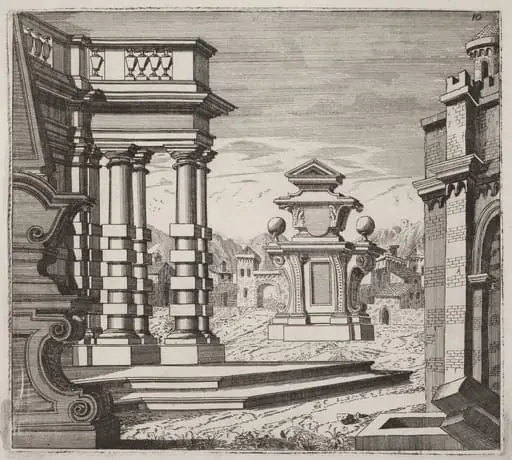
Architectural Fantasy with Classical Ruins and Vernacular Buildings
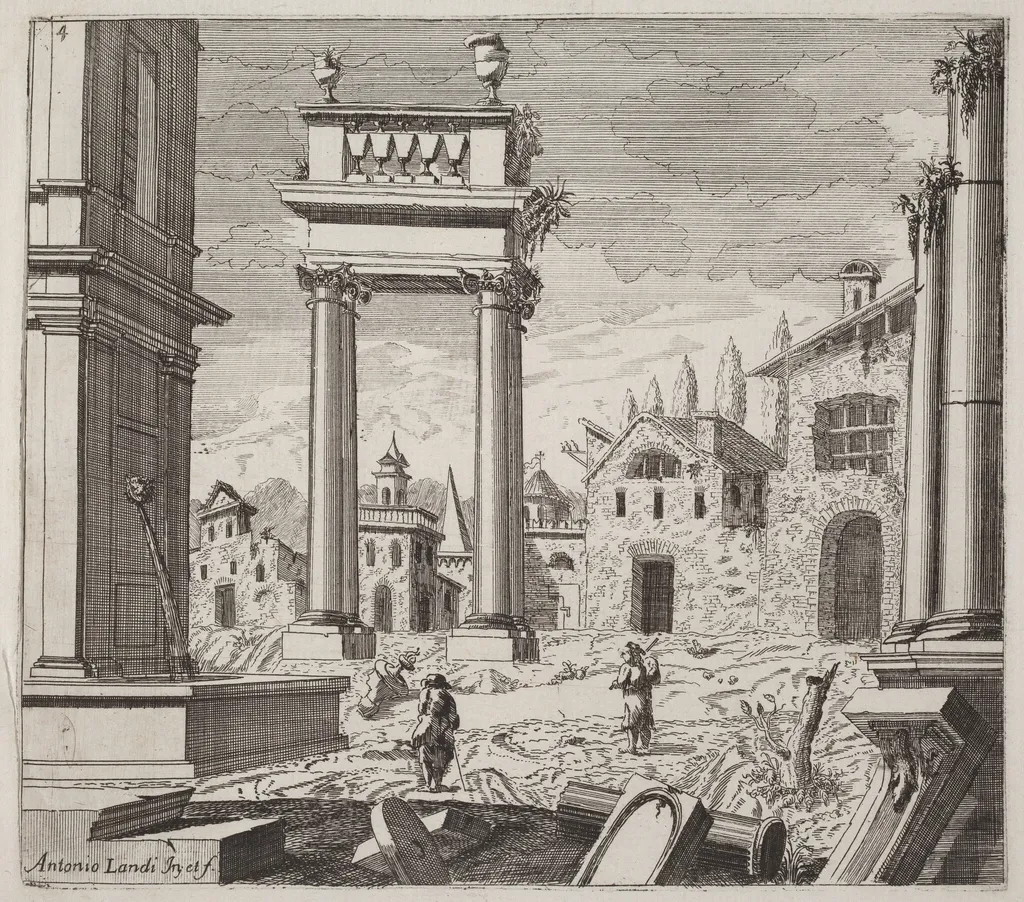
Architectural Fantasy with Classical Ruins and Vernacular Buildings is an ink print by the Baroque artist Giuseppe Antonio Landi. It dates from 1753 and is held in the collection of the National Gallery of Art.
About this work
Overview
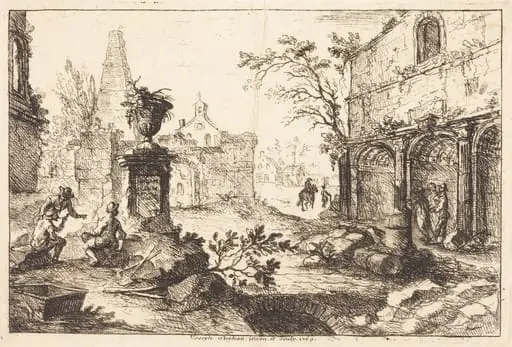
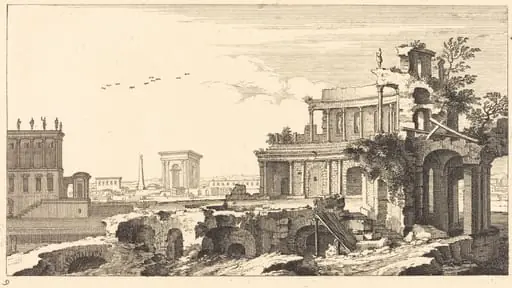
Giuseppe Antonio Landi’s 1753 print, titled Architectural Fantasy with Classical Ruins and Vernacular Buildings, is executed as an etching and engraving on laid paper. The composition presents an imagined landscape where fragments of ancient architecture coexist with a modest village scene, all under a cloud‑filled sky.
Subject & Meaning
The foreground is dominated by shattered columns and arches that evoke the remnants of a classical past, while the background reveals a small settlement with a church and domestic dwellings. By juxtaposing monumental decay with everyday life, the work invites contemplation of the passage of time and the dialogue between historic grandeur and ordinary experience.
Technique & Style
Landi combined etching’s fine line work with engraving’s deeper incisions to achieve a high level of detail in both the ruinous stonework and the modest village structures. The tonal contrasts created by cross‑hatching and stippling give the scene depth, while the overall composition reflects the imaginative, theatrical qualities characteristic of late‑Baroque printmaking.
History & Provenance
Created in the mid‑18th century, the print reflects Landi’s interest in architectural subjects, a common theme among Italian printmakers of the period. While specific ownership records are scarce, the work has been catalogued in several collections of European prints, indicating its circulation among connoisseurs of architectural fantasy imagery.
Context
During the 1750s, European artists often employed imagined ruins to evoke nostalgia for antiquity and to explore the relationship between past and present. Landi’s print aligns with this tradition, integrating the classical motif with contemporary vernacular architecture, a synthesis that mirrors broader Baroque interests in drama, contrast, and the merging of disparate visual elements.
Artist & collection


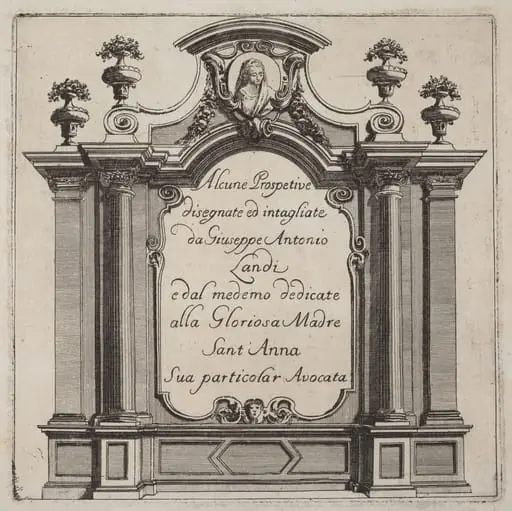 Alcune Prospettive
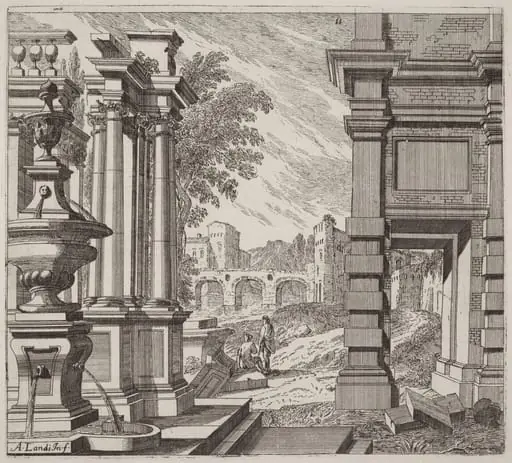 Architectural Fantasy with a Fountain, Classical Ruins, and a Bridge
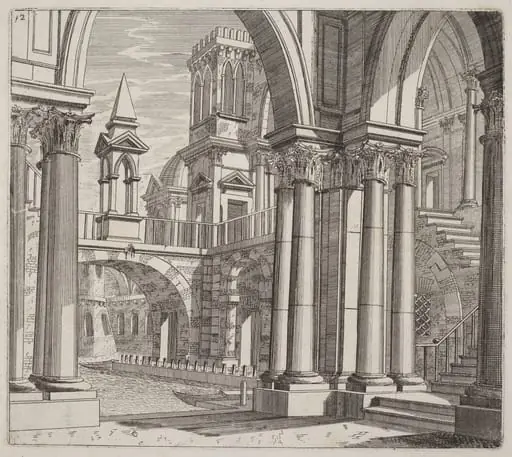 Architectural Fantasy with Buildings, Stairways, and Portals beside a Canal
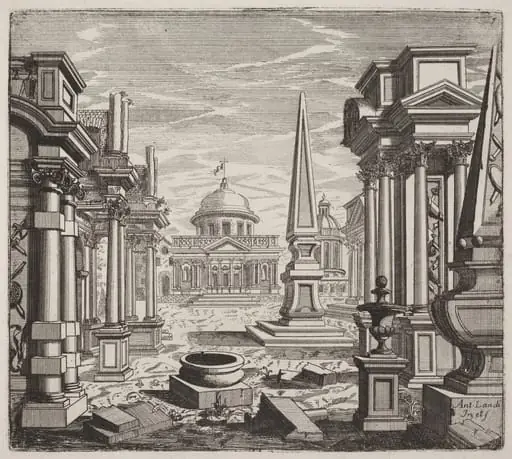 Architectural Fantasy with Obelisks, Ruins, and a Piazza
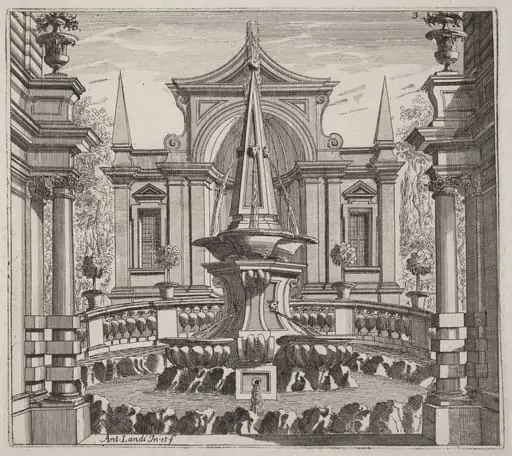 Fantastic Garden with a Fountain and a Garden Pavilion
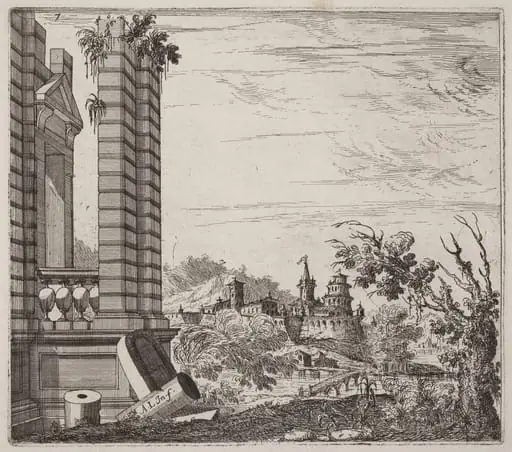 Fantastic River Landscape with Ruins and a Castle
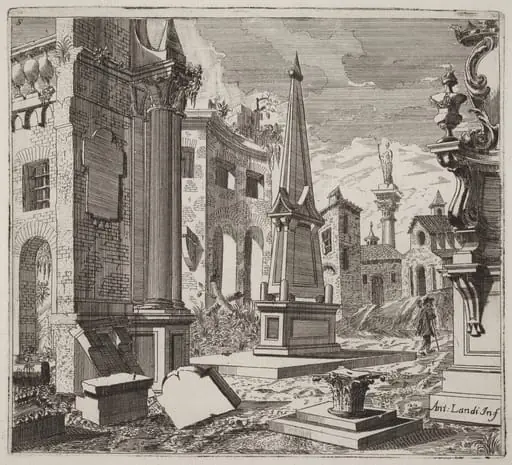 Fantastic Townscape with Ruins
 Architectural Fantasy with Portals and Monuments