Artwork
Alcune Prospettive
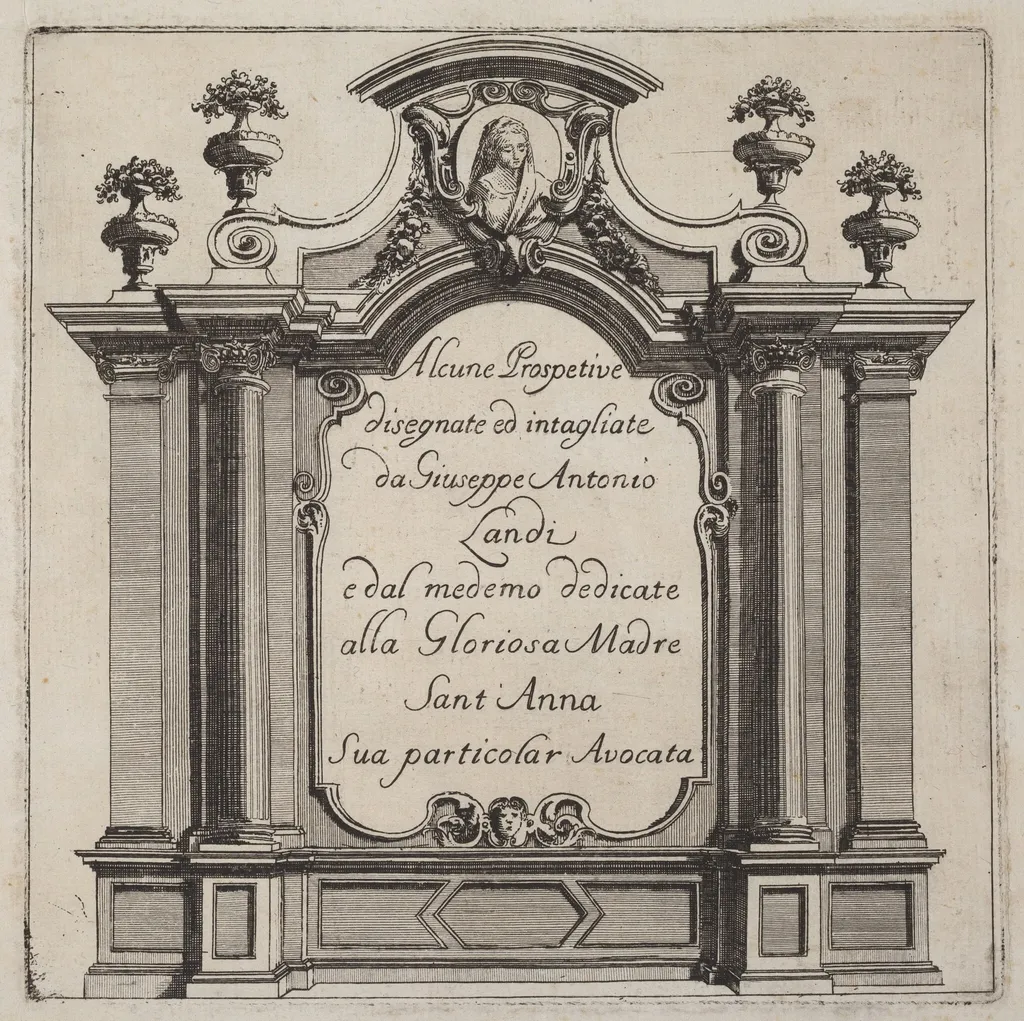
Alcune Prospettive is an ink print by the Baroque artist Giuseppe Antonio Landi. It dates from 1753 and is held in the collection of the National Gallery of Art.
About this work
Overview
Alcune Prospettive is a black‑and‑white print executed by Giuseppe Antonio Landi in 1753. The work combines engraving and etching on laid paper, presenting an elaborate architectural composition framed as if it were a monumental façade. A small portrait occupies a decorative arch at the top, flanked by two tall vases, while columns and ornamental motifs populate the surrounding space.
Subject & Meaning
The image functions as a staged architectural fantasy, merging real and imagined elements to showcase perspective tricks. The central portrait, likely a devotional figure, is set within a classical arch, suggesting a reverent dedication. The surrounding ornamental architecture reinforces a sense of grandeur and order, typical of 18th‑century academic exercises in perspective.
Technique & Style
Landi employed both engraving and etching, cutting lines into a metal plate to produce fine, controlled strokes and richer tonal areas. The use of laid paper, with its visible ribbed texture, adds a subtle tactile quality. The composition reflects the Rococo taste for intricate detail, decorative framing, and a playful yet disciplined handling of space.
History & Provenance
Signed by the artist, the print bears a dedication to a religious figure, indicating it may have been intended for a private devotional context or as a collector’s item. Produced in the mid‑18th century, it exemplifies Landi’s interest in architectural drawing and his skill in printmaking, though specific ownership records beyond the signature are not documented.
Context
During the 1750s, Italian printmakers often explored perspective as a means of demonstrating technical mastery and intellectual curiosity. Landi’s work aligns with this tradition, offering a visual study of architectural forms that would have appealed to architects, scholars, and patrons interested in the theoretical aspects of space and ornamentation.
Artist & collection


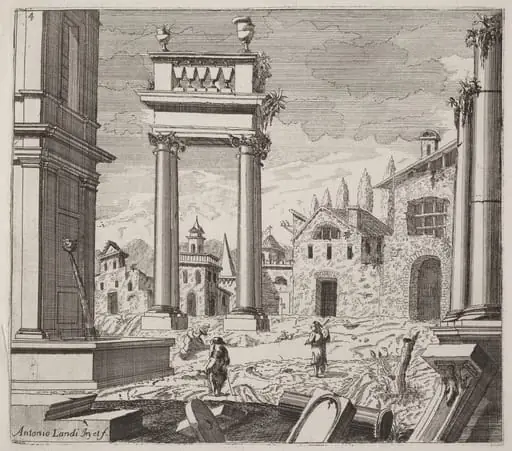 Architectural Fantasy with Classical Ruins and Vernacular Buildings
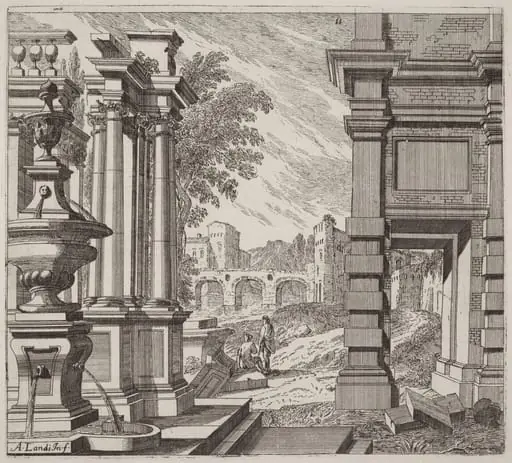 Architectural Fantasy with a Fountain, Classical Ruins, and a Bridge
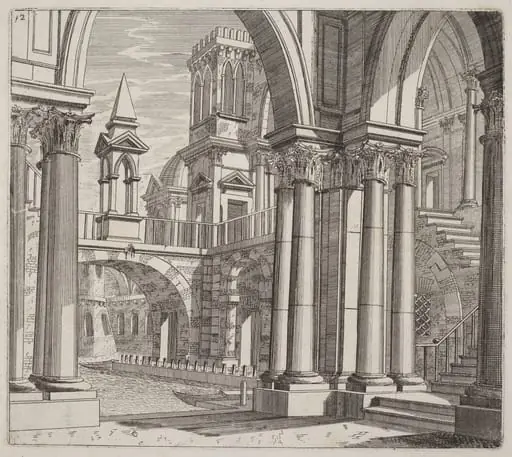 Architectural Fantasy with Buildings, Stairways, and Portals beside a Canal
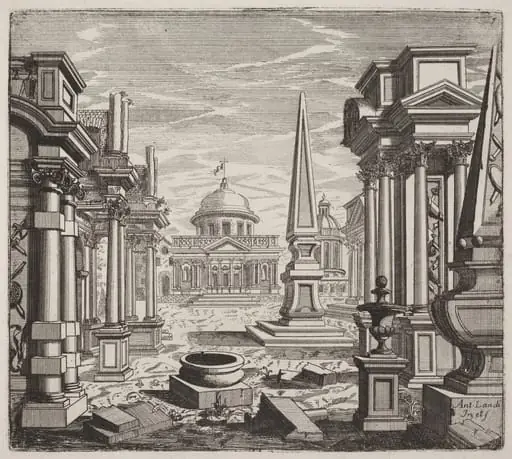 Architectural Fantasy with Obelisks, Ruins, and a Piazza
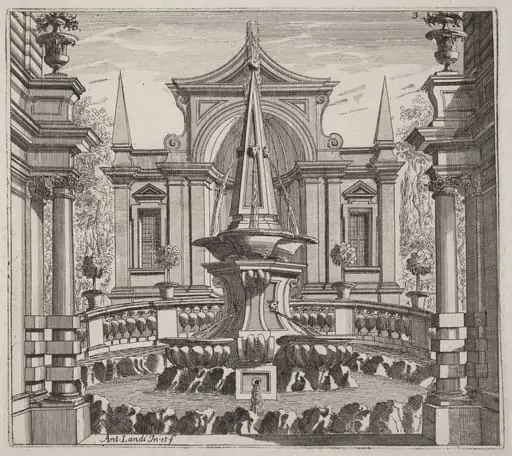 Fantastic Garden with a Fountain and a Garden Pavilion
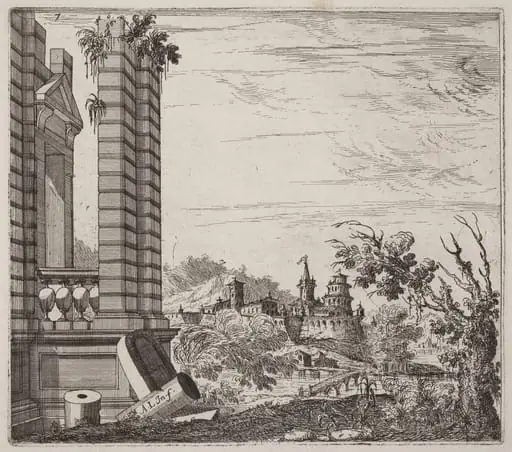 Fantastic River Landscape with Ruins and a Castle
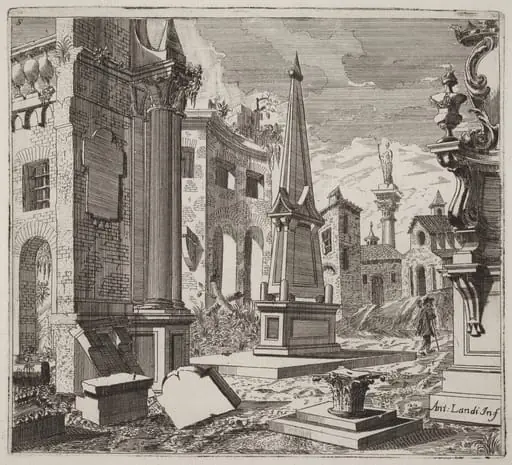 Fantastic Townscape with Ruins
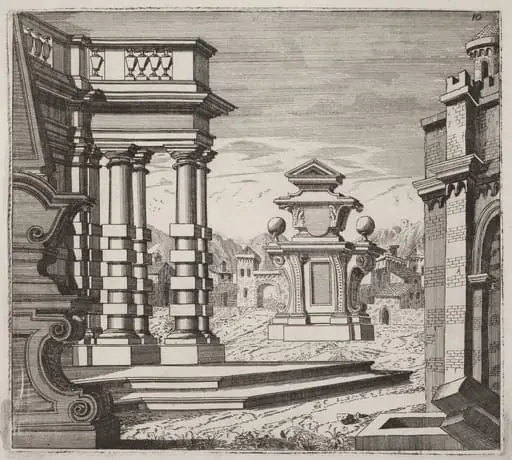 Architectural Fantasy with Portals and Monuments
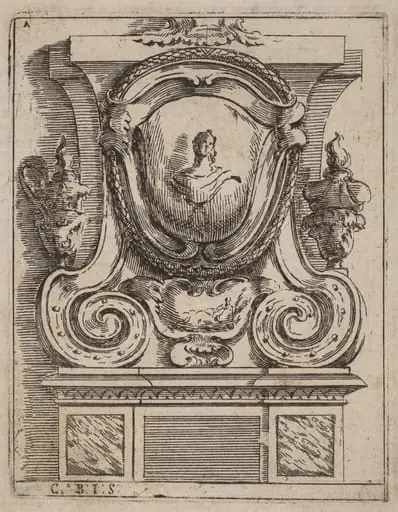 Architectural Motif with Bust and Two Lamps
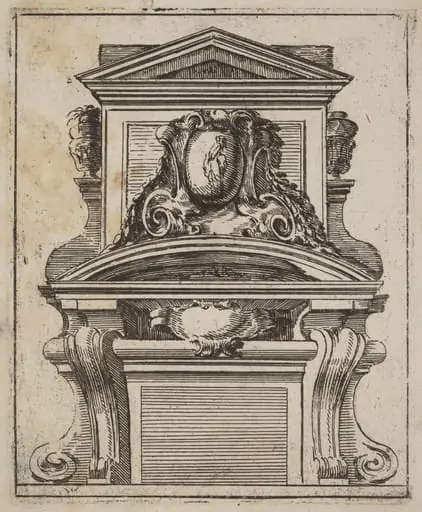 Architectural Motif with a Figure
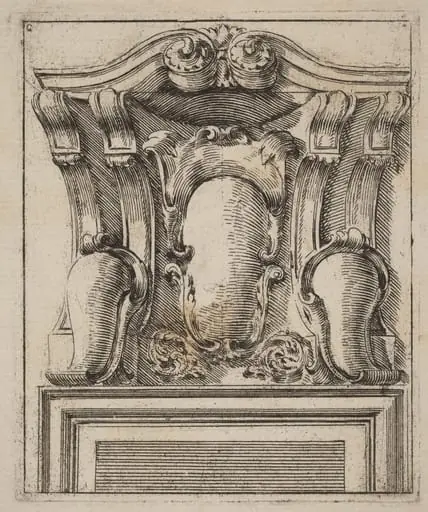 Architectural Motif with Three Shields
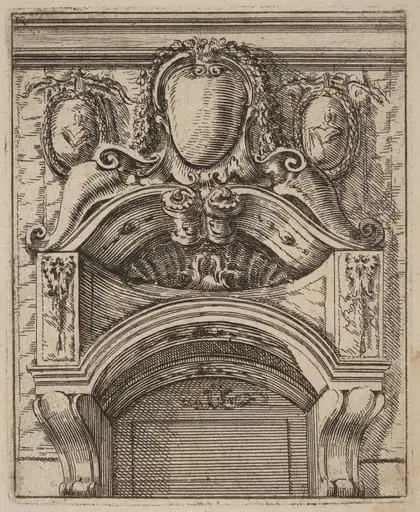 Architectural Motif with Three Shields, Two with Figures
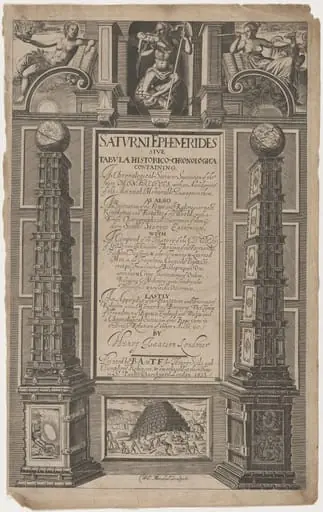 Title Page to Saturne Ephemerides by Henry Isaacson
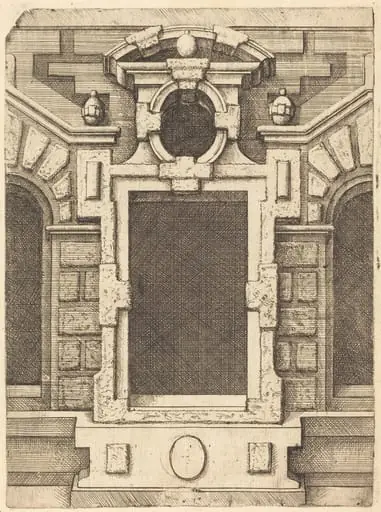 Pedimented Windows
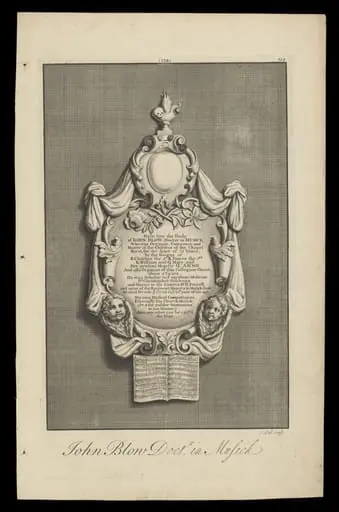 H Beard Print Collection
 Architectural Motif with Fruit in a Vase
 Architectural Motif with Three Shields
 Barthelemy Tremblay
 Cartouche
 Cartouche