Artwork
Le matin
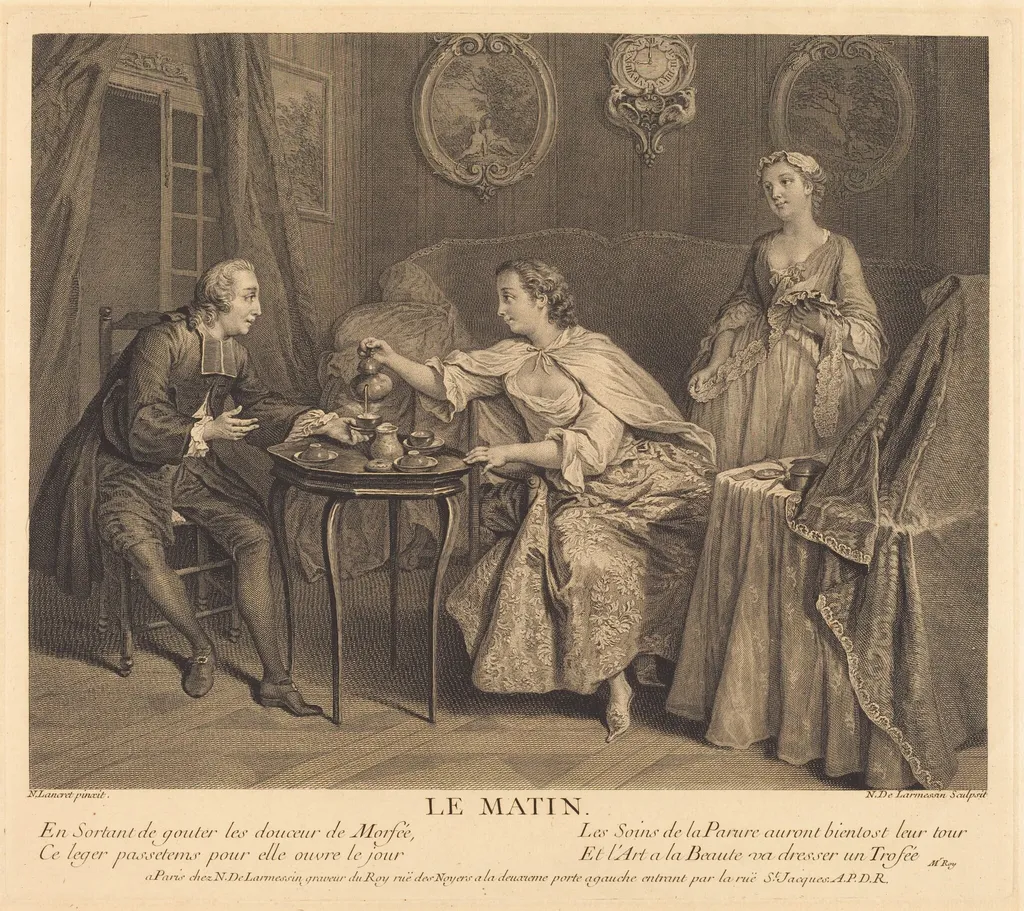
Le matin is an ink print by the Baroque artist Nicolas de Larmessin IV. It dates from 1741 and is held in the collection of the National Gallery of Art.
About this work
Overview
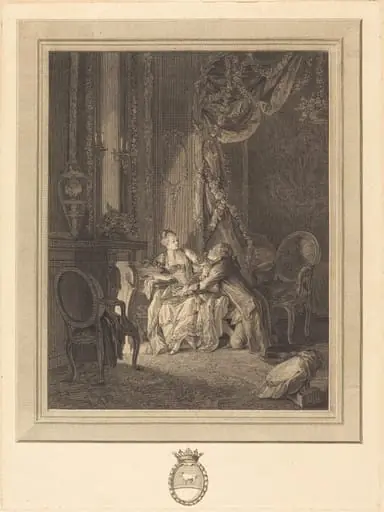
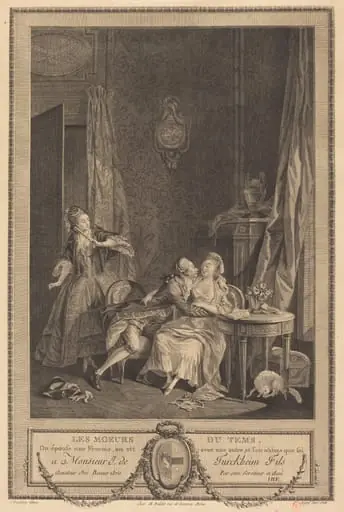
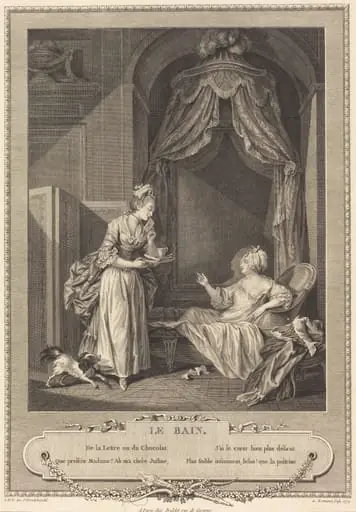
The composition centers on a man in a robe observing a woman serving tea, while a third figure stands nearby, observing silently.
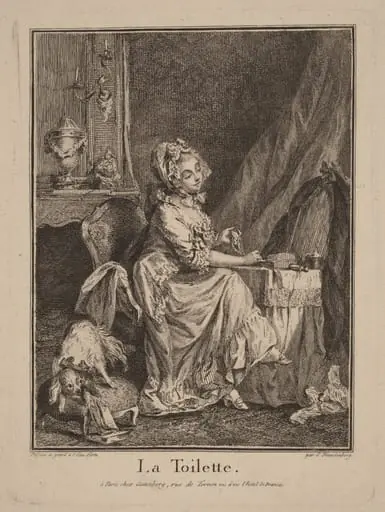
Le matin is a 1741 print by Nicolas de Larmessin IV, executed in engraving and etching. It depicts an intimate interior scene with three figures engaged in a quiet morning ritual. The composition centers on a man in a robe observing a woman serving tea, while a third figure stands nearby, observing silently. The work captures a moment of domestic stillness, rendered with precision through fine linear detail and subtle tonal contrasts.
Subject & Meaning
The scene suggests a private morning moment, possibly within a bourgeois household. The act of tea service, accompanied by a lit candle and modest furnishings, implies a ritual of quiet commencement. The figures’ postures and attire convey social hierarchy and calm attention, with the standing woman’s fan hinting at decorum and observation. The title, meaning 'morning' in French, anchors the scene in the early hours, evoking tranquility rather than activity.
Technique & Style
Larmessin employed engraving and etching to achieve fine, controlled lines that define textures in fabric, ceramic, and wood. The delicate rendering of lace, candlelight, and the teapot’s curvature demonstrates mastery of line weight and cross-hatching. Light enters through a window, softly modeling forms without dramatic contrast, reinforcing the scene’s subdued, intimate mood. The technique prioritizes clarity and detail over expressive brushwork.
History & Provenance
Created in 1741, the print belongs to a series of genre scenes by Larmessin, who specialized in depicting contemporary French life. It was likely produced for a middle-class audience interested in domestic imagery. While specific early ownership records are scarce, similar works circulated in print collections of the period, reflecting growing demand for scenes of everyday elegance.
Context
In mid-18th-century France, domestic interiors became popular subjects in printmaking, mirroring rising interest in private life among the bourgeoisie. Tea drinking, recently introduced to elite circles, was often portrayed as a refined ritual. Larmessin’s work aligns with this trend, offering a restrained vision of morning routine that avoids theatricality, instead emphasizing order, quiet observation, and material detail.
Legacy
Le matin exemplifies the shift in French printmaking toward intimate, non-narrative genre scenes. Though not widely reproduced today, it reflects the broader 18th-century movement to elevate ordinary moments through careful draftsmanship. Its influence is seen in later artists who sought to capture domestic life with similar restraint and attention to subtle social cues.
Artist & collection