Artwork
Le midi
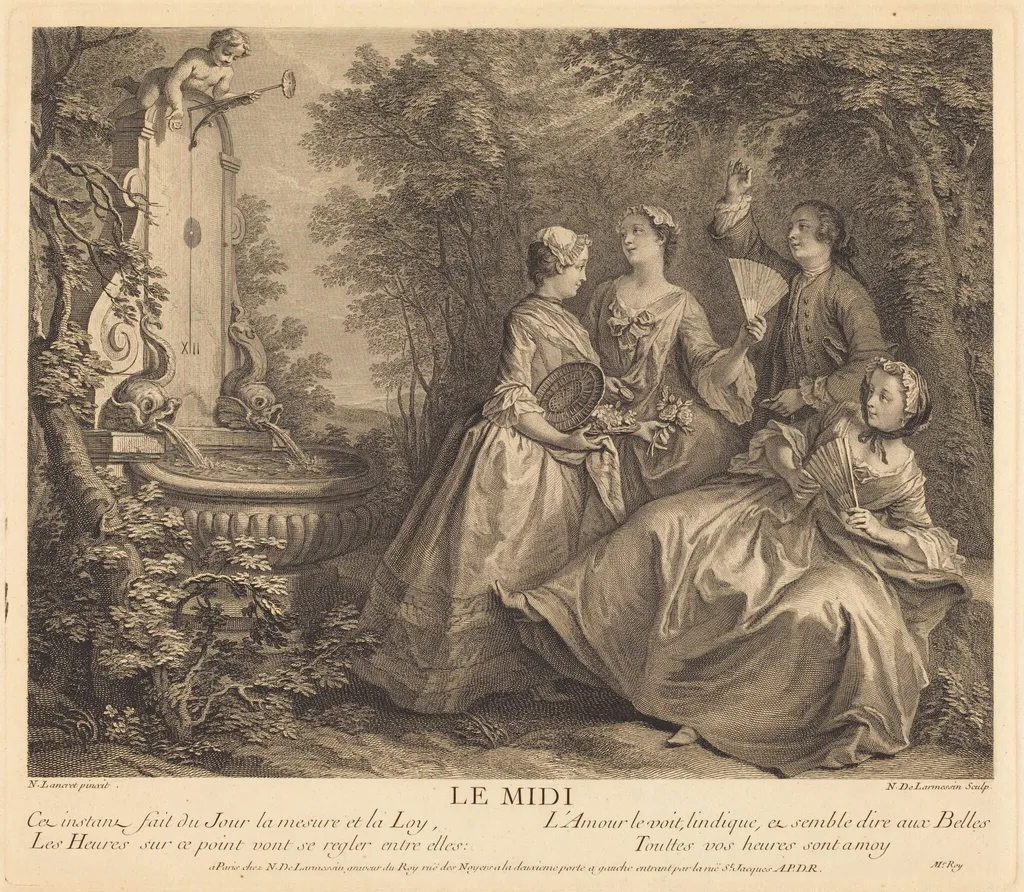
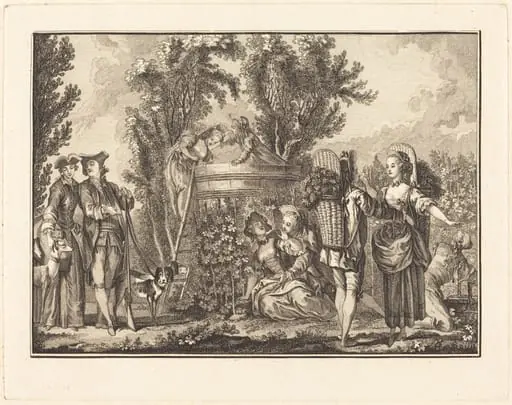
Le midi is an ink print by the Baroque artist Nicolas de Larmessin IV. It dates from 1741 and is held in the collection of the National Gallery of Art.
About this work
Overview
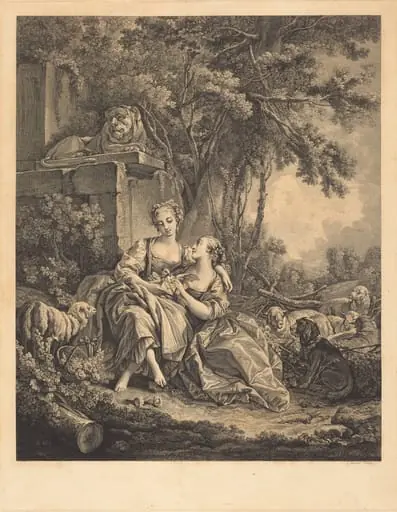
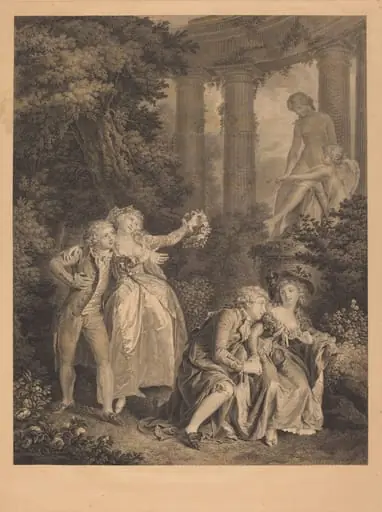
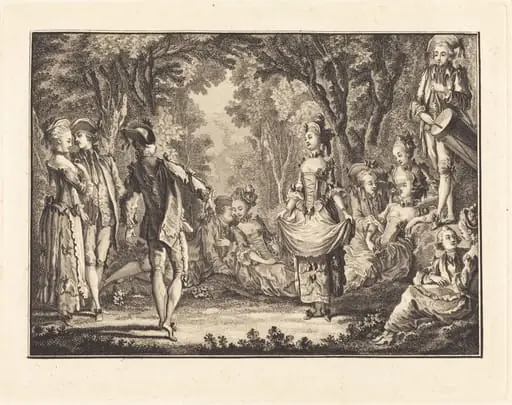
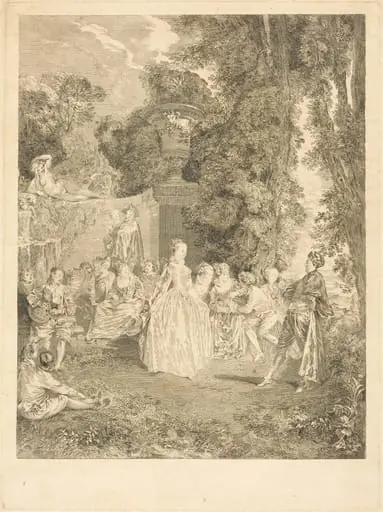
Le midi, executed in 1741 by Nicolas de Larmessin IV, is a print that combines engraving and etching techniques. The work presents a group of figures gathered in a garden setting, captured at the height of the day, with attention to light and shadow that emphasizes the midday atmosphere.
Subject & Meaning
The composition features two women and a man near a fountain, all dressed in elaborate eighteenth‑century attire. One woman carries a basket of flowers, another fans herself, while the man gazes upward. A child kneels nearby, also fanning, and a sculptural figure of a boy holding a fan stands in the background, reinforcing the theme of leisure at noon.
Technique & Style
Larmessin employs fine, parallel lines typical of engraving to render the texture of fabrics and foliage, while the etching component allows for sharper, more spontaneous details, especially in the rendering of light on faces and the delicate foliage surrounding the figures.
History & Provenance
Created in the early 1740s, the print reflects the French Rococo taste for pastoral scenes and fashionable leisure. It was likely produced for the market of collectors interested in decorative prints that combined technical skill with contemporary subject matter.
Context
During the mid‑eighteenth century, prints served both as decorative objects and as means of disseminating fashionable imagery. Le midi fits within this tradition, illustrating a genteel garden gathering that aligns with the period’s fascination with nature, social interaction, and the nuanced play of daylight.
Artist & collection