Artwork
Sir Francis Drake
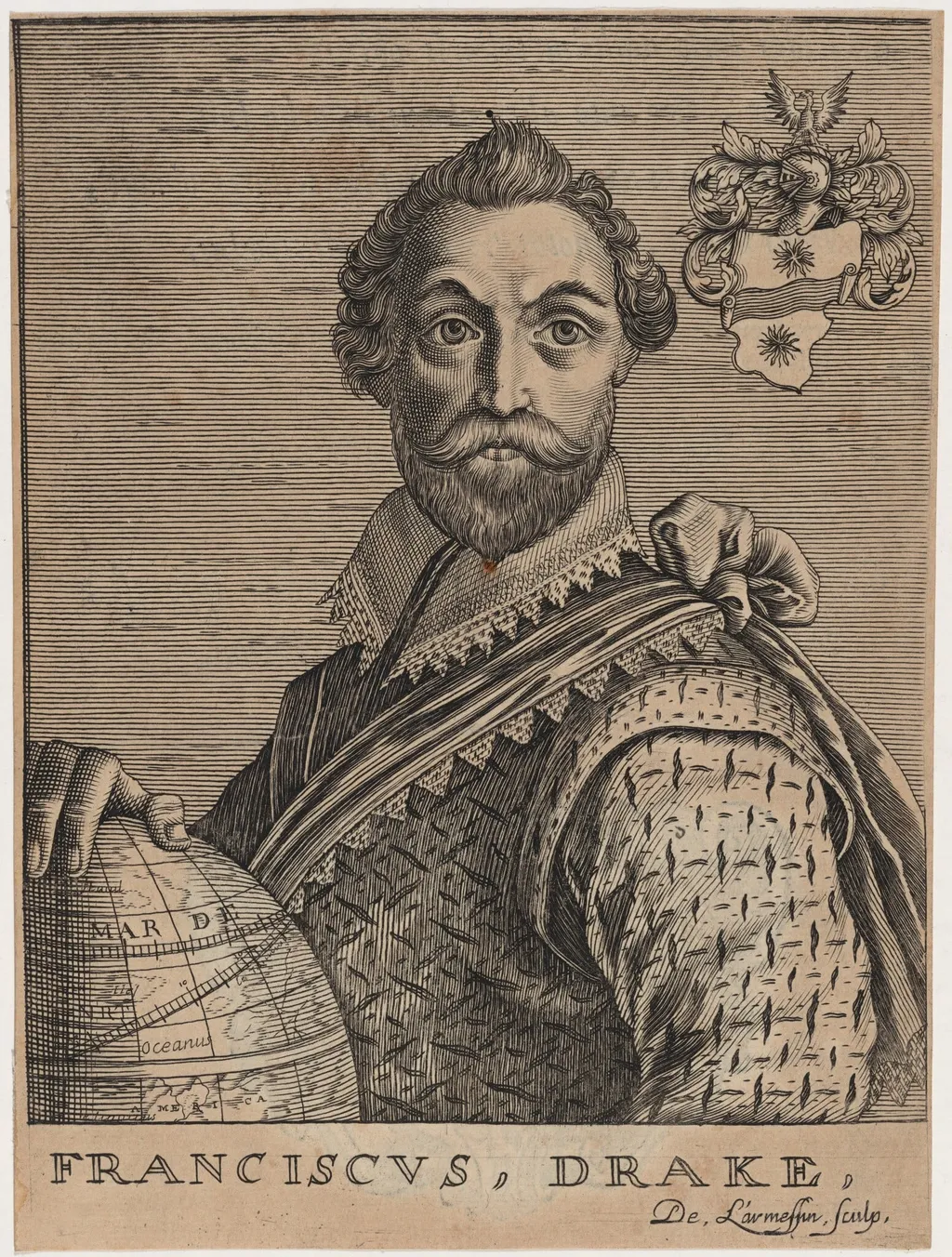
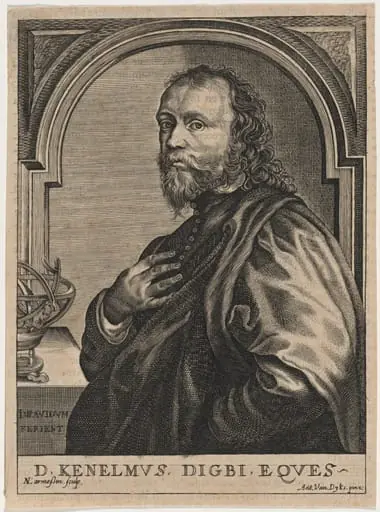
Sir Francis Drake is an ink print by the Baroque artist Nicolas de Larmessin IV. It dates from 1682 and is held in the collection of the National Gallery of Art.
About this work
Overview
Created in 1682, this black‑and‑white print is an engraving by the French artist Nicolas de Larmessin IV. It presents a portrait of the English seafarer Sir Francis Drake, rendered in a formal pose with a serious gaze. The composition includes a globe, a folded cloak, and a stylized world map in the background, all arranged to emphasize Drake’s maritime achievements.
Subject & Meaning
The figure is identified by the inscription “FRANCISCUS DRAKE” placed beneath the image, confirming the sitter as the celebrated Elizabethan explorer. The inclusion of a globe and a cartographic backdrop alludes to Drake’s voyages of circumnavigation and his role in expanding European geographic knowledge during the late 16th century.
Technique & Style
De Larmessin employs the traditional intaglio engraving process, incising fine lines into a copper plate to achieve delicate shading and texture.
De Larmessin employs the traditional intaglio engraving process, incising fine lines into a copper plate to achieve delicate shading and texture. The artist’s handling of hatching creates subtle tonal variations in the beard, ruffled collar, and fabric folds, while cross‑hatching delineates the map’s continents and oceanic labels, producing a clear, linear aesthetic typical of late‑17th‑century French portrait prints.
History & Provenance
The print was produced shortly after Drake’s death and circulated among collectors interested in heroic naval figures. Though the original plate’s whereabouts are unknown, surviving impressions have appeared in European print collections and auction catalogues, indicating the work’s continued presence in the market for historical portraiture.
Artist & collection