Artwork
La jeunesse
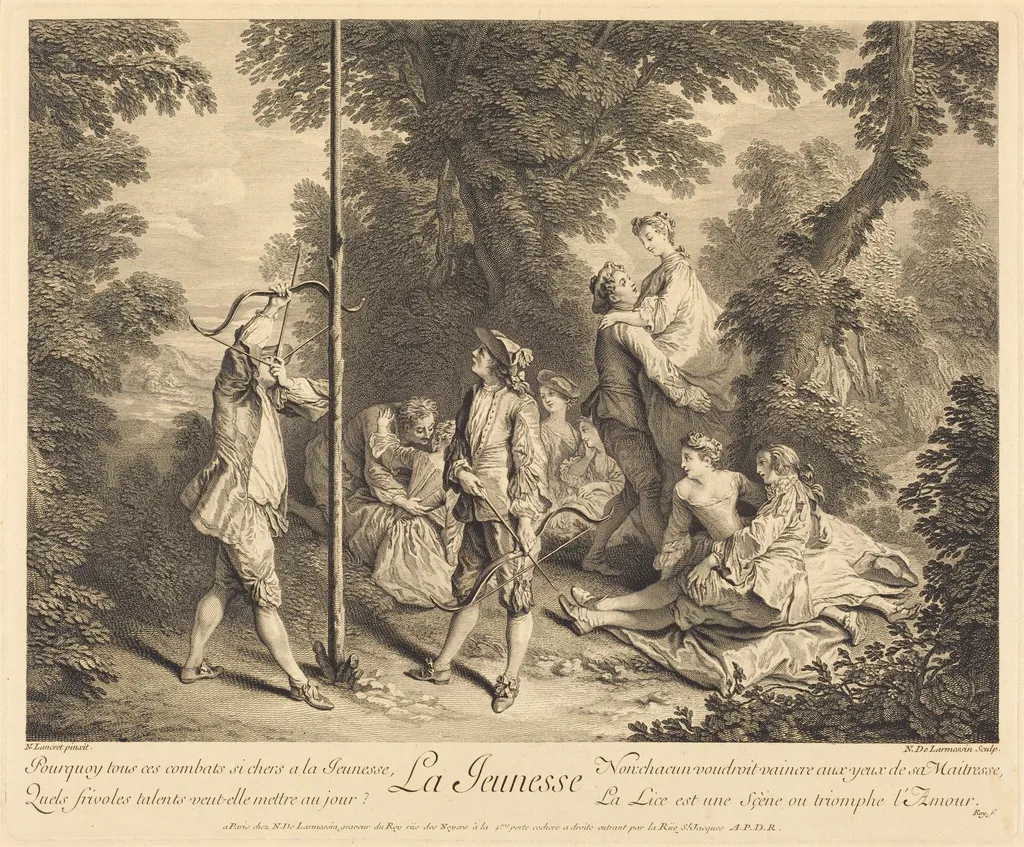
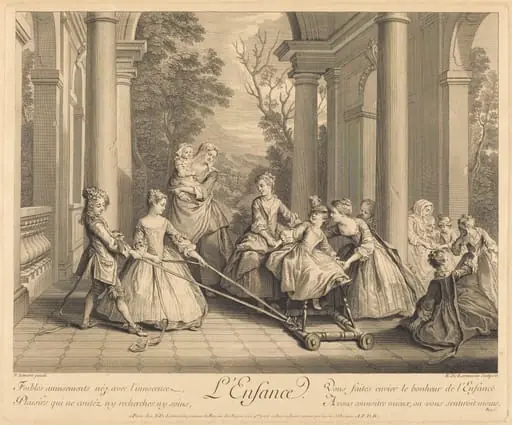
La jeunesse is an ink print by the Baroque artist Nicolas de Larmessin IV. It dates from 1735 and is held in the collection of the National Gallery of Art.
About this work
Overview
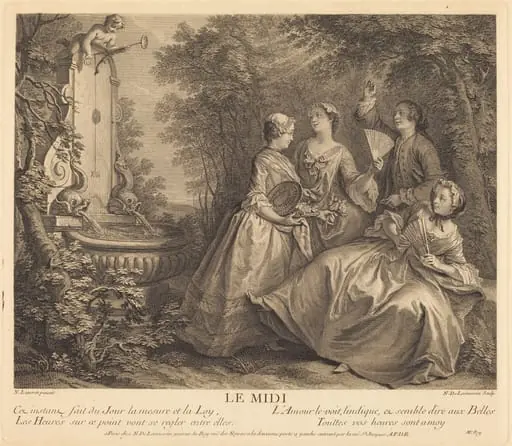
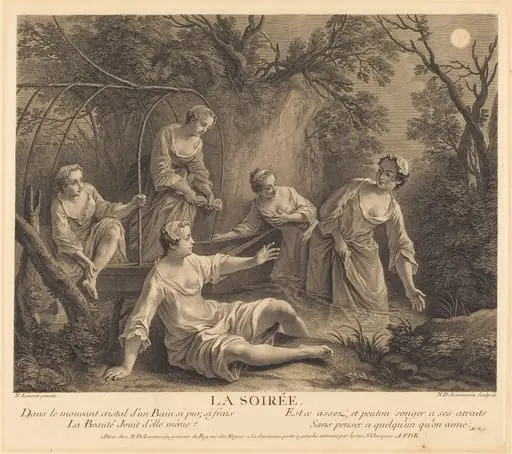
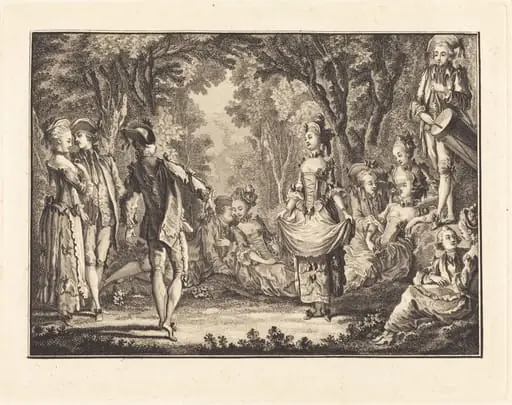
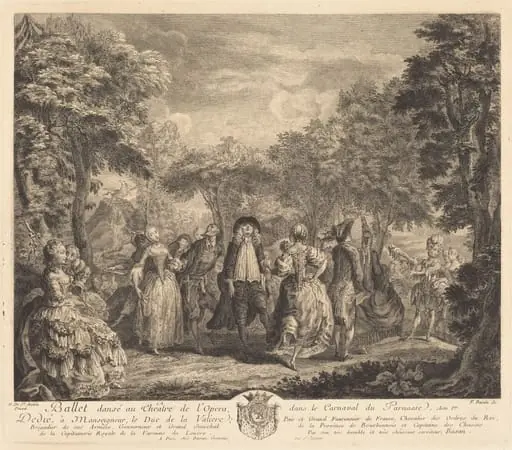
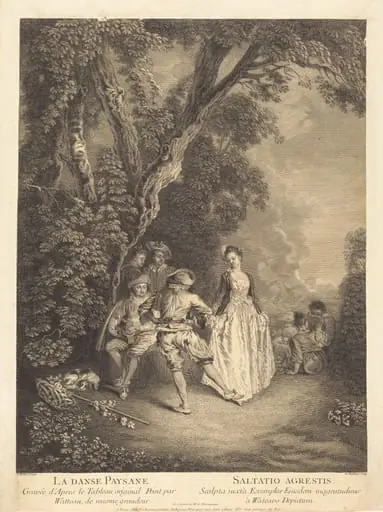
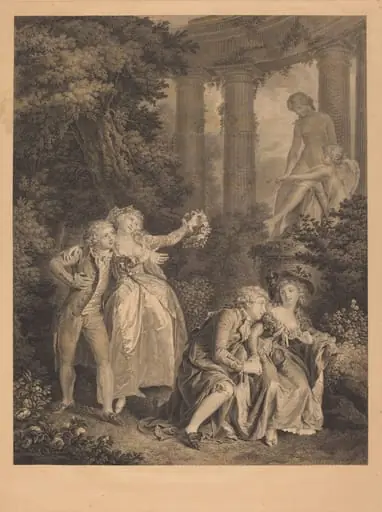
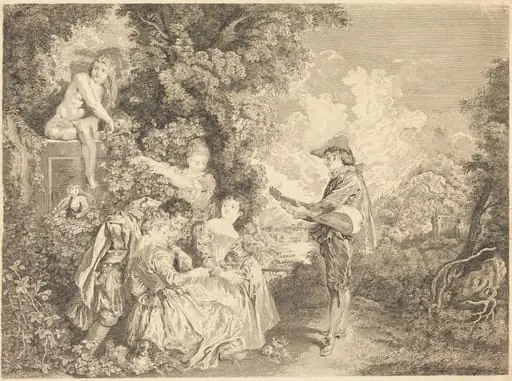
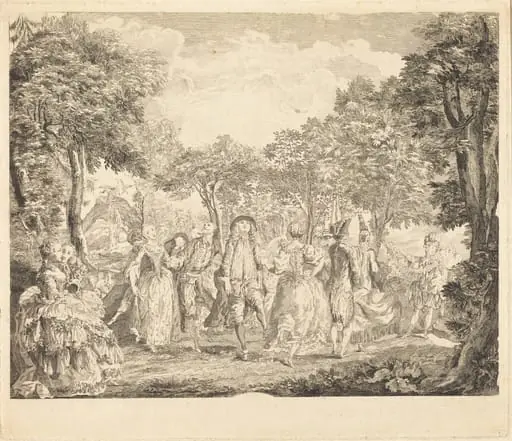
La jeunesse is a print created in 1735 by the French engraver Nicolas de Larmessin IV. Executed as a combination of engraving and etching, the work measures the typical size of a single‑plate print and presents a lively outdoor tableau. The composition is framed by a wooded landscape that recedes toward distant hills, establishing a natural setting for the figures.
Subject & Meaning
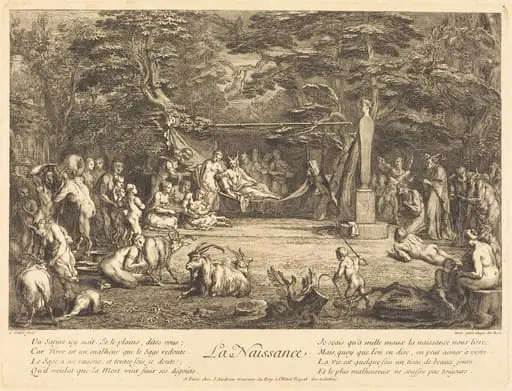
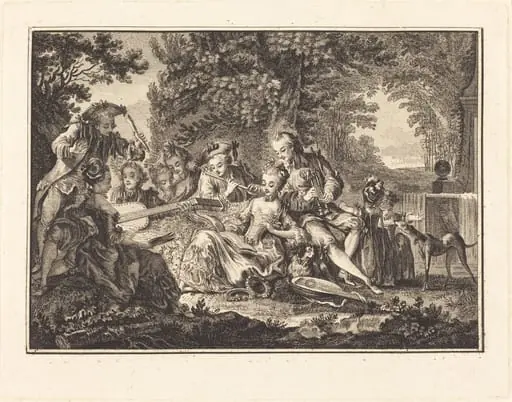
The image depicts six figures gathered in a forest clearing. A man on the left holds a bow, suggesting a hunting or mythic motif, while a woman stands cradling a child, and another leans against a tree. The surrounding characters are seated or standing in relaxed poses, dressed in period costume. A French inscription below alludes to themes of youth, love, and the fleeting nature of early life.
Technique & Style
The print combines traditional engraving with etching, a process in which acid bites lines into a copper plate. Engraving provides precise, controlled lines for the figures and architectural details, whereas the etching yields softer, atmospheric textures in the foliage and background. The contrast of crisp outlines and tonal washes creates depth and a sense of movement within the wooded scene.
History & Provenance
Nicolas de Larmessin IV, a member of a family of Parisian printmakers, produced La jeunesse during the early eighteenth century, a period when prints served both decorative and didactic purposes. The work entered several private collections in the late 1700s and was later acquired by a regional museum in the early twentieth century, where it remains part of the print department’s holdings.
Artist & collection