Artwork
Giovanni Battista Salvi (Il Sassoferrato)
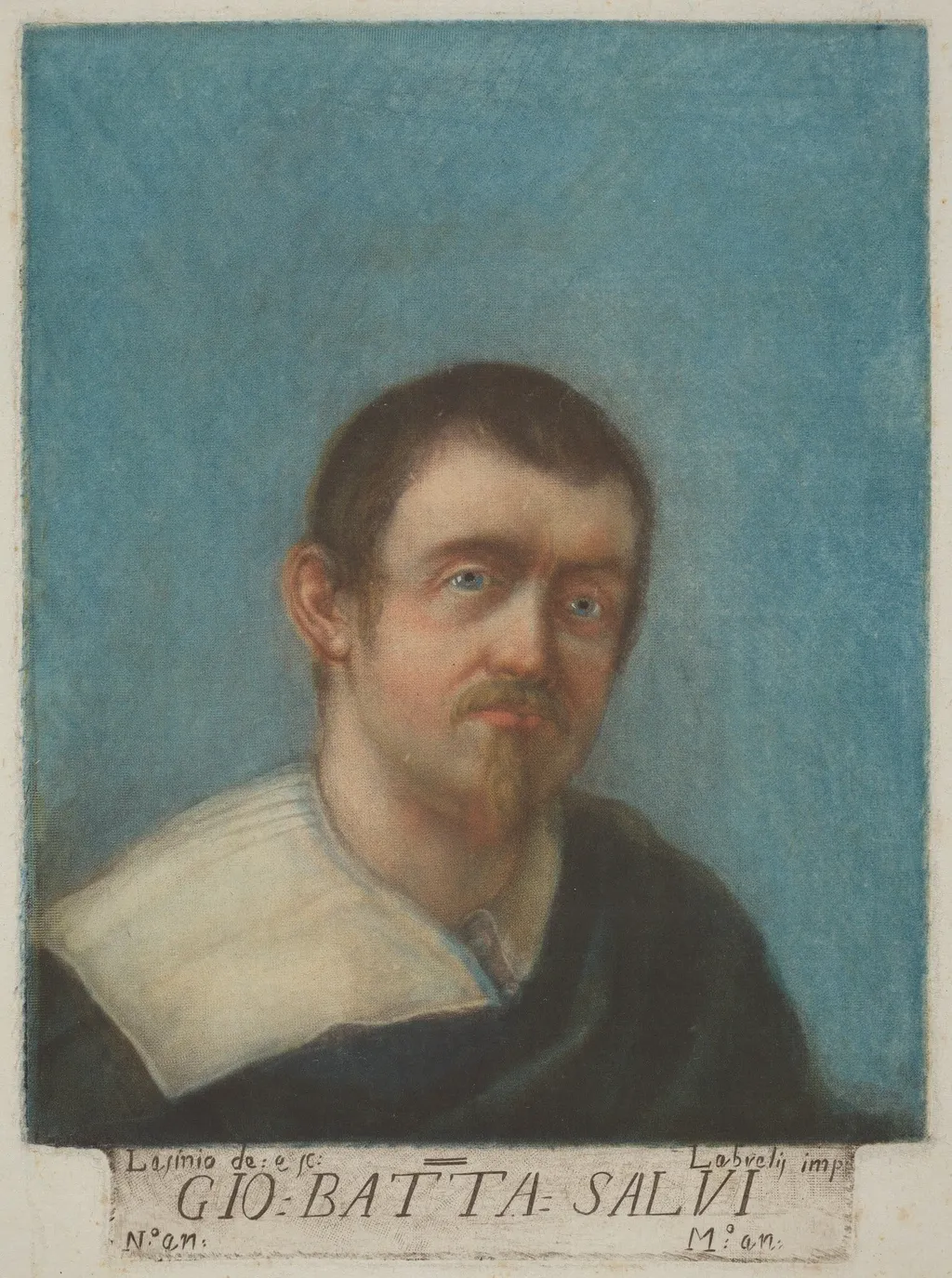
Giovanni Battista Salvi (Il Sassoferrato) is an ink print by the Romanticist artist Carlo Lasinio. It dates from 1789 and is held in the collection of the National Gallery of Art.
About this work
The name at the bottom reads *Giovanni Battista Salvi*, but the artist’s signature and date (1789) are also visible.
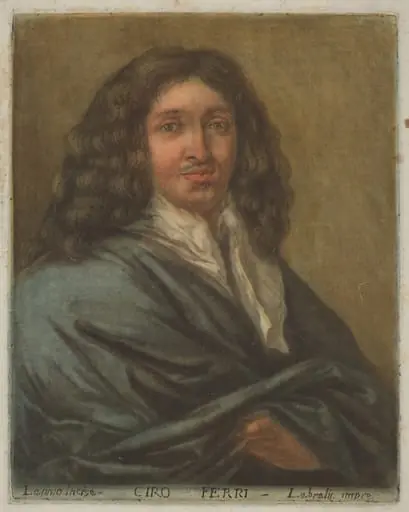
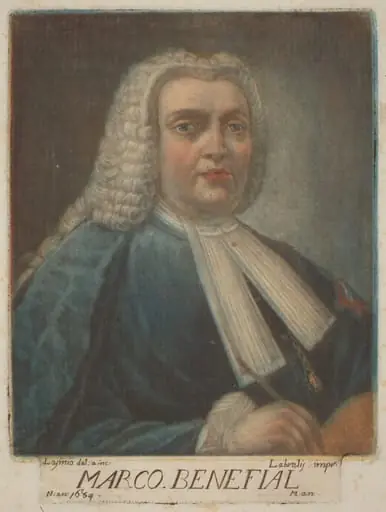
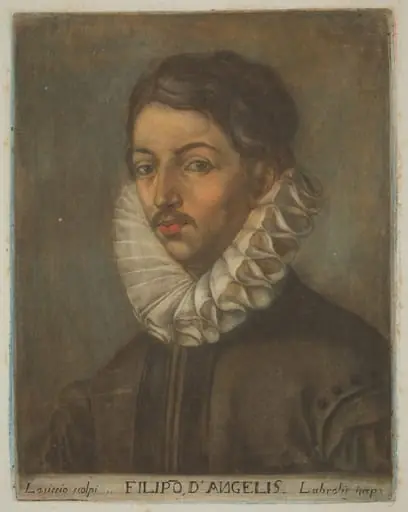
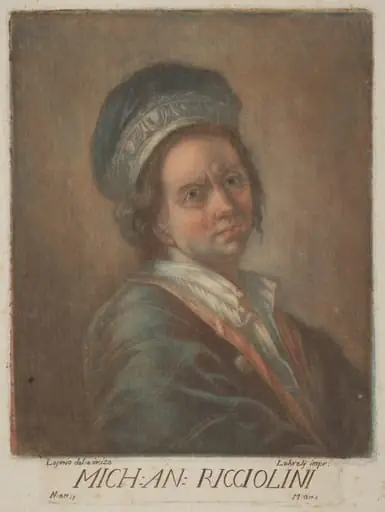
This is a portrait of a man with dark hair and a mustache. He’s wearing a white collar and a dark garment over his shoulders. The background is a solid blue, and his face is lit from the side, making one cheek brighter than the other.
The name at the bottom reads *Giovanni Battista Salvi*, but the artist’s signature and date (1789) are also visible. This is a printed image, not a painting, made using a technique that creates shadows with tiny etched lines.
Look up *chiaroscuro* next to see how artists like this used light and dark to shape faces.
Overview
This color mezzotint print, created in 1789 by Carlo Lasinio, portrays a man identified as Giovanni Battista Salvi, also known by his artistic nickname 'Il Sassoferrato'. The image features a somber, yet nuanced, depiction of its subject against a solid blue background.
Subject & Meaning
The subject, Giovanni Battista Salvi (Il Sassoferrato), is represented with dark hair, a mustache, a white collar, and a dark draped garment. The portrait conveys a sense of solemnity and introspection, characteristic of 18th-century portraiture's emphasis on capturing the sitter's personality.
Technique & Style
Executed in mezzotint, a technique renowned for its ability to achieve deep, rich shadows, the print utilizes tiny etched lines to create a pronounced chiaroscuro effect. This is evident in the strong, side-illuminated lighting that accentuates the subject's facial features, with one cheek significantly brighter than the other.
History & Provenance
Created in 1789 by Carlo Lasinio, the print is signed and dated by the artist. The subject's identification as Giovanni Battista Salvi (Il Sassoferrato) is explicitly stated at the bottom of the work.
Artist & collection