Artwork
Armand Jean du Plessis, Cardinal Richelieu
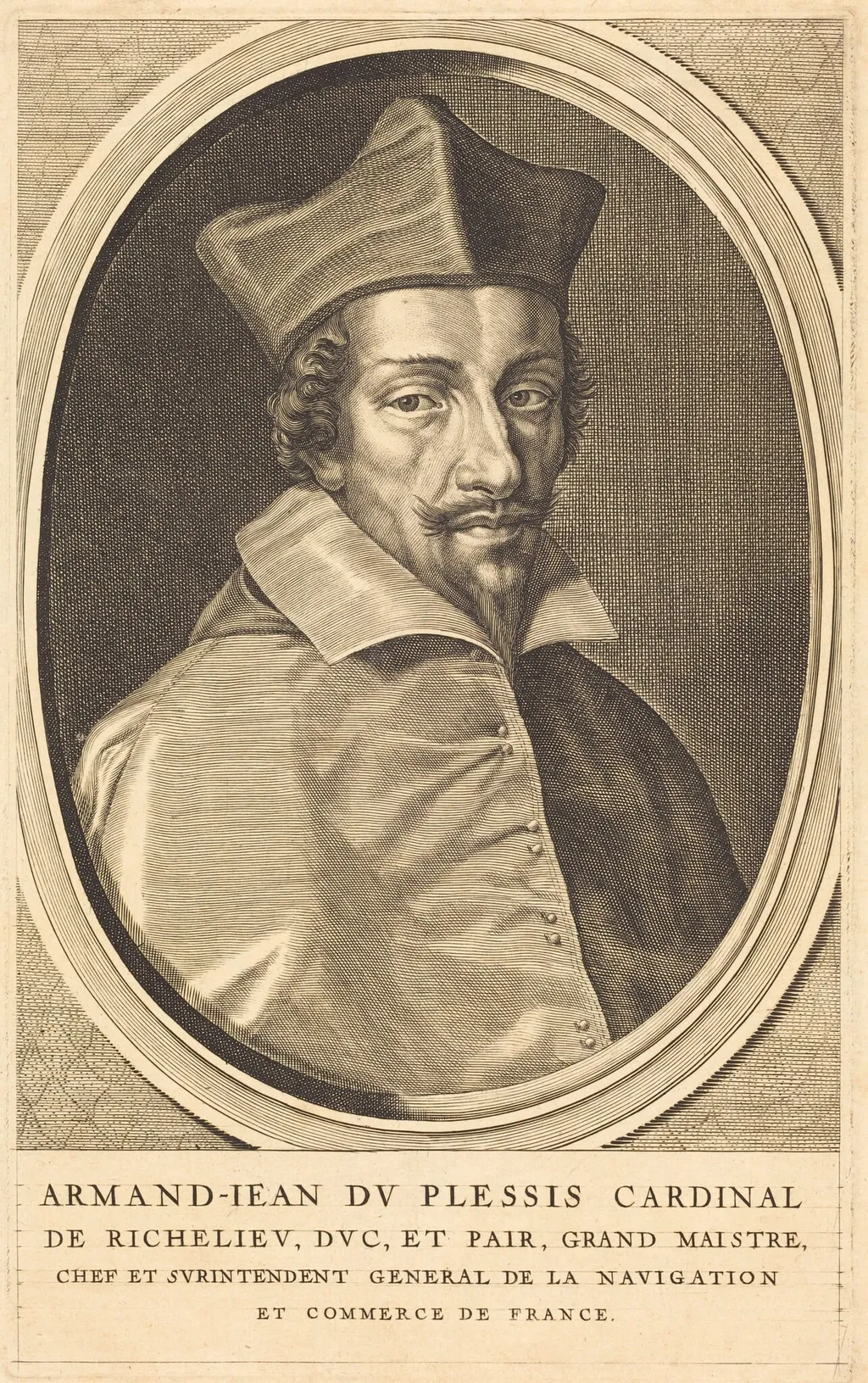
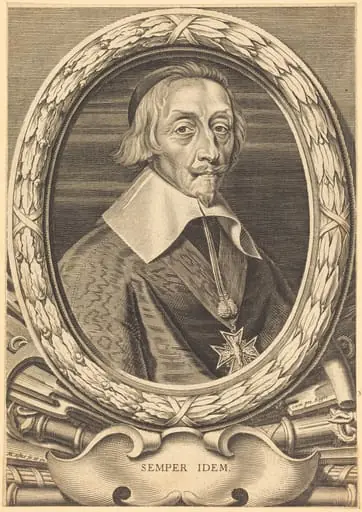
Armand Jean du Plessis, Cardinal Richelieu is an ink print by the Renaissance artist Michel Lasne. It dates from 1628 and is held in the collection of the National Gallery of Art.
About this work
Overview
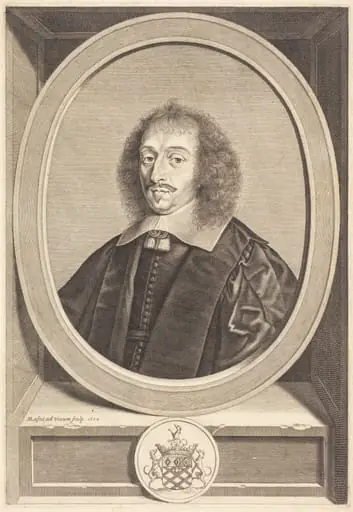
The image is rendered in fine, controlled lines that model the face with subtle tonal gradations, emphasizing clarity and dignity over ornamentation.
This 1628 engraving by Michel Lasne portrays Armand Jean du Plessis, Cardinal Richelieu, in a formal, half-length composition. Executed on laid paper, the work belongs to the early 17th-century French portrait print tradition. The image is rendered in fine, controlled lines that model the face with subtle tonal gradations, emphasizing clarity and dignity over ornamentation. The plain background and oval frame focus attention entirely on the subject’s presence.
Subject & Meaning
Cardinal Richelieu, chief minister to Louis XIII, was a central figure in consolidating royal authority and shaping France’s political and religious direction. The portrait presents him with solemn composure, his clerical attire and dignified bearing reinforcing his dual role as churchman and statesman. The absence of symbolic props or elaborate settings underscores his authority as derived from position rather than spectacle.
Technique & Style
Lasne employed engraving to achieve precise, linear shading, using closely spaced parallel and cross-hatched lines to define the contours of Richelieu’s face and the texture of his attire. The woven border of the oval frame adds a decorative edge without distracting from the likeness. The technique reflects the influence of Flemish portraiture, particularly the restrained realism learned during Lasne’s time with Rubens and van Dyck.
History & Provenance
Michel Lasne, active in Paris by 1621 after training in Antwerp, became one of the leading portrait engravers in France. This print was likely produced to disseminate Richelieu’s image among the elite and administrative class. Though no specific early ownership records are documented, the work’s survival in multiple institutional collections suggests it was widely circulated and valued as a standard representation of the cardinal.
Context
In the 1620s, as Richelieu rose to power, visual representations of political figures became tools of statecraft. Engravings like this one allowed controlled dissemination of leadership imagery across France, reinforcing legitimacy and presence beyond the court. The medium’s reproducibility made it ideal for political messaging, aligning with the era’s growing use of print to shape public perception.
Legacy
Lasne’s engraving established a canonical image of Richelieu that influenced later portraits and historical depictions. Its restrained realism became a model for French official portraiture, emphasizing gravitas over flamboyance. Though not the first likeness of the cardinal, it endured as one of the most widely recognized, shaping how generations would visualize the architect of early modern French statehood.
Artist & collection
Artist
Michel Lasne (Caen, ca. 1590–4 December 1667, Paris), was a French engraver, draughtsman and collector. Lasne was born in Caen and was the son of a goldsmith. He was a member of the Guild of Saint Luke in Antwerp for…