Artwork
Alphonse du Plessis Richelieu, Cardinal of Lyon
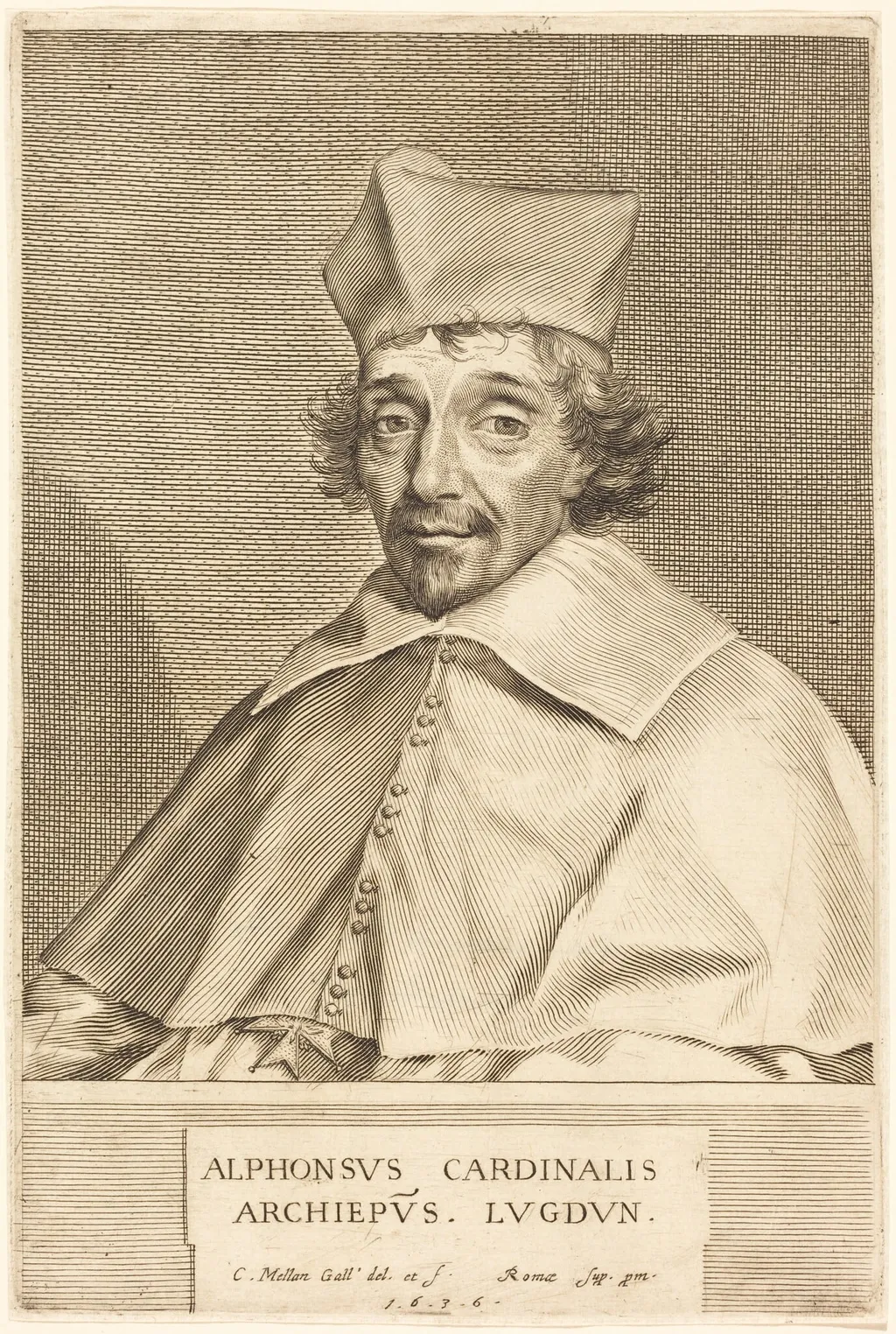
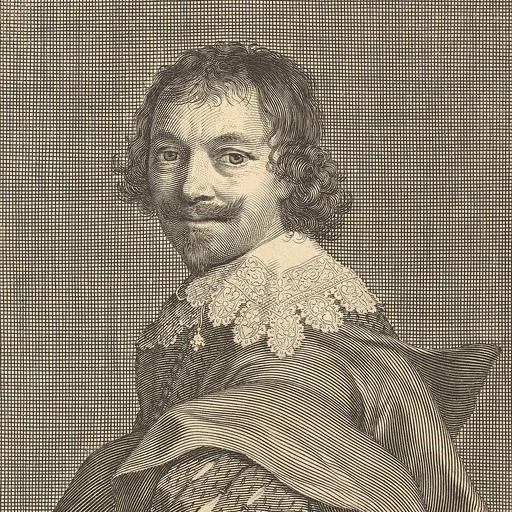
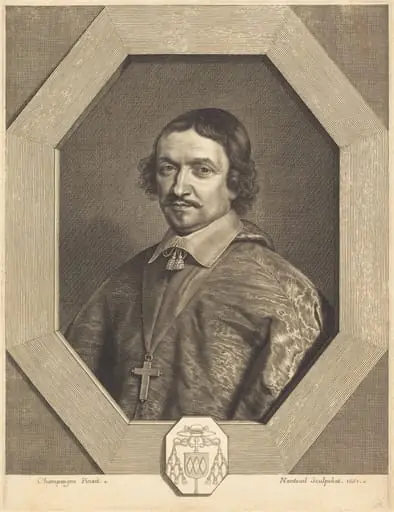
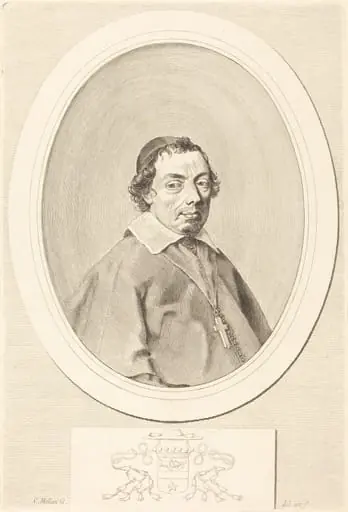
Alphonse du Plessis Richelieu, Cardinal of Lyon is an ink print by the Baroque artist Claude Mellan. It dates from 1636 and is held in the collection of the National Gallery of Art.
About this work
His collar is stiff with buttons, and the lines of his face are sharp, almost carved into the paper.
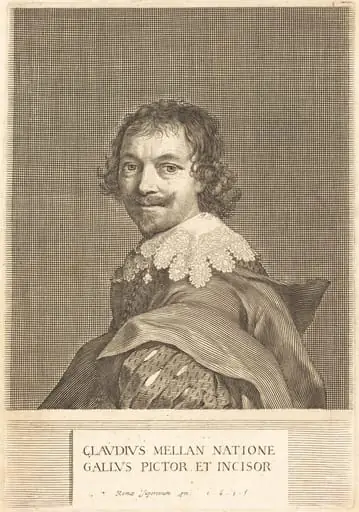
This is a black-and-white portrait of a serious-looking man. He has a short beard, curly hair, and a wide-brimmed hat. His collar is stiff with buttons, and the lines of his face are sharp, almost carved into the paper.
The name below says "Alphonse Cardinalis," and the artist signed it in 1636. The texture of the paper shows it was made by hand, with visible fibers.
Next, check out how this was made using engraving.
Overview
Claude Mellan’s 1636 engraving presents Alphonse du Plessis Richelieu, then Cardinal of Lyon, in a stark monochrome portrait. Rendered on laid paper, the image captures the cardinal’s solemn expression, short beard, curled hair, and the distinctive wide‑brimmed hat that frames his face. The composition is defined by crisp, carved‑like lines that emphasize the rigid collar and buttoned attire, giving the work a precise, almost sculptural quality.
Subject & Meaning
The sitter, Alphonse du Plessis Richelieu, held the prominent ecclesiastical office of cardinal in Lyon during the early seventeenth century. His austere demeanor and formal dress reflect the dignity and authority associated with high church officials of the period, while the absence of overt symbols beyond his hat and collar suggests a focus on personal presence rather than overt theological messaging.
Technique & Style
Mellan employed traditional copper‑plate engraving, incising fine lines that translate into varying densities of black on the laid paper’s textured surface. The hand‑made paper, visible through its fiber pattern, interacts with the engraved marks, enhancing the contrast between light and shadow. Mellan’s characteristic use of precise, parallel strokes creates a sense of depth without reliance on heavy cross‑hatching, resulting in a clean, linear aesthetic.
History & Provenance
Signed and dated 1636, the print bears the inscription “Alphonse Cardinalis,” confirming its identity and authorship. While specific ownership records are limited, the work aligns with Mellan’s prolific output of portrait engravings for the French aristocracy and clergy, circulating among collectors and patrons who valued his exacting technique.
Context
Created during the reign of Louis XIV’s early years, the engraving reflects the broader Baroque interest in portraiture that conveyed status through restrained elegance. Mellan, a noted French engraver, contributed to the visual culture of the court and the church, providing a durable medium for disseminating images of influential figures across Europe.
Legacy
Mellan’s portrait of Cardinal Richelieu exemplifies the precision engraving that influenced subsequent printmakers seeking to balance realism with graphic clarity. The work remains a reference point for scholars studying seventeenth‑century French portraiture and the technical developments of intaglio printmaking.
Artist & collection