Artwork
Armand Jean du Plessis, Cardinal Richelieu
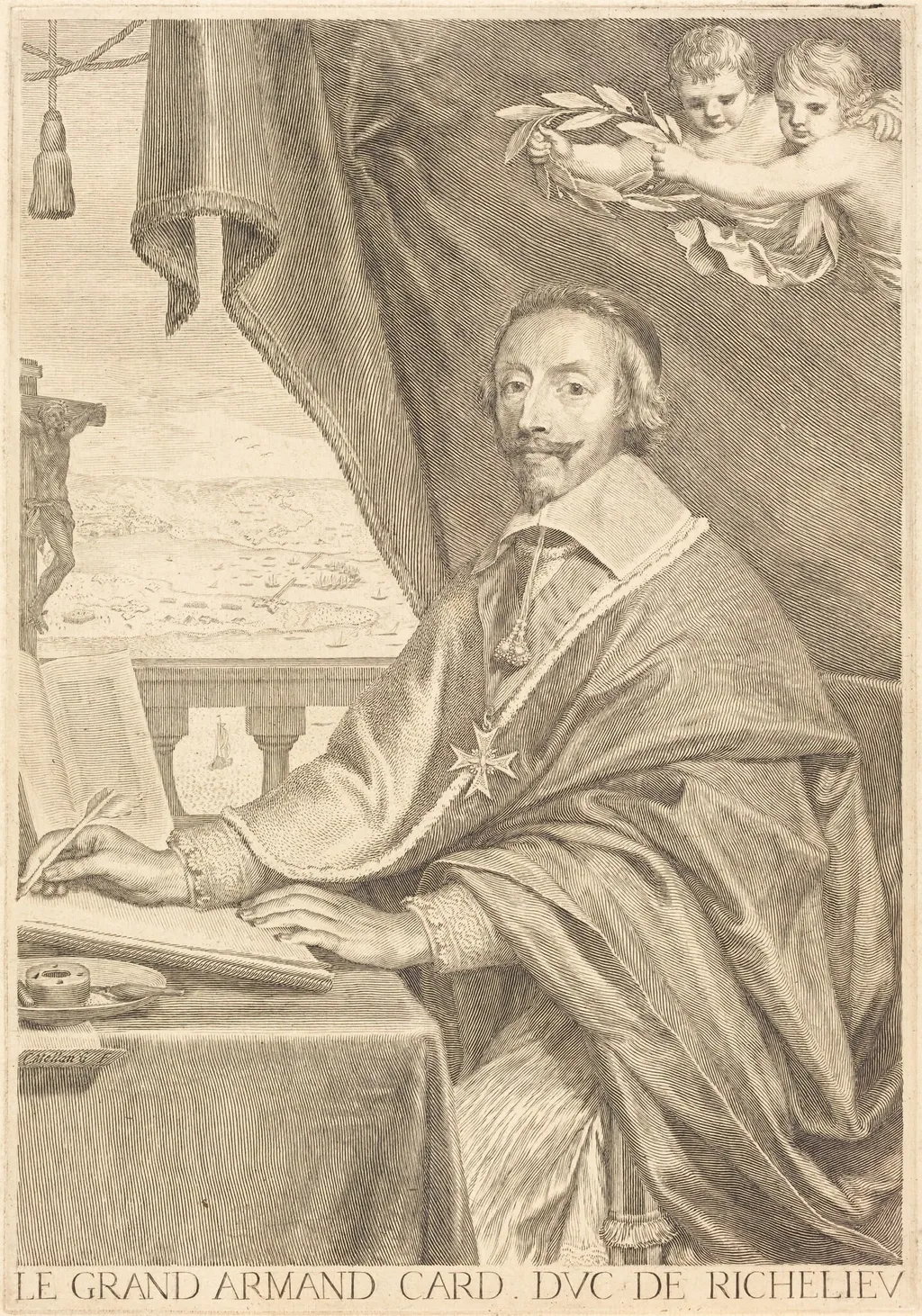
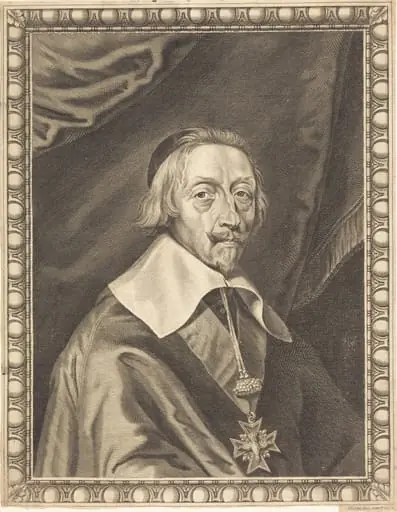
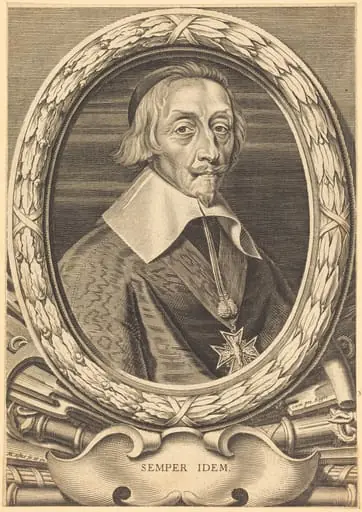
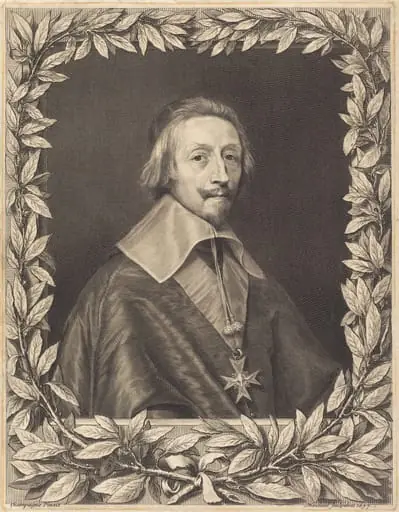
Armand Jean du Plessis, Cardinal Richelieu is an ink print by the Renaissance artist Claude Mellan. It dates from 1643 and is held in the collection of the National Gallery of Art.
About this work
Overview
Claude Mellan’s 1643 engraving presents Armand Jean du Plessis, Cardinal Richelieu, in a formal portrait. Rendered in black and white on laid paper, the image combines a dignified figure with a modest narrative background, characteristic of early‑modern printmaking.
Subject & Meaning
The central figure is the cardinal, depicted in elaborate ecclesiastical robes, holding a scroll in one hand and a staff in the other, symbols of his religious authority and political power. The subdued background, featuring a tiny ship on water and two diminutive figures, alludes to Richelium’s maritime and diplomatic interests.
Technique & Style
Mellan employs delicate line work and subtle cross‑hatching to model the cardinal’s face and hands, creating a sense of volume without the use of color. The engraving’s fine incisions into the paper demonstrate the artist’s mastery of tonal variation through line density, a hallmark of the period’s print techniques.
History & Provenance
Created in the year of Richelieu’s death, the print was likely intended as a commemorative image. It bears the inscription “Le Grand Armand Card. Duc de Richelieu,” confirming its identification and suggesting a contemporary audience familiar with the cardinal’s titles.
Context
Mellan’s work reflects the broader 17th‑century French practice of producing portrait engravings for dissemination among the educated elite. Such prints served both as visual records of prominent figures and as didactic tools, reinforcing the social hierarchy of the Ancien Régime.
Artist & collection