Artwork
Jean Loret
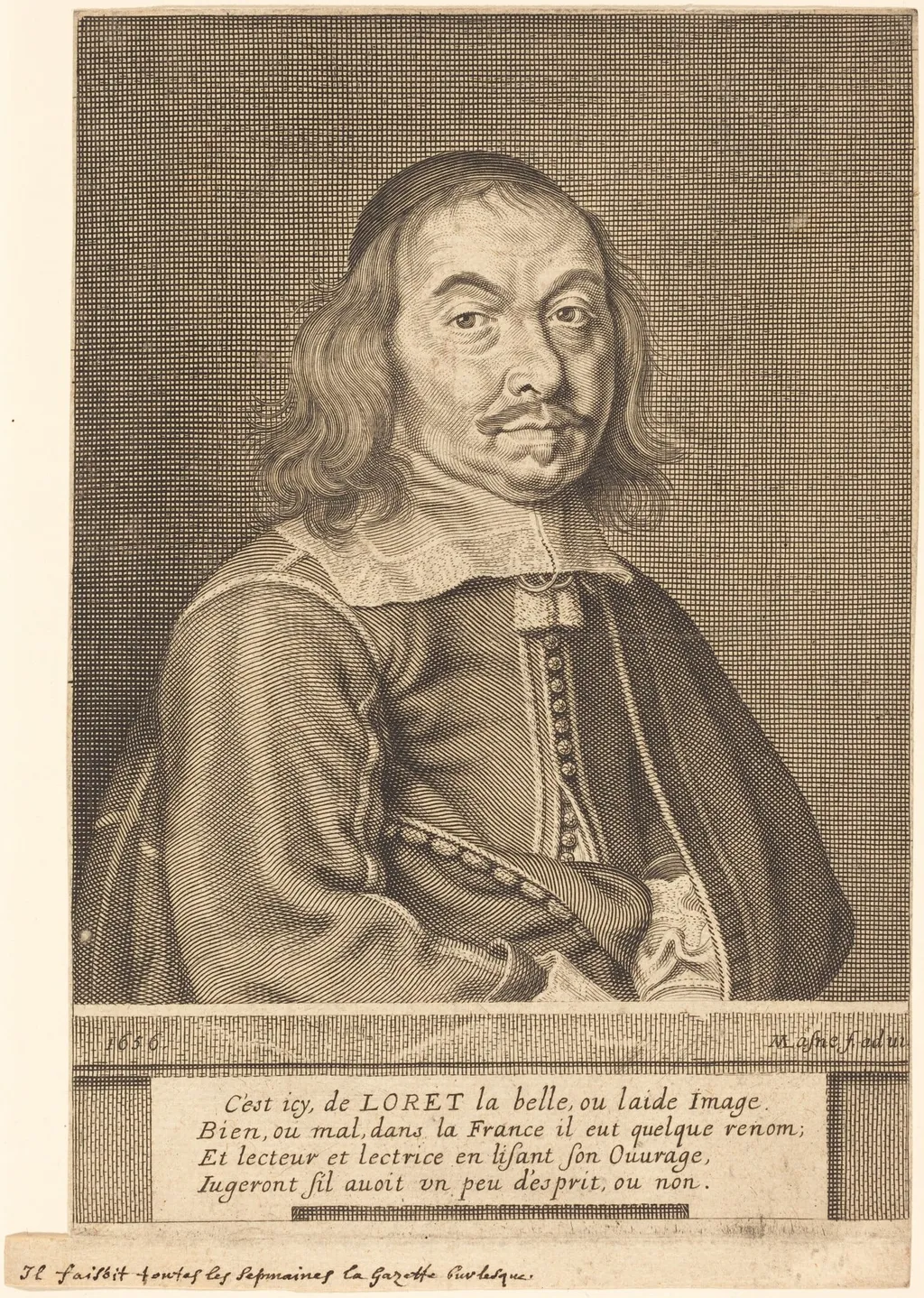
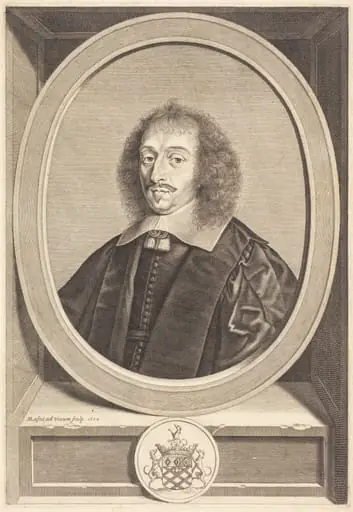
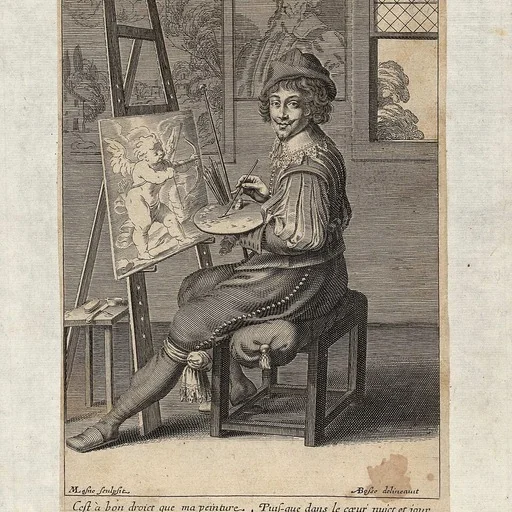
Jean Loret is an ink print by the Baroque artist Michel Lasne. It dates from 1656 and is held in the collection of the National Gallery of Art.
About this work
Overview
Executed in black ink on laid paper, the portrait captures Loret’s likeness with precision, emphasizing his facial features and attire.
This 1656 engraving by Michel Lasne portrays Jean Loret, a French poet and journalist known for his satirical verse. Executed in black ink on laid paper, the portrait captures Loret’s likeness with precision, emphasizing his facial features and attire. Lasne, a trained engraver active in Paris, was appointed official printmaker to King Louis XIII, reflecting his standing in the French artistic community during the mid-seventeenth century.
Subject & Meaning
Jean Loret was a prominent literary figure who chronicled court life and current events in verse, earning the nickname 'the journalist of the French court.' The portrait presents him with a composed, introspective demeanor, aligning with his role as an observer of society. The plain background and focused composition underscore his intellectual identity rather than his social status, inviting contemplation of his literary influence.
Technique & Style
Lasne employed fine, controlled lines to model form through cross-hatching, a method that builds tonal depth without color. The texture of Loret’s ruffled collar and curly hair is rendered with meticulous gradations of shadow, demonstrating Lasne’s skill in translating surface detail into monochrome. The absence of decorative elements directs attention to the subject’s expression and the precision of the engraving technique.
History & Provenance
Michel Lasne, trained in Antwerp under Rubens and van Dyck, brought Northern engraving traditions to France. He produced portraits of notable contemporaries, including this one of Loret, likely commissioned or circulated among literary circles. The print survives as part of a broader corpus of French portraiture from the reign of Louis XIII, reflecting the era’s growing interest in documenting cultural figures through print.
Context
In mid-17th century France, printmaking served as a key medium for disseminating images of public figures. Loret’s popularity as a chronicler of court life made him a natural subject for portraiture. Lasne’s work aligns with a trend of using engraved portraits to elevate literary personalities, bridging the worlds of visual art and written culture in an age before photography.
Legacy
This engraving remains one of the few surviving visual records of Jean Loret, preserving his appearance for later generations. Lasne’s technique influenced subsequent French portrait engravers, and the work exemplifies how printmaking helped define the public image of intellectuals during the early modern period. It stands as a quiet testament to the intersection of literature and visual culture in 17th-century France.
Artist & collection
Artist
Michel Lasne (Caen, ca. 1590–4 December 1667, Paris), was a French engraver, draughtsman and collector. Lasne was born in Caen and was the son of a goldsmith. He was a member of the Guild of Saint Luke in Antwerp for…