Artwork
Marche de Silene
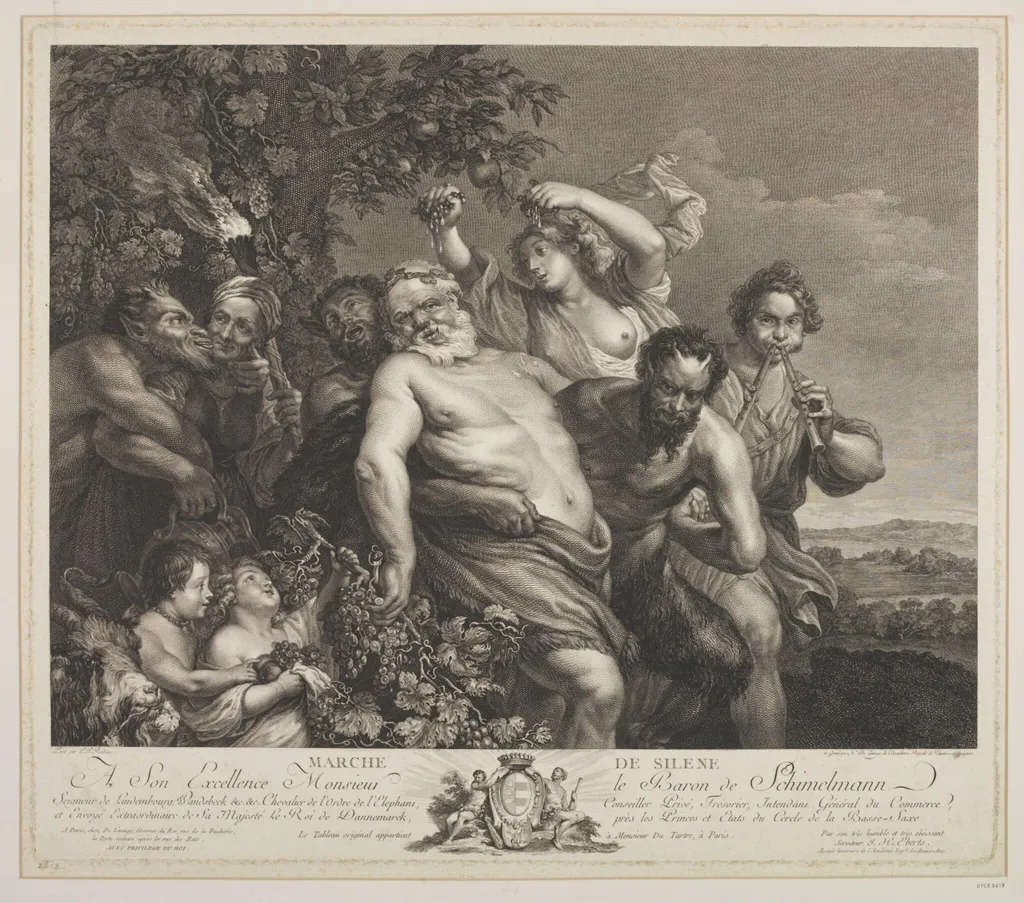
Marche de Silene is a print by Nicolas Launay. It dates from 1750 and is held in the collection of the Victoria and Albert Museum.
About this work
Overview
Nicolas Launay’s print *Marche de Silene* is a reproductive engraving based on a composition by Peter Paul Rubens. Executed on paper, it belongs to a broader series of prints made to disseminate Rubens’ designs to a wider audience. The work captures a dynamic, mythologically inspired scene, rendered with fine linear detail characteristic of 17th-century reproductive printmaking.
Subject & Meaning
Surrounding characters engage in revelry—playing instruments, carrying grapes, or observing—evoking themes of intoxication, nature, and ritual.
The scene centers on Silenus, a mythological companion of Dionysus, depicted bare-chested and holding a woman amid a throng of figures. Surrounding characters engage in revelry—playing instruments, carrying grapes, or observing—evoking themes of intoxication, nature, and ritual. The gathering suggests an allegory of earthly excess and the wilder aspects of human passion, rooted in classical mythological tradition.
Technique & Style
Launay employed fine-line engraving to translate Rubens’ fluid composition into monochrome print. The intricate cross-hatching defines texture and movement, while the dense arrangement of figures creates rhythmic visual energy. The rocky landscape and sparse trees frame the scene without dominating it, preserving focus on the human and mythological interaction.
History & Provenance
The print was produced in the early 17th century as part of a commercial effort to reproduce Rubens’ paintings for collectors and connoisseurs. Launay, a skilled engraver, worked within a network of artists and publishers who specialized in disseminating Flemish art across Europe. Its presence in the Victoria and Albert Museum reflects its historical role in art circulation.
Context
During this period, reproductive prints were vital for spreading the influence of major painters like Rubens beyond original patrons. *Marche de Silene* reflects the era’s fascination with classical mythology and the desire to visualize its narratives in accessible formats. Such prints bridged elite art and public taste, reinforcing cultural ideals through familiar mythological motifs.
Legacy
Though not an original painting, Launay’s engraving preserved and propagated Rubens’ vision, contributing to the enduring visibility of his mythological themes. It stands as an example of how printmaking functioned as a medium of artistic transmission, allowing compositions to outlive their original contexts and reach audiences across generations and geographies.
Artist & collection
Artist
Nicolas Launay’s prints in the 1700s brought scenes to life with sharp lines and rich contrasts—his 1780s etching *Marche de Silene* shows a lively procession of mythical figures.

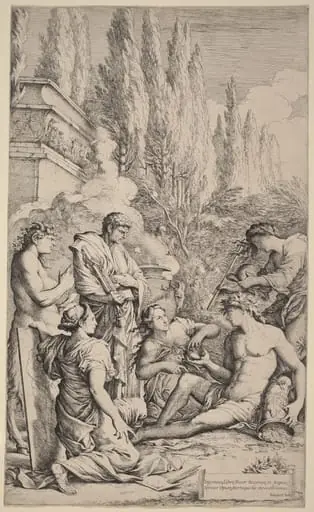 The Genius of Salvator Rosa
![Omnia Vincit Amor [Apollo and Daphne], by Robert van Audenaerd](https://artifactworldgallery.com/img/robert-van-audenaerd--omnia-vincit-amor-apollo-and-daphne--7af37b2f424f6e58-w320.webp) Omnia Vincit Amor [Apollo and Daphne]
Omnia Vincit Amor [Apollo and Daphne]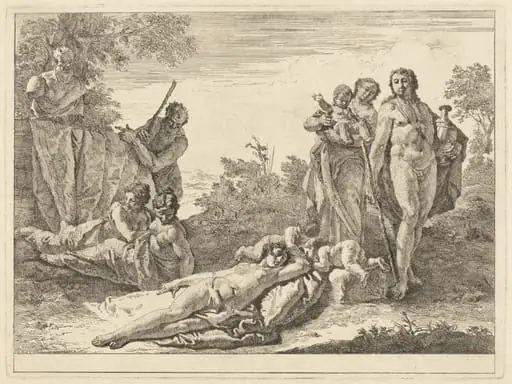 Nine Figures around a Herm of Pan
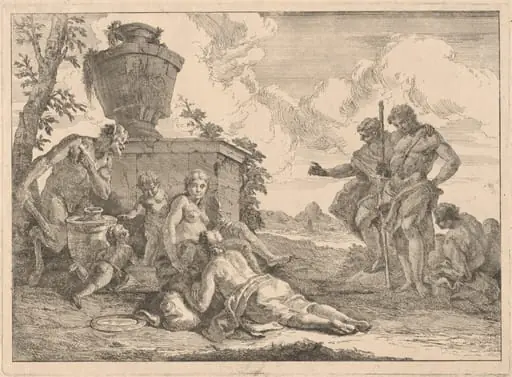 A Satyr with a Staff and Seven Other Figures
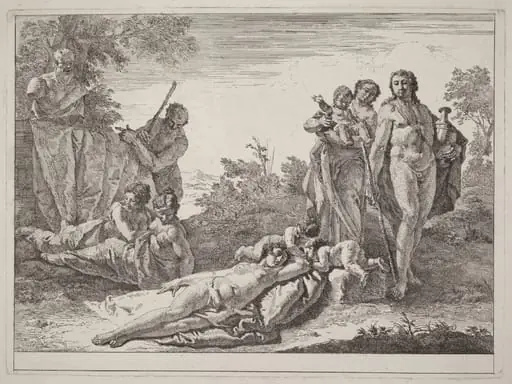 Apollo and Nymphs in a Landscape with a Bust of Pan
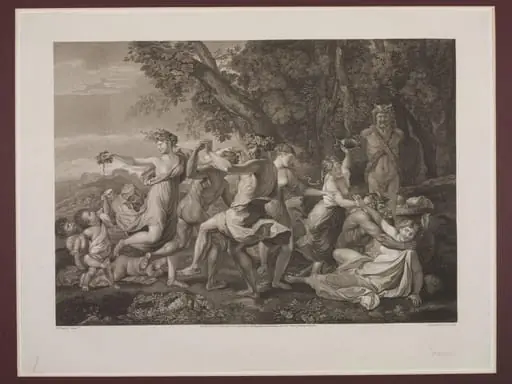 Bacchanalian Dance
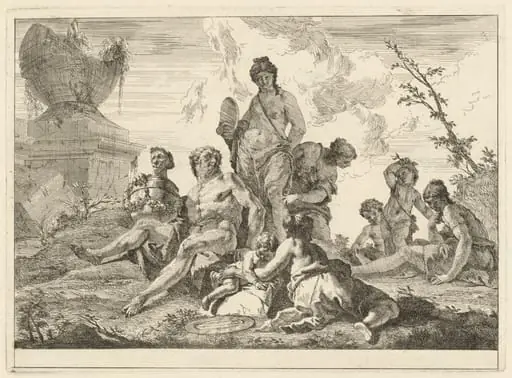 Venus and Vulcan with Three Nymphs and Three Cupids
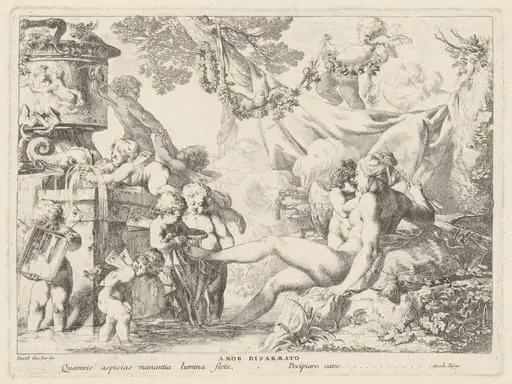 Amor Disarmato (Cupid Disarmed)
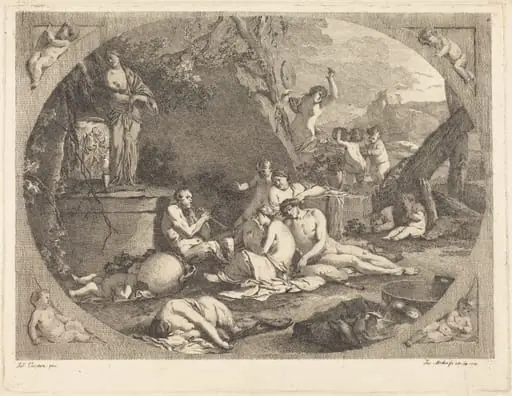 Bacchanal
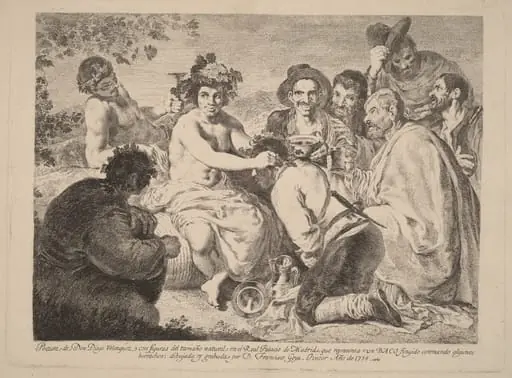 Baco (Bacchus)
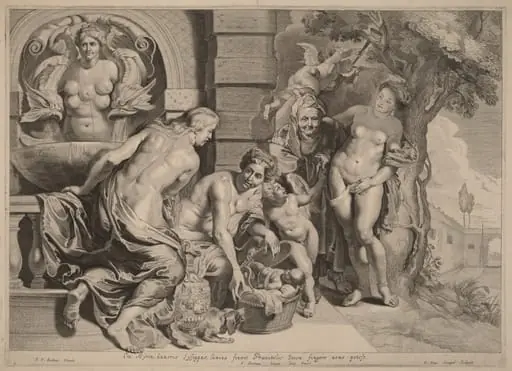 Erichthonius in His Basket
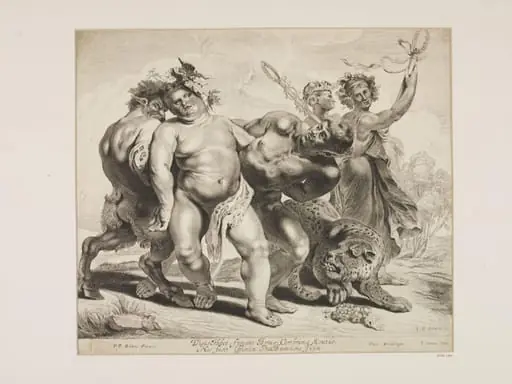 The March of Silenus