Artwork
Baco (Bacchus)
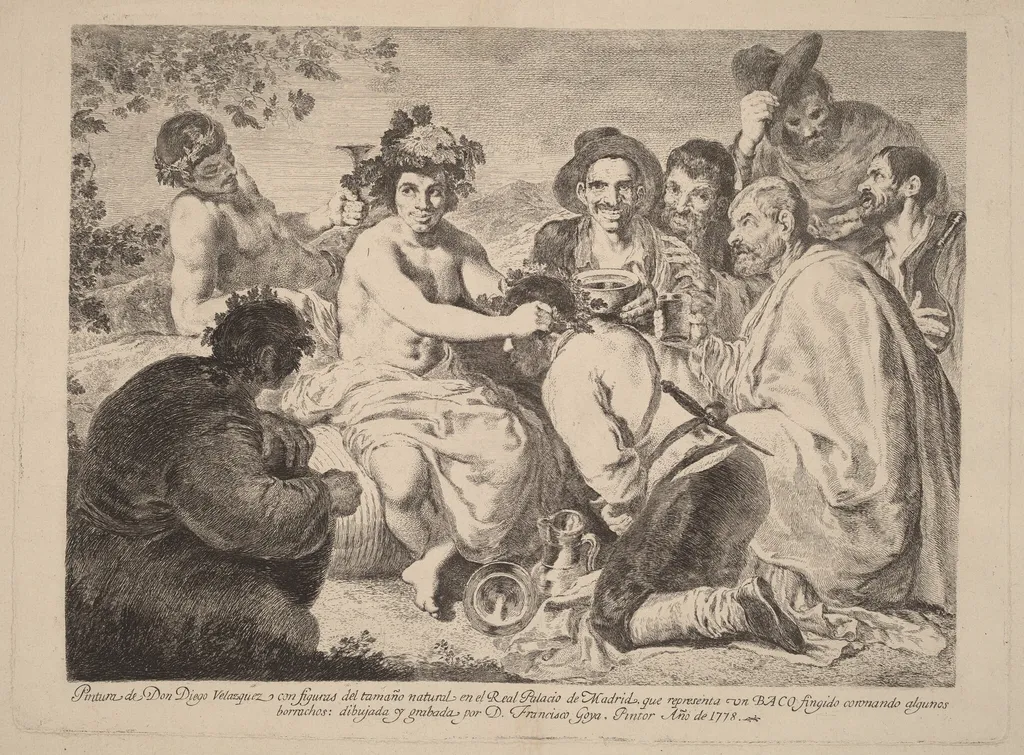
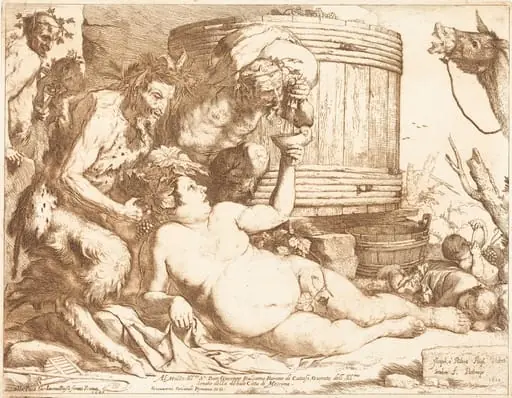
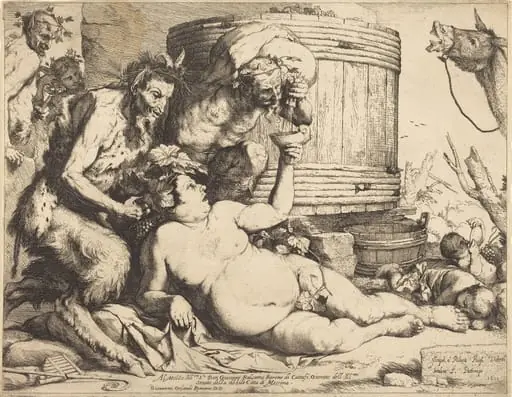
Baco (Bacchus) is an ink print by the Romanticist artist Francisco Goya. It dates from 1778 and is held in the collection of the National Gallery of Art.
About this work
Overview
Baco (Bacchus) is an etching on heavy laid paper by Francisco de Goya, produced in the first edition at the Calcografia in 1778-79. This early work showcases Goya's interpretation of a mythological scene, characteristic of his engagement with classical antiquity during his time in Spain.
Subject & Meaning
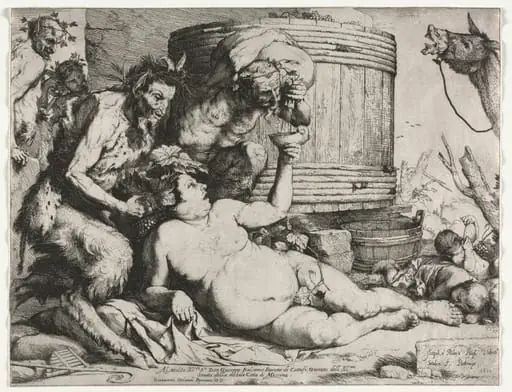
The etching depicts a lively, chaotic outdoor scene inspired by classical mythology, specifically Bacchus (the Roman god of wine). The composition features a central figure holding a large wine jug, surrounded by individuals in various states of dress, engaged in drinking and reaching for food amidst a natural backdrop.
Technique & Style
Goya's etching technique in Baco (Bacchus) is marked by scratchy, layered lines, imparting a rough, energetic quality to the work. Although based on a Diego Velázquez painting, Goya's print transforms the original into a distinctly personal, expressive interpretation.
History & Provenance
Created during Goya's association with the royal print workshop, Calcografía, this etching is part of his early graphic output in Spain. It was printed in the first edition between 1778 and 1779.
Context
Baco (Bacchus) contributes to the broader European Romantic printmaking tradition of the late 18th and early 19th centuries, reflecting Goya's role as a leading Spanish artist of his time.
Artist & collection
Artist
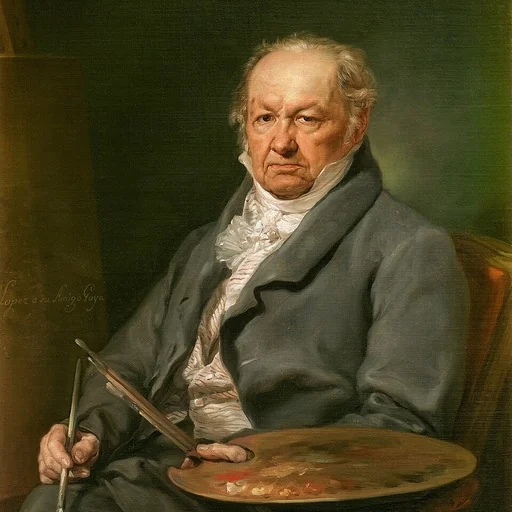
Francisco José de Goya y Lucientes (; Spanish: ; 30 March 1746 – 16 April 1828) was a Spanish romantic painter and printmaker.