Artwork
Rosvoja luolan suulla (Sotilaita tunnelissa)
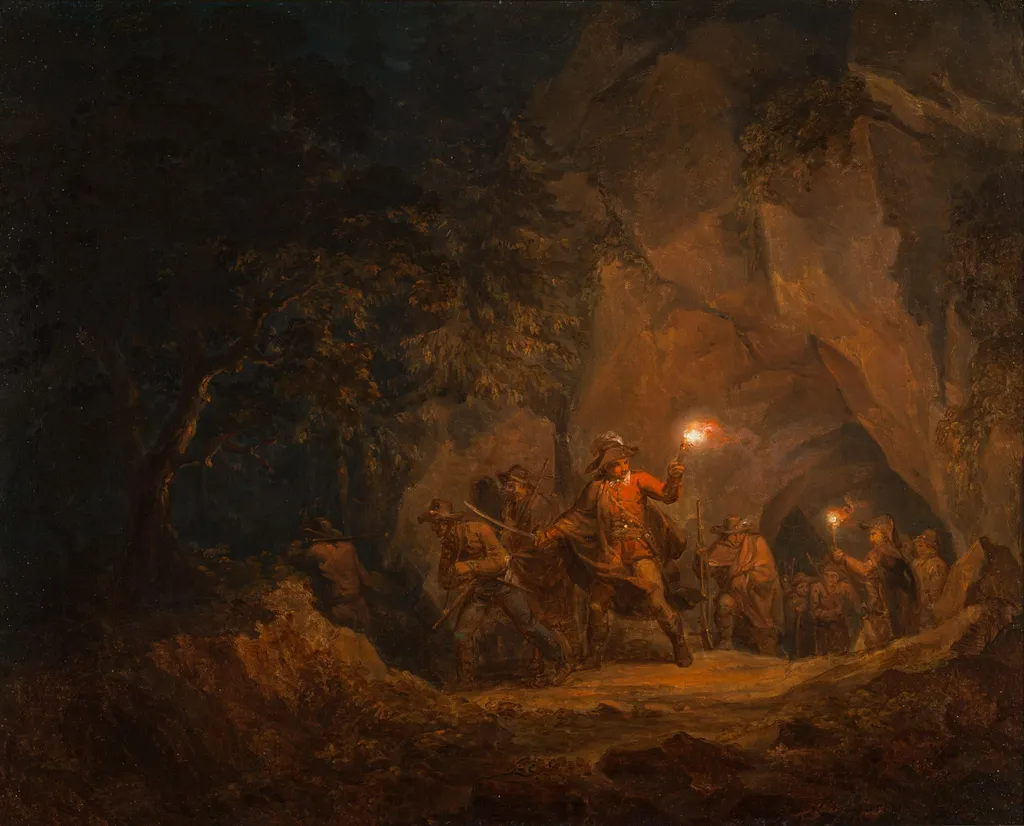
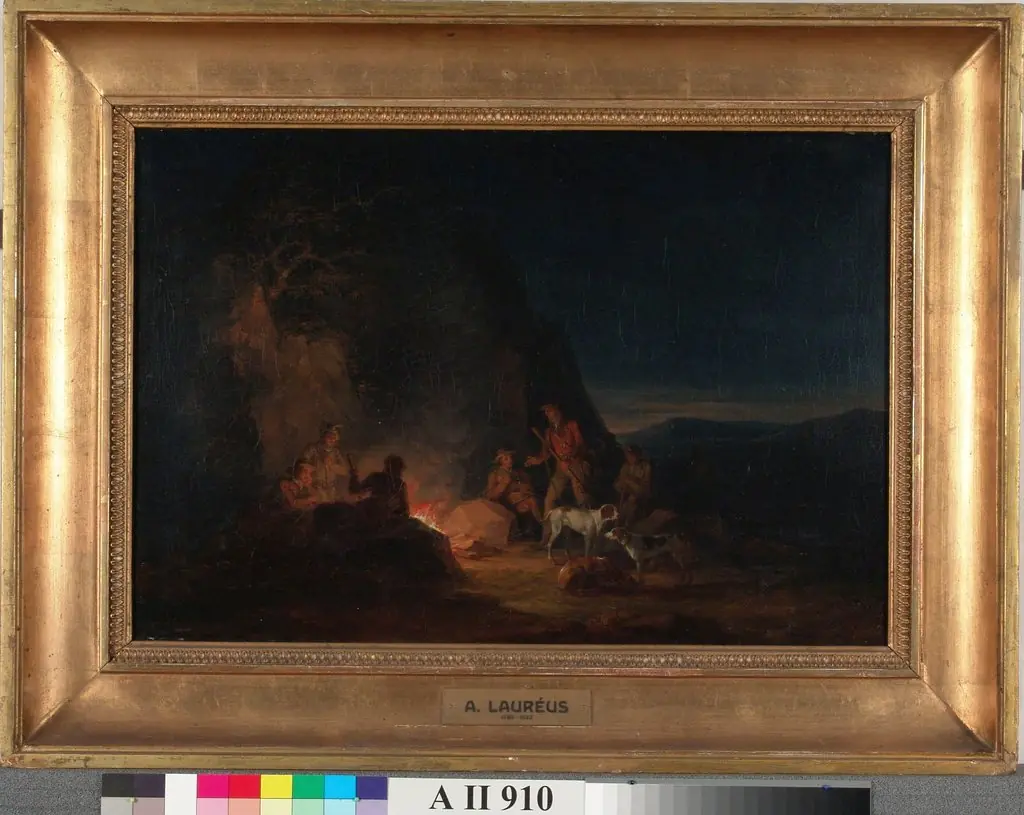
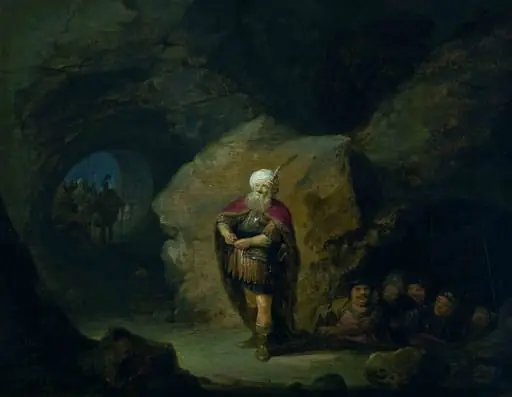
Rosvoja luolan suulla (Sotilaita tunnelissa) is a drawing by Aleksander Lauréus. It is held in the collection of the Helsinki City Museum. This image depicts a group of soldiers in a dim, rocky cave, rendered in a somber yet intimate tone.
About this work
Overview
This image depicts a group of soldiers in a dim, rocky cave, rendered in a somber yet intimate tone. A single lantern held by the foremost figure casts a warm, localized glow, illuminating faces and textured stone while leaving the surrounding space in deep shadow. The composition emphasizes quiet stillness amid the tension of war, focusing on the human presence rather than action or drama.
Subject & Meaning
The soldiers, gathered in a confined underground space, suggest a moment of respite during conflict. Their postures—resting, leaning, or silently observing—convey fatigue and camaraderie. The lantern’s glow becomes a symbol of fragile warmth in an otherwise hostile environment, hinting at the vulnerability and humanity of those caught in war’s prolonged uncertainty.
Technique & Style
The artist employs careful shading and cross-hatching to model the rough surfaces of the cave walls and the layered textures of uniforms. The contrast between the lantern’s warm light and the surrounding darkness enhances spatial depth and tactile realism. Lines are used deliberately to suggest volume and material, avoiding overt detail in favor of atmospheric suggestion.
History & Provenance
The work originates from a Finnish context, likely created during or shortly after the Winter War or Continuation War. Its title, referencing a cave entrance, aligns with documented soldier experiences in subterranean shelters. Though exact provenance is unclear, the piece reflects a broader tradition of wartime visual documentation by Finnish artists responding to national hardship.
Context
In Finland’s 20th-century military history, soldiers often took refuge in natural rock formations during harsh winters. This image captures a common, unglamorous reality: the quiet endurance of men in temporary, earth-bound shelters. The scene resonates with other contemporary works that prioritize emotional truth over heroic narrative, reflecting a national visual culture shaped by resilience.
Legacy
The image contributes to a modest but enduring visual record of Finnish wartime life, valued for its restraint and psychological nuance. It has been referenced in educational materials on printmaking techniques and military history, serving as an example of how everyday moments in conflict can be rendered with dignity and quiet power.
Artist & collection

 Episod din lupta lui Saul cu David
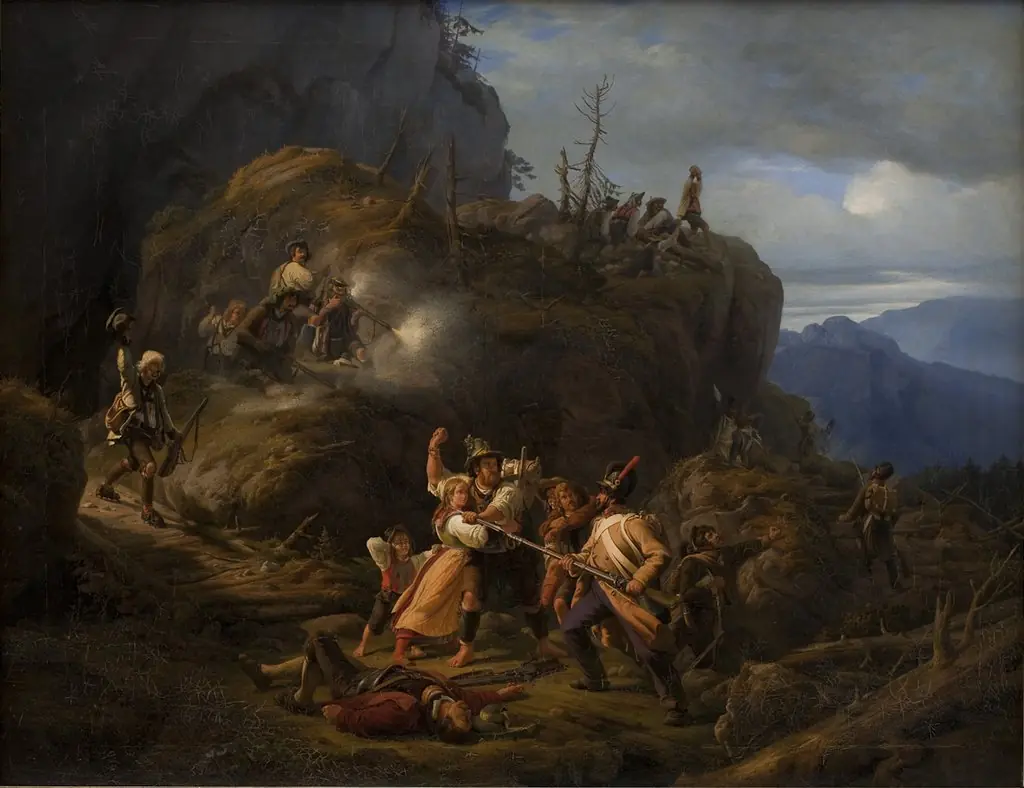 Scene af tyrolerkrigen i året 1809
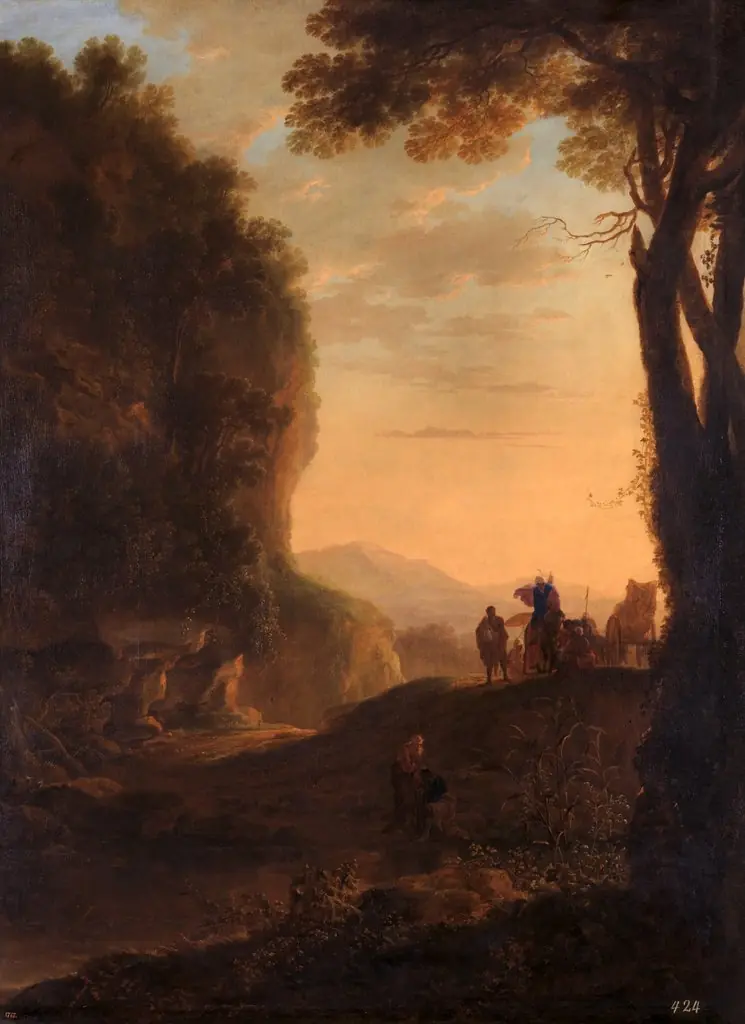 Baptism of the Eunuch of Queen Candace
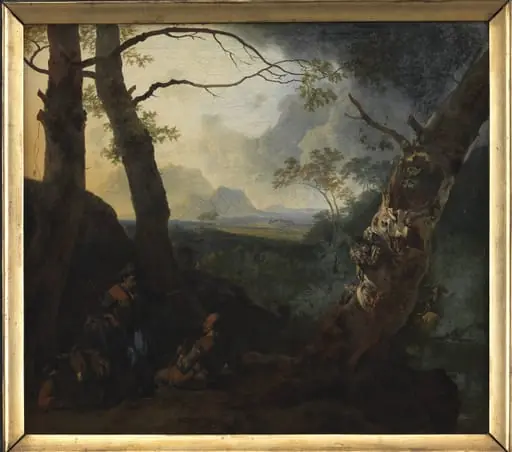 Southern Landscape with Herdsmen
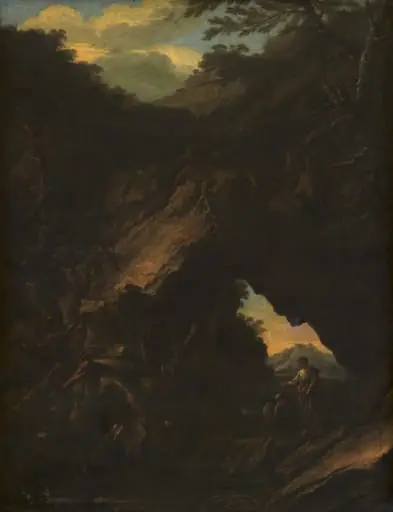 Landscape with an "Arco Naturale"
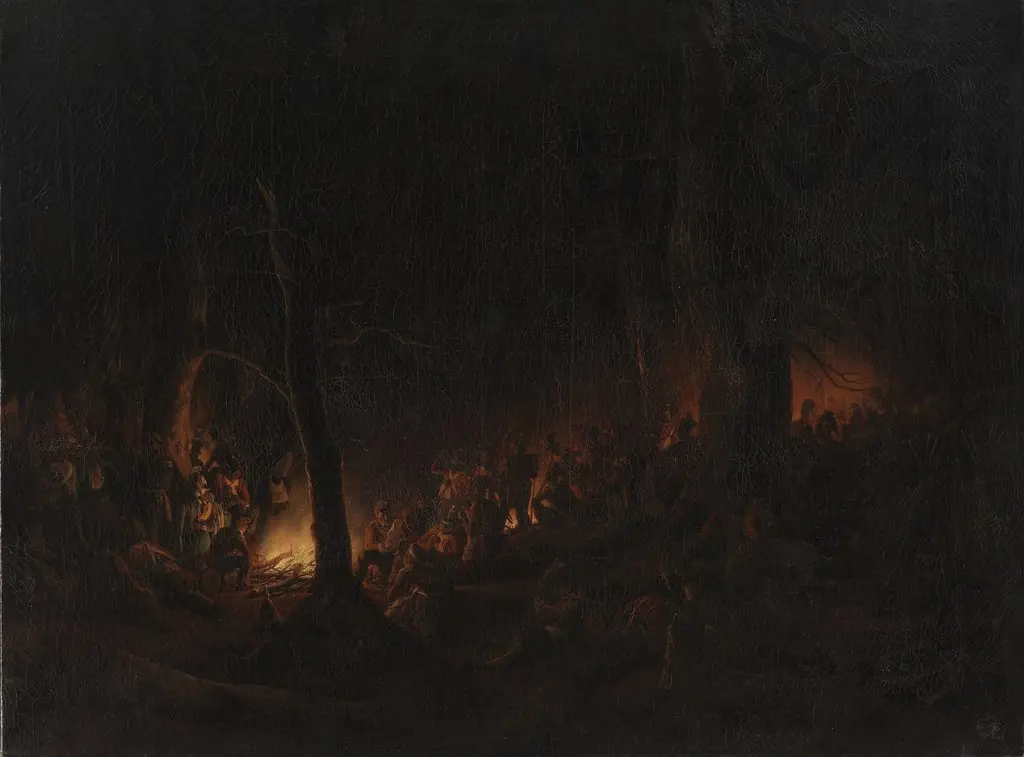 Bivouac After the Skirmish at Schleswig on the Night Between 23 and 24 April 1848
 Temptation of St Anthony
 A Cavern in the Campagna, Rome
 Bandits in Romagna
 Pond in the Salt Mine at Wieliczka
 A Room in a Cottage
 Scene af tyrolerkrigen i året 1809