Artwork
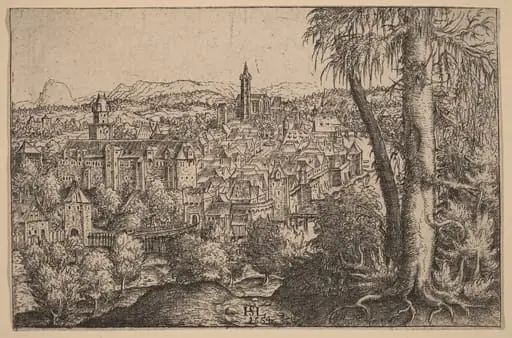
Landscape with View of a Farmer's Cottage and a Town near a River
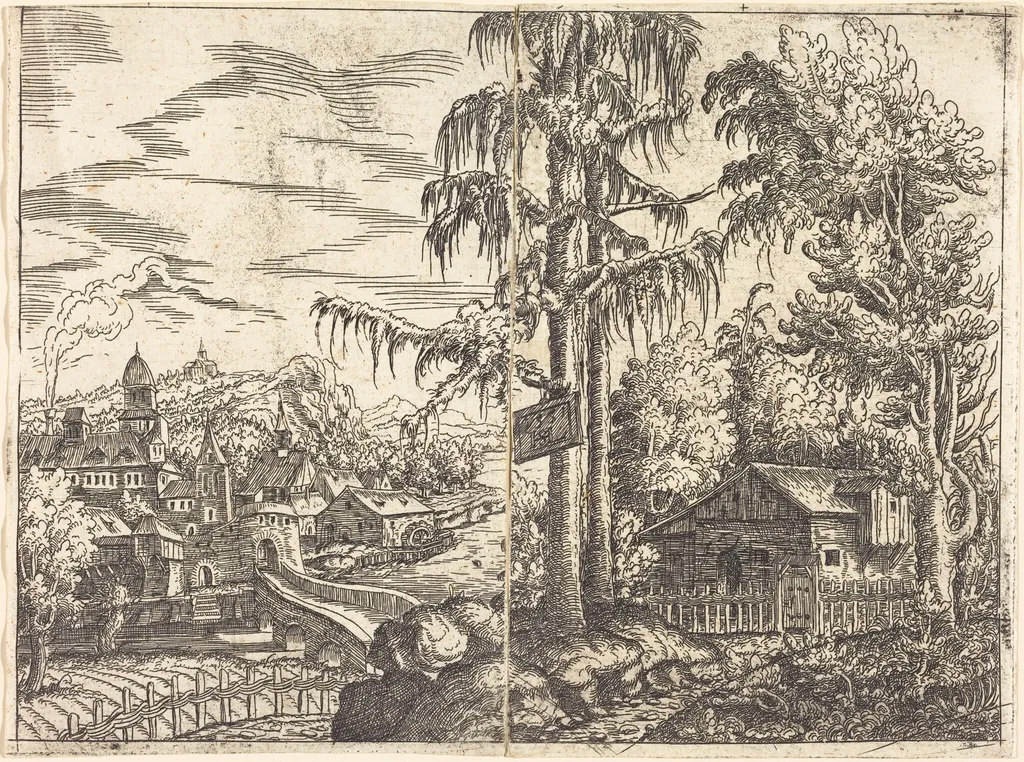
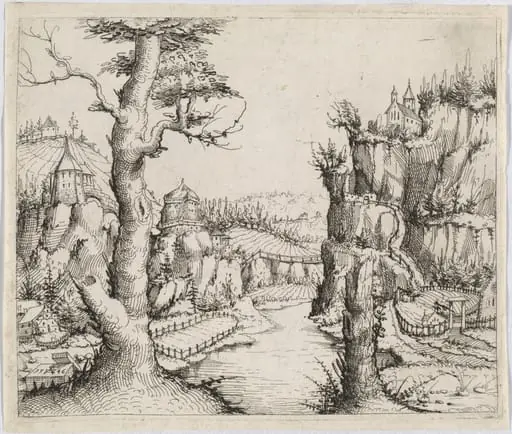
Landscape with View of a Farmer's Cottage and a Town near a River is an ink print by the Renaissance artist Hanns Lautensack. It dates from 1551 and is held in the collection of the National Gallery of Art.
About this work
Overview
The work is a single print made using the etching technique, in which lines are incised into a metal plate and inked to transfer the image onto paper.
Created in 1551 by Hanns Lautensack, this etching combines two sheets to form a continuous landscape scene. The work is a single print made using the etching technique, in which lines are incised into a metal plate and inked to transfer the image onto paper. Its dual-sheet format allowed for a broader composition than standard single-sheet prints of the period, reflecting a technical adaptation to expansive subject matter.
Subject & Meaning
The scene portrays a quiet rural settlement nestled beside a winding river, with a cluster of modest buildings and a few church spires rising above the rooftops. Two tall trees frame the view, anchoring the composition and directing the eye toward the distant town. The absence of human figures and the emphasis on natural and architectural forms suggest a contemplative observation of place rather than narrative storytelling.
Technique & Style
Lautensack employed etching to render fine, controlled lines on a metal plate, allowing for detailed textures in the landscape. The sky is filled with delicate, undulating strokes that imply movement or cloud cover, while the buildings and trees are defined by crisp, linear contours. The monochrome ink on light paper gives the work a sketchlike quality, emphasizing draftsmanship over color or tonal variation.
History & Provenance
Hanns Lautensack, born in 1524 to painter Paul Lautensack, was active in Nuremberg before relocating to Vienna around 1556. This print dates from his earlier period, likely made before his documented service to Emperor Ferdinand I. Its survival in collections today reflects its value as an example of mid-16th-century German printmaking, though specific early ownership records remain unclear.
Context
In the mid-1500s, landscape imagery in Northern Europe was gaining traction as an independent subject, moving beyond mere background in religious or historical scenes. Lautensack’s work aligns with this trend, capturing a harmonious blend of cultivated land and settlement. His use of etching placed him within a broader circle of German artists exploring the medium’s potential for detailed natural observation.
Legacy
Though not widely known today, Lautensack’s prints contributed to the development of landscape as a printmaking genre in Central Europe. His technical approach—using multiple sheets to extend the pictorial field—demonstrates an early experimentation with scale and format. His work remains a reference point for understanding how artists of the period translated observed environments into intimate, linear compositions.
Artist & collection
Artist
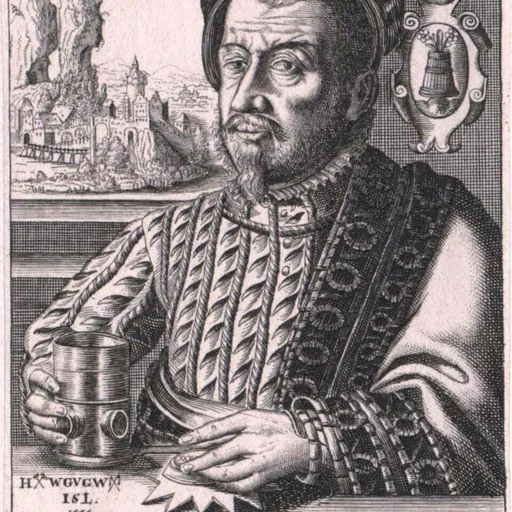
Hanns Lautensack (sometimes erroneously referred to as Hans Sebald Lautensack) (1524 – c.

![View of Nuremberg from the West [center section], by Hanns Lautensack](https://artifactworldgallery.com/img/hanns-lautensack--view-of-nuremberg-from-the-west-center-section--12422dca269411c0-w320.webp)
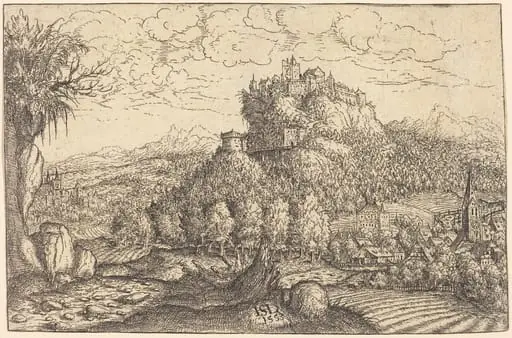
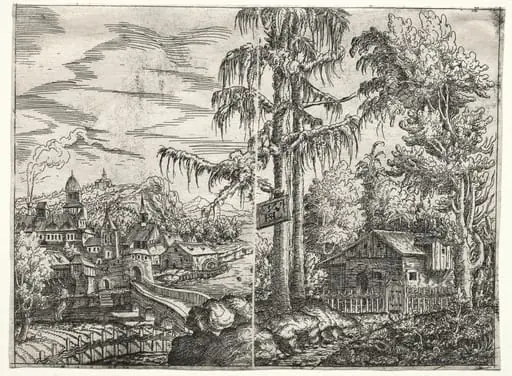 Landscape with the Town on a River and the Cottage between Trees
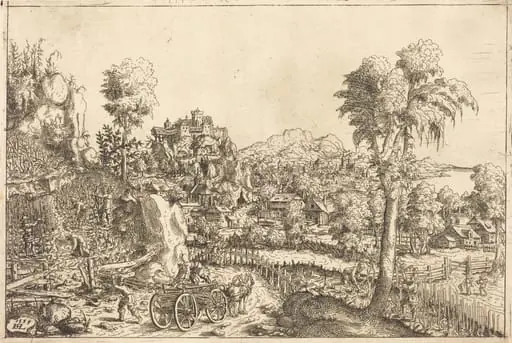 Landscape with a Vineyard
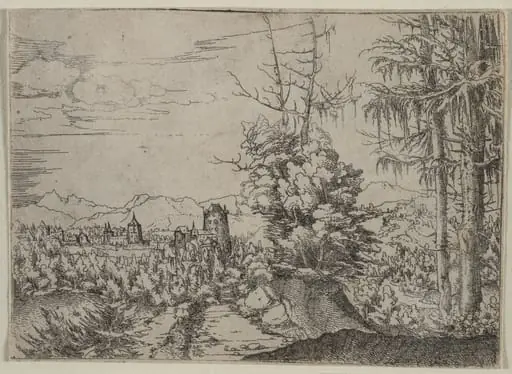 Landscape with Two Pines
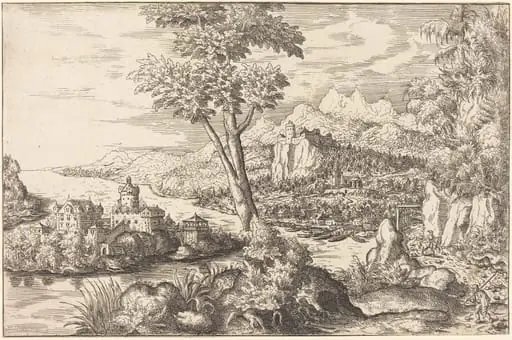 Landscape with Three Men
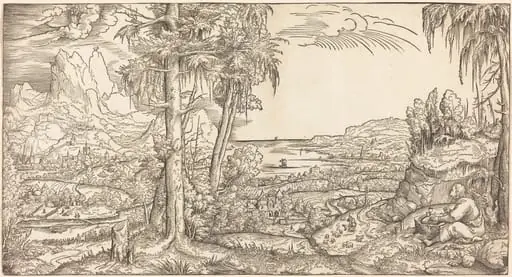 Saint John on Patmos
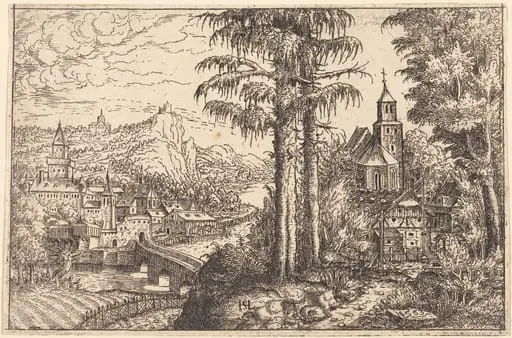 View of a Town near a River with a Church on the Right
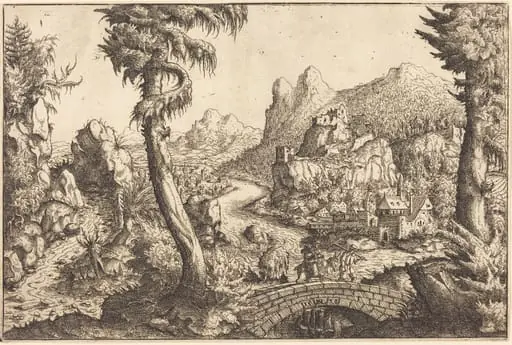 The Flight into Egypt
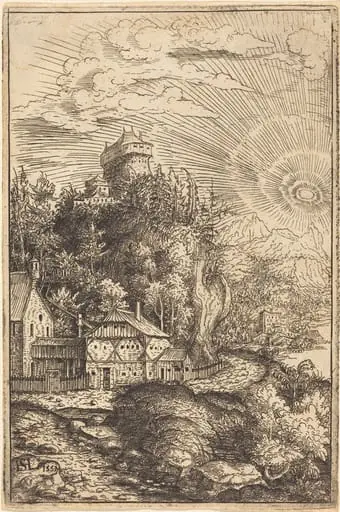 Landscape with a Castle and Radiating Sun
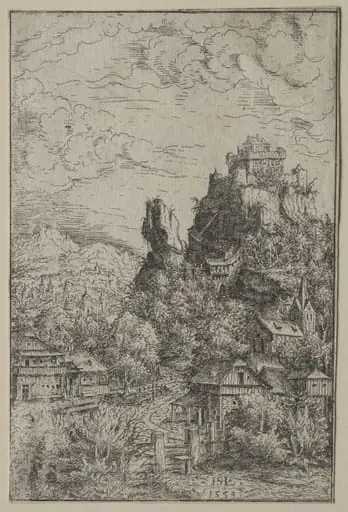 Landscape with a Castle
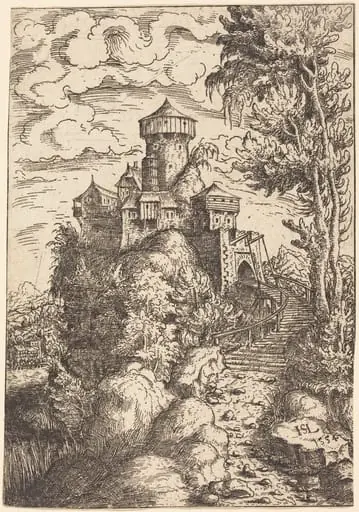 Landscape with a Fortress and Big Stairway
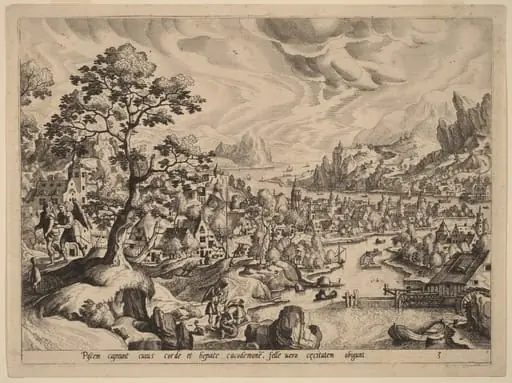 Tobias Catching the Fish in the River Tigris
 River Landscape with High Cliffs