Artwork
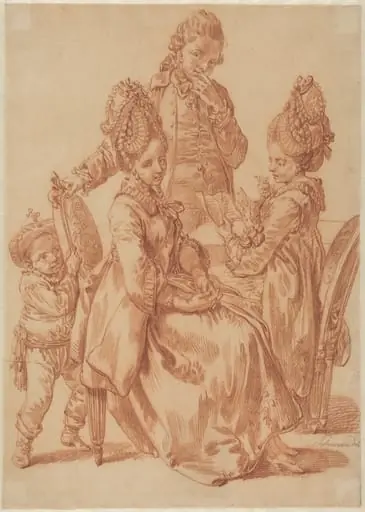
A Lady and Gentleman with Exaggerated Headdresses
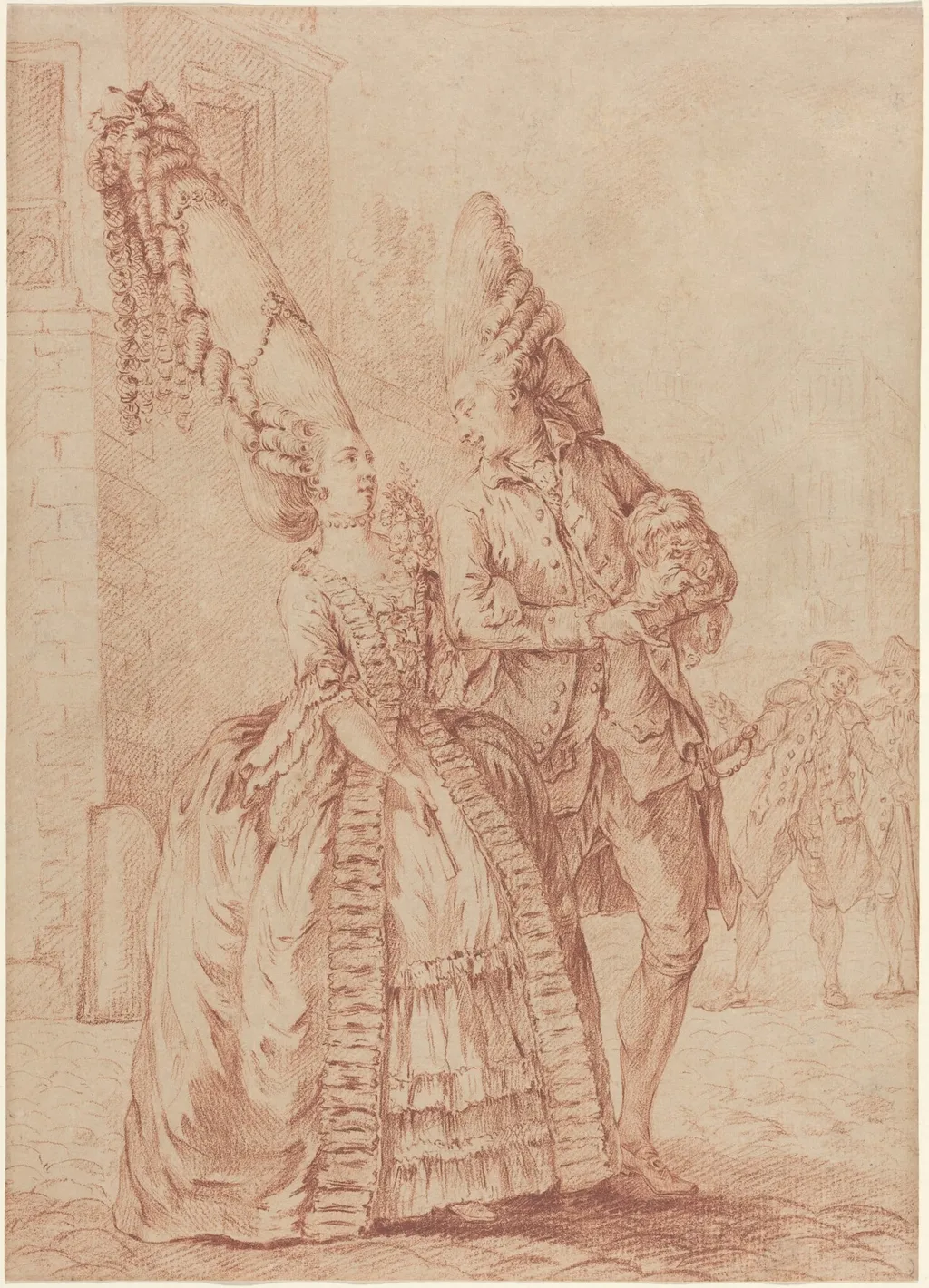
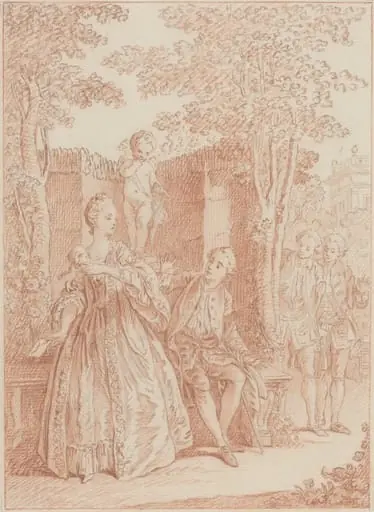
A Lady and Gentleman with Exaggerated Headdresses is a chalk drawing by the Romanticist artist Pierre Thomas Le Clerc. It dates from 1779 and is held in the collection of the National Gallery of Art. Pierre‑Thomas Le Clerc’s drawing, dated 1779, presents a pair of figures dressed in elaborate eighteenth‑century attire.
About this work
Overview
Pierre‑Thomas Le Clerc’s drawing, dated 1779, presents a pair of figures dressed in elaborate eighteenth‑century attire. Rendered in red chalk on a beige laid‑paper support, the composition balances the two central characters with secondary figures in the background, creating a lively tableau of fashion and social interaction.
Subject & Meaning
The work depicts a woman in a towering wig and a layered gown opposite a gentleman wearing a powdered wig, a richly ornamented coat, and holding a hat. A servant and an additional figure stand near a stone wall, suggesting a domestic or courtly setting where status and costume are foregrounded.
Technique & Style
Le Clerc employs a warm red chalk that yields soft tonal variations across the paper’s light surface. The drawing is executed with loose, rapid strokes, giving the impression of a sketch rather than a finished study, while still conveying the texture of fabrics and the intricacy of the headdresses.
History & Provenance
Created in 1779, the piece belongs to Le Clerc’s broader output of whimsical figure studies. Its provenance traces through private collections of eighteenth‑century French drawings before entering a museum holding focused on period costume illustration, where it serves as a reference for contemporary scholars of fashion and drawing practice.
Artist & collection