Artwork
Oui, je la connais Traitre, et je connais ton Coeur
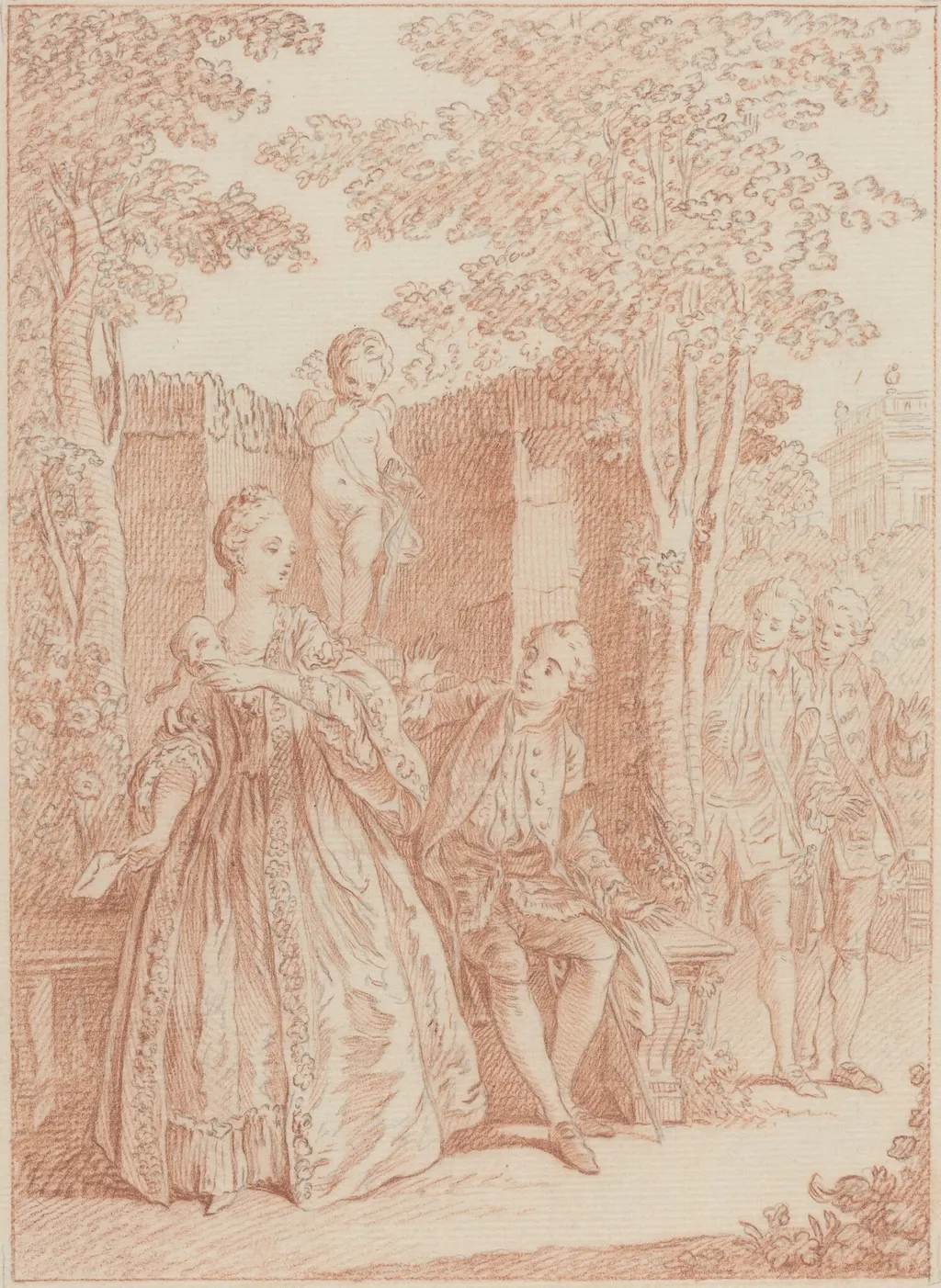
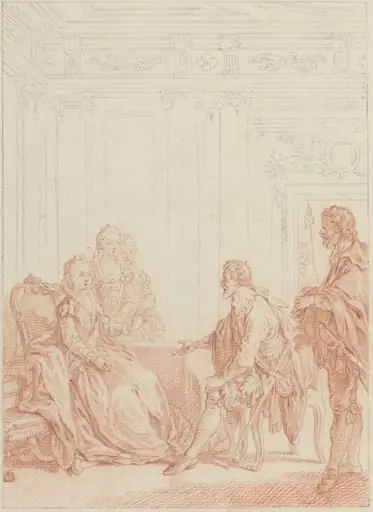
Oui, je la connais Traitre, et je connais ton Coeur is a graphite drawing by the Baroque artist Hubert François Gravelot. It dates from 1736 and is held in the collection of the National Gallery of Art.
About this work
Overview
The piece reflects the refined, intimate character of early Rococo illustration rather than the grandeur of Baroque traditions.
Created in 1736, this drawing by Hubert François Gravelot is executed in red chalk and graphite on laid paper. It belongs to a body of work produced after his move from Paris to London in 1732, where he contributed significantly to the dissemination of French decorative sensibilities in British art. The piece reflects the refined, intimate character of early Rococo illustration rather than the grandeur of Baroque traditions.
Subject & Meaning
The French title, 'Oui, je la connais Traitre, et je connais ton Coeur,' translates to 'Yes, I know you, traitor, and I know your heart.' It suggests a moment of emotional revelation between two figures, likely drawn from a theatrical or literary scene. The phrasing implies betrayal and intimate knowledge, evoking psychological tension within a delicate, stylized composition typical of Rococo narrative drawing.
Technique & Style
Gravelot employed red chalk for its warm, fluid lines and graphite for subtle tonal contrasts, exploiting the texture of laid paper to enhance the drawing’s tactile quality. The lines are precise yet expressive, favoring elegance over dramatic intensity. This approach aligns with the Rococo preference for grace and nuance, distinguishing it from the heavier chiaroscuro and monumental forms of the Baroque.
History & Provenance
Gravelot produced this work during his London years, where he worked as an illustrator for publishers and taught drawing to British artists. Though his engraved designs influenced British decorative arts, this drawing remains a rare surviving example of his independent graphic work. Its provenance traces to private collections in Britain, reflecting its status as a personal study rather than a commercial print.
Context
In 1730s London, French Rococo aesthetics were gaining traction among the elite, particularly in book illustration and interior design. Gravelot’s drawings helped bridge continental styles with British tastes. While Baroque drama still held sway in public art, this piece exemplifies the quieter, more personal visual language that flourished in private and literary circles.
Legacy
Though Gravelot is better known for his engravings, this drawing illustrates his mastery of line and emotional subtlety. It contributed to the evolution of British graphic arts by demonstrating how French Rococo sensibilities could be adapted to intimate, hand-drawn formats. His influence endured in the work of later illustrators who embraced expressive draftsmanship over grand narrative.
Artist & collection

Artist
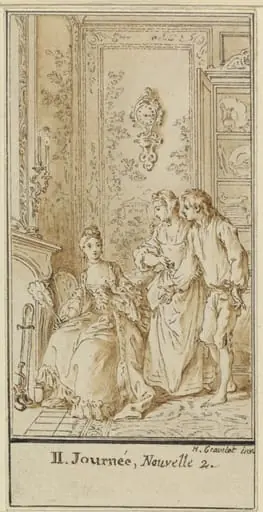
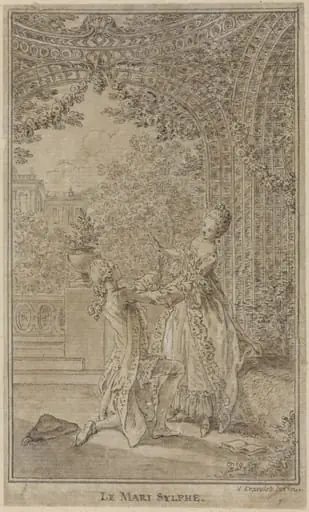
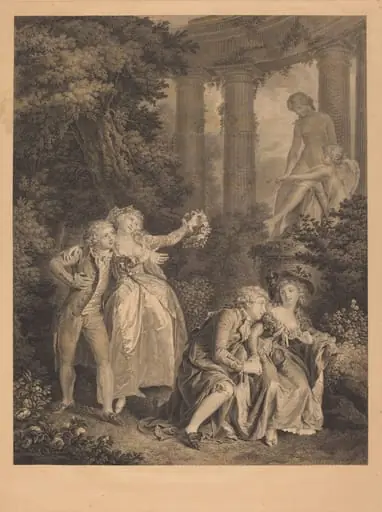
Hubert-François Bourguignon, commonly known as Gravelot (26 March 1699 – 20 April 1773), was a French engraver, a famous book illustrator, designer and drawing-master.

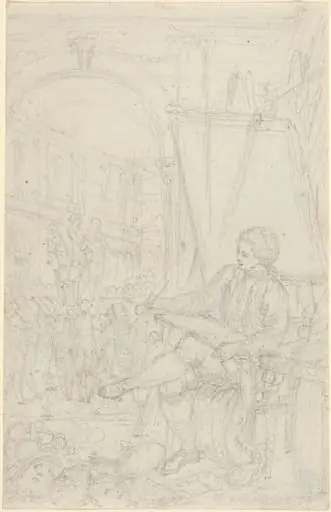 Self-Portrait
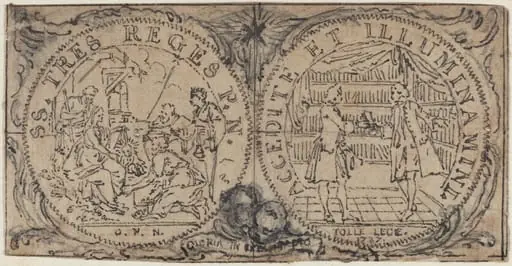 Ornamental Medallions with the Adoration of the Magi and Two Bibliophiles
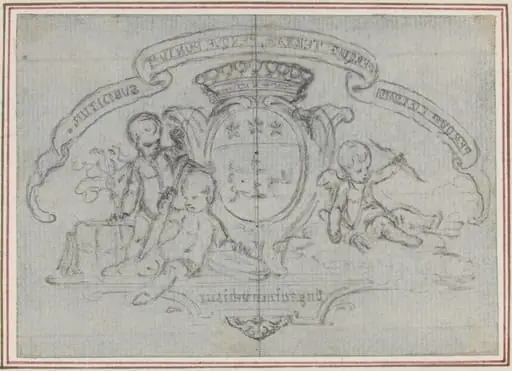 Coat of Arms with Three Putti
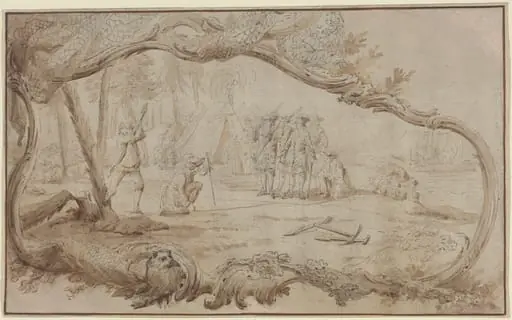 The Landing of the Dutch Expedition Party in New York
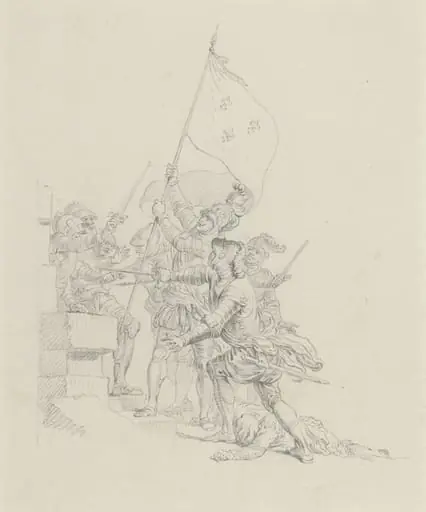 Il monte: il a déjà de ses mains triomphantes...
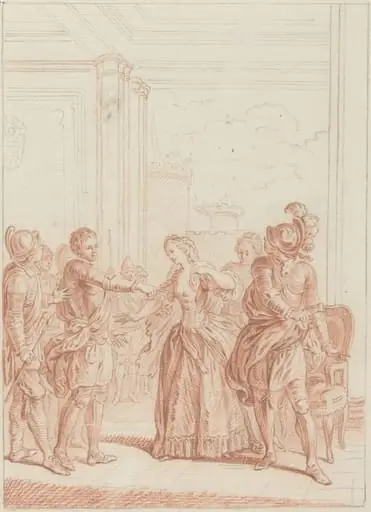 Je suis vengé de toi: l'on te hait, et l'on m'aime
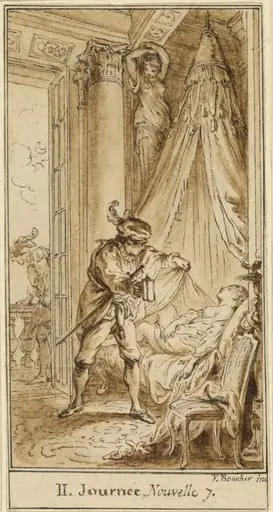 Second Day, Seventh Story: The Duke of Athens Contemplating the Sleeping Princess Alatiel
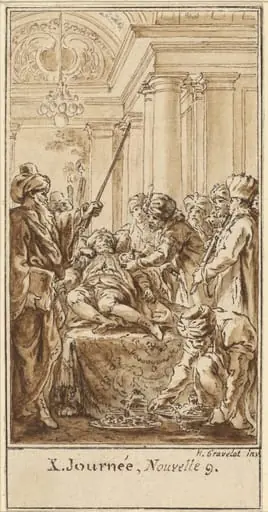 Tenth Day, Ninth Story: Saladin Bestows Rich Gifts on the Sleeping Torello