Artwork
La chasse royalle
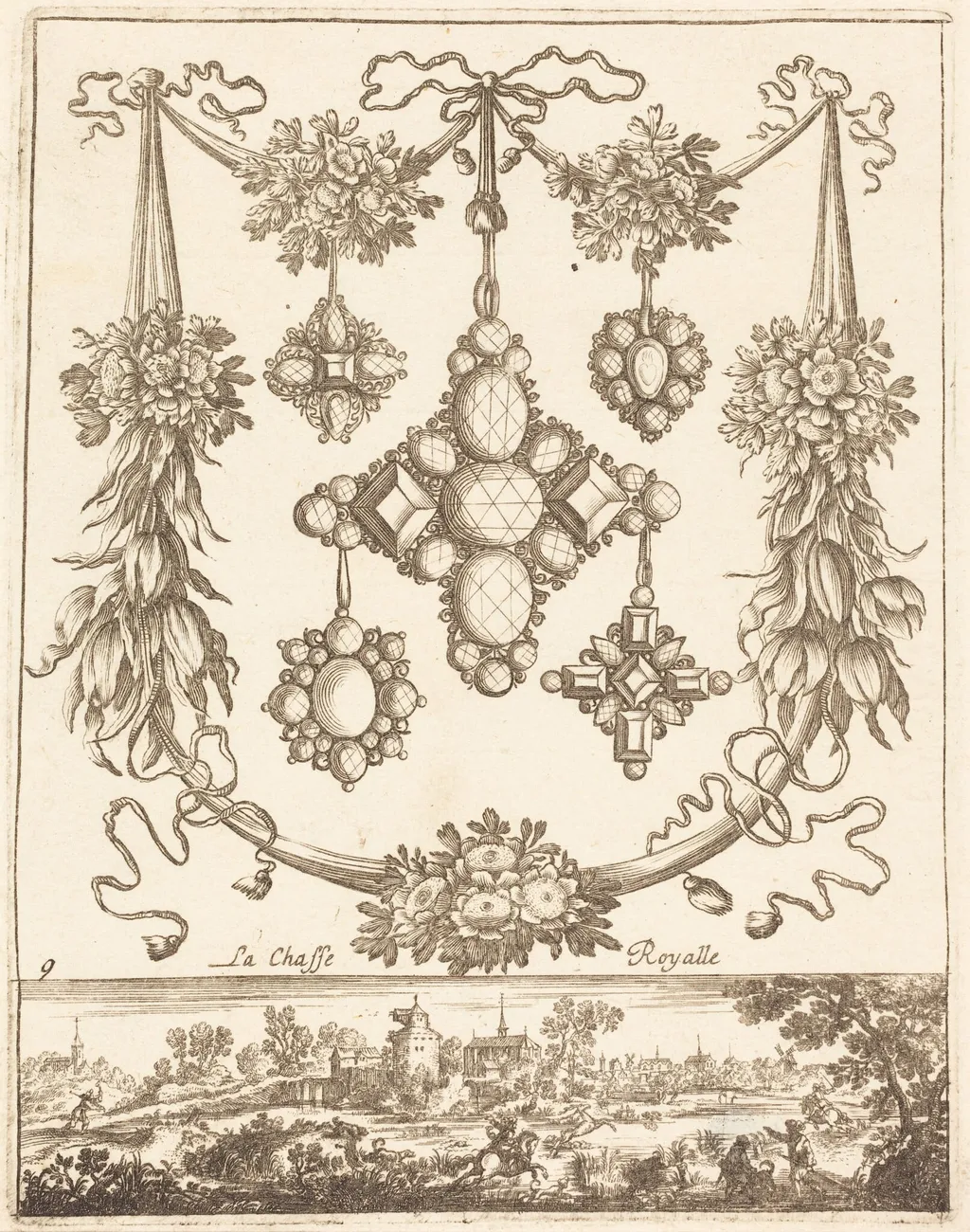
La chasse royalle is an ink print by the Baroque artist François Le Febvre. It dates from 1665 and is held in the collection of the National Gallery of Art.
About this work
Overview
The work exemplifies the decorative print culture of mid-17th-century France, blending naturalistic elements with artificial symmetry.
La chasse royalle is a copperplate engraving produced around 1665 by French artist François Le Febvre. It presents a highly stylized composition divided into two zones: an upper register of elaborate floral and vegetal ornamentation, and a lower scene depicting a pastoral hunt. The work exemplifies the decorative print culture of mid-17th-century France, blending naturalistic elements with artificial symmetry.
Subject & Meaning
The title, meaning 'The Royal Hunt,' suggests a connection to aristocratic pastimes, though the scene does not depict an actual hunt. Instead, the lower register shows figures in a wooded landscape, possibly alluding to leisurely pursuit. The upper portion, filled with vases spilling fruit and blossoms, functions as symbolic abundance rather than narrative. Together, they evoke ideals of order, refinement, and controlled nature associated with courtly life.
Technique & Style
Le Febvre employed fine, precise lines typical of engraving to render texture and depth. The floral motifs in the upper section are rendered with intricate, repetitive strokes, while the landscape below uses varied line weights to suggest distance and foliage. The composition is rigidly symmetrical, emphasizing balance over spontaneity. This methodical approach reflects the engraver’s skill in translating ornamental design into reproducible form.
History & Provenance
The print was likely produced for domestic or aristocratic interiors, serving as decorative wall art rather than documentary illustration. No early ownership records are documented, but similar engravings by Le Febvre circulated among French collectors interested in ornamental prints. Its survival in institutional collections suggests it was valued for its craftsmanship and aesthetic harmony rather than historical specificity.
Context
Created during the reign of Louis XIV, the work aligns with the era’s preference for controlled, ornamental aesthetics seen in garden design and interior decoration. Engravings like this were mass-produced to meet demand for refined imagery among the bourgeoisie and nobility. While not tied to a specific event, it reflects broader cultural ideals of nature tamed, wealth displayed, and hierarchy made visible through visual order.
Legacy
La chasse royalle remains a representative example of French decorative engraving from the late 17th century. It illustrates how printmaking served as a vehicle for disseminating courtly ideals beyond the palace. Though not widely studied today, it contributes to understanding the role of ornament in early modern visual culture and the intersection of art, status, and reproduction.
Artist & collection


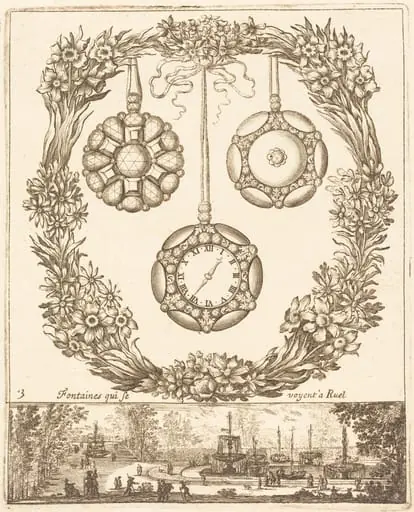
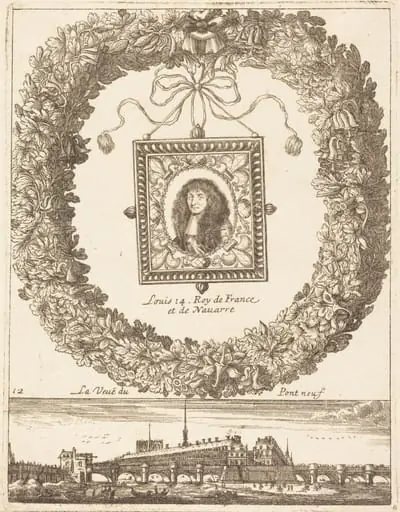
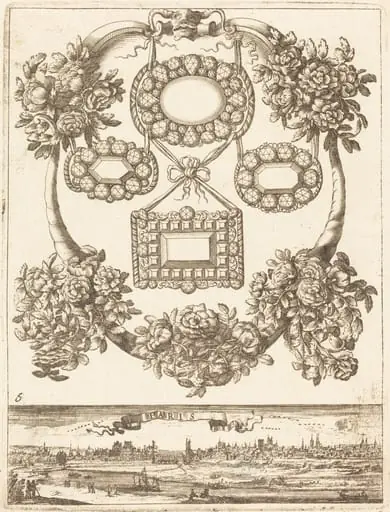
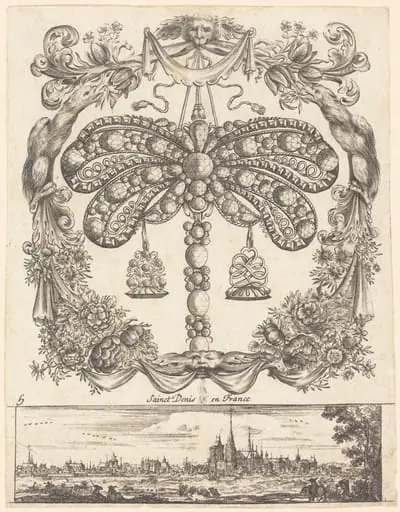
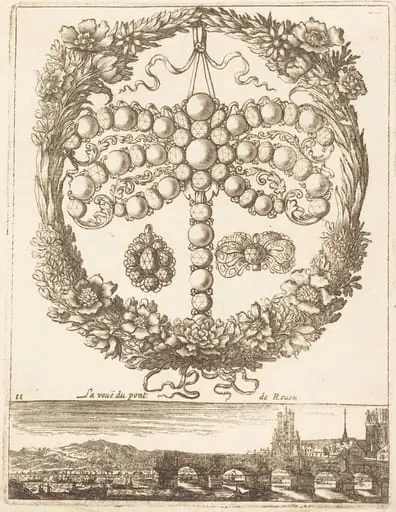
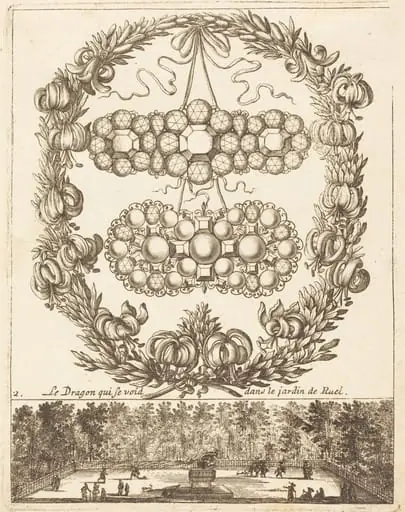 Le dragon qui se void dans le jardin de Ruel
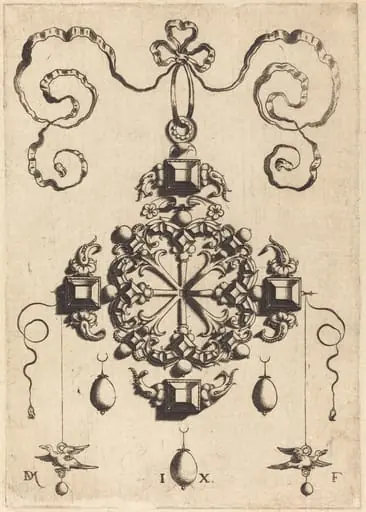 Large Pendant in the Form of a Wheel
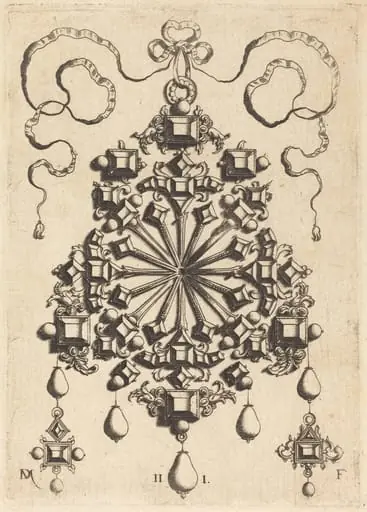 Large Pendant with Star at Centre
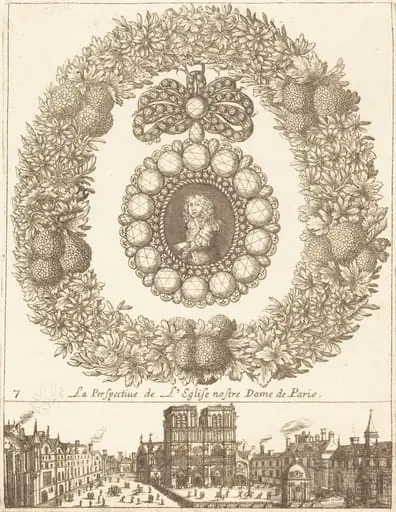 La perspective de l'englise Nostre Dame de Paris
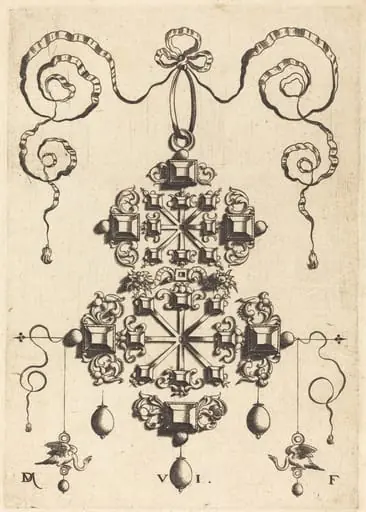 Large Pendant with Two Double Crosses, Surrounded by Six Large and Sixteen Small Table-Stones
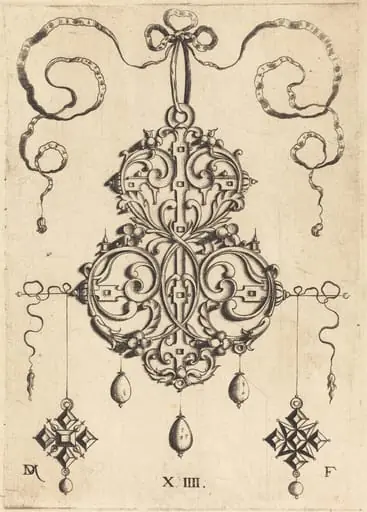 Strapwork Pendant with Three Drops and Two Cross-Shaped Pendants as Earrings at Left and Right
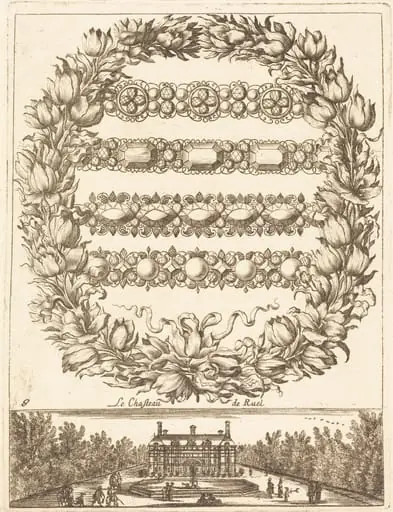 Le chasteau de Ruel