Artwork
Fontaines qui se voyent a Ruel
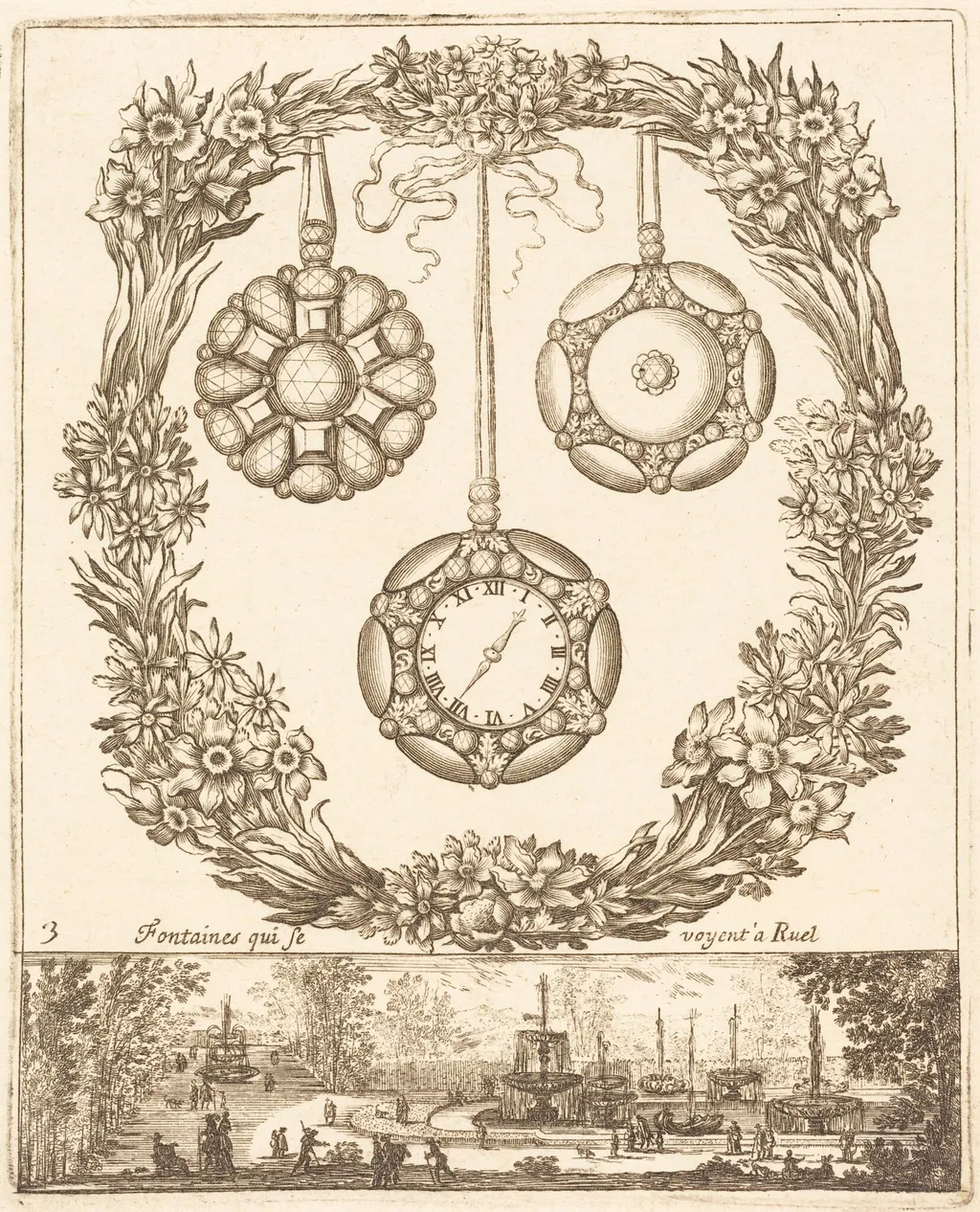
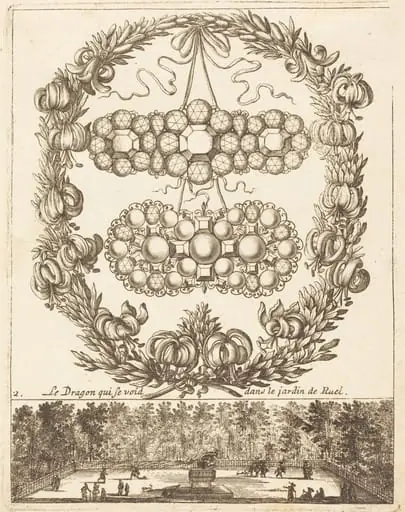
Fontaines qui se voyent a Ruel is an ink print by the Baroque artist François Le Febvre. It dates from 1665 and is held in the collection of the National Gallery of Art.
About this work
Overview
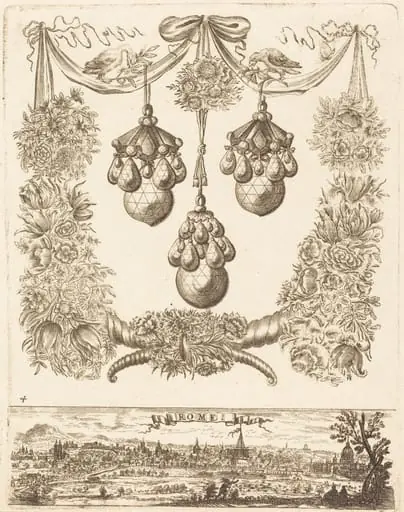
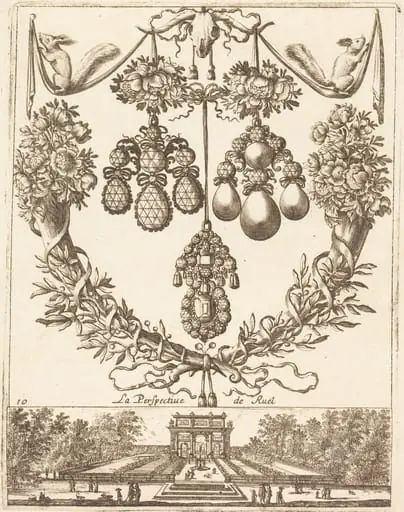
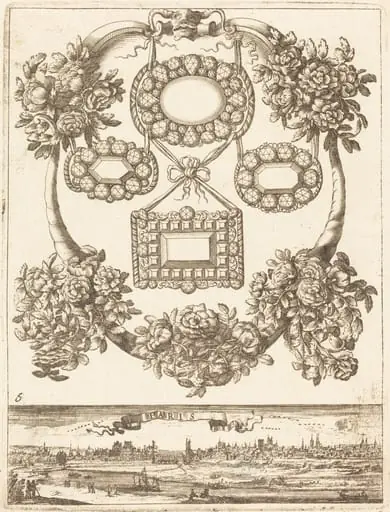
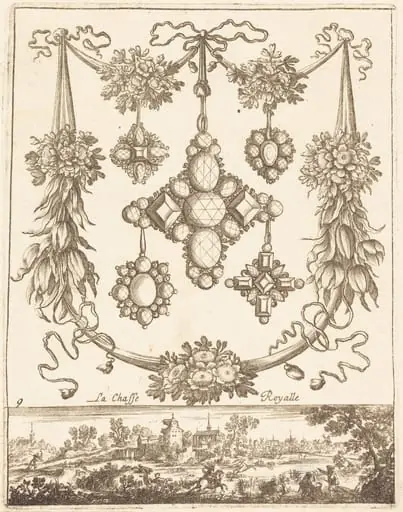
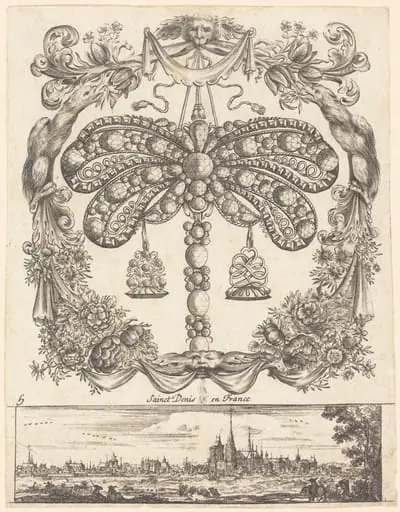
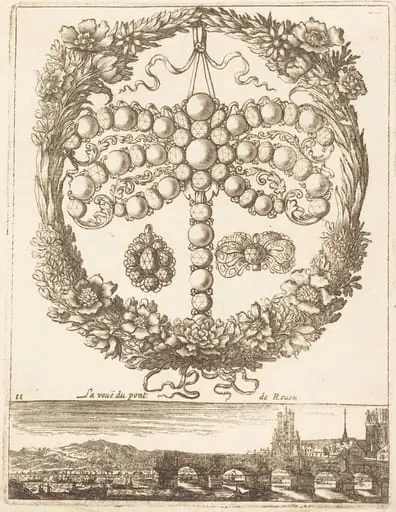
François Le Febvre’s copper engraving, dated around 1665, depicts a decorative ensemble of three elaborate fountains. The composition is framed by a leafy wreath and includes ancillary details such as hanging lamps and a central clock face, creating a richly ornamental scene typical of mid‑seventeenth‑century French printmaking.
Subject & Meaning
The central motif consists of three ornate fountains, each crowned with a suspended light source. Below, a miniature genre scene shows pedestrians near water, set against a backdrop of buildings and trees, suggesting a public square or garden space, possibly the locale referenced in the title.
Technique & Style
Executed in fine line engraving, Le Febvre employs precise hatching and cross‑hatching to render texture, depth, and reflective surfaces. The intricate detailing of foliage, architectural elements, and the clock’s numerals demonstrates the high level of craftsmanship associated with French baroque print aesthetics.
History & Provenance
Created circa 1665, the print bears the French caption *Fontaines qui se voyent à Ruel*, indicating a specific site, though the exact location remains uncertain. The work survives in museum collections that specialize in early modern European prints, reflecting its preservation as a representative example of Le Febvre’s output.
Context
During the 1660s, French engravers frequently produced ornamental prints that served both decorative and documentary purposes, often illustrating architectural projects or celebrated urban features. Le Febvre’s image aligns with this trend, offering a visual record of fountain design and public space planning in the period.
Artist & collection