Artwork
Le dragon qui se void dans le jardin de Ruel
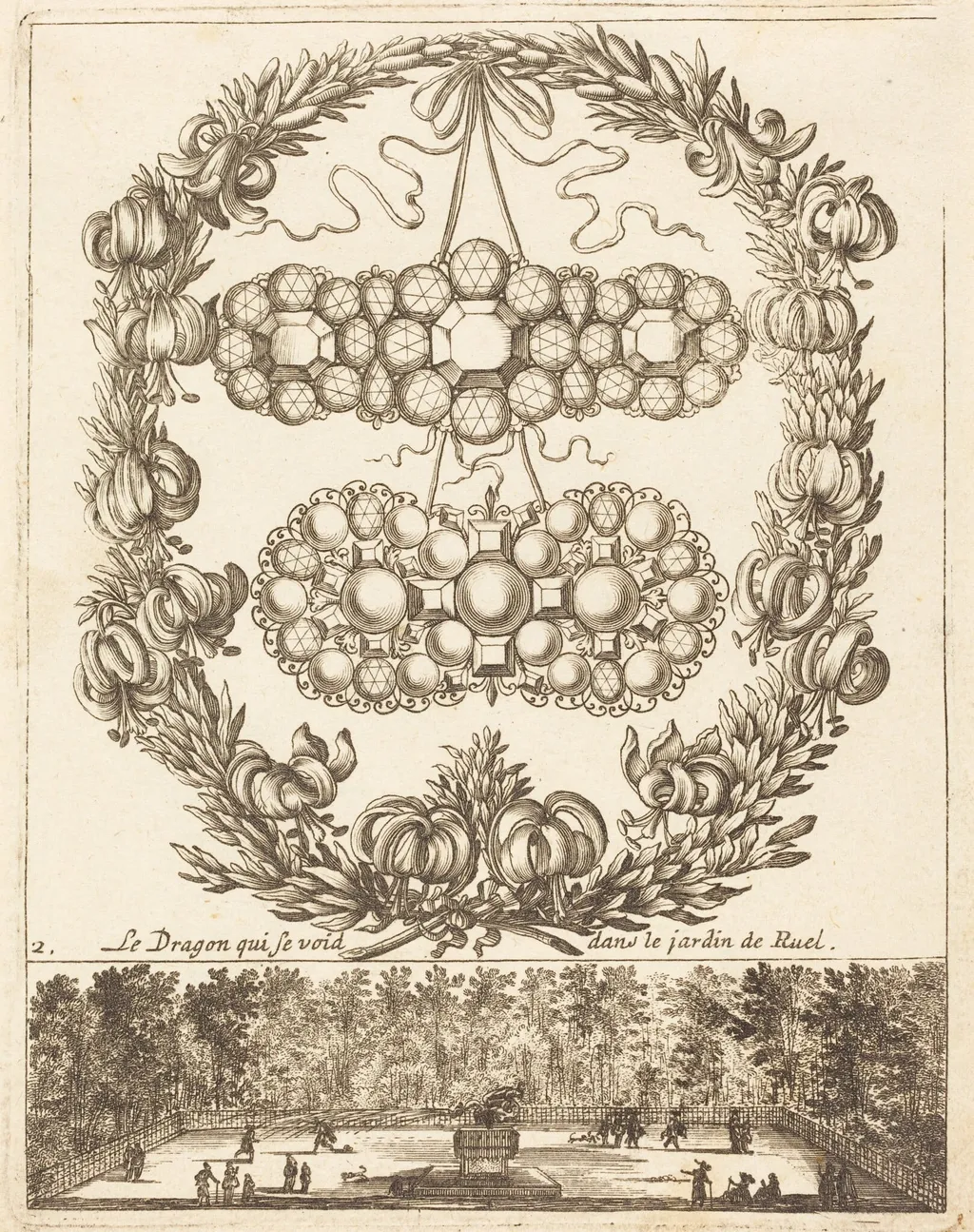
Le dragon qui se void dans le jardin de Ruel is an ink print by the Baroque artist François Le Febvre. It dates from 1665 and is held in the collection of the National Gallery of Art.
About this work
Overview
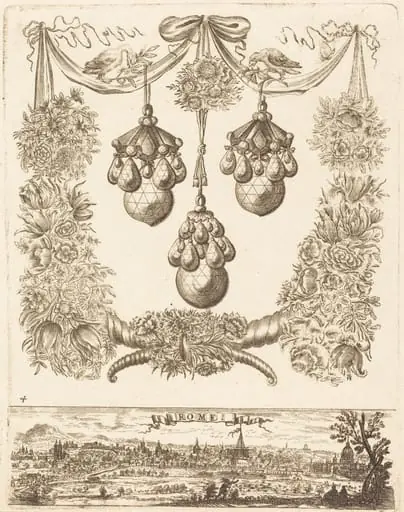
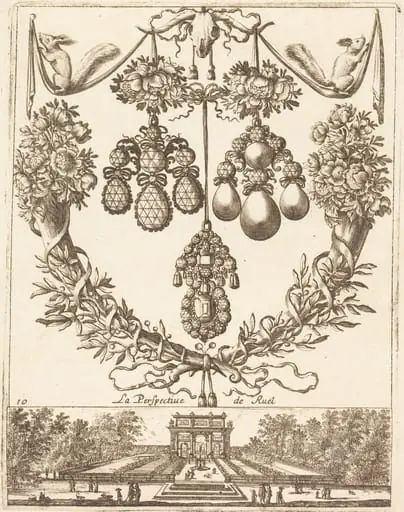
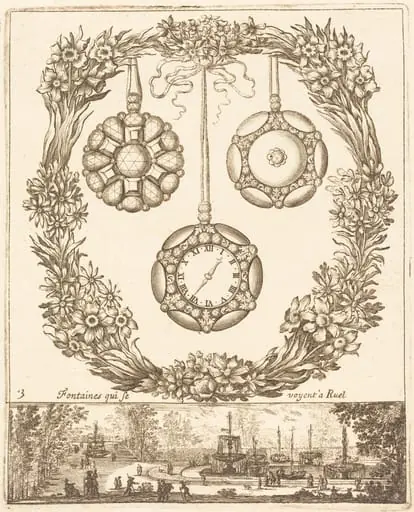
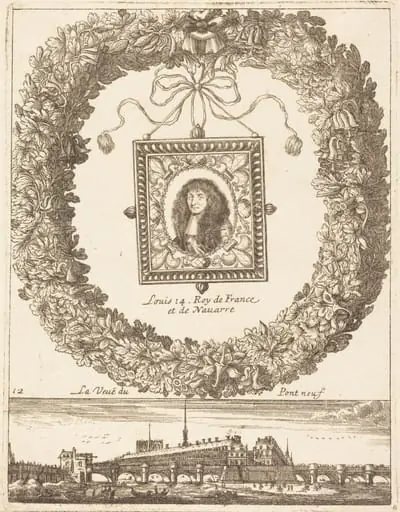
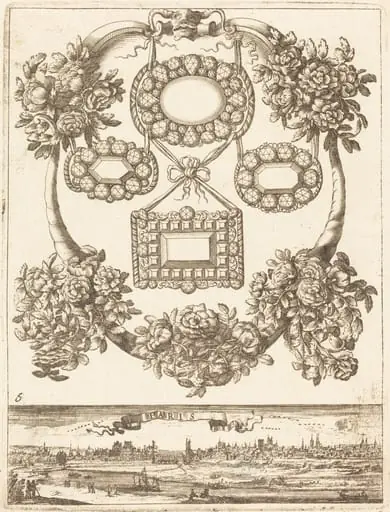
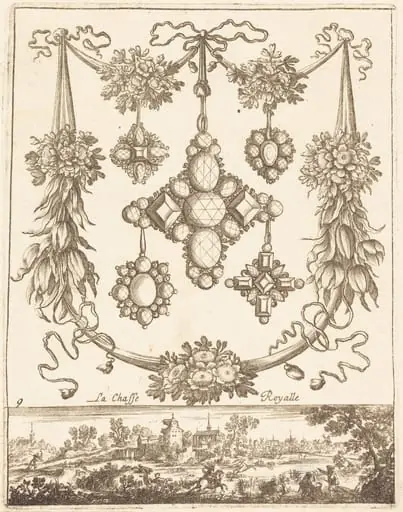
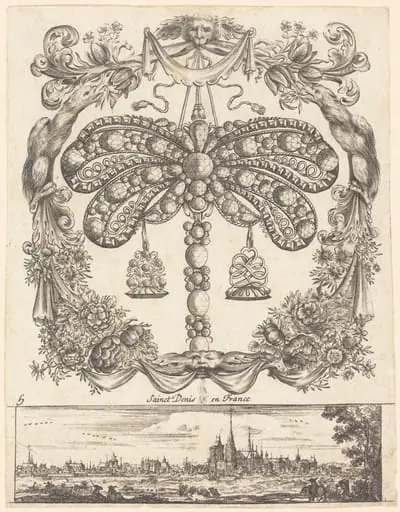
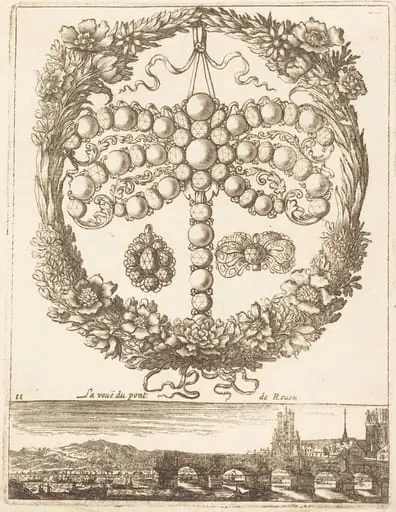
François Le Febvre’s engraving titled *Le dragon qui se void dans le jardin de Ruel* dates from around 1665. Executed as a print, the work presents a densely ornamented floral composition centered on a single motif, encircled by a profusion of leaves and blossoms that together form an elaborate wreath.
Subject & Meaning
The image does not depict a literal dragon; instead, the title alludes to a decorative motif that resembles a stylized creature within a garden setting. The central element functions as a focal point around which the surrounding flora radiates, suggesting a harmonious interplay between nature and ornamental design typical of decorative arts of the period.
Technique & Style
Le Febvre employs the Baroque engraving technique of fine cross‑hatching to model light and shadow across the intricate foliage. Curved, sinuous lines generate a sense of movement, while the dense ornamental detail reflects the period’s taste for lavish, ornate patterns. The print’s texture emerges from the layered hatchwork that defines each petal and leaf.
History & Provenance
Created circa 1665, the engraving belongs to the mid‑seventeenth‑century French print market, where decorative designs were often circulated for use in interior decoration and pattern books. While specific ownership records are scarce, the work is attributed to Le Febvre, a lesser‑known engraver active during the Baroque era, and it survives in several museum collections of early modern prints.
Artist & collection