Artwork
Rome
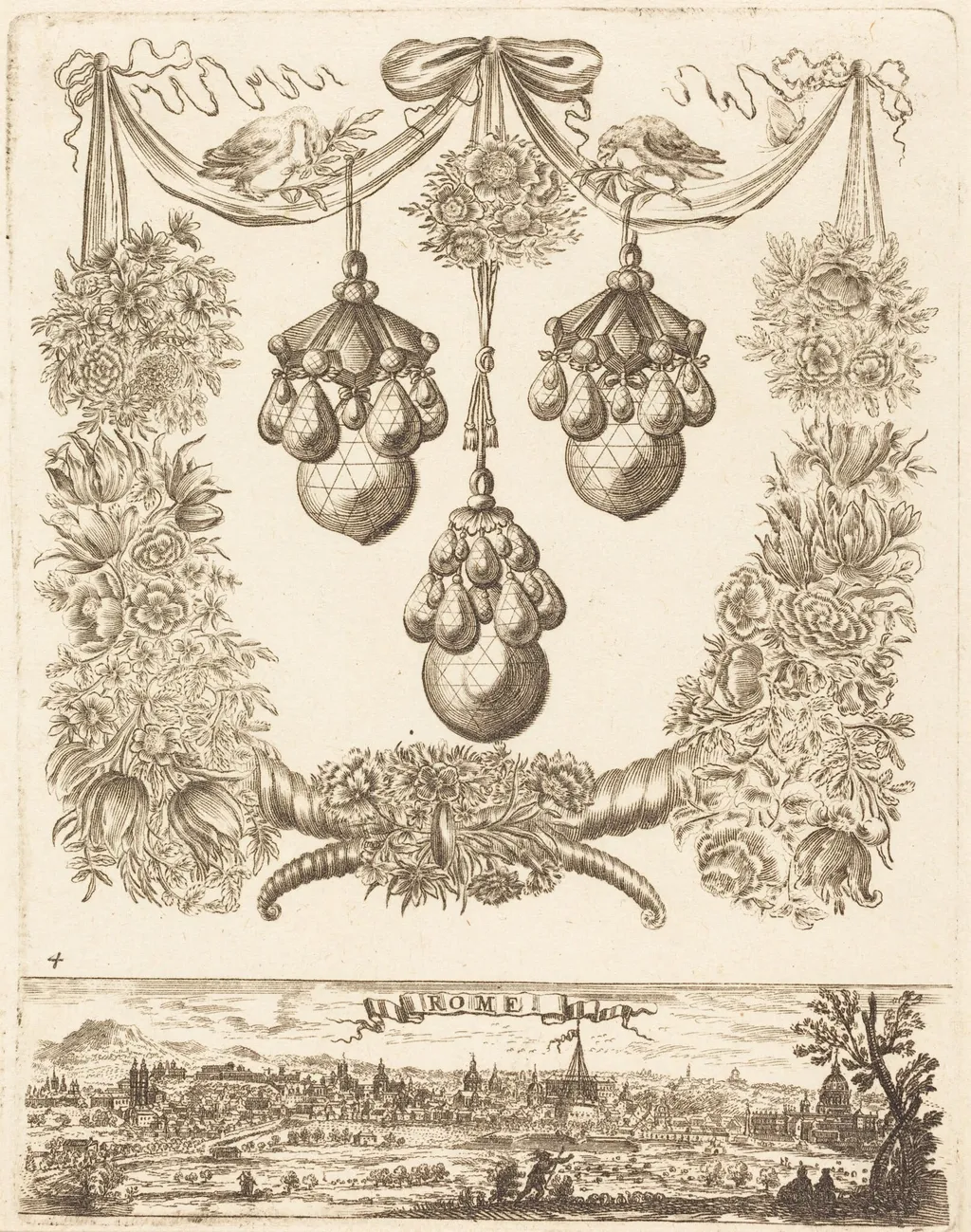
Rome is an ink print by the Baroque artist François Le Febvre. It dates from 1665 and is held in the collection of the National Gallery of Art.
About this work
Overview
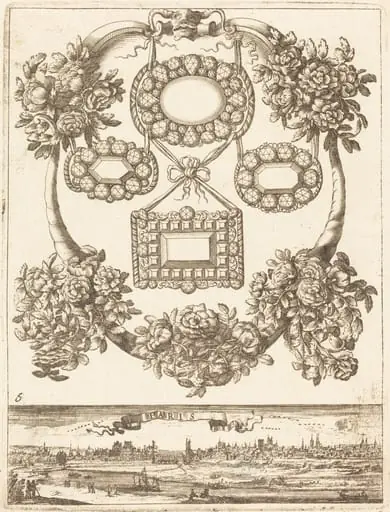
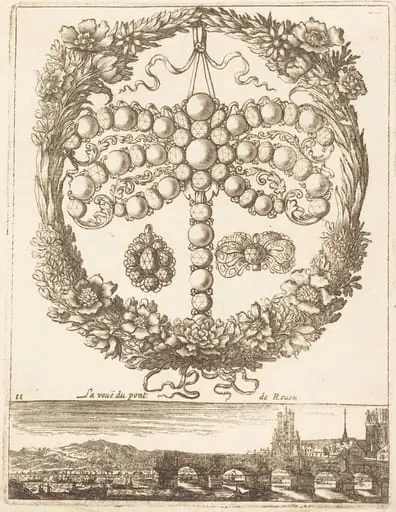
Rome is an engraving by François Le Febvre, dated to circa 1665. It depicts a floral motif with three prominent, ribbon-suspended ornaments, surrounded by additional floral and foliate elements.
Subject & Meaning
The subject of 'Rome' is a decorative, Baroque-inspired floral arrangement. The emphasis on lush, suspended ornaments suggests a celebration of natural abundance and possibly alludes to the ornateness of Baroque aesthetics.
Technique & Style
Executed in a detailed engraving style, 'Rome' features intricate linework that achieves a high degree of realism in rendering flowers and leaves, characteristic of the meticulous craftsmanship of 17th-century engraving.
History & Provenance
Created around 1665 by François Le Febvre, the engraving's provenance and exhibition history are not specified in available information.
Context
'Rome' can be contextualized within the broader Baroque movement, reflecting its penchant for elaborate ornamentation and naturalistic detail, though the engraving's specific thematic connections to Rome are not immediately apparent from the image alone.
Legacy
While 'Rome' itself is not noted for groundbreaking influence, it represents a typical example of 17th-century Baroque engraving, potentially informing later decorative arts and printmaking practices through its detailed, realistic style.
Artist & collection


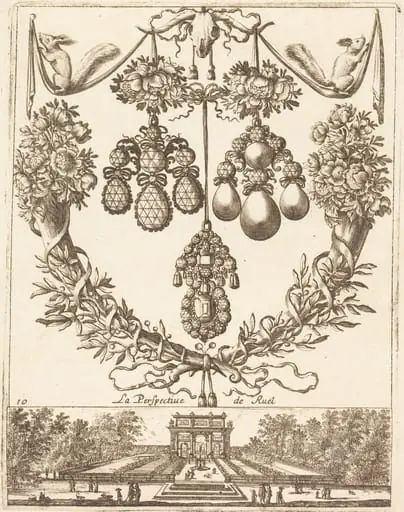
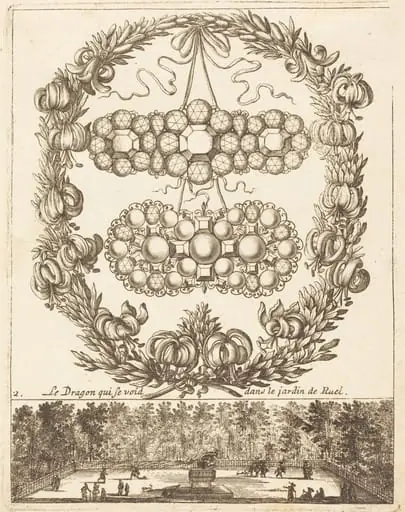 Le dragon qui se void dans le jardin de Ruel
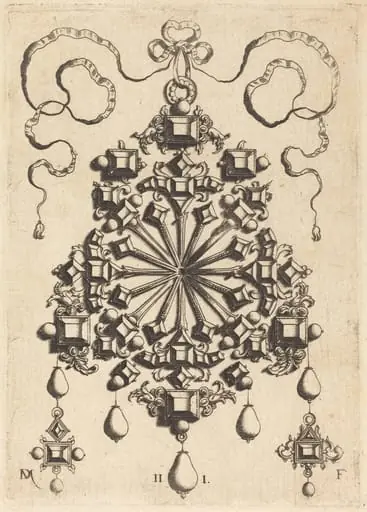 Large Pendant with Star at Centre
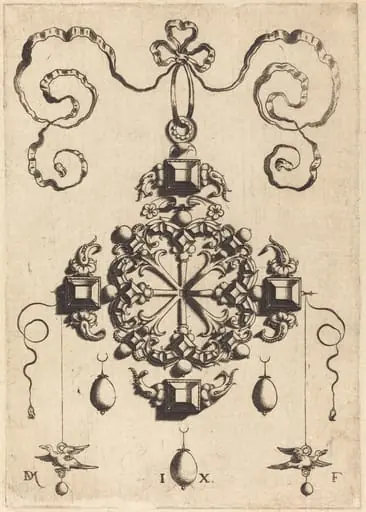 Large Pendant in the Form of a Wheel
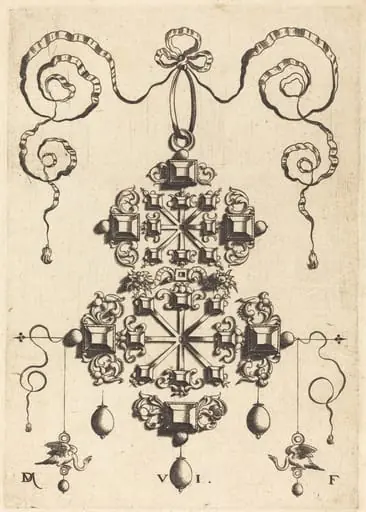 Large Pendant with Two Double Crosses, Surrounded by Six Large and Sixteen Small Table-Stones
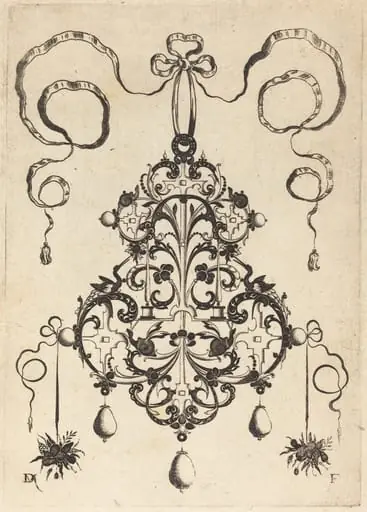 Large Pendant, Lower Left and Right Two Bunches of Grass and Fruit
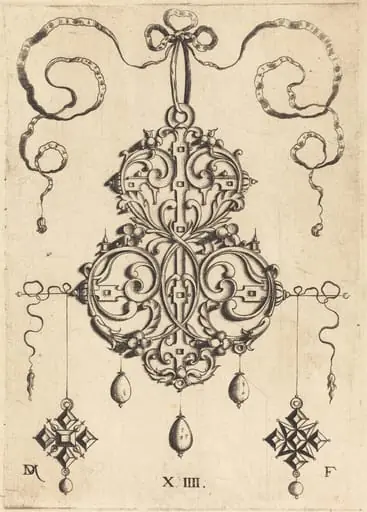 Strapwork Pendant with Three Drops and Two Cross-Shaped Pendants as Earrings at Left and Right