Artwork
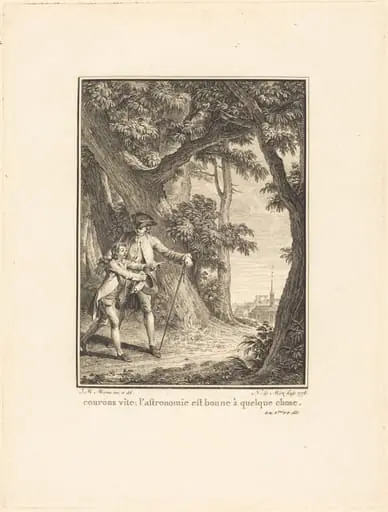
Il en est nâvré, je l'entraine avec peine
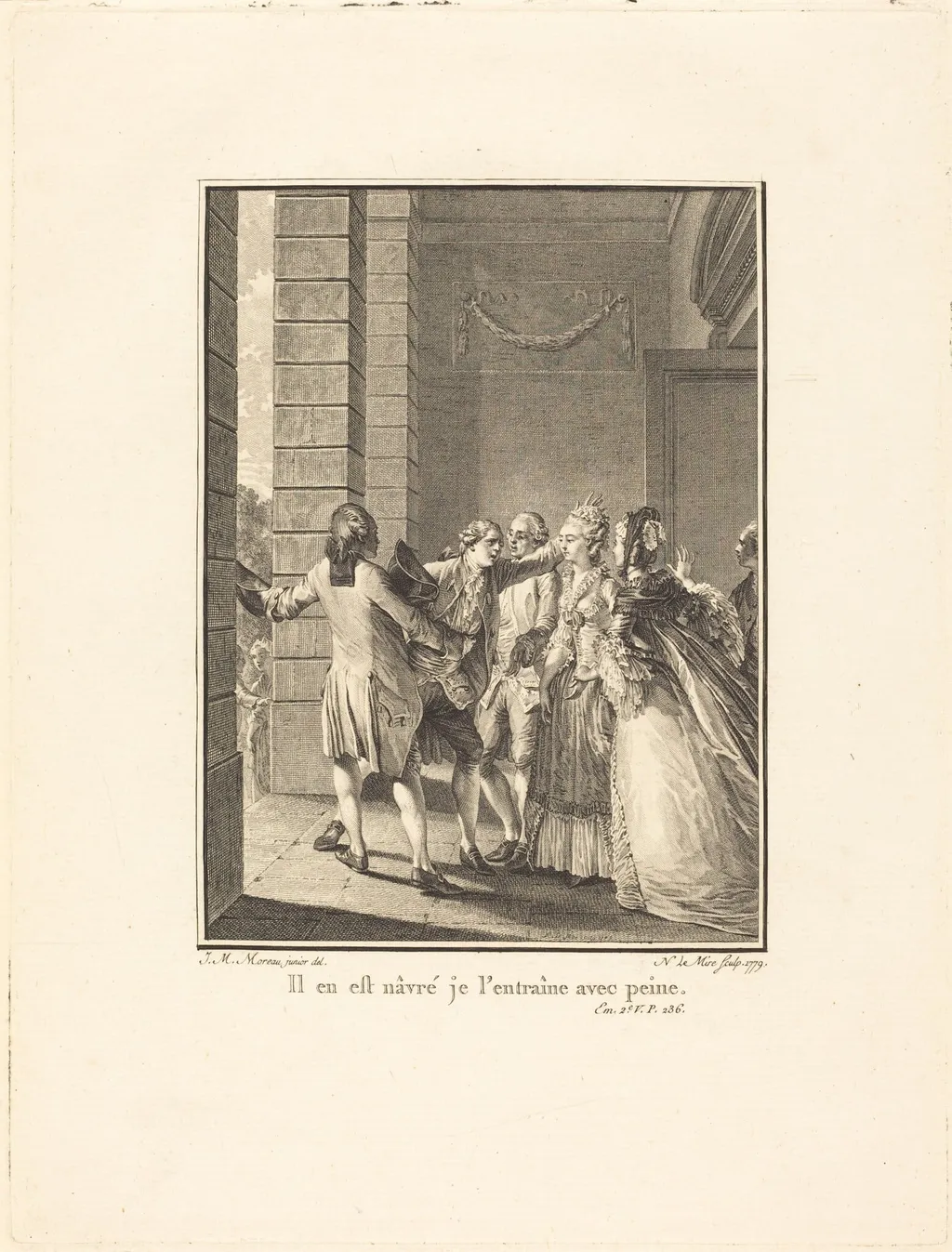
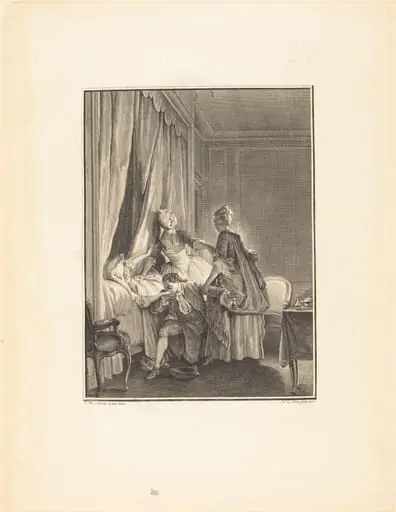
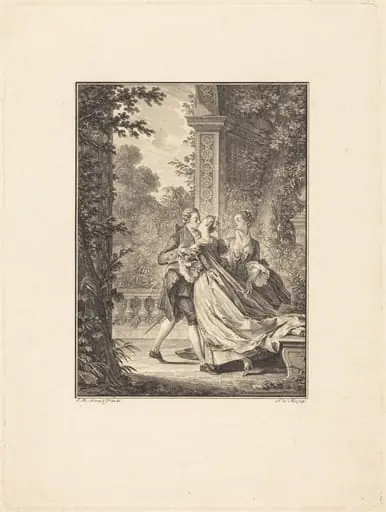
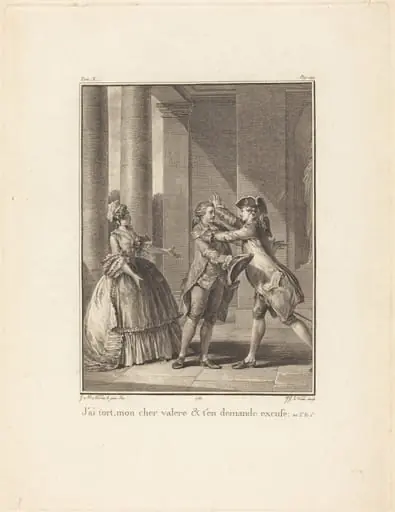
Il en est nâvré, je l'entraine avec peine is an ink print by the Romanticist artist Noël Le Mire. It dates from 1779 and is held in the collection of the National Gallery of Art.
About this work
Overview
The scene unfolds in a grand interior space, likely a noble residence, where figures are arranged with careful attention to posture and spatial depth.
Created in 1779 by Noël Le Mire, this print combines etching and engraving techniques to depict a moment of social tension. The scene unfolds in a grand interior space, likely a noble residence, where figures are arranged with careful attention to posture and spatial depth. The work belongs to a tradition of 18th-century French printmaking that captured everyday social dynamics with precision and subtle narrative.
Subject & Meaning
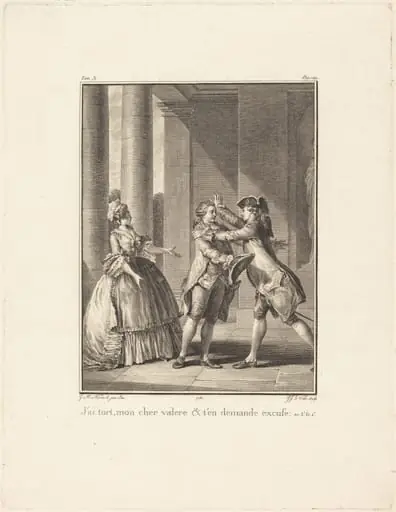
A man forcibly draws another through a corridor, the latter resisting with visible reluctance. Surrounding figures—men and women in period attire—observe in silence, their expressions ambiguous. The title, translating to 'He is distressed, I drag him with difficulty,' suggests coercion within a formal setting, possibly hinting at familial duty, social obligation, or moral conflict masked by decorum.
Technique & Style
Le Mire employs fine, controlled lines to render textures of fabric, architectural detail, and human anatomy. Cross-hatching and delicate shading model forms with quiet realism, avoiding theatricality. The composition directs attention to the central struggle through spatial framing and the alignment of figures along the hallway’s axis, enhancing the psychological weight of the moment.
History & Provenance
The print was produced during Le Mire’s active period as a reproductive engraver, often translating paintings into accessible formats for middle-class collectors. While specific early ownership records are sparse, its survival in institutional collections suggests it was circulated widely in France and possibly beyond, reflecting contemporary interest in moralizing domestic scenes.
Context
In late 18th-century France, prints like this served as visual commentaries on social behavior, often echoing themes from literature and theater. The tension between individual will and societal expectation resonated amid growing critiques of aristocratic norms. Le Mire’s work aligns with a broader trend of genre scenes that elevated ordinary moments into subjects of quiet moral inquiry.
Legacy
Though not widely known today, Le Mire’s prints contributed to the dissemination of narrative imagery in pre-Revolutionary France. His attention to psychological nuance and architectural detail influenced later engravers who sought to capture social complexity. This work remains a quiet example of how printmaking could convey human conflict with restraint and precision.
Artist & collection