Artwork
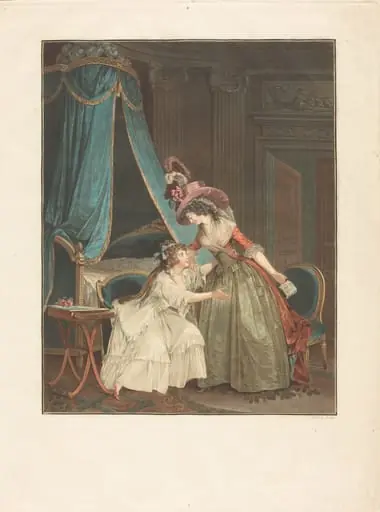
L'inoculation de l'amour
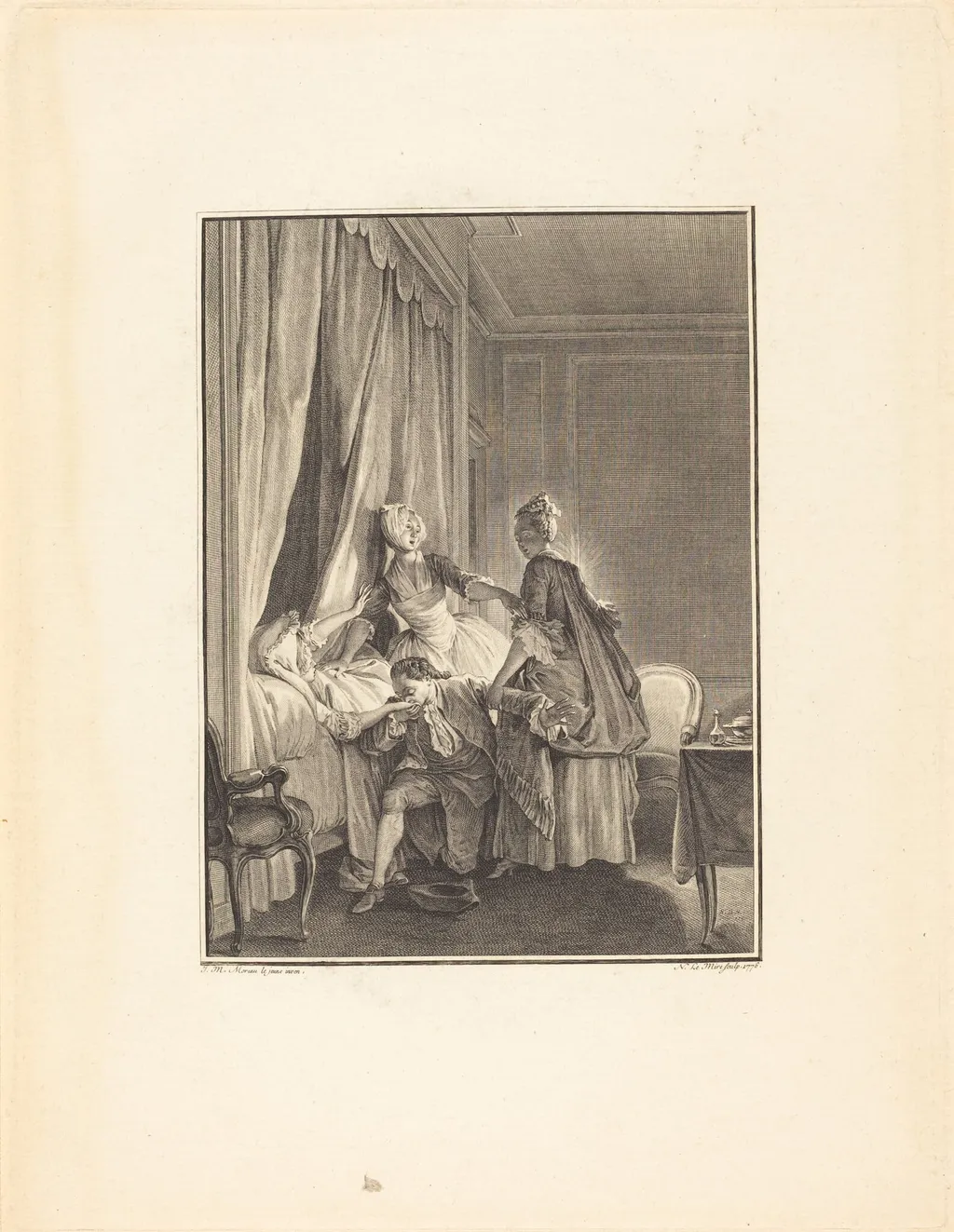
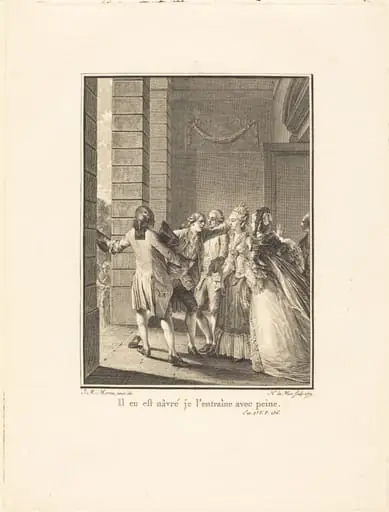
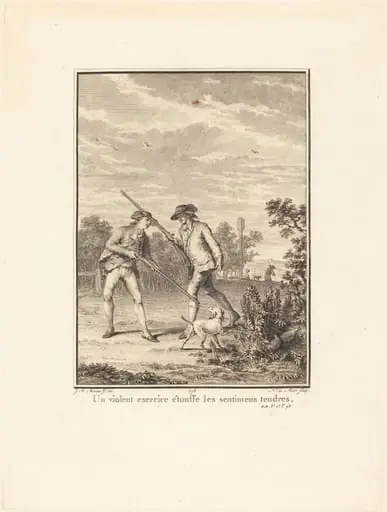
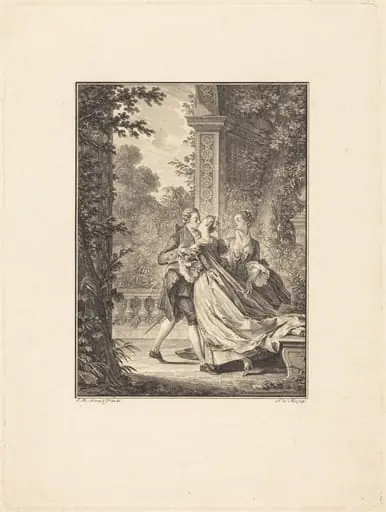
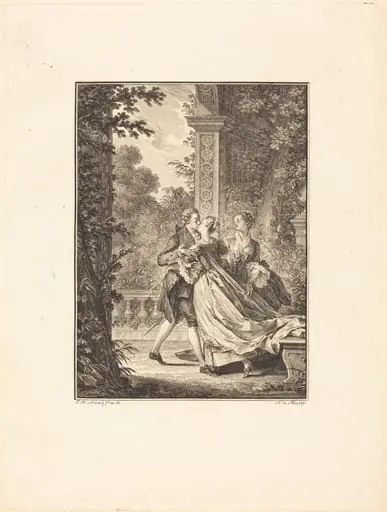
L'inoculation de l'amour is an ink print by the Romanticist artist Noël Le Mire. It dates from 1776 and is held in the collection of the National Gallery of Art.
About this work
Overview
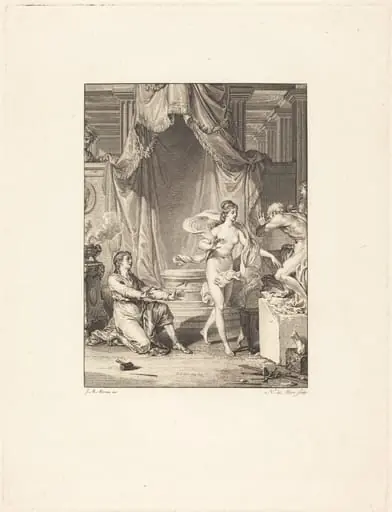
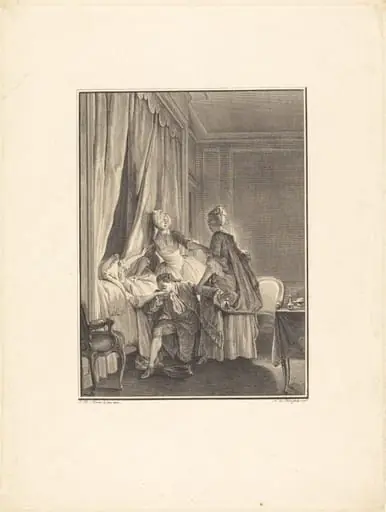
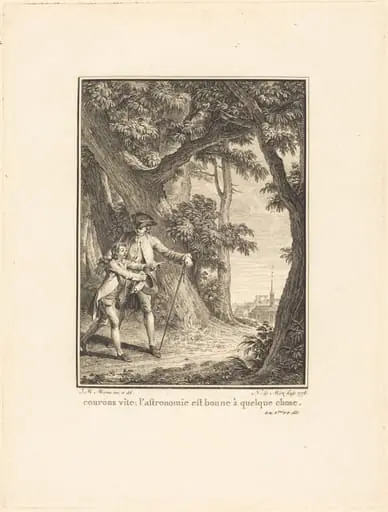
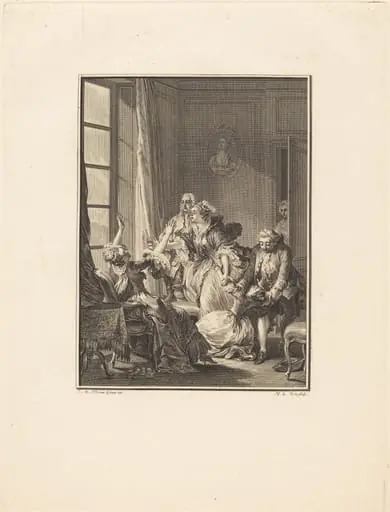
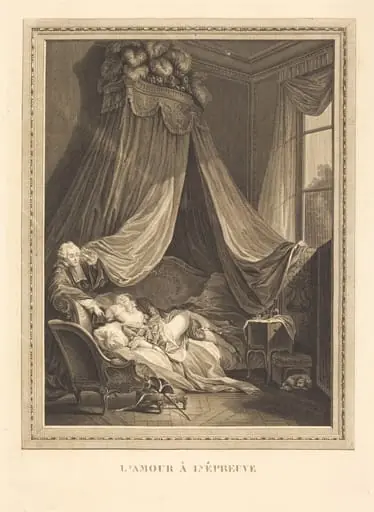
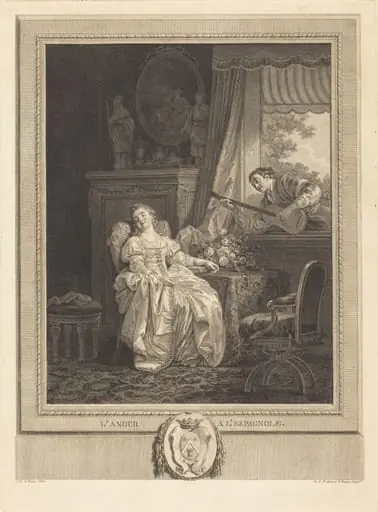
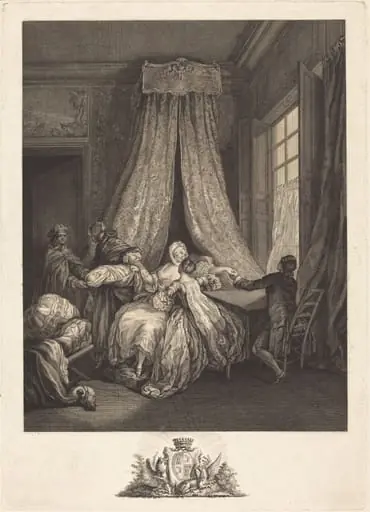
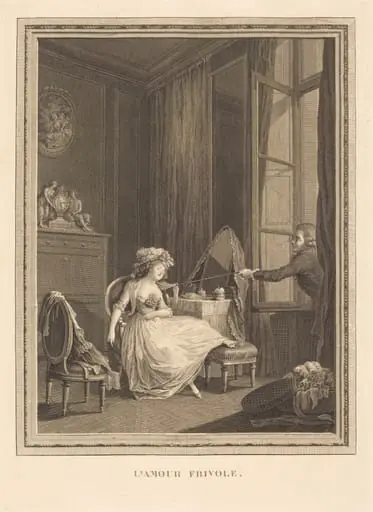
Created in 1776 by French printmaker Noël Le Mire, L’inoculation de l’amour is a black‑and‑white engraving that presents an intimate interior scene. The work measures a modest size typical of 18th‑century prints and is executed in a combination of line work and tonal shading, allowing the viewer to discern the figures and furnishings within a domestic bedroom.
Subject & Meaning
The composition depicts four figures in a private chamber: a richly dressed woman adjusting the sleeve of a kneeling child, a second woman reclining partially covered by sheets, and a boy in plain attire gazing upward. The title suggests an instructional moment concerning love, perhaps a moral lesson conveyed by the standing woman to the child, while the boy’s inquisitive look adds a layer of youthful curiosity to the scene.
Technique & Style
Le Mire employed traditional engraving alongside drypoint and aquatint techniques to achieve both crisp outlines and subtle gradations of tone. The use of heavy drapery, delicate folds in clothing, and the chiaroscuro created by the window’s light source demonstrate the artist’s skill in rendering texture and depth within the constraints of a monochrome print.
History & Provenance
The print was produced in the late Enlightenment period, a time when instructional and genre scenes were popular in French print culture. Although specific ownership records are scarce, L’inoculation de l’amour appears in several 19th‑century catalogues of Le Mire’s oeuvre, indicating that it circulated among collectors of French prints and was likely disseminated through the artist’s workshop.
Artist & collection