Artwork
Julie s'évanouit dans un fauteuil
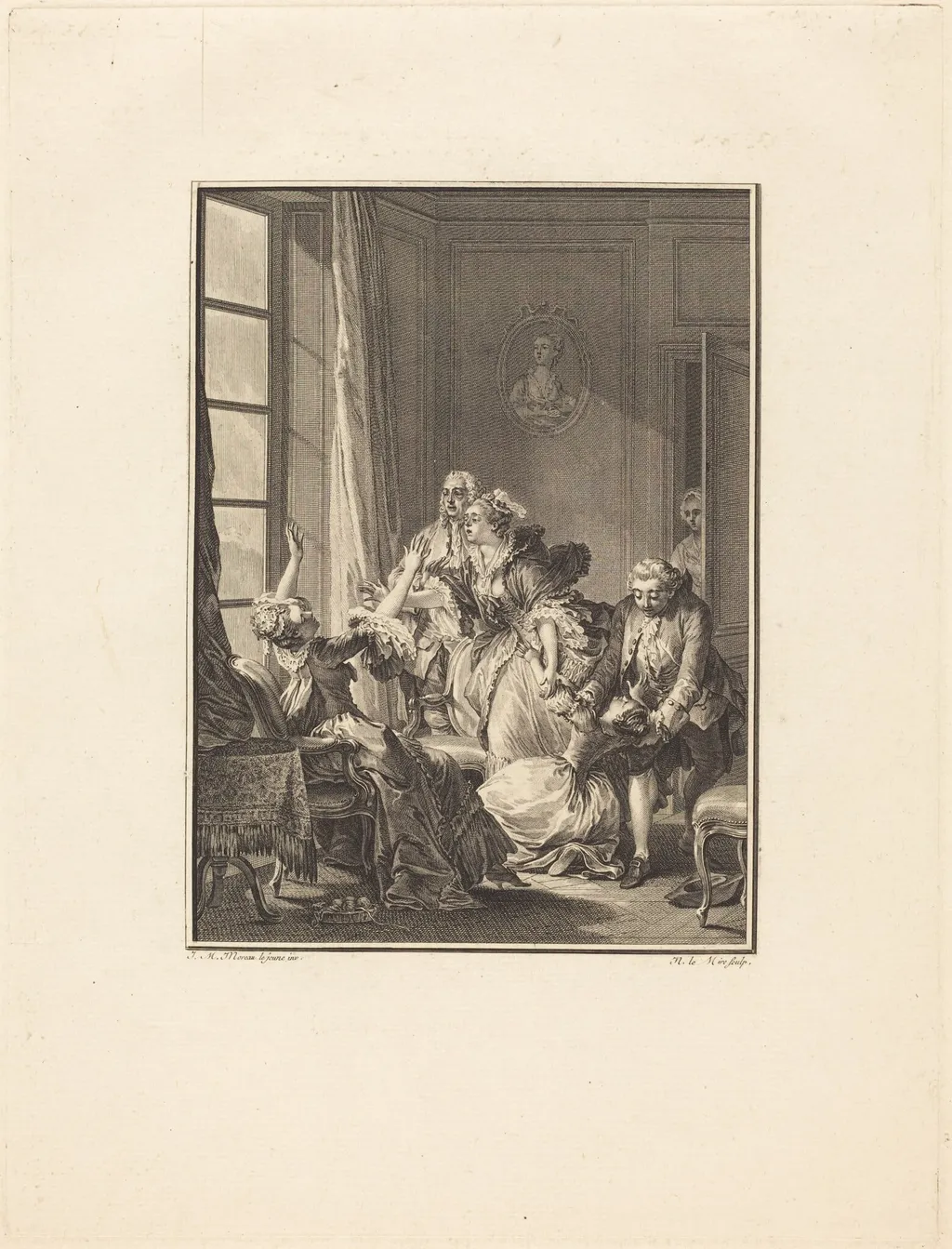
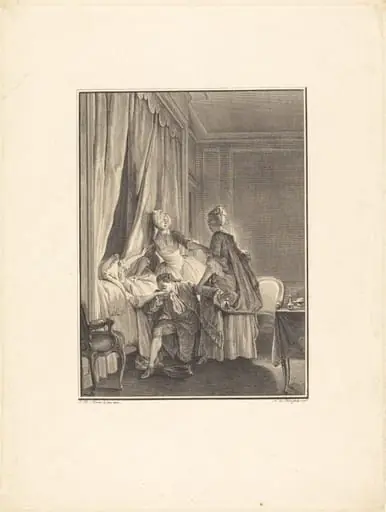
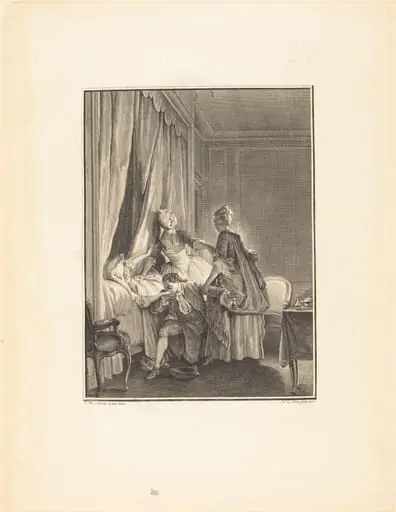
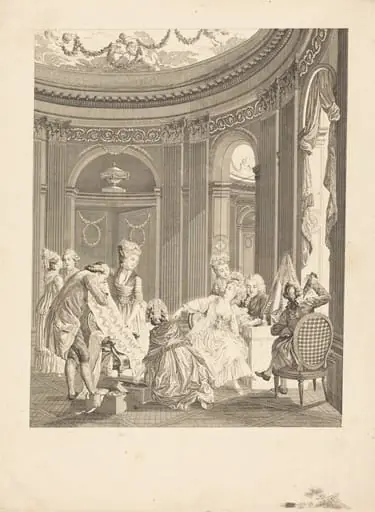
Julie s'évanouit dans un fauteuil is an ink print by the Baroque artist Noël Le Mire. It dates from 1762 and is held in the collection of the National Gallery of Art.
About this work
Overview
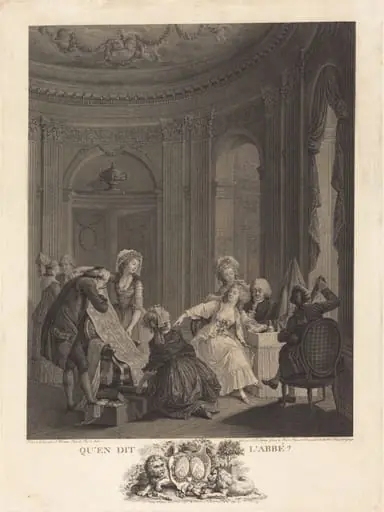
Created in 1762, this print by Noël Le Mire combines etching and engraving techniques to depict a domestic tableau. The composition centers on a woman in a light‑colored dress who has collapsed into a chair, surrounded by onlookers whose gestures suggest concern and curiosity. The work’s careful line work and staged setting convey a moment that feels both ordinary and heightened in drama.
Subject & Meaning
A kneeling gentleman in a wig holds a basket, while a darker‑dressed lady leans forward, emphasizing the collective response to the incident.
The scene presents a fainting woman, a motif common in 18th‑century genre art that alludes to contemporary ideas about health, femininity, and social interaction. A kneeling gentleman in a wig holds a basket, while a darker‑dressed lady leans forward, emphasizing the collective response to the incident. The inclusion of a small portrait on the wall and the illuminated window adds layers of personal and spatial context.
Technique & Style
Le Mire employed a combination of fine etching lines and deeper engraved strokes to render textures such as the folds of the pale dress and the drapery of the curtains. The contrast between delicate hatching and bolder incisions creates depth, while the precise rendering of facial expressions and gestures demonstrates the artist’s skill in translating narrative detail onto a metal plate.
Context
Produced during the mid‑18th century, the print reflects the period’s fascination with staged genre scenes that blend observation of everyday life with theatricality. Such works were often circulated as affordable prints, allowing a broader audience to engage with contemporary visual culture and the moral or social themes embedded within domestic episodes.
Artist & collection