Artwork
Bugloss and painted lady butterfly; Heartsease or wild pansy
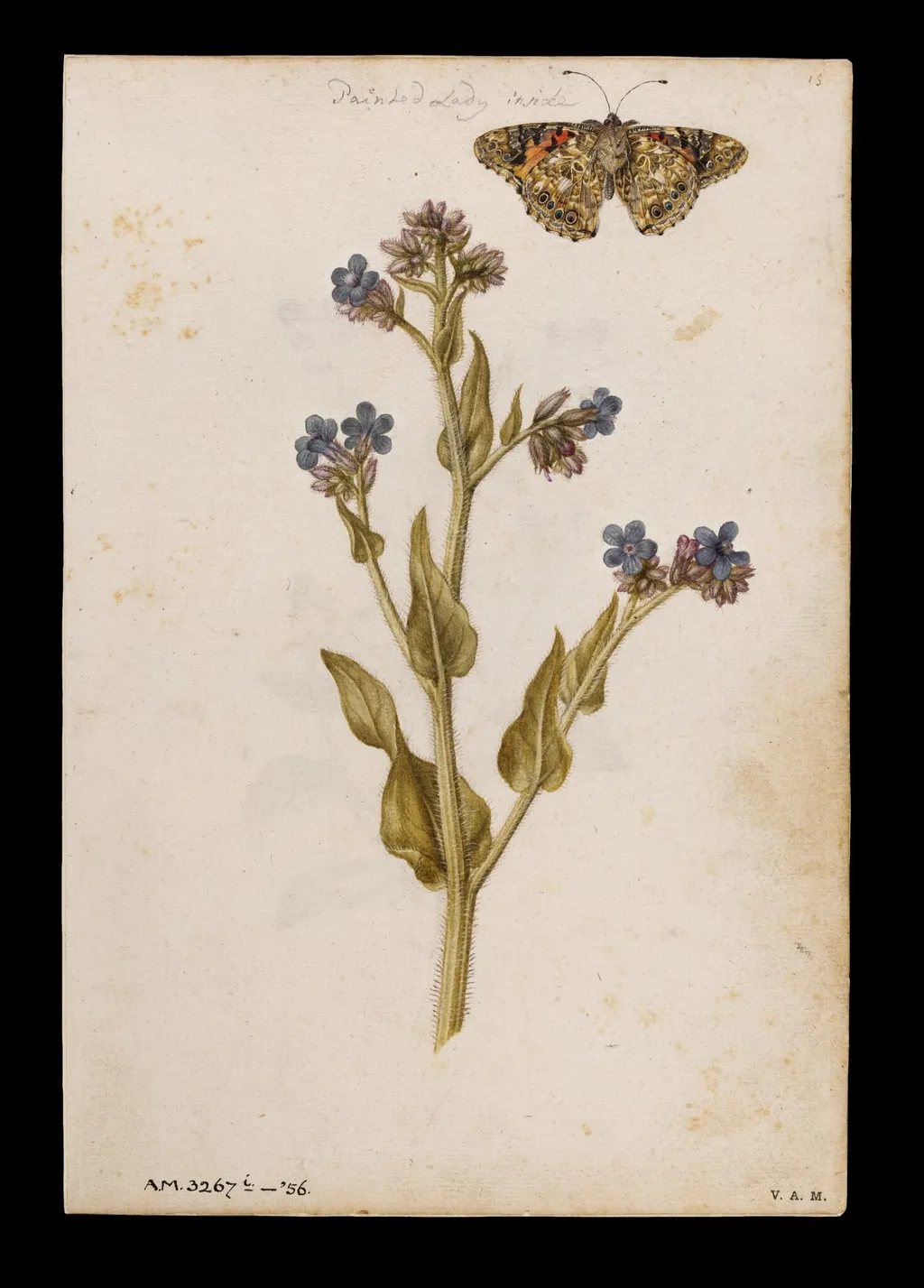
Bugloss and painted lady butterfly; Heartsease or wild pansy is a watercolor work on paper by the Early Baroque Italian artist Jacques Le Moyne de Morgues. It dates from 1568 and is held in the collection of the Victoria and Albert Museum.
About this work
This is a delicate watercolour painting of plants and a butterfly. Artist Jacques Le Moyne de Morgues made it between 1560 and 1575. Today it lives in London at the Victoria and Albert Museum.
The sheet has two sides. One shows a bugloss flower and a painted lady butterfly. The other shows a wild pansy.
These plants were painted by hand over 400 years ago. Look up the Victoria and Albert Museum.
Overview
This watercolour painting is one of 59 botanical artworks attributed to Jacques Lemoyne de Morgues, a Huguenot artist active in the 16th century. The double-sided sheet features two distinct compositions.
Subject & Meaning
The recto depicts a bugloss flower accompanied by a painted lady butterfly, while the verso shows a wild pansy, also known as heartsease. These plants were rendered with attention to detail, suggesting a focus on botanical accuracy.
Technique & Style
Executed in watercolour, the painting showcases Lemoyne de Morgues' skill in capturing the subtleties of natural forms. The delicate rendering of the plants and butterfly demonstrates a high level of craftsmanship.
History & Provenance
Dated to around 1575, the painting is now housed at the Victoria and Albert Museum in London. It was part of a rediscovery of Lemoyne de Morgues' botanical watercolours in the early 20th century, which reevaluated his role in the history of botanical art.
Artist & collection
Artist
Jacques Le Moyne de Morgues (French pronunciation: ; c. 1533–1588) was a French artist and member of Jean Ribault's expedition to the New World. His depictions of Native American life and culture, colonial life, and…

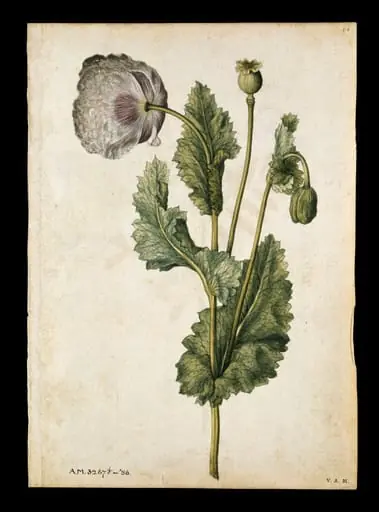
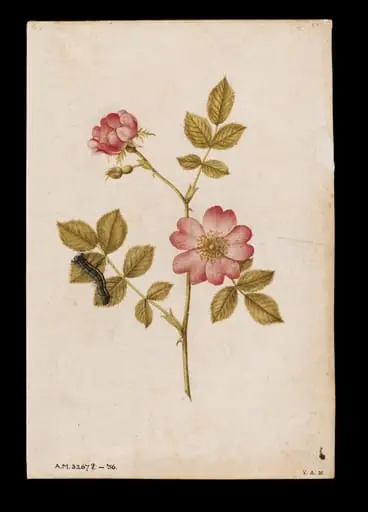 Two dog roses and a lackey moth caterpillar
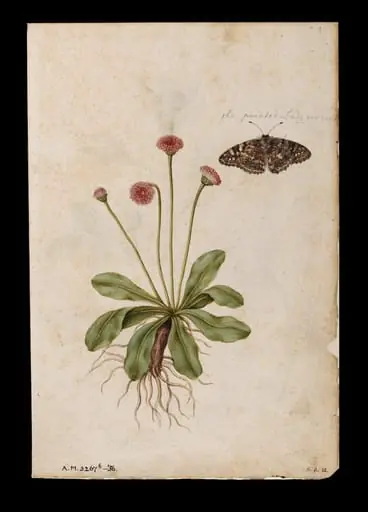 Daisies and lady butterfly; Roses
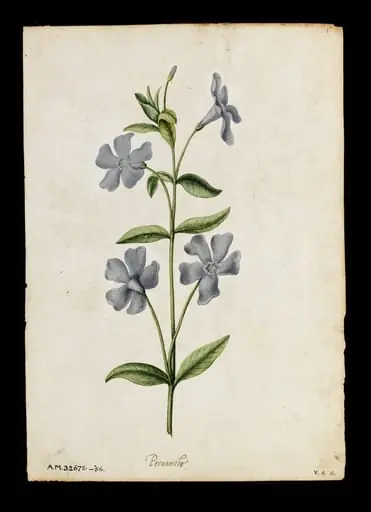 Periwinkle; Peony
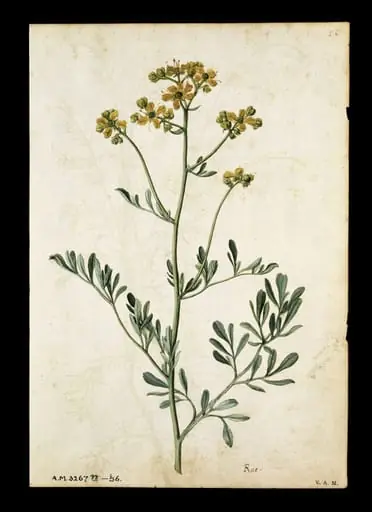 Rue; Camomile
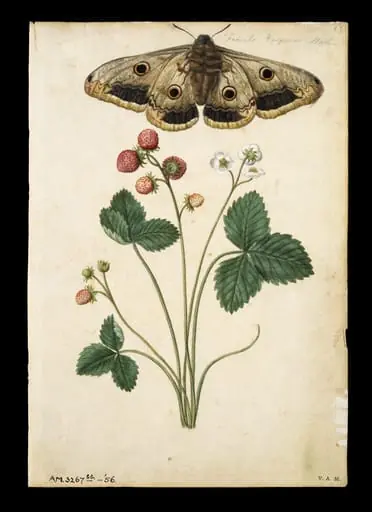 Strawberry and emperor moth
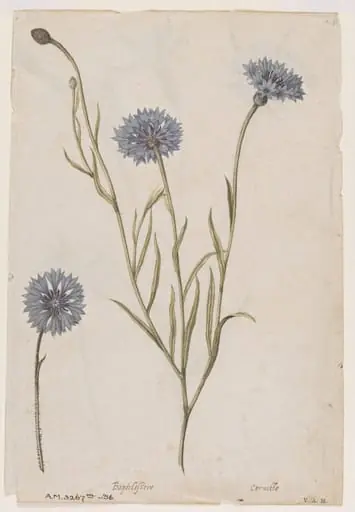 Cornflower; Corn cockle
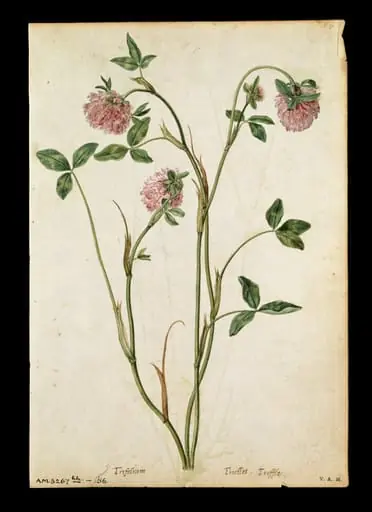 A red clover; a field scabious
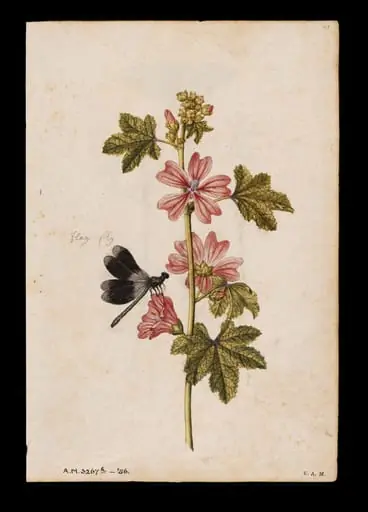 A common mallow and a damselfly; a snowdrop and a lady butterfly
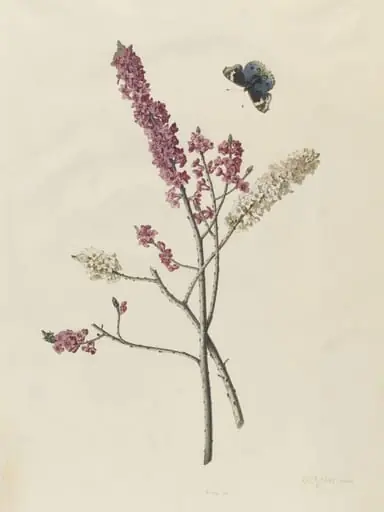 <i>Daphne mezereum</i> with butterfly
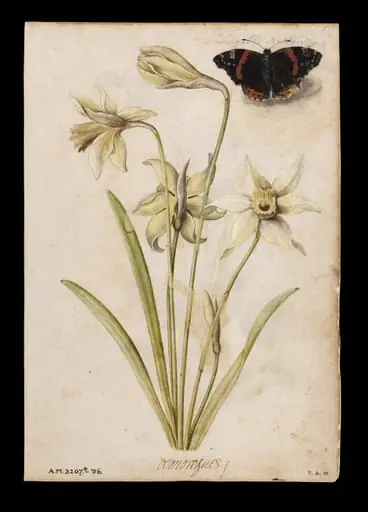 Daffodils and red admiral butterfly; Violets and red admiral butterfly
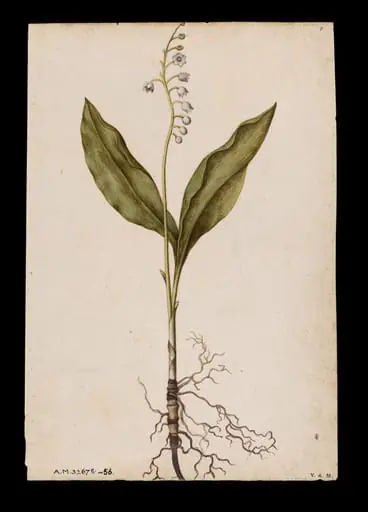 Lily of the valley; Pinks