Artwork
A Farmer and a Sheep Crossing a Rustic Bridge
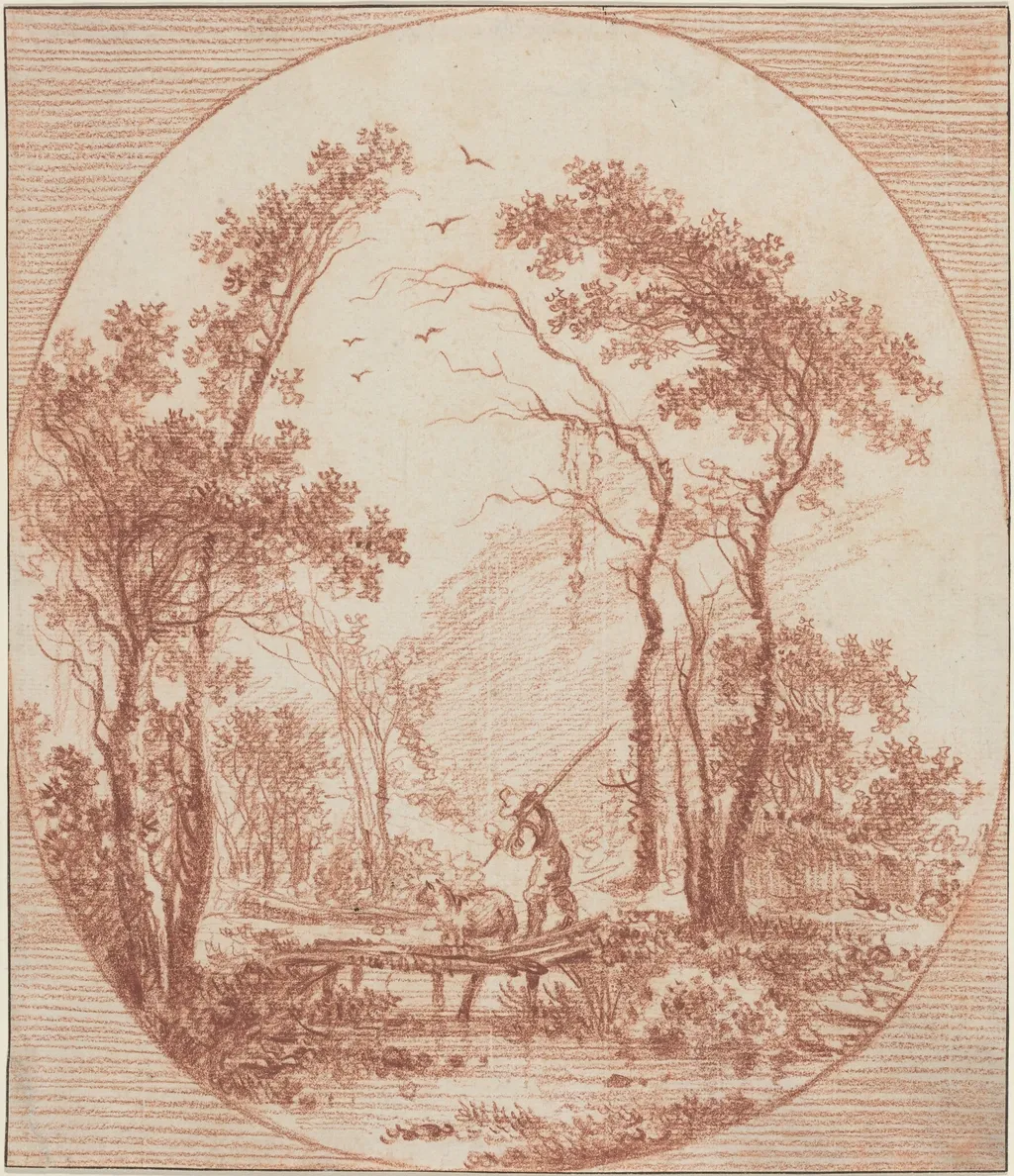
A Farmer and a Sheep Crossing a Rustic Bridge is a chalk drawing by the Baroque artist Jean-Baptiste Le Prince. It dates from 1758 and is held in the collection of the National Gallery of Art.
About this work
Overview
The medium’s warmth and fluidity lend immediacy to the scene, emphasizing the artist’s attention to natural movement and quiet interaction.
Created in 1758, this drawing by Jean-Baptiste Le Prince depicts a rural moment: a farmer and a sheep crossing a simple wooden bridge. Executed in red chalk on laid paper, it belongs to a tradition of observational sketches that capture everyday life with quiet precision. The medium’s warmth and fluidity lend immediacy to the scene, emphasizing the artist’s attention to natural movement and quiet interaction.
Subject & Meaning
The subject centers on a humble agricultural encounter, free from narrative drama or symbolism. The farmer, leading the sheep across the bridge, suggests routine labor and harmony with the land. The absence of other figures or architectural elements focuses attention on the quiet dignity of rural existence, reflecting an 18th-century interest in unidealized, observable reality rather than myth or grandeur.
Technique & Style
Le Prince employs red chalk with varied pressure to model form and suggest texture—soft strokes for the sheep’s wool, firmer lines for the bridge’s planks. Subtle tonal gradations create a sense of depth and volume, while controlled chiaroscuro enhances spatial recession without overwhelming the scene. The paper’s laid texture subtly interacts with the medium, reinforcing the drawing’s tactile, intimate quality.
History & Provenance
The work dates from Le Prince’s early career, when he was developing his landscape and genre drawings in France. It likely originated as a study for larger compositions or as an independent sketch, reflecting his interest in naturalism. Its survival suggests it was valued by contemporaries, though its specific provenance before modern institutional ownership remains undocumented in public records.
Context
In mid-18th-century France, artists increasingly turned to everyday rural life as a subject, moving away from aristocratic or mythological themes. Le Prince’s drawing aligns with this shift, paralleling the work of contemporaries like Hubert Robert and the emerging interest in topographical accuracy. His use of chalk reflects a broader trend toward preparatory studies as autonomous works, valued for their directness and sensitivity.
Legacy
Though not widely exhibited today, this drawing exemplifies Le Prince’s contribution to the evolution of French draftsmanship. His ability to convey quiet narrative through minimal means influenced later generations of landscape sketchers. The work stands as a quiet testament to the artistic value placed on observation, humility, and the transient beauty of ordinary moments in the pre-Revolutionary era.
Artist & collection


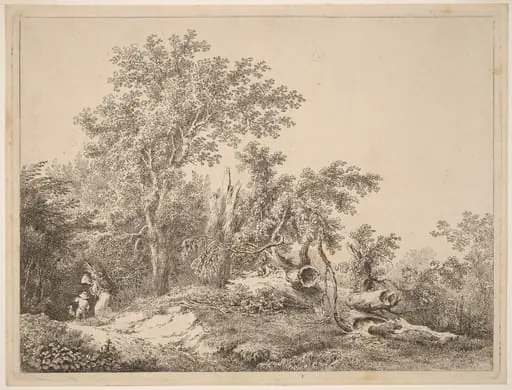 Landscape with Broken Tree
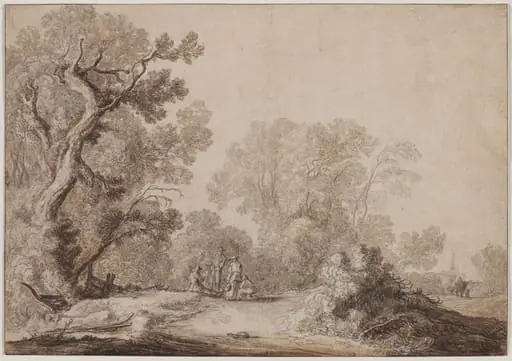 Peasants at the Edge of a Wood
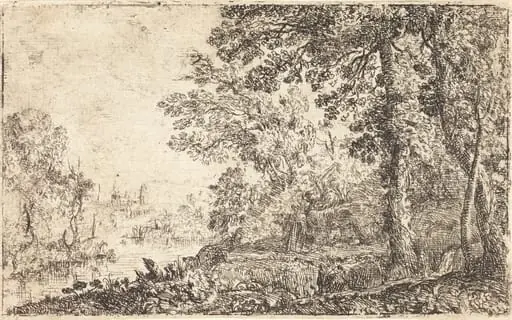 The Vision (L'apparition)
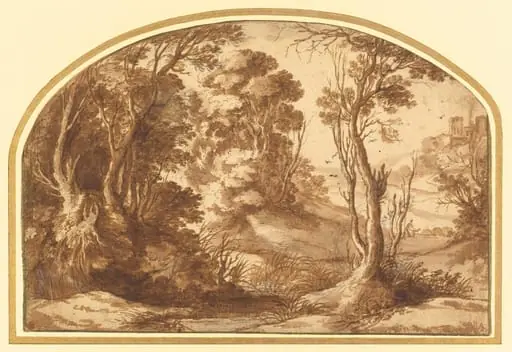 Pool at the Edge of a Wood
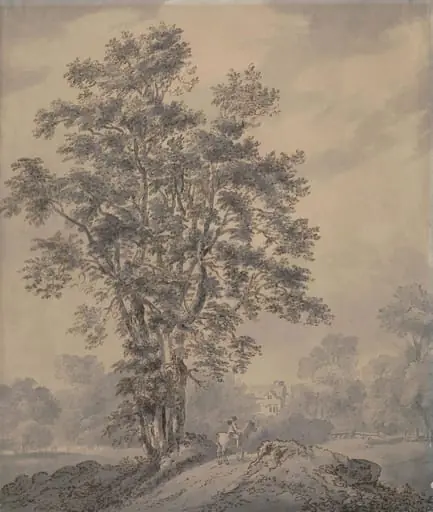 Landscape, with man on horseback
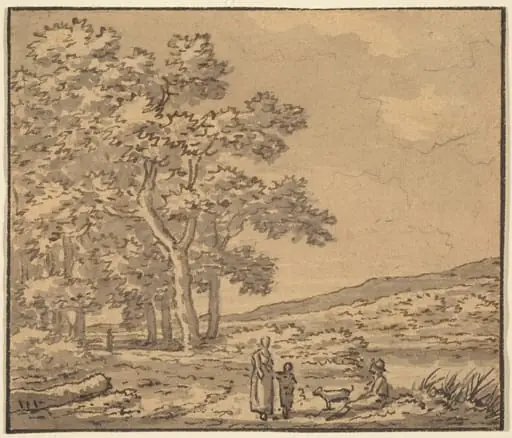 A Landscape with Three Figures and a Dog
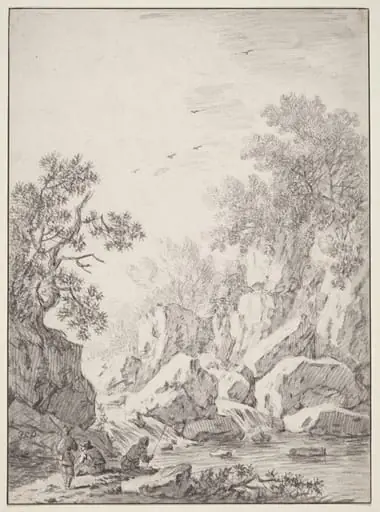 A Waterfall by Rock Cliffs
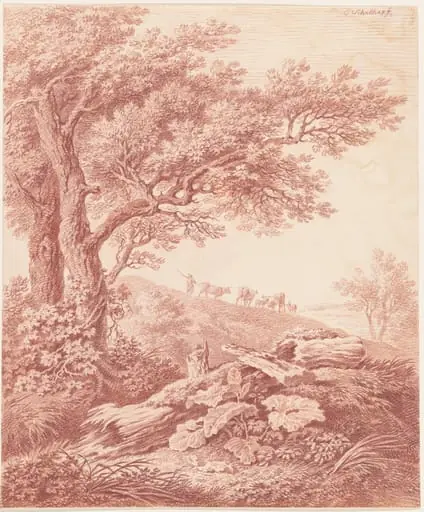 Ancient Trees in a Pastoral Landscape
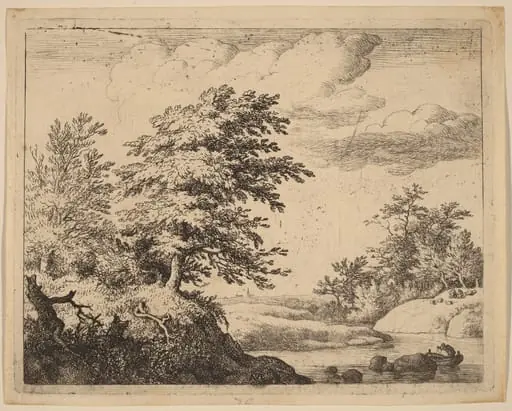 Winding River
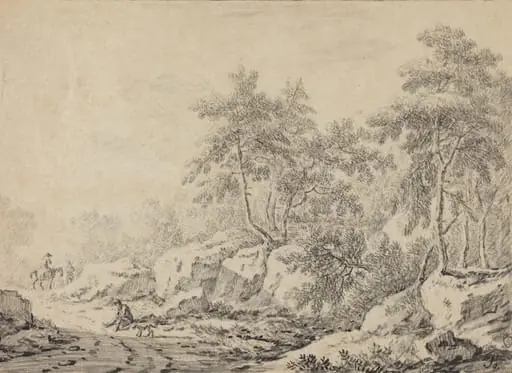 Travelers in a Rocky Wood
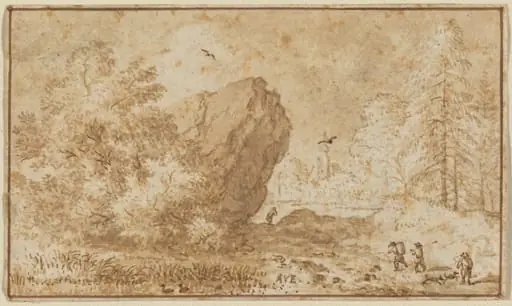 Landscape with Large Rock
 Hunters Resting by a River