Artwork
Les Filets (The Nets)
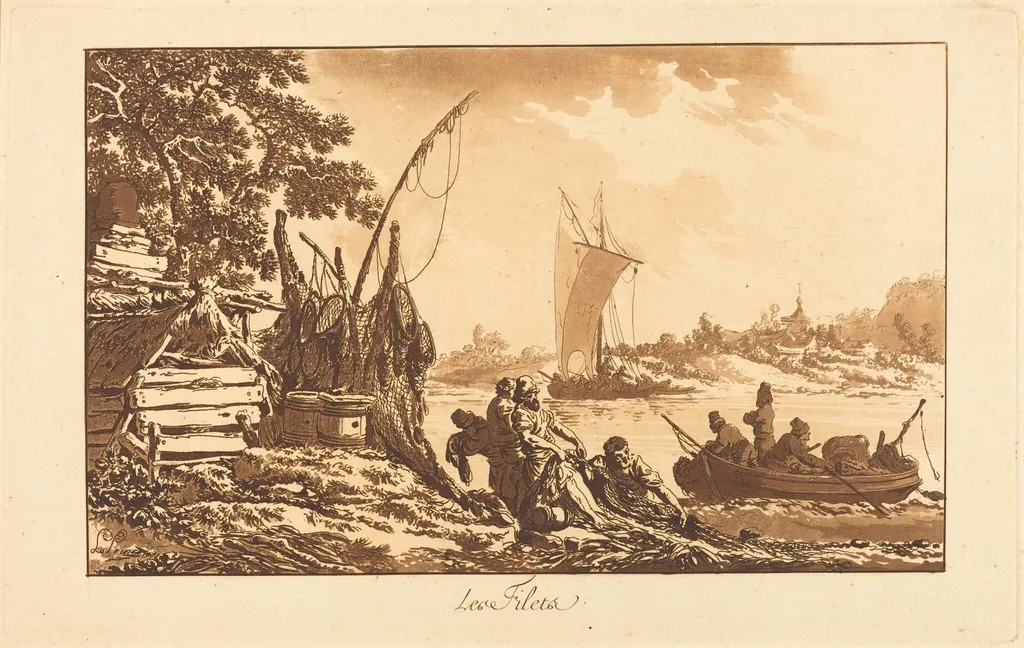
Les Filets (The Nets) is an ink print by the Romanticist artist Jean-Baptiste Le Prince. It dates from 1771 and is held in the collection of the National Gallery of Art.
About this work
Overview
A large tree looms behind them, while a second vessel drifts on the water and a distant sailboat suggests movement beyond the immediate activity.
Les Filets (The Nets), created in 1771 by Jean-Baptiste Le Prince, is a brown-toned etching and aquatint on laid paper. It depicts a quiet riverside scene where laborers unload fish from a boat near a partially constructed wooden frame. A large tree looms behind them, while a second vessel drifts on the water and a distant sailboat suggests movement beyond the immediate activity. The print’s monochrome palette and delicate shading evoke a subdued, atmospheric mood.
Subject & Meaning
The scene captures a moment of rural labor along a waterway, emphasizing the quiet rhythm of fishing life rather than its drama. Figures are engaged in routine tasks—unloading nets, hauling catches—without theatricality. The leaning structure and scattered boats imply an ongoing, unglamorous economy tied to the river. The composition avoids idealization, instead presenting daily work as an integral part of the landscape.
Technique & Style
Le Prince employed etching for fine lines and aquatint to achieve subtle gradations of tone. The brown ink, applied with care, creates a soft, muted atmosphere, enhancing the sense of depth through layered shadows—under the boat, along the bank, and within the nets. The texture of the paper and the delicacy of the ink washes mimic the natural light and moisture of the riverside, demonstrating a refined command of printmaking to suggest volume without bold contrast.
History & Provenance
Created in 1771, Les Filets was part of Le Prince’s series of prints documenting French rural and riverine life during the late Enlightenment. Though not widely exhibited in his lifetime, the work was circulated among collectors interested in topographical and genre scenes. Its survival in institutional collections suggests early recognition of its technical precision and observational clarity.
Context
In the decades before the French Revolution, there was growing interest in scenes of everyday life, particularly those tied to nature and labor. Le Prince’s work aligned with this trend, drawing from both Dutch landscape traditions and emerging French naturalism. Unlike grand historical subjects, Les Filets reflects a quieter, more intimate vision of society—one grounded in place and routine rather than spectacle.
Legacy
Les Filets contributed to the development of the French print tradition that valued observation over ornament. Le Prince’s use of aquatint to render atmospheric depth influenced later artists exploring tonal landscapes in print. While not widely known today, the work remains a quiet example of how printmaking could convey the dignity of ordinary life through subtle technique and restrained composition.
Artist & collection


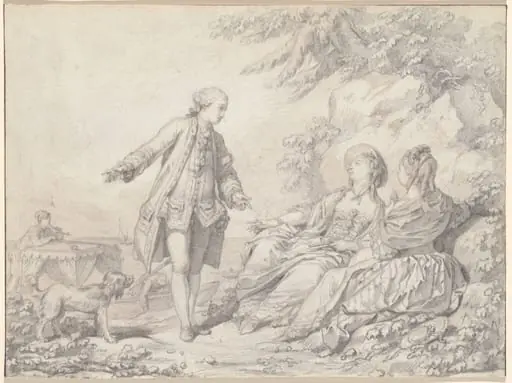 A Man and Two Women on a Rocky Shore
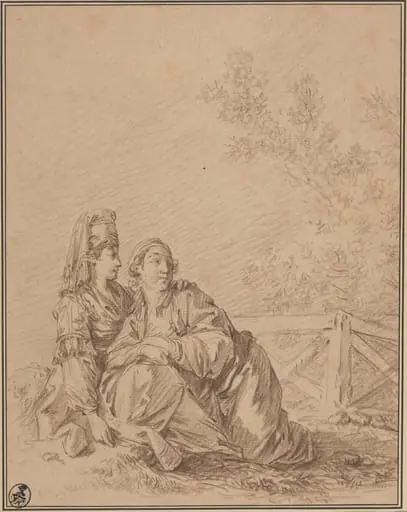 Two Russians Seated in Landscape
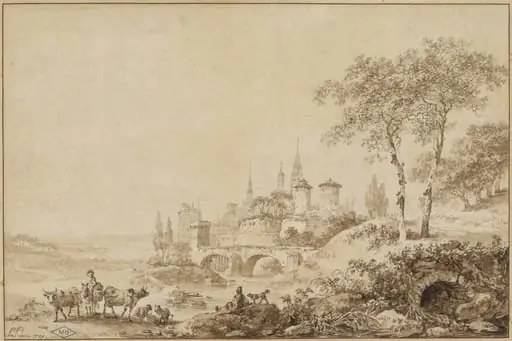 Shepherds in a Landscape before a Fortified Town
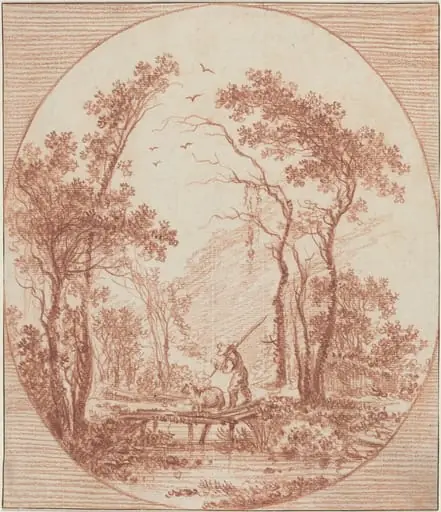 A Farmer and a Sheep Crossing a Rustic Bridge
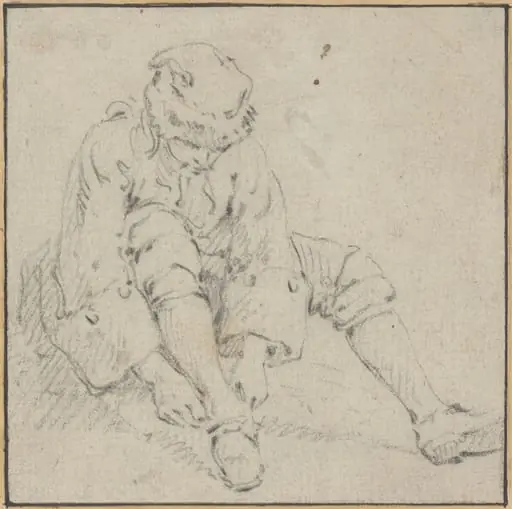 Man Pulling on His Shoe
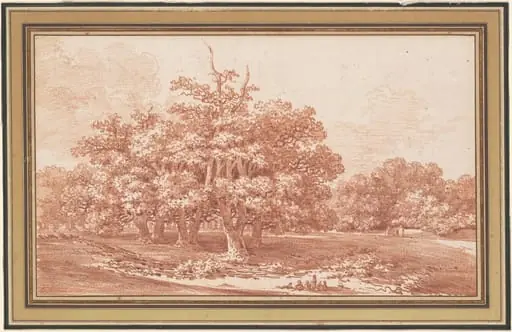 The Carrefour de l'Aiguille in the Forest of Fontainebleau
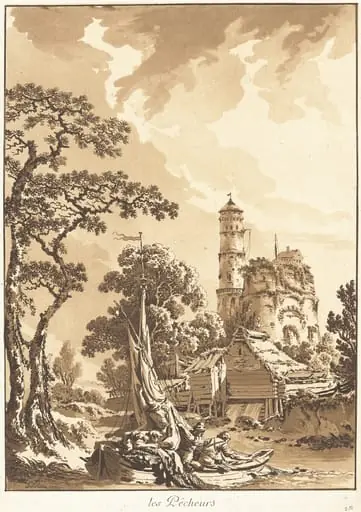 Les Pêcheurs (The Fishermen)
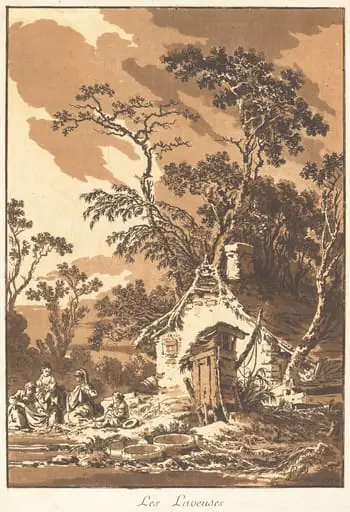 Les Laveuses (The Laundresses)
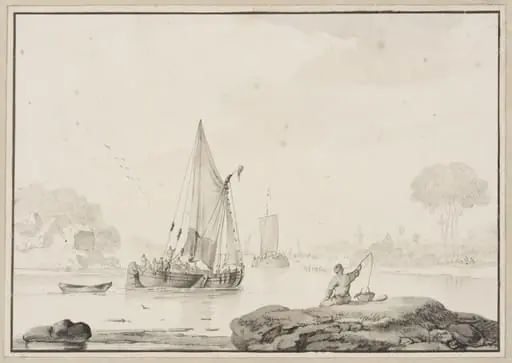 Dutch River Barges
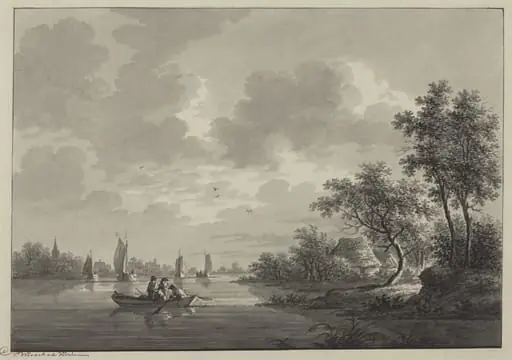 Ameide on the River Lek
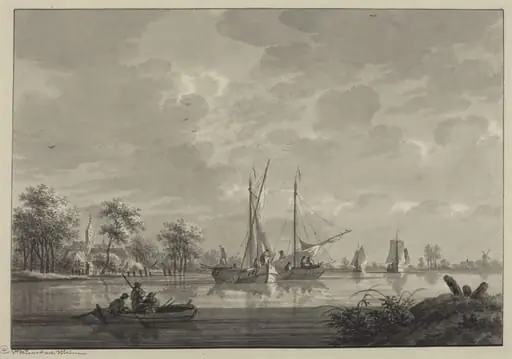 Tull on the River Waal
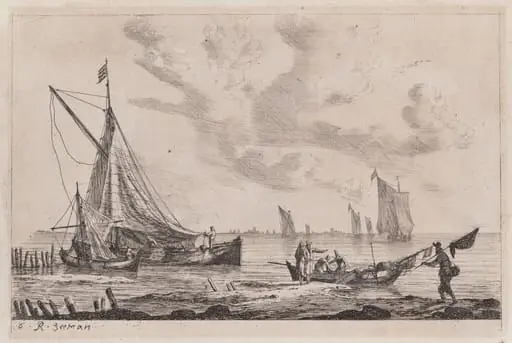 Shore of Inland Waterway with a Ketch, Two Smaller Boats, and Fisherman
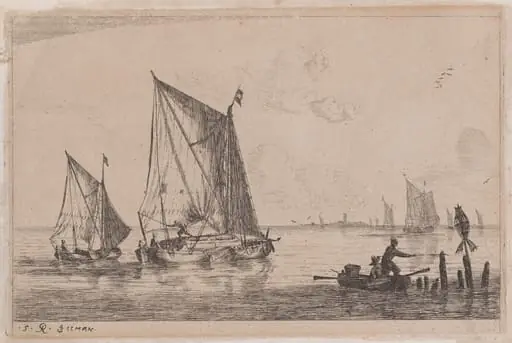 A "Duinopschuit," a Smaller Sailing Boat, and a Rowboat
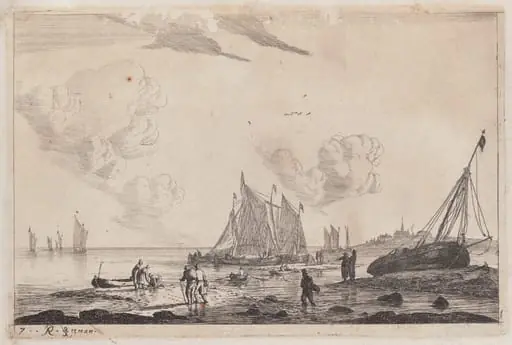 Beach Scene with Ketches and other Fishing Boats
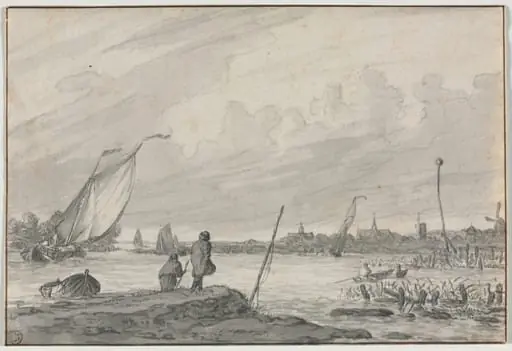 View of Alkmaar with Boats
 Inland Waterway with Two Galliots at the Right
 Three Sailing Vessels on Calm Waters
 River Bank
 Marine Scene with Amsterdam in the Distance
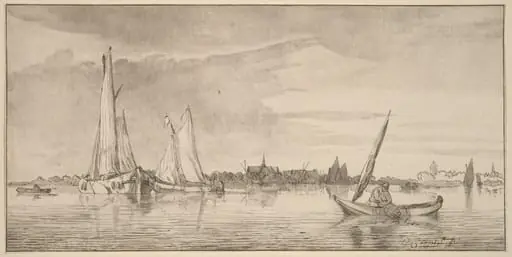 River with Town